
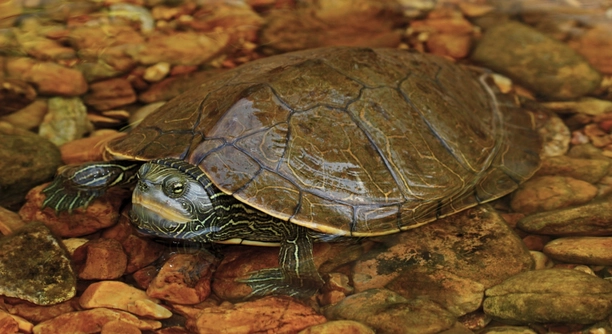
Texas map turtles are fascinating creatures known for their unique markings. These turtles are often spotted in rivers and ponds across the state of Texas, capturing the attention of nature lovers. Their distinctive designs make them stand out in their natural habitats.
The unique markings on Texas map turtles are a result of their genetic makeup and environmental influences. These markings are a form of camouflage, helping them blend in with their surroundings, which aids in avoiding predators.
Understanding the reasons behind these markings will deepen your appreciation for Texas map turtles and their survival strategies. The patterns are more than just visually striking, they serve an important role in their everyday life.
The Role of Markings in Camouflage
The striking markings on Texas map turtles help them survive in their natural habitats. Their shell patterns mimic the appearance of their surroundings, such as river rocks or the muddy bottoms of streams. This camouflage provides protection from predators that would otherwise see them as an easy meal. The bold designs also help break up their shape, making it difficult for predators to focus on any one part of the turtle. These markings serve a clear purpose beyond decoration.
The patterns are a simple yet effective way for the turtles to blend in. They can hide from birds of prey and larger animals by remaining still, using their shells as a form of defense.
Markings on the turtle’s shell are not just for hiding, though. They help keep the turtles healthy by protecting their soft skin underneath from the elements. The designs can also be used to identify individual turtles. Over time, researchers have used these markings to track and study the turtles’ behavior, migration, and population trends. Each turtle has a unique pattern, making it easy for experts to monitor the species.
Genetic and Environmental Influences
Markings on Texas map turtles are influenced by both genetics and the environment. Their genetic traits determine the overall pattern and color of their shells, while environmental factors, such as water quality and exposure to sunlight, can influence the intensity of these patterns. These markings evolve to suit the turtle’s specific environment.
The turtles’ patterns are not randomly formed; they are inherited traits passed down through generations. When young turtles are born, their markings are often light and faint, gradually becoming darker as they mature. Depending on their habitat, the markings may shift in appearance, becoming more prominent in murky waters or more subdued in clear environments. These patterns serve a functional purpose, helping the turtles blend in with their surroundings and protect themselves.
These markings are also tied to their survival. Turtles that are well-camouflaged in their environments have a better chance of surviving longer. Because these markings are passed down through generations, turtles with better camouflage are more likely to thrive and reproduce. This cycle of natural selection has helped shape the unique appearance of Texas map turtles over time, ensuring that their patterns continue to support their survival in their habitats.
The Importance of Shell Patterns in Identifying Turtles
The unique patterns on Texas map turtles are useful for researchers and conservationists. These designs help to identify individual turtles, making it easier to track their movements and study their behaviors. They serve as natural identification tags, which are essential for managing the species.
By observing the shell markings, scientists can monitor specific turtles over time, gathering data about their growth, diet, and reproduction. This helps create a clearer understanding of their life cycle and environmental needs. Some researchers even name turtles based on their patterns to keep track of them in the wild. The more distinct the pattern, the easier it is to spot and monitor a particular turtle in large populations.
Tracking individual turtles helps ensure they are properly protected, especially in areas where their habitats are threatened. Through this method, we can see how these turtles interact with their environments and the factors that impact their survival. In the long run, this identification helps conservation efforts aimed at maintaining healthy populations.
How the Environment Affects Markings
Texas map turtles’ shell markings are also influenced by their environment. Factors like water clarity, temperature, and exposure to sunlight play a role in shaping the patterns on their shells. For example, turtles living in murky waters may develop darker patterns for better camouflage.
The environment affects the turtle’s survival chances, which indirectly affects the development of these markings. Turtles in clearer waters might develop lighter, less pronounced patterns, making them blend into different surroundings. Environmental factors can even affect how intensely the colors on their shells stand out, helping the turtles adapt to varying habitats. In areas with high sun exposure, the patterns may darken as a form of protection from the heat, while in shadier environments, the markings may remain softer.
These environmental influences demonstrate the adaptability of the Texas map turtle. The markings are not solely inherited but also shaped by the conditions the turtles live in, providing further protection and ensuring they are well-equipped to face the challenges of their surroundings. Understanding these connections can help in the conservation of these turtles and their habitats.
The Role of Markings in Mate Selection
The markings on Texas map turtles can also play a role in mate selection. Males may use these patterns to choose potential mates based on visual cues. Certain patterns might indicate health, age, or genetic traits that are desirable in reproduction.
In some species, markings help males identify females that are fertile or in prime condition. Texas map turtles may exhibit similar behaviors, with males favoring females whose markings appear more vibrant or distinct. These visual signals can indicate the health and genetic fitness of a female, increasing the chances of successful reproduction. The more defined the patterns, the more attractive they might appear to potential mates.
Such visual cues, shaped by both genetics and environmental factors, are critical in the mating process. They allow turtles to select mates with compatible traits, which can ultimately affect the survival and genetic diversity of the population.
The Role of Hatchlings’ Markings
When Texas map turtles hatch, their markings are lighter and less defined. These markings gradually darken and become more pronounced as they grow older. The initial pattern, while still helpful for camouflage, is more subtle and becomes sharper with age.
This development in markings ensures that as the turtles grow, they continue to be well-camouflaged in their surroundings. The process also plays a role in their survival as they begin to encounter predators. Hatchlings’ markings are an early form of defense, but as they mature, their patterns become an even more effective tool for avoiding danger.
The Influence of Predators on Markings
Predators also influence the markings of Texas map turtles. Those with patterns that offer better camouflage are more likely to survive and reproduce. Over time, this results in turtles with markings that help them evade common predators. These markings reflect the natural selection process at work.
As they evolve, the markings of these turtles become more attuned to their specific environment, improving their chances of avoiding predation and continuing their lineage.
FAQ
Why do Texas map turtles have such unique markings?
Texas map turtles have unique markings as a form of camouflage. Their shell patterns help them blend into their environments, protecting them from predators. These markings mimic natural features like rocks and riverbeds, making it harder for animals to spot them. These distinct patterns are a mix of genetic traits and environmental influences, like water clarity and exposure to sunlight.
Can the markings on a Texas map turtle change over time?
Yes, the markings on a Texas map turtle can change as they age. When they are hatchlings, their shell patterns are usually lighter and less defined. As they grow, the patterns become darker and more pronounced. Environmental factors like exposure to sunlight and the habitat they live in can also impact the intensity of these markings over time.
Do all Texas map turtles have the same markings?
No, each Texas map turtle has a unique pattern. Just like human fingerprints, no two turtles share the exact same shell markings. These patterns vary in color and shape, which helps researchers identify and track individual turtles. The uniqueness of their markings is part of what makes them so fascinating to study.
How do researchers use the markings to track Texas map turtles?
Researchers use the distinct shell markings of Texas map turtles to identify and track them in the wild. By recognizing the unique patterns, scientists can monitor the turtles’ movement, health, and behavior. This allows for better conservation efforts and helps in studying the turtle population over time. The markings serve as a natural identification tag, making it easier for researchers to gather data on these creatures.
Do the markings on Texas map turtles serve any other purpose besides camouflage?
Yes, besides camouflage, the markings on Texas map turtles also help in mating. In some cases, the patterns on a turtle’s shell can signal to potential mates its health or genetic fitness. Vibrant or distinct markings might indicate a turtle’s ability to survive in its environment, making it a more attractive mate. Additionally, the patterns can provide protection by keeping the turtle hidden from predators.
Can Texas map turtles’ markings be affected by the water they live in?
Yes, the water in which Texas map turtles live can influence the markings on their shells. For example, turtles in murky or darker waters may develop darker, more intense patterns that help them blend in better. On the other hand, turtles living in clearer waters might have lighter patterns. These markings change based on the turtle’s environment, making them more suited to the conditions around them.
Do male and female Texas map turtles have different markings?
In most cases, male and female Texas map turtles have similar markings, though some slight differences might exist. The markings are more influenced by the turtle’s genetics and environment than by its sex. However, researchers have noted that females may have larger or more defined markings as they age, while males may have smaller, less pronounced designs. These differences, if they exist, are subtle and can vary between individuals.
How do Texas map turtles’ markings affect their survival?
The markings on Texas map turtles play a significant role in their survival. The patterns on their shells help them blend into their environment, hiding them from predators. By being less visible, they have a higher chance of avoiding animals that would otherwise see them as easy prey. These markings help the turtles adapt to their surroundings, increasing their chances of survival in the wild.
Are there any threats to the Texas map turtle population?
Yes, Texas map turtles face threats from habitat destruction, pollution, and illegal collection for the pet trade. As their natural habitats are altered by human activity, turtles may find it harder to find food or shelter. Pollution in the waterways can also affect their health and survival. Conservation efforts are in place to protect these turtles, focusing on preserving their habitats and reducing human impact.
Can Texas map turtles be kept as pets?
While Texas map turtles can technically be kept as pets, it’s important to consider their specific needs before deciding to adopt one. They require a proper aquatic environment with clean water, a suitable basking area, and access to food like fish and insects. Keeping them as pets also requires understanding their natural behaviors and ensuring they are not taken from the wild, as conservation of wild populations is crucial. Always check local regulations before acquiring one, as some areas may have laws to protect native species.
What do Texas map turtles eat?
Texas map turtles are omnivorous, feeding on a mix of plants and animals. Their diet includes aquatic insects, small fish, snails, and plant matter like algae and water plants. As they grow, their diet might shift to include more plant-based foods, depending on the availability of food in their environment. A balanced diet is important for their health, both in the wild and in captivity.
How can I help protect Texas map turtles?
To help protect Texas map turtles, consider supporting local conservation efforts focused on preserving their habitats. Avoid disturbing their natural environments, and don’t collect them from the wild. If you have a pet turtle, make sure to care for it responsibly and follow local regulations. Additionally, supporting organizations that work to reduce pollution and protect aquatic ecosystems can contribute to the long-term survival of these turtles.
Final Thoughts
Texas map turtles are fascinating creatures with their unique shell markings. These markings, which serve multiple purposes such as camouflage, are a key factor in the turtles’ survival. By blending into their environment, these patterns help protect them from predators, giving them a better chance of staying safe in their natural habitat. Over time, these markings have evolved to suit the environment the turtles live in, making them a great example of how animals adapt to their surroundings for survival.
Besides serving as camouflage, the markings on Texas map turtles also help in their identification. Researchers use these unique patterns to track and study individual turtles, providing valuable data on their behavior and health. This helps conservationists make informed decisions about protecting the species. These markings also play a role in mating, as they may signal a turtle’s health and fitness, helping ensure the survival of the strongest individuals. Through these patterns, Texas map turtles are able to communicate important information without ever saying a word.
Despite their clever adaptations, Texas map turtles face many threats. Habitat loss, pollution, and human interference are some of the biggest challenges they face today. Conservation efforts are important to ensure that these turtles continue to thrive in the wild. Supporting initiatives that protect their natural habitats and ensure the health of the waterways is essential. By understanding the significance of their markings and the role they play in the turtles’ lives, we can better appreciate these creatures and work to protect them for future generations.

Hello,
If you enjoy the content that we create, please consider saying a "Thank You!" by leaving a tip.
Every little bit helps us continue crafting quality advice that supports the health, happiness, and well-being of pets around the world, for pets of all shapes, sizes, and species.
We really appreciate the kindness and support that you show us!