
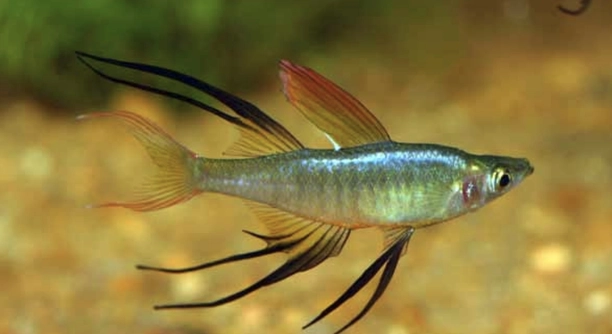
Have you ever watched threadfins swimming peacefully and noticed them suddenly darting away at a quick movement nearby? Their reaction is subtle yet rapid, showing how sensitive these fish are to changes in their surroundings.
When threadfins sense sudden motion, they exhibit an immediate escape response. This behavior involves rapid bursts of swimming, coordinated fin movements, and directional changes to avoid potential threats, demonstrating their highly developed sensory systems and instinctive survival mechanisms.
Observing these responses can reveal much about their behavior, social interactions, and survival strategies in their natural environment.
Sensory Mechanisms of Threadfins
Threadfins have an acute ability to detect movement around them. Their lateral line system, a series of fluid-filled canals along their body, picks up vibrations and changes in water pressure. This system allows them to sense approaching predators or nearby disturbances before they are visible. When I first observed threadfins at a local estuary, I was surprised at how quickly they could react. Even small shadows or splashes caused them to shift direction almost instantly. Their eyes also play a role, detecting motion and sudden changes in light intensity. These combined senses ensure that threadfins remain alert and can respond before threats reach them. This natural alertness is not only essential for survival but also for maintaining their position in schools. It helps them navigate crowded waters while avoiding collisions or harm. Their reactions are automatic and highly efficient, a result of evolutionary adaptation that keeps them alive in complex aquatic environments.
Threadfins’ sensory response is continuous, allowing them to remain aware of subtle changes. Their body is always ready to react.
Understanding how their lateral line works can help explain why even minor disturbances provoke quick movements. It’s a delicate balance between caution and efficiency in their natural behavior.
Behavioral Reactions to Sudden Motion
Threadfins respond almost instantly to sudden motion in their environment.
When threadfins detect movement, they often perform a burst of rapid swimming away from the source. This reaction is instinctive, triggered by both visual cues and vibrations sensed through their lateral line. In schools, this reaction is synchronized, creating a wave-like movement that helps protect the group. Watching them, it becomes clear that each fish is aware of its neighbors’ movements, adjusting its own behavior accordingly. These coordinated actions reduce the chance of an individual being singled out by predators. Threadfins also display subtle fin flicks and tail adjustments to steer quickly and maintain balance. Some species might even change depth suddenly, moving closer to the bottom or surface depending on perceived threats. The speed and precision of these movements are impressive, reflecting the efficiency of their sensory systems. Such behavioral adaptations have been shaped by natural selection to increase survival, making their responses both rapid and highly effective. Over time, these instinctive reactions become second nature, allowing threadfins to navigate complex, dynamic waters with remarkable agility.
Coordination Within Schools
Threadfins move in tight schools, reacting together to sudden motion. When one fish senses a threat, the others follow almost instantly, creating a coordinated wave of movement that helps protect the group from predators.
This schooling behavior is fascinating to watch. Each fish seems to anticipate its neighbor’s next move, shifting direction in harmony. The lateral line system plays a key role here, transmitting subtle water pressure changes between individuals. Even slight changes in speed or orientation ripple through the school, maintaining cohesion. I’ve observed small disturbances, like a falling leaf or ripple, trigger nearly the entire group to move simultaneously. This coordination reduces individual risk and increases survival chances. It’s remarkable how instinct and sensory perception work together, allowing threadfins to navigate crowded waters efficiently without collisions.
The school’s fluid movements are both protective and adaptive. Each individual adjusts constantly, balancing safety with the need to maintain formation while swimming.
Environmental Influences on Response
Threadfins’ reactions vary depending on their surroundings. In shallow, calm waters, they react faster to motion due to fewer obstacles and clearer signals.
Environmental conditions such as water clarity, current strength, and habitat structure directly affect how threadfins respond to sudden motion. In murky water, visual cues are limited, so they rely more heavily on their lateral line to detect vibrations. Strong currents can make their reactions more cautious, as moving too quickly could push them into obstacles. I’ve noticed that in open, calm areas, even minor disturbances can trigger rapid bursts of swimming, while in complex reef environments, they move more deliberately to avoid collisions. Seasonal changes, including temperature shifts, also influence their alertness and reaction speed. These factors collectively shape how threadfins navigate their habitat safely, balancing energy use with survival instincts.
Understanding these environmental influences can help explain variations in behavior across different locations and times of the year. Observing them in multiple conditions shows just how adaptable these fish are, fine-tuning their responses based on context.
Predators and Threat Detection
Threadfins are highly alert to predators. Sudden motion triggers immediate evasive actions, helping them avoid being caught. Their speed and coordination make them difficult targets.
Even small ripples or shadows in the water can prompt a reaction. Their sensitivity is a survival advantage, allowing them to escape before danger arrives.
Energy Costs of Rapid Movement
Frequent bursts of rapid swimming consume significant energy. Threadfins must balance the need to react quickly with conserving energy for feeding and reproduction. Observing them, I noticed that after repeated escapes, they often slow down, regrouping in calmer waters. Over time, this energy trade-off influences their daily patterns, foraging strategies, and overall fitness. In larger schools, the collective response reduces the need for each fish to use maximum energy constantly, as coordinated movements allow them to share alertness. Their instinctive reactions are finely tuned to minimize exhaustion while maintaining safety, demonstrating an impressive natural balance between vigilance and efficiency.
Observing Threadfin Behavior
Watching threadfins respond to sudden motion reveals both instinct and adaptability. Their reactions are precise, showing how evolution shaped survival strategies in subtle ways.
FAQ
How quickly do threadfins react to sudden motion?
Threadfins react almost instantly to changes in their environment. Within milliseconds, their lateral line system detects vibrations and their eyes sense movement. I’ve noticed that even slight splashes or shadows can trigger immediate swimming bursts. This speed is essential for avoiding predators and maintaining safety in schools. Their reactions are instinctive, not learned, and can vary slightly depending on water clarity or current strength.
Do all threadfins respond the same way?
Responses can differ based on species, age, and environmental conditions. Younger threadfins tend to be more erratic, using sharper bursts of movement, while adults often move with more precision. In larger schools, responses are more coordinated, with individuals adjusting their movements to match neighbors. Personal observations show that subtle environmental factors, like water turbulence, also influence how vigorously they react.
Why do threadfins move in schools when sensing motion?
Schooling offers protection. When one fish detects motion, the rest follow quickly, creating a wave-like escape that confuses predators. I’ve seen how a single shadow can cause the whole group to shift almost simultaneously. This coordination reduces the risk for each fish and demonstrates how instinct and communication work together in real time.
Do environmental factors affect their reactions?
Yes. Water clarity, currents, and obstacles play a big role. In calm, clear waters, threadfins react faster because visual cues are easier to detect. Murky or turbulent water makes them rely more on their lateral line, often resulting in slightly slower but still precise reactions. Observing different habitats shows how adaptable they are to varying conditions.
How long can threadfins sustain rapid bursts?
Rapid movements are energy-intensive. Threadfins usually perform short, high-speed bursts, then slow down to conserve energy. In schools, they share alertness, allowing each fish to avoid constant exertion. I’ve noticed that after repeated escapes, they regroup in calmer areas before resuming normal swimming patterns. This balance is crucial for feeding, growth, and reproduction.
Can sudden motion cause stress in threadfins?
Yes. Frequent disturbances can elevate stress levels, affecting feeding and overall health. In aquaculture or observational settings, minimizing unnecessary movement around their habitat helps reduce stress. I’ve observed that fish in calmer environments appear more active and healthy, while those exposed to constant motion show cautious, jittery swimming.
Do threadfins communicate their detection of motion to others?
While they don’t communicate verbally, their movements transmit information through water pressure changes. Each fish senses the shift in neighboring fish and adjusts accordingly. Watching a school react, it’s clear that this silent signaling helps maintain coordination and safety. Their lateral line system plays a critical role in this non-verbal communication.
How do threadfins balance reaction speed and energy use?
Threadfins instinctively manage energy expenditure. They perform rapid movements only when necessary and slow down afterward to recover. In schools, coordination reduces individual effort because not every fish needs to react with maximum force. Observing them over time highlights how evolution fine-tuned this balance for survival.
Do threadfins ever make mistakes in reaction?
Occasionally, misjudged motion or conflicting signals from other fish can lead to collisions or abrupt direction changes. I’ve noticed that in very crowded schools or complex habitats, they sometimes overreact, which can cause minor disarray. However, these moments are rare, and the group usually regains coordination quickly.
What can studying their reactions teach us?
Watching threadfins respond to sudden motion reveals insights into predator-prey dynamics, energy conservation, and sensory adaptation. Personally, I find it fascinating to see how instinct, environment, and social behavior work together. Understanding these mechanisms can also help in conservation, aquaculture, and habitat management, ensuring these fish thrive in natural and controlled settings.
This FAQ highlights how threadfins’ responses to sudden motion are finely tuned, instinctive, and influenced by their surroundings, schooling behavior, and energy needs. Their behavior is a window into survival strategies shaped over generations.
Final Thoughts
Threadfins are remarkable fish when it comes to sensing sudden motion. Their reactions are swift and precise, driven by a combination of sensory organs and instinct. The lateral line system, which runs along their bodies, allows them to detect even the smallest vibrations in the water. Their eyes also play a key role, picking up movement and light changes almost instantly. Together, these senses give threadfins a heightened awareness of their surroundings, enabling them to react before threats become dangerous. Observing them, I often notice how even subtle disturbances, like a falling leaf or a ripple from a nearby fish, can trigger a quick burst of movement. These reactions are not random. They follow a pattern shaped by evolution to maximize survival. Over time, this has made threadfins highly efficient in avoiding predators, navigating crowded waters, and maintaining safety within their groups.
Schooling behavior adds another layer of protection. When one threadfin senses sudden motion, others quickly follow, creating coordinated movements that confuse predators and reduce risk for each individual. This synchronization is impressive to watch. Each fish seems aware of its neighbors, adjusting its speed and direction almost instantly to maintain formation. The lateral line system helps transmit these subtle signals between fish, allowing the school to react as a single unit. I’ve noticed that the larger the group, the smoother the collective response, which shows how important social behavior is in their survival strategy. Threadfins balance individual alertness with group coordination, ensuring both personal safety and the stability of the school. Their behavior demonstrates a natural combination of instinct, perception, and teamwork that is both efficient and fascinating.
Environmental conditions influence how threadfins respond as well. Water clarity, currents, obstacles, and habitat structure can all affect the speed and intensity of their reactions. In calm, open water, threadfins respond rapidly to minor disturbances, while in murky or turbulent conditions, they rely more on their lateral line, moving more deliberately to avoid collisions. These adjustments show their adaptability and the fine balance they maintain between quick reactions and energy conservation. Rapid bursts of swimming use a lot of energy, so threadfins regulate how often and how intensely they react to motion. Observing them over time reveals a subtle pattern of vigilance, movement, and recovery. It’s fascinating to see how instinct, sensory perception, social behavior, and environmental awareness come together in these fish. Their responses to sudden motion are not just about survival—they are a carefully tuned system that supports health, efficiency, and long-term survival in their natural habitats.

Hello,
If you enjoy the content that we create, please consider saying a "Thank You!" by leaving a tip.
Every little bit helps us continue crafting quality advice that supports the health, happiness, and well-being of pets around the world, for pets of all shapes, sizes, and species.
We really appreciate the kindness and support that you show us!