
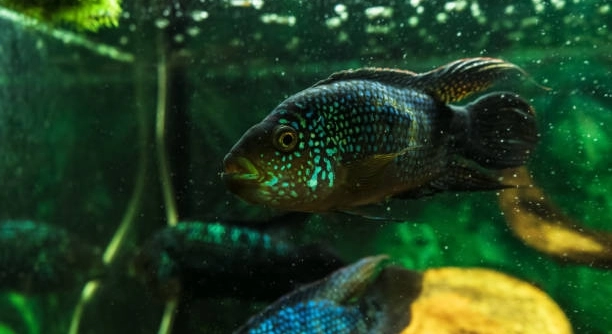
Watching Jack Dempsey fish share a tank can reveal intense behavior shaped by instinct, space, and hierarchy, especially when multiple individuals interact and compete for territory, food, and dominance within confined aquatic environments overall settings.
When Jack Dempsey fish compete, aggression increases as individuals establish dominance through displays, chasing, and physical confrontation. This competition determines access to resources, breeding opportunities, and territory, often resulting in stress or injury when conditions fail to provide sufficient space.
These competitive interactions influence tank harmony, long-term health, and care decisions that every aquarist should understand before managing this species.
Territory and Dominance Behavior
Competition among Jack Dempsey fish is closely tied to territory and dominance, especially in enclosed tanks. I often notice that the strongest fish claims central areas, while others are pushed to corners. These fish rely on visual displays, body size, and repeated movements to assert control. Flaring gills, darkened colors, and rapid swimming patterns are common signals. Physical contact can follow when warnings fail. This behavior is rooted in survival instincts, not temperament alone. Limited space intensifies these reactions and removes natural escape options. Rocks, caves, and plants become valuable assets worth defending. Feeding times further increase tension, as faster fish gain priority access. Over time, a clear hierarchy forms, reducing constant conflict. However, imbalance can persist if tank conditions favor one individual too heavily. Understanding these patterns helps explain why competition feels sudden but is usually gradual and predictable in structured environments when basic needs overlap daily within tanks.
Some fish submit quickly, while others resist repeatedly. I have seen smaller individuals hide for long periods. Prolonged pressure weakens immune response and appetite. Without intervention, stress builds silently. These outcomes show why competition should never be ignored in confined aquarium settings by attentive keepers managing space and behavior carefully.
Territorial competition does not always lead to constant fighting. In balanced setups, boundaries become respected over time. I have found that visual barriers reduce direct confrontation. When fish cannot see each other constantly, tension drops. Stable water conditions also play a role in moderating aggression. Poor quality increases irritability and reactivity. Age and size similarity matter as well. Evenly matched fish establish order faster than uneven groups. Consistent lighting and feeding schedules further stabilize interactions. These factors together influence whether competition remains controlled or escalates into repeated conflict that harms overall tank stability in shared freshwater environments long term care.
Managing Competition in Home Aquariums
Managing competition requires planning rather than reaction. I prefer larger tanks with defined zones. Adding caves and driftwood breaks sightlines. Stocking numbers should remain conservative. Monitoring behavior daily helps catch early warning signs. Small adjustments often prevent larger issues from forming before aggression escalates and health declines over time steadily.
Tank mates play a critical role in reducing competitive pressure. I avoid pairing Jack Dempsey fish with similar aggressive species. Calm, fast moving fish can sometimes coexist, but choices must be deliberate. Overcrowding almost always worsens behavior patterns. Providing ample swimming space allows subdominant fish to retreat safely. Rearranging decor can reset established territories and disrupt dominance cycles. I have used this method during periods of heightened aggression with positive results. Feeding strategies also matter. Spreading food across multiple locations reduces direct clashes. Consistent routines lower anticipation stress. Breeding pairs require special attention, as protective instincts intensify rapidly. Temporary separation may be necessary during these periods. Observing subtle changes in color, posture, and movement offers valuable insight. Early response prevents injury and long-term stress. With thoughtful setup and regular observation, competition becomes manageable rather than destructive in home aquariums over time, supporting healthier behavior patterns and stable environments. I find consistency builds predictability for both fish and keeper. Patience remains essential when adjusting layouts or stocking choices. Gradual changes reduce shock and maintain balance. Long term success depends on observation, restraint, and respect for natural instincts within confined aquatic systems designed for their needs and limits today carefully managed always.
Stress and Health Effects
Competitive stress affects Jack Dempsey fish both physically and behaviorally in confined tanks. I often notice reduced appetite, faded coloration, and increased hiding. Constant pressure elevates stress hormones, weakening immune defenses. Over time, this makes fish more vulnerable to disease and slower recovery from minor injuries during prolonged aggressive exposure.
Prolonged competition disrupts normal routines and rest patterns. Subordinate fish remain alert, limiting sleep and recovery periods. I have seen this lead to erratic swimming and poor feeding responses. Stress also impacts digestion, reducing nutrient absorption. When combined with frequent chasing, energy reserves deplete quickly. Healing slows, and small wounds may become infected. Overcrowded tanks amplify these effects by removing escape options. Even visually dominant fish experience strain maintaining control. Without intervention, the overall tank environment becomes unstable, affecting every inhabitant regardless of rank or strength and prolonged imbalance often requires active management adjustments to restore long term stability safely.
Chronic stress can also influence breeding behavior and social bonding. Competing fish may abandon nesting sites or destroy eggs during disputes. I have observed pairs fail repeatedly under constant pressure. Hormonal imbalance interferes with reproduction and parental care. Fry survival drops sharply in unstable environments. Stress related aggression can spread, triggering chain reactions among tank mates. Once this pattern sets in, reversal becomes difficult. Long periods of imbalance reshape behavior permanently. Early recognition of stress signals remains critical for preventing lasting damage within captive populations especially in home aquariums with limited space and inadequate environmental structure for long term health.
Signs Competition Is Escalating
Escalating competition shows clear warning signs that are easy to miss. I watch for repeated chasing, torn fins, and darkened coloration. One fish often controls feeding zones. Others hide excessively or stop eating. Increased surface breathing can signal stress. Sudden decor guarding is another indicator. These behaviors suggest hierarchy instability rather than normal social adjustment especially when tank size and layout are inadequate for the species long term needs and daily activity balance within aquariums.
When competition escalates, intervention becomes necessary to prevent injury. I usually start by assessing space and layout. Rearranging rocks and shelters breaks established territories. This often resets interactions. Increasing tank size provides immediate relief when possible. Separating individuals may be required in severe cases. Monitoring feeding ensures weaker fish receive nutrition. Water quality must remain stable, as stress worsens in poor conditions. Lighting adjustments can reduce overstimulation. I avoid sudden stocking changes, as instability increases aggression. Long term management relies on observation rather than reaction. Subtle behavior shifts often appear before physical damage. Responding early protects fish health and preserves balance within the aquarium over extended periods of captive care and maintenance where consistency supports calmer social structures and predictable daily routines for long stability.
Tank Size and Space Limitations
Tank size plays a direct role in reducing competition among Jack Dempsey fish. I have learned that cramped environments force constant interaction. Limited swimming space increases encounters, triggers defense behavior, and removes retreat options, making dominance disputes more frequent and harder to resolve naturally over time in small aquariums setups.
Larger tanks allow territories to form without constant overlap. I prefer providing long horizontal space instead of height. Extra room lowers stress, spreads feeding areas, and gives weaker fish room to recover. Proper sizing supports stable hierarchies and reduces repeated confrontations significantly in shared aquarium environments over extended care periods.
Importance of Tank Structure
Environmental structure directly influences how Jack Dempsey fish compete. I rely on rocks, caves, and driftwood to create visual breaks. These elements limit constant eye contact and reduce chase behavior. Plants add cover and soften aggressive approaches. Multiple shelters prevent one fish from controlling every hiding space. When decor is evenly distributed, dominance becomes localized rather than tank wide. Rearranging structures occasionally disrupts fixed territories and resets behavior. I have seen aggression drop within days after layout changes. Thoughtful placement supports natural spacing and lowers stress without removing fish or altering stocking levels in long term captive aquarium care systems.
Stocking Choices and Compatibility
Stocking decisions influence competition outcomes more than many expect. I avoid mixing similar sized aggressive species together. Balanced groupings reduce constant testing behavior. Selecting compatible tank mates, limiting numbers, and observing interactions early helps prevent escalation before dominance struggles become harmful and difficult to reverse in confined aquarium environments long.
FAQ
Why do Jack Dempsey fish become aggressive toward each other?
Jack Dempsey fish display aggression mainly due to territorial instincts and dominance needs. I have seen this behavior increase when space is limited or resources overlap. Their natural response is to defend areas they value, such as shelters or feeding zones. This aggression is not random. It develops gradually as fish assess strength, size, and persistence. Once a hierarchy forms, aggression may lessen, but it rarely disappears entirely. Environmental pressure often intensifies these behaviors.
Is competition normal between Jack Dempsey fish?
Competition is a normal and expected behavior for this species. I consider it part of their social structure rather than a problem by default. In balanced conditions, competition helps establish order. Issues arise when competition becomes constant or physical damage appears. Healthy competition involves displays and short chases, not prolonged attacks. Recognizing the difference helps determine when intervention is needed and when observation alone is sufficient.
Can Jack Dempsey fish live together peacefully?
Peaceful coexistence is possible but requires planning. I have had success when fish are introduced at similar sizes and given ample space. Clear boundaries and multiple shelters reduce conflict. Even then, peace does not mean absence of dominance. It means aggression stays controlled. Without proper setup, peaceful behavior rarely lasts long. Long term success depends on consistent conditions rather than initial compatibility alone.
Does tank size really affect competition levels?
Tank size has a major impact on how competition plays out. I notice immediate differences when space increases. Larger tanks reduce forced interaction and allow escape routes. Small tanks compress territories, making conflict unavoidable. Even strong filtration or decor cannot fully compensate for insufficient space. Providing more room is often the most effective way to reduce persistent aggression without separating fish.
How does feeding influence competitive behavior?
Feeding often triggers competition because food represents a limited resource. I spread food across different areas to prevent one fish from controlling access. When food drops in one location, chasing usually follows. Regular feeding schedules also help. Inconsistent timing increases anticipation stress and aggression. Adequate nutrition supports calmer behavior, while hunger amplifies dominance struggles quickly.
What role does tank decor play in reducing aggression?
Decor shapes how fish interact daily. I rely on rocks and caves to block lines of sight. When fish cannot see rivals constantly, tension decreases. Shelters give weaker fish recovery time. Open tanks with little structure often lead to nonstop chasing. Balanced decor creates defined zones, which helps competition stay localized instead of spreading throughout the tank.
Are male Jack Dempsey fish more aggressive than females?
Males often display stronger dominance behaviors, especially during breeding periods. I have observed males defending larger areas and initiating more displays. Females can also be aggressive, particularly when guarding eggs. Aggression depends more on individual temperament and conditions than gender alone. Size differences often matter more than sex in determining dominance outcomes.
When should I separate competing Jack Dempsey fish?
Separation becomes necessary when injuries appear or stress signs persist. I watch for torn fins, refusal to eat, or constant hiding. If rearranging the tank does not help, separation protects long term health. Waiting too long often worsens recovery. Temporary separation can also reset behavior patterns before reintroduction under improved conditions.
Can competition affect breeding success?
Competition strongly influences breeding outcomes. I have seen pairs abandon nests when other fish interfere. Constant pressure disrupts parental care and increases egg loss. Stable environments support better breeding behavior. When competition remains high, breeding attempts often fail repeatedly. Managing aggression improves both spawning success and fry survival rates over time.
Does age or size difference reduce competition?
Size differences can reduce direct conflict but introduce other risks. Larger fish may dominate without resistance, causing chronic stress for smaller ones. I prefer similar sized fish so hierarchies form quickly. Large gaps in size often lead to one sided control rather than balanced competition. Stability depends on minimizing extremes rather than relying on size advantage alone.
Final Thoughts
Understanding what happens when Jack Dempsey fish compete comes down to recognizing natural behavior shaped by space, structure, and consistency. Competition is not a flaw in the species but a response to environment and pressure. In my experience, most issues develop slowly rather than appearing suddenly. Subtle changes in swimming patterns, feeding habits, or coloration often appear before open aggression. These early signs matter. Ignoring them allows stress to build and behavior to harden. When competition is managed early, fish remain healthier and more predictable. When it is ignored, recovery becomes harder and outcomes worsen. Stable water conditions, proper spacing, and thoughtful layout form the foundation of balance. Without these basics, even well matched fish struggle to coexist. Competition should be expected, observed, and guided rather than feared or suppressed entirely in captive care.
Long term success depends less on reacting to fights and more on preventing pressure points. Tank size remains one of the most influential factors. Adequate room allows boundaries to form naturally and reduces forced interaction. Structure supports this by giving fish control over their immediate surroundings. I have found that consistency matters as much as setup. Sudden changes in lighting, feeding, or decor often increase tension. Predictable routines help fish settle into stable roles. Stocking choices also shape outcomes. Fewer fish with compatible behavior patterns create calmer systems than crowded tanks with constant testing. Observation remains the most valuable tool. Watching daily behavior reveals patterns that equipment cannot measure. Adjustments made early protect health and reduce the need for drastic intervention later.
Competition among Jack Dempsey fish does not need to result in constant conflict. With informed decisions, it becomes a manageable aspect of their care. Balance is achieved through space, structure, and patience rather than force. Each fish responds differently, and no single setup fits every situation. Flexibility allows keepers to adapt as dynamics shift over time. When competition is kept within healthy limits, fish display stronger coloration, better feeding response, and more stable behavior. This creates an environment that supports both physical health and natural expression. Managing competition is not about control but about understanding boundaries. When those boundaries are respected, the aquarium becomes more stable, predictable, and rewarding to maintain over the long term.

Hello,
If you enjoy the content that we create, please consider saying a "Thank You!" by leaving a tip.
Every little bit helps us continue crafting quality advice that supports the health, happiness, and well-being of pets around the world, for pets of all shapes, sizes, and species.
We really appreciate the kindness and support that you show us!