
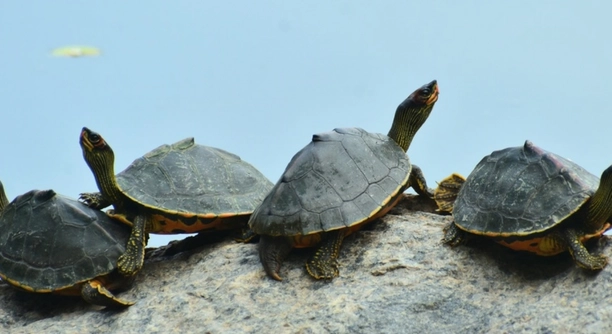
Lighting plays an important role in the health and well-being of your Indian roofed tortoise. Proper lighting provides the necessary warmth and UVB rays needed for its growth and overall vitality.
The right lighting ensures your tortoise has access to both heat and UVB rays, which are essential for its calcium metabolism and bone health. A combination of a heat lamp and a UVB light should be used to mimic natural sunlight.
Choosing the right lighting will help support your tortoise’s immune system and digestion. Proper lighting is a key component to maintaining its health and comfort.
Understanding the Lighting Needs of an Indian Roofed Tortoise
Indian roofed tortoises need specific types of lighting to thrive. These tortoises, native to areas with plenty of sunlight, require both warmth and UVB light to stay healthy. UVB light is crucial for producing vitamin D3, which helps with calcium absorption, promoting strong bones and a healthy shell. Without proper lighting, your tortoise may develop health issues such as metabolic bone disease.
Heat lamps mimic natural sunlight by providing the necessary warmth, while UVB bulbs provide the light needed for vitamin D3 synthesis. This combination is vital for your tortoise’s overall well-being. You should aim for a temperature gradient in the enclosure, with a warm basking area and a cooler spot where the tortoise can regulate its body temperature.
The light source should be placed about 12-18 inches away from the tortoise. UVB rays lose their effectiveness over distance, so it’s essential to ensure the proper distance between the light source and your tortoise’s basking area for maximum benefit.
Choosing the Right UVB Bulb
Choosing the correct UVB bulb can significantly affect your tortoise’s health. Tortoises need UVB bulbs with a UV index of 5.0 or 10.0, depending on their age and the environment they are in.
For example, if your tortoise is housed indoors with limited natural sunlight, a stronger UVB bulb may be necessary to ensure adequate UV exposure. The best bulbs are those designed specifically for reptiles, as they provide the right spectrum of light. Be sure to replace bulbs every 6-12 months, even if they still seem to be working. UVB output diminishes over time, and regular replacement ensures your tortoise gets the necessary exposure.
When selecting a bulb, you can choose between fluorescent or mercury vapor bulbs, both of which are effective options. Fluorescent bulbs provide UVB and are less expensive, while mercury vapor bulbs offer both UVB and heat, but tend to be pricier.
Maintaining Proper Heat for Your Tortoise
Maintaining the right temperature is just as important as UVB lighting. The basking area should be between 90-95°F, while the cooler side of the enclosure should be around 75-80°F. This temperature gradient allows your tortoise to regulate its body heat by moving between the warm and cool spots.
A ceramic heat emitter or a basking bulb works well to provide the necessary warmth. Make sure the heat source is not too close, as it could cause overheating, which can be dangerous. It’s essential to monitor the temperature with a reliable thermometer to ensure the enclosure stays within the desired range.
Investing in a good quality thermostat can help regulate the heat to prevent fluctuations that could stress your tortoise. Regular temperature checks will help maintain a stable environment and keep your tortoise healthy and active.
Proper Lighting Duration for an Indian Roofed Tortoise
Lighting duration plays a key role in your tortoise’s health. A consistent day and night cycle helps regulate its biological clock, ensuring proper sleep and activity patterns.
It’s recommended to keep the lights on for 10-12 hours during the day, followed by 12-14 hours of darkness. This mimics the natural light cycle and helps keep your tortoise’s circadian rhythm in check. Ensure the lighting is consistent, as sudden changes may stress your tortoise.
If you live in an area where natural sunlight is limited, investing in a timer for the lights can help keep the cycle steady. Timers are especially useful when you’re unable to manually turn the lights on and off each day, ensuring that your tortoise gets the right amount of light exposure.
Importance of Light Placement
Proper light placement ensures your tortoise gets the most out of the light. Place the UVB light directly above the basking area to maximize exposure. The light should cover the spot where your tortoise spends most of its time.
Avoid placing the light too far from the tortoise’s basking area. If the light is too far away, the UVB rays lose effectiveness, and your tortoise may not get enough exposure. A good rule of thumb is to place the bulb at a distance of about 12-18 inches, depending on the bulb’s strength.
It’s also important to adjust the light’s placement based on the type of light you use. Some lights, like mercury vapor bulbs, may require a bit more space than fluorescent ones. Checking the manufacturer’s recommendations will help you position the light for optimal effect.
Avoiding Overheating in Your Tortoise’s Enclosure
It’s important to avoid overheating, as excessive heat can stress your tortoise and lead to dehydration.
Monitor the temperature closely, especially near the heat source. If the basking spot becomes too hot, your tortoise might try to escape the area, which can cause further stress. Adjust the distance of the heat source to maintain the proper temperature.
Choosing Between Fluorescent and Mercury Vapor Bulbs
Fluorescent and mercury vapor bulbs both have their benefits. Fluorescent bulbs are energy-efficient and cost-effective, making them a popular choice. However, mercury vapor bulbs provide both UVB and heat, which can simplify lighting needs in larger enclosures.
If you use mercury vapor bulbs, make sure the wattage suits your enclosure size. These bulbs are more powerful, so placing them too close may result in excessive heat. Always monitor temperature and UVB output to ensure proper conditions.
Monitoring Light and Heat Consistency
Keep a close eye on your tortoise’s behavior to ensure the lighting and heating conditions remain stable. If your tortoise is not basking or appears sluggish, it may be a sign that something is wrong with the environment.
Make adjustments if necessary, ensuring the basking area is warm enough and the UVB light is at the correct intensity. Monitoring your tortoise closely will help you identify any inconsistencies in its habitat.
FAQ
What is the best type of light for an Indian roofed tortoise?
The best light for an Indian roofed tortoise is a combination of UVB and heat light. UVB light is essential for vitamin D3 production, which helps with calcium absorption, and a heat light provides the necessary warmth. Fluorescent UVB bulbs are commonly used, but mercury vapor bulbs are also effective since they offer both heat and UVB. Ensure the UVB light is designed for reptiles, as it provides the proper spectrum for tortoises.
How long should the lights be on for my tortoise each day?
The lights should be on for 10-12 hours during the day, mimicking the natural daylight cycle. Afterward, they should be off for 12-14 hours to allow your tortoise to have a proper sleep cycle. Consistency is key, so using a timer can help ensure the lights are on and off at the same time each day.
How close should the UVB light be to the basking area?
The UVB light should be placed 12-18 inches away from the basking area. This distance ensures that your tortoise receives adequate UVB exposure without overexposure, which can cause harm. Be sure to check the manufacturer’s recommendations for your specific bulb to get the best results.
Can I use natural sunlight instead of UVB lighting?
Natural sunlight can be beneficial, but it’s not always reliable, especially if you live in a location with limited sun or during colder months. UVB bulbs are a more consistent and controlled option for ensuring your tortoise gets the necessary exposure, regardless of the weather or time of year.
How do I know if my tortoise is getting enough UVB light?
If your tortoise is not basking or seems lethargic, it might not be getting enough UVB exposure. A lack of proper UVB light can lead to health problems like metabolic bone disease. Monitor your tortoise’s behavior, and if needed, adjust the light’s placement to ensure it is receiving the right amount of exposure.
Should I use a heat lamp or a ceramic heat emitter?
Both options can work for providing heat to your tortoise. A heat lamp is commonly used to create a warm basking area, but it also emits light, which might not be ideal for nighttime. A ceramic heat emitter provides heat without light, making it a good option for maintaining temperature at night without disrupting the tortoise’s sleep cycle.
How do I maintain the proper temperature in the enclosure?
To maintain the proper temperature, create a gradient with a hot basking area (90-95°F) and a cooler area (75-80°F). Use a thermometer to monitor the temperatures regularly. It’s essential to keep the basking area warm enough for your tortoise to digest food, but not so hot that it causes stress.
How often should I replace the UVB bulb?
UVB bulbs lose their effectiveness over time, so it’s important to replace them every 6-12 months, even if the bulb still seems to be working. The UVB output diminishes gradually, and your tortoise may not receive adequate exposure as the bulb ages. Keep track of the bulb’s age and replace it as needed.
Can I use a standard light bulb for heat?
Standard incandescent bulbs are not ideal for reptiles because they don’t provide the right spectrum of light and may not produce enough heat for your tortoise. Reptile-specific heat bulbs are designed to produce the right amount of heat and can be used for your tortoise’s basking area.
What if the light setup doesn’t fit my enclosure?
If your light setup doesn’t fit your enclosure, try adjusting the placement of the light or consider upgrading to a different type of light source. There are various sizes and types of lights available, including long, linear fluorescent lights and compact mercury vapor bulbs. Ensure the bulb size fits and that the proper distance is maintained from your tortoise.
Can my tortoise have too much UVB light?
Yes, excessive UVB light can be harmful. If your tortoise is exposed to too much UVB, it may suffer from burns or eye damage. Ensure the light is positioned at the proper distance from your tortoise, and do not exceed the recommended exposure time. Regularly check the bulb’s effectiveness to prevent overexposure.
Should I have a separate heat source for night time?
Yes, it’s important to maintain a stable temperature even at night. While your tortoise doesn’t need the basking light on during the night, it’s crucial to provide a heat source, such as a ceramic heat emitter or a low-wattage bulb, to ensure the enclosure doesn’t get too cold. Nighttime temperatures should be around 75-80°F.
What is the ideal humidity level for an Indian roofed tortoise?
The humidity level for an Indian roofed tortoise should be kept at around 50-60%. High humidity can lead to respiratory problems, while low humidity can cause dehydration. Regularly check humidity levels using a hygrometer and adjust the enclosure’s environment with a water dish or slight misting if needed.
Final Thoughts
Choosing the right lighting for an Indian roofed tortoise is crucial to its health and well-being. Providing the right balance of UVB and heat ensures your tortoise gets the necessary nutrients and warmth for proper digestion and overall growth. Without proper lighting, it could lead to serious health problems, such as metabolic bone disease or stress from inadequate warmth. Always monitor the lighting conditions regularly, and make adjustments as needed to ensure your tortoise thrives in its environment.
Consistency is key when it comes to lighting schedules. Tortoises need a steady cycle of day and night, so setting up a timer for the lights is a great way to keep things consistent. Remember, the UVB light should be replaced every 6-12 months to maintain its effectiveness. Temperature gradients, with a hot basking spot and a cooler area, help provide your tortoise with the perfect environment to regulate its body temperature. Proper lighting also supports natural behavior, such as basking, which is vital for your tortoise’s health.
Finally, while setting up a lighting system might seem like a small task, it plays a large role in the overall care of your tortoise. With the right UVB light and heating sources, you’re setting your tortoise up for a long, healthy life. Don’t forget to assess the setup regularly to make sure everything is working as it should. A proper light cycle and a warm, safe environment will help your tortoise feel secure, comfortable, and healthy.

Hello,
If you enjoy the content that we create, please consider saying a "Thank You!" by leaving a tip.
Every little bit helps us continue crafting quality advice that supports the health, happiness, and well-being of pets around the world, for pets of all shapes, sizes, and species.
We really appreciate the kindness and support that you show us!