
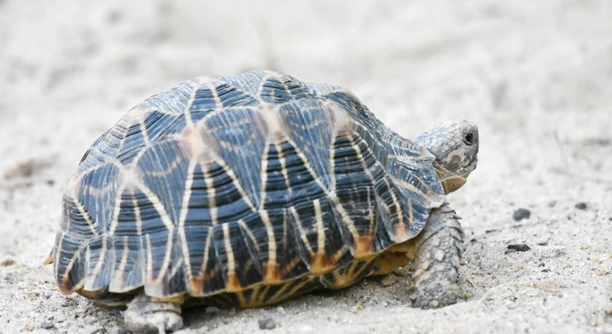
When caring for an Indian Star Tortoise, one of the most important factors to consider is providing proper lighting. A basking lamp plays a vital role in maintaining their health and well-being by simulating natural sunlight.
To choose the best basking lamp for your Indian Star Tortoise, consider the lamp’s wattage, heat output, and UVB production. A combination of heat and UVB light is essential for your tortoise’s digestion, shell growth, and overall health.
Understanding the right lighting setup will make sure your tortoise thrives in its environment. We will go through key considerations to help you select the best basking lamp for their needs.
Understanding the Importance of Proper Lighting for Indian Star Tortoises
A basking lamp provides two essential benefits for your Indian Star Tortoise: warmth and UVB light. These tortoises, being cold-blooded, rely on external heat sources to regulate their body temperature. Without the right amount of heat, your tortoise may struggle to digest food and even develop health issues. UVB light is equally important, as it helps them synthesize vitamin D3, which is crucial for calcium absorption. Without sufficient calcium, your tortoise can suffer from shell deformities or even metabolic bone disease. The proper basking lamp setup is crucial for ensuring that your tortoise has both the warmth and the UVB exposure it needs to thrive.
In short, the basking lamp serves as a way to simulate the sunlight your tortoise would get in the wild. Without it, they won’t be able to properly maintain their body functions.
When choosing a basking lamp, it’s important to consider both the type of lamp and its placement in the enclosure. Not all lamps are created equal, so you must select one that provides the proper heat and UVB light. If you’ve noticed that your tortoise is sluggish or has trouble eating, it could be due to improper lighting. Make sure the basking lamp mimics the natural sunlight your tortoise would receive in the wild to prevent these health concerns.
Types of Basking Lamps to Consider
There are different types of basking lamps to choose from, including incandescent, halogen, and mercury vapor bulbs. Each type has its own set of features that can benefit your Indian Star Tortoise. Incandescent bulbs are great for providing heat but don’t offer UVB light, so they are often used alongside separate UVB lights. Halogen bulbs, on the other hand, provide both heat and light, but the intensity may need to be adjusted based on your tortoise’s needs.
Mercury vapor bulbs are the most beneficial as they emit both heat and UVB light in one fixture, making them the best option for your tortoise’s basking spot. These bulbs, however, are typically more expensive than the others, but they can save you money in the long run by reducing the need for separate heat and UVB lights.
Choosing the right type of basking lamp depends on your setup and your tortoise’s specific needs. For example, if your enclosure has good UVB coverage but lacks warmth, an incandescent bulb may be sufficient. If you need both heat and UVB light, a mercury vapor bulb is likely the best choice. Consider your tortoise’s overall health and how much exposure to heat and UVB they need to make the right decision.
Wattage and Heat Output
The wattage of your basking lamp determines how much heat it generates. A higher wattage means more heat, but it’s essential to match the wattage to the size of the enclosure. Too much heat can stress your tortoise, while too little can leave it cold.
For an Indian Star Tortoise, a 75 to 100-watt bulb is often sufficient for a medium-sized enclosure. However, the wattage you choose will also depend on the distance between the lamp and your tortoise’s basking spot. If the lamp is too far away, it won’t provide enough heat. Always monitor the temperature closely to ensure it’s within the ideal range of 90 to 95°F (32 to 35°C) at the basking spot.
Using a thermometer to measure the temperature of the basking area can help you determine if the wattage is appropriate. If it’s too high, your tortoise might overheat, and if it’s too low, your tortoise might become too cold. Adjusting the distance between the lamp and your tortoise, or switching to a bulb with a different wattage, can help maintain the proper temperature.
UVB Light and Its Role in Health
UVB light is vital for tortoises as it enables them to produce vitamin D3, which is necessary for calcium absorption. Without UVB light, your tortoise may develop serious health issues, such as metabolic bone disease.
Choosing a bulb that offers UVB light ensures that your tortoise receives the proper exposure. The two main types of UVB bulbs are fluorescent and mercury vapor. Fluorescent bulbs are typically less expensive and can provide the necessary UVB for small to medium-sized enclosures. Mercury vapor bulbs, however, provide both UVB and heat, making them an excellent choice for larger enclosures where you need both functions.
To get the most out of your UVB bulb, make sure it’s placed correctly within the enclosure. The bulb should be placed within 12 inches of the basking area to provide the right amount of UVB. Over time, UVB bulbs lose their effectiveness, so they should be replaced regularly, even if the light is still working.
Placement of the Basking Lamp
The position of the basking lamp matters. It should be placed at one end of the enclosure to create a temperature gradient. This allows your tortoise to choose between a warmer basking spot or a cooler area to regulate its body temperature.
Place the basking lamp above the tortoise’s basking area but make sure it’s not too close to avoid overheating. Keep it at a distance that maintains the ideal basking temperature. Adjusting the height can help control the heat output without causing discomfort for your tortoise.
Proper placement also ensures that your tortoise doesn’t experience temperature stress. Make sure the lamp is directed at a flat, accessible spot where your tortoise will naturally gravitate towards.
Maintenance and Lamp Replacement
Regular maintenance is key to ensuring your basking lamp is effective. Over time, bulbs lose their intensity and efficiency. It’s important to check the lamp’s light output and heat regularly to ensure it’s working properly.
UVB bulbs should be replaced every six months to maintain their effectiveness. Heat bulbs may last longer, but it’s wise to keep an eye on them for any signs of wear. Clean the lamps periodically to remove dust and debris, which can block light output and reduce heat efficiency.
Observing Your Tortoise’s Behavior
Monitor your tortoise for any changes in behavior, as this can indicate issues with the basking setup. If your tortoise seems lethargic or isn’t eating properly, it could be a sign that the temperature or lighting is off.
Checking your tortoise’s activity level and appetite will help you spot issues early. If the basking spot is too hot or cold, your tortoise may refuse to bask or avoid the area. Regular observation will help you adjust the setup accordingly.
FAQ
How long should the basking lamp be on each day?
The basking lamp should be on for around 10 to 12 hours each day. This mimics the natural light cycle and ensures your tortoise gets the right amount of heat and UVB exposure. Keep in mind that the light should also be turned off during the night to provide your tortoise with a proper rest period. You can use a timer to ensure consistency, but always monitor the conditions to adjust as necessary.
What temperature should the basking area be?
The ideal temperature for the basking area should be between 90 and 95°F (32 to 35°C). This allows your tortoise to regulate its body temperature effectively. Make sure you use a thermometer to check the basking spot regularly. Too high a temperature can lead to stress, while too low can cause health problems due to insufficient digestion or heat.
Do I need a UVB bulb in addition to the basking lamp?
Yes, you will need a UVB bulb in addition to your basking lamp if your chosen heat source does not emit UVB light. UVB is essential for your tortoise’s health because it helps them produce vitamin D3, necessary for calcium absorption. You can choose either a separate fluorescent UVB bulb or a mercury vapor bulb that provides both heat and UVB.
Can I use a heat pad instead of a basking lamp?
While a heat pad can provide additional warmth, it’s not a suitable substitute for a basking lamp. A heat pad doesn’t offer UVB light, which is essential for your tortoise’s health. If you want to use a heat pad, it should be combined with a separate UVB light to ensure your tortoise gets both the heat and UVB exposure it needs.
What type of bulb should I use for an Indian Star Tortoise?
For an Indian Star Tortoise, a combination of heat and UVB is necessary. A mercury vapor bulb is one of the best options, as it provides both heat and UVB in one fixture. If using separate bulbs, an incandescent or halogen bulb can be used for heat, while a fluorescent UVB bulb will provide the necessary light for calcium absorption.
How far should the basking lamp be from my tortoise?
The basking lamp should be placed about 12 to 18 inches (30 to 45 cm) above the basking spot. This distance ensures the proper temperature range is maintained while preventing the lamp from being too close and overheating the tortoise. Adjust the height based on the wattage of the bulb and the size of your enclosure.
Can I leave the basking light on all night?
No, you should not leave the basking light on at night. Tortoises, like most reptiles, need a period of darkness for rest. A 12-hour light cycle (on during the day and off at night) is best. You can use a separate night heat source, like a ceramic heat emitter, if additional warmth is needed without light.
How do I know if my tortoise is getting enough UVB?
You can tell if your tortoise is getting enough UVB by observing its activity and health. If your tortoise is lethargic, not eating properly, or showing signs of soft or deformed shells, it may not be getting enough UVB. You can also use a UVB meter to measure the amount of UVB light reaching the basking area, ensuring it’s within the required range.
Should I use a timer for the basking light?
Using a timer for your basking light is a great idea. It helps maintain a consistent light cycle, mimicking the natural day and night cycle. This consistency is important for your tortoise’s internal clock and overall well-being. A timer also takes the guesswork out of turning the light on and off at the right times.
What should I do if the basking lamp isn’t reaching the right temperature?
If the basking lamp isn’t reaching the right temperature, try adjusting the distance between the lamp and the basking spot. You might also need to increase the wattage of the bulb or switch to a more powerful heat source. If the problem persists, check the bulb’s effectiveness and consider replacing it.
Can I use the same basking lamp for a different type of tortoise or reptile?
Yes, the basking lamp can often be used for other tortoises or reptiles, but different species have different temperature and UVB requirements. Make sure to adjust the temperature and UVB light to meet the specific needs of each species. Always research the particular care needs of the tortoise or reptile you’re keeping to ensure the lighting setup is appropriate.
Is a basking lamp enough for my tortoise’s health?
While a basking lamp is crucial for warmth and UVB, it is only one part of your tortoise’s habitat. Proper substrate, humidity, food, and water are also essential for your tortoise’s well-being. Make sure you’re providing a balanced environment, and regularly monitor the temperature and light output of your basking lamp to ensure everything is in optimal condition.
Choosing the right basking lamp for your Indian Star Tortoise is an important decision that affects its health and well-being. Providing proper heat and UVB exposure is essential for digestion, growth, and overall vitality. The right basking lamp will help mimic natural sunlight, creating the perfect environment for your tortoise to thrive. When setting up the basking area, make sure the lamp is at the proper distance from the tortoise to maintain the correct temperature. You should also ensure the UVB light is strong enough for calcium absorption and bone health. A little attention to detail goes a long way in making sure your tortoise is healthy and happy.
Remember that not all basking lamps are the same. Depending on your tortoise’s needs and the size of your enclosure, the wattage, type of bulb, and placement of the lamp will vary. Always consider both the heat output and UVB light your tortoise needs. Mercury vapor bulbs are often the best option because they provide both heat and UVB in one. However, if you’re using separate bulbs, make sure the heat and UVB sources are appropriate for your setup. Regularly check the temperature and UVB levels, and replace the bulbs when necessary to maintain a healthy habitat.
Lastly, monitoring your tortoise’s behavior is key. If your tortoise isn’t basking or seems too lethargic, it may be a sign that the lighting needs adjustment. Sometimes, small changes, like adjusting the distance of the lamp or swapping out a bulb, can make a big difference. Over time, you’ll learn what works best for your tortoise’s specific needs. By staying consistent and observant, you can ensure that your Indian Star Tortoise enjoys a comfortable and healthy life in its environment.

Hello,
If you enjoy the content that we create, please consider saying a "Thank You!" by leaving a tip.
Every little bit helps us continue crafting quality advice that supports the health, happiness, and well-being of pets around the world, for pets of all shapes, sizes, and species.
We really appreciate the kindness and support that you show us!