
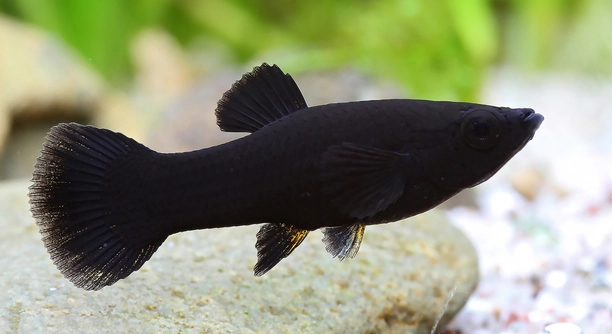
Many aquarists enjoy keeping Black Mollies because of their calm nature and striking appearance. These small fish are social, active, and often seen exploring the aquarium, making them a favorite among both beginners and experienced hobbyists.
Black Mollies can eat live plants, but they do not rely on them as a primary food source. Their diet is omnivorous, consisting mostly of flakes, pellets, and occasional vegetable matter, while live plants may be nibbled occasionally.
Learning how Black Mollies interact with plants can help maintain a balanced aquarium environment and support the health of both fish and greenery.
How Black Mollies Interact with Live Plants
Black Mollies are curious fish that explore their environment constantly. They may nibble on soft or tender leaves, but this behavior is usually minimal and does not harm strong, well-established plants. Many aquarists notice that Mollies prefer algae and biofilm over fresh plant leaves, though younger plants with tender shoots can be tempting. Over time, fish often learn to avoid certain plants after repeated tasting, especially if their primary diet is nutritious and balanced. Adding dense or hardy plants like Java Fern or Anubias can reduce the risk of damage. Providing a variety of food options, such as vegetables and high-quality pellets, keeps Mollies from relying on live plants for nutrition. Regular observation is key, as individual fish may have different nibbling habits. With proper care, live plants and Black Mollies can coexist peacefully, adding both life and beauty to an aquarium environment.
Nibbled leaves are usually a sign that Mollies are experimenting rather than starving.
Maintaining live plants alongside Black Mollies also provides benefits beyond aesthetics. Plants improve water quality by absorbing nitrates and oxygenating the water, creating a healthier habitat. They offer hiding spots for shy fish and reduce stress levels, which encourages natural behavior and social interaction. Even with some light nibbling, the overall presence of plants can enhance tank stability. Regular trimming and monitoring help prevent overgrowth or damage, ensuring that both plants and fish thrive together. Selecting plants suited to Mollies’ behavior and providing a balanced diet makes coexistence manageable and rewarding for any aquarium caretaker.
Best Plants for Black Mollies
Hardy plants like Anubias, Java Fern, and Amazon Sword are ideal for tanks with Black Mollies.
These plants withstand occasional nibbling and provide shelter without breaking apart easily. Mollies’ nibbling tendencies are reduced when dense roots or thick leaves are available, which allows aquarists to maintain a lush, healthy tank. Providing floating plants such as Duckweed or Water Lettuce adds shade and encourages natural grazing on biofilm, reducing the chance of direct leaf damage. Pairing a varied diet with resilient plant species ensures the aquarium remains visually appealing and functionally healthy. Over time, Mollies adapt to these plant types, leading to minimal interference with growth. Proper placement of plants in clusters or along tank edges also limits exposure to nibbling. For aquarists seeking balance between fish and flora, combining hardy species with careful tank management supports long-term success and a thriving aquatic environment.
Feeding Habits of Black Mollies
Black Mollies are omnivores, eating both plant matter and protein-based foods. They often favor flake or pellet diets but will occasionally nibble on live plants when other options are limited or new textures catch their attention.
A balanced diet is crucial to prevent excessive plant nibbling. Black Mollies benefit from a mix of high-quality flakes, vegetable matter like blanched spinach or zucchini, and occasional protein sources such as brine shrimp. Providing varied foods satisfies their nutritional needs and reduces stress, helping them maintain vibrant colors and active behavior. Overfeeding can lead to poor water quality, while underfeeding may trigger more aggressive plant nibbling. Consistency in feeding times and portion control supports healthy digestion and keeps them from seeking extra food in live plants, preserving the aquarium’s greenery.
Monitoring feeding behavior reveals individual preferences and tendencies. Some Mollies may show more interest in plants than others. Observing which foods they prefer helps aquarists adjust diet plans to ensure both fish and plants thrive. Incorporating vegetables directly in the tank or offering algae wafers can satisfy their natural grazing instincts while limiting damage to live plants. A mix of floating and rooted foods keeps the fish engaged, and rotating diet options prevents boredom. Understanding these feeding habits makes it easier to maintain a balanced aquarium environment where Black Mollies coexist peacefully with live plants.
Tips to Protect Live Plants
Dense and hardy plants are best for tanks with Black Mollies.
Placing plants with strong stems or thick leaves minimizes the impact of nibbling. Aquarists can use plant clusters or decorations to shield more delicate species, creating protected areas. Floating plants provide shade and reduce direct grazing, while rooted plants offer stability. Offering extra food like blanched vegetables or algae wafers redirects attention from live plants and keeps fish engaged. Regular trimming removes damaged leaves and encourages new growth, preventing decay that may affect water quality. Maintaining proper lighting, nutrients, and water parameters ensures plants grow strong and recover quickly from occasional nibbling. By combining resilient species, careful placement, and dietary management, aquarists can create an environment where Black Mollies and live plants thrive together.
Common Plant Damage
Black Mollies may leave small bite marks on leaves, especially softer species. This light nibbling usually does not threaten the plant’s overall health if the plant is hardy and well-established.
Damage often appears on young shoots or tender leaves. Hardy plants recover quickly, and careful observation allows timely trimming of affected areas to maintain plant vitality.
Preventing Excessive Nibbling
Providing a variety of foods reduces plant nibbling. Black Mollies are less likely to eat live plants when their diet includes vegetables, high-quality flakes, and occasional protein treats. A well-fed fish is more likely to leave plants untouched.
Observing Behavior
Regularly watching Black Mollies helps identify which plants they favor. Noting preferences can guide placement and selection of plant species to protect more delicate greenery.
Choosing Aquarium Plants
Thick-leaved and fast-growing plants are ideal for tanks with Black Mollies. These species withstand occasional nibbling and provide shelter, making them suitable companions for active fish.
FAQ
Do Black Mollies eat all types of live plants?
Black Mollies do not eat all plants equally. They tend to nibble on soft, tender leaves while ignoring tougher species. Plants like Java Fern, Anubias, and Amazon Sword are generally safe, as their thick leaves withstand occasional bites. Soft plants like hornwort or young shoots may show more damage.
Will Black Mollies harm established plants in my aquarium?
Established and hardy plants usually survive well with Black Mollies. Most nibbling is minimal, affecting only a few leaves. Regular trimming and proper plant care ensure that minor bites do not impact overall plant health. Dense planting also reduces the likelihood of significant damage.
How can I reduce plant nibbling?
Providing a varied diet is key. Offering high-quality flakes, vegetables like zucchini or spinach, and occasional protein sources keeps Black Mollies from relying on plants for food. Floating plants and algae wafers can also redirect grazing behavior, keeping delicate plants safer.
Do Black Mollies prefer algae over live plants?
Yes, Black Mollies often prefer algae, biofilm, or detritus over fresh plant leaves. They naturally graze on these surfaces in aquariums, which helps control algae growth while leaving most sturdy plants intact. Supplementing with vegetables mimics this natural grazing.
Can I keep delicate plants with Black Mollies?
Delicate plants can survive if placed strategically. Using plant clusters or hiding spots reduces direct exposure. Pairing these plants with a balanced diet and providing extra food options ensures that nibbling is minimal and that plants have a chance to grow.
How do I know if my Black Mollies are hungry?
Signs of hunger include persistent nibbling on plants or chasing food aggressively during feeding. Observing fish behavior during scheduled feedings helps gauge satisfaction. Providing appropriate portions prevents overfeeding while limiting plant damage.
Are there plants Black Mollies will never eat?
While no plant is completely immune, thick-leaved or fast-growing species are generally avoided. Java Fern and Anubias, for example, remain largely untouched due to their texture. Dense and mature plants resist nibbling more effectively than soft, young growth.
Is plant nibbling harmful to Black Mollies?
Occasional nibbling on plants is normal and does not harm the fish. It is a natural behavior that satisfies grazing instincts. Ensuring they have a proper diet prevents excessive nibbling and promotes healthy growth.
How often should I feed Black Mollies to protect plants?
Feeding two to three times daily in measured portions is effective. Providing enough food keeps fish satisfied, reducing the likelihood of nibbling on live plants. Supplementing with vegetables or algae wafers also provides variety and helps preserve plant life.
Can aquarium setup influence plant safety?
Yes, tank layout matters. Dense planting, hiding spots, and strong lighting encourage plant growth while discouraging fish from targeting delicate leaves. Combining resilient species with careful placement minimizes stress on plants and supports a healthy environment for Black Mollies.
Do young Black Mollies nibble more than adults?
Younger fish may explore and nibble more as they learn what is edible. Adults tend to focus more on prepared foods and algae. Providing tender vegetables for juveniles helps satisfy curiosity while protecting main plants.
Can live plants improve Black Mollies’ health?
Yes, plants contribute to water quality by absorbing nitrates and providing oxygen. They also offer shelter, reduce stress, and encourage natural behavior, making the aquarium a healthier environment for Black Mollies while maintaining visual appeal.
How do I recover damaged plants?
Trimming damaged leaves and ensuring proper nutrients promotes regrowth. Hardy plants recover faster, and maintaining water quality is crucial. Replacing or relocating sensitive plants can prevent further nibbling and support overall tank balance.
Is it better to use floating or rooted plants with Black Mollies?
Both types have benefits. Floating plants provide shade and grazing surfaces, while rooted plants offer shelter and structure. Using a combination ensures variety and reduces stress, keeping Black Mollies occupied and less likely to damage delicate plants.
Can diet changes fully stop plant nibbling?
Diet changes significantly reduce nibbling but may not eliminate it entirely. Some fish explore or nibble occasionally out of curiosity. Ensuring a balanced diet and providing hardy plant species minimizes potential damage while supporting natural behaviors.
How do I monitor which plants are most at risk?
Regular observation reveals patterns in nibbling behavior. Noting which species show more damage allows aquarists to adjust placement, introduce protective barriers, or supplement with extra food. Monitoring helps maintain both fish health and plant vitality.
Are there signs that plants are being over-nibbled?
Yellowing leaves, torn edges, and slowed growth indicate excessive nibbling. Prompt trimming and protective measures, such as relocating delicate plants or providing extra food, prevent further damage and maintain a healthy aquarium environment.
Can Black Mollies live without live plants?
Yes, Black Mollies can thrive without live plants if their diet and environment are properly managed. However, plants improve water quality, provide shelter, and encourage natural behavior, making them a valuable addition to the tank.
Does tank size affect nibbling behavior?
Larger tanks with more hiding spots and plant coverage reduce nibbling pressure. Crowded or small tanks may increase stress and curiosity, leading to more plant damage. Proper tank planning ensures both fish and plants coexist comfortably.
Can live plants help with breeding Black Mollies?
Yes, dense plants provide hiding spots for fry and reduce stress on adults during spawning. Hardy, well-placed plants ensure both protection and clean water, supporting successful breeding while minimizing nibbling on tender plant parts.
Black Mollies are generally peaceful fish that adapt well to community tanks, and their interactions with live plants are usually manageable. While they may nibble on soft or tender leaves, this behavior is often minor and does not threaten healthy, established plants. Choosing hardy plant species like Anubias, Java Fern, or Amazon Sword helps prevent significant damage and allows plants to thrive even in active tanks. Dense planting also gives Mollies natural hiding spots and reduces stress, which encourages them to focus on their prepared diet rather than nibbling excessively on plants. Observing your fish regularly provides insight into their feeding habits and preferences, helping you make small adjustments in placement or diet to maintain a balanced environment.
Providing a varied diet is key to minimizing plant nibbling and keeping Black Mollies healthy. A combination of high-quality flakes, pellets, blanched vegetables, and occasional protein treats satisfies their nutritional needs and prevents them from seeking extra food from live plants. Floating plants or algae wafers can further redirect their natural grazing instincts, giving delicate leaves a chance to grow undisturbed. Proper feeding schedules and portion control are equally important, as overfeeding can harm water quality and underfeeding can increase nibbling behavior. By maintaining consistent care and offering options that mimic natural grazing, Mollies are less likely to damage the tank’s greenery, allowing both fish and plants to flourish together.
Maintaining a successful aquarium with Black Mollies and live plants involves a balance of diet, plant selection, and observation. Hardy and fast-growing plants recover quickly from minor nibbling, while strategic placement of delicate species ensures they are protected. Trimming damaged leaves and monitoring growth supports a healthy environment, and understanding individual fish behavior allows you to adapt care routines as needed. Plants contribute more than aesthetic value, as they improve water quality, provide oxygen, and offer shelter that reduces stress for your fish. With careful planning and regular observation, Black Mollies and live plants can coexist harmoniously, creating a visually appealing and healthy tank that benefits both the aquatic vegetation and the fish.

Hello,
If you enjoy the content that we create, please consider saying a "Thank You!" by leaving a tip.
Every little bit helps us continue crafting quality advice that supports the health, happiness, and well-being of pets around the world, for pets of all shapes, sizes, and species.
We really appreciate the kindness and support that you show us!