
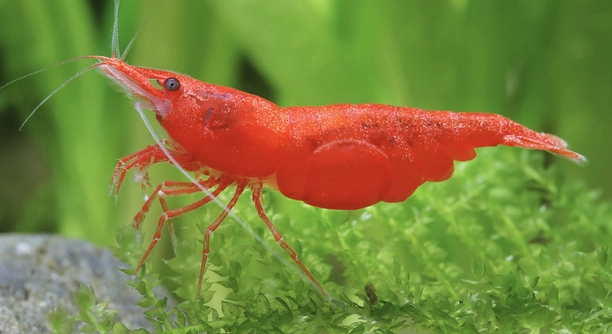
Have you ever watched shrimp move around in a tank and wondered how they seem to find food so quickly? These small creatures may be simpler than we think, yet they display surprising behaviors in their search for meals. Observing shrimp can reveal insights about how even tiny animals interact with their environment.
Shrimp have been shown to remember locations where they found food. Experiments indicate that they use spatial memory to return to these sites efficiently. This ability helps them maximize energy intake and navigate their surroundings more effectively.
Understanding shrimp behavior goes beyond curiosity about feeding habits. Their memory and navigation skills can reveal much about aquatic ecosystems and animal cognition in general.
How Shrimp Find Their Food
Shrimp rely heavily on their senses to locate food. They use their antennae to detect chemical signals in the water, which guide them toward potential meals. Observations show that shrimp often explore familiar areas first, returning to places where they previously found food. This behavior suggests that shrimp not only respond to immediate stimuli but also remember successful feeding spots. Memory plays a key role in their daily routine, allowing them to minimize energy use while maximizing food intake. In addition to chemical cues, shrimp use visual and tactile signals to navigate. They can distinguish between different textures and shapes on the substrate, helping them identify edible items. Researchers have noted that shrimp sometimes revisit feeding areas multiple times, showing consistent patterns in their behavior. These small crustaceans demonstrate that even simple creatures can use memory and environmental cues to improve survival. Their feeding strategy is efficient and finely tuned to their habitats.
Shrimp combine memory with sensory input to find food efficiently. Their behavior is consistent and predictable when returning to known locations.
The way shrimp remember food locations reflects a balance between instinct and learned behavior. This memory helps them survive in complex environments where food may be scarce or hidden. By revisiting areas that provided nourishment, they reduce wasted energy and increase the likelihood of sustaining themselves. Studies on shrimp cognition suggest that even small brains can store spatial information effectively, challenging assumptions about memory limitations in invertebrates. Understanding how shrimp feed gives insight into their ecology and highlights the adaptive strategies they use in aquatic habitats. Their ability to track and return to food sources shows an impressive level of organization and environmental awareness for such tiny creatures.
Experiments on Shrimp Memory
Experiments show that shrimp can recall food locations over time, even after hours or days.
In controlled studies, shrimp were placed in tanks with multiple potential feeding spots. Researchers observed that shrimp consistently returned to previously rewarded areas rather than exploring randomly. When food was moved, shrimp adjusted their behavior, demonstrating flexibility in memory use. This suggests that shrimp are capable of forming mental maps of their surroundings. By remembering food locations, they conserve energy that would otherwise be spent searching randomly. Experiments also reveal that shrimp can learn from repeated experiences, reinforcing successful strategies. These findings provide evidence that memory is a significant factor in shrimp behavior. Researchers continue to explore how shrimp integrate sensory input with spatial memory. Understanding this process helps explain survival strategies in natural habitats and informs aquaculture practices, ensuring that shrimp have optimal conditions for feeding and growth. Memory, even in small animals, proves essential for efficient foraging and overall well-being.
How Shrimp Use Landmarks
Shrimp often rely on visual and physical landmarks to locate food. Rocks, plants, and tank edges serve as reference points, helping them navigate. This behavior shows that their memory is not purely chemical but also spatial, allowing them to remember where resources are located with accuracy.
Landmarks in the environment help shrimp move efficiently without wasting energy. By associating certain objects with feeding spots, shrimp reduce random exploration and increase the chance of finding food quickly. Researchers have observed that shrimp will return to the same location repeatedly when specific landmarks are present. When landmarks are moved or removed, shrimp may explore more until they adjust, demonstrating flexibility in their memory. This shows that shrimp combine multiple types of information, both sensory and spatial, to remember feeding sites and navigate their surroundings effectively.
Using landmarks also helps shrimp in more complex environments. In areas with multiple hiding spots or competing species, remembering visual cues can be the difference between finding food or going hungry. Shrimp may combine chemical signals with spatial memory, cross-referencing their surroundings to locate food reliably. This combination of strategies highlights how even small animals develop efficient behaviors that support survival. Observing shrimp in tanks or natural habitats shows consistent patterns in their use of landmarks, demonstrating that memory and environmental awareness work together to improve their foraging efficiency and success over time.
Memory Duration in Shrimp
Shrimp can remember feeding locations for several hours, sometimes even days. Their memory is short-term but reliable for routine feeding activities.
Studies indicate that shrimp retain spatial information long enough to revisit food sources consistently. Memory duration varies depending on environmental conditions and the frequency of food availability. When food is provided repeatedly at the same location, shrimp strengthen their memory of that area. If food is moved, shrimp adapt by exploring and forming new memory associations. This flexibility shows that shrimp memory is dynamic, supporting their ability to survive in changing conditions. Researchers continue to study how long shrimp retain memories under different circumstances.
The retention of memory allows shrimp to plan movements and optimize energy use. In natural settings, food may be sparse or hidden, so remembering locations is crucial for survival. Even small differences in memory duration can influence foraging success. Experiments show that shrimp can adapt to changes, updating their memory when feeding spots are altered. This indicates a level of cognitive processing that was once underestimated. Understanding memory in shrimp helps researchers learn more about invertebrate intelligence and behavior. By studying how shrimp remember and adapt, scientists gain insights into their strategies for feeding, navigating, and interacting with their environments in ways that support long-term survival.
Chemical Cues in Feeding
Shrimp use chemical signals in the water to locate food. These cues guide them toward edible substances and help them detect food from a distance. Chemical sensing is a key part of their ability to remember where meals are found.
These signals work alongside memory and landmarks. Shrimp can follow chemical trails back to feeding spots, even if the food is no longer visible. This combination of senses ensures they can efficiently find resources and reduces wasted energy during foraging.
Learning from Experience
Shrimp improve their feeding efficiency through repeated experiences. They remember which areas provided food in the past and adjust their behavior accordingly. Over time, this learning helps them prioritize locations that are more likely to yield successful foraging outcomes.
Environmental Impact
Changes in the environment affect shrimp memory and feeding. Altered landmarks or water conditions can make it harder for them to locate food, requiring adaptation and flexibility to maintain efficient foraging patterns.
FAQ
How long can shrimp remember where they found food?
Shrimp can remember feeding locations for several hours to a few days. Memory retention depends on how often they visit the spot and the consistency of food availability. When food is regularly placed in the same location, their memory strengthens, making it easier for them to return efficiently.
Do all shrimp species have the same memory abilities?
Not all species have identical memory capacity. Some shrimp, particularly those living in complex environments with many hiding spots and variable food sources, tend to have stronger spatial memory. Others in simpler habitats rely more on chemical cues than long-term memory. Memory abilities vary depending on environmental demands and survival needs.
How do shrimp use their senses to locate food?
Shrimp rely on a combination of chemical signals, visual landmarks, and tactile cues. Their antennae detect chemicals in the water, while their eyes and legs help them identify shapes, textures, and objects. These senses work together, allowing shrimp to remember feeding sites and navigate efficiently.
Can shrimp adapt if food locations change?
Yes, shrimp can adapt quickly when their usual feeding areas are moved or removed. They explore new areas and form new memory associations. This adaptability shows that their memory is flexible and can update based on environmental changes, ensuring they continue finding food reliably.
Does age affect shrimp memory?
Age can influence memory, but even young shrimp show the ability to remember food locations. Older shrimp may become more efficient at revisiting known spots due to repeated experience. Continuous exposure to familiar feeding sites reinforces memory across their lifespan.
Do shrimp communicate about food with each other?
Shrimp do not communicate directly about food in a complex way, but they may leave chemical trails that other shrimp can detect. These chemical signals provide indirect information about feeding activity, helping others locate areas where food has been found.
How do environmental changes impact shrimp memory?
Changes in water temperature, clarity, or habitat structure can affect how well shrimp remember feeding sites. Altered landmarks or disrupted chemical signals may force them to explore more, updating their memory. Shrimp show flexibility, but environmental stability generally improves feeding efficiency.
Is shrimp memory similar to that of fish or other animals?
Shrimp memory is simpler than that of many fish but still effective for survival. They rely on spatial and sensory cues rather than complex cognitive strategies. Their ability to remember and adapt demonstrates that even small invertebrates can form functional memory systems.
Can shrimp learn from repeated exposure to food sources?
Repeated exposure strengthens memory and increases foraging efficiency. Shrimp learn to associate specific areas with food, returning more quickly and accurately over time. This learned behavior reduces wasted energy and improves their chances of survival in competitive environments.
Do shrimp forget food locations over time?
Yes, shrimp can forget locations if they are not reinforced by repeated feeding. Short-term memory may fade after hours or days, especially if environmental cues change. Consistent feeding at the same spot helps maintain memory, while inconsistent conditions may require shrimp to relearn locations.
How do researchers study shrimp memory?
Researchers use controlled tanks with multiple potential feeding locations, tracking shrimp behavior over time. By observing how shrimp return to known food spots, adapt to changes, or follow chemical trails, scientists can measure memory duration, accuracy, and flexibility in feeding patterns.
Why is understanding shrimp memory important?
Studying shrimp memory provides insight into invertebrate cognition, survival strategies, and behavior. It helps improve aquaculture practices, ensuring that feeding conditions support growth and well-being. Understanding memory also sheds light on how small animals navigate complex environments efficiently.
Do shrimp use landmarks or just chemical cues?
Shrimp use both. Landmarks such as rocks, plants, and tank edges help with spatial navigation, while chemical cues indicate the presence of food. Combining these strategies allows shrimp to remember feeding locations accurately and adapt to changes in their environment.
Can shrimp remember multiple feeding locations?
Yes, shrimp can remember several locations at once. They tend to prioritize areas that have consistently provided food, but they are capable of recalling multiple spots and switching between them as needed. This ability helps them forage efficiently across their habitat.
Do stress or predators affect shrimp memory?
Stressful conditions or the presence of predators can impact how shrimp remember feeding locations. They may avoid certain areas temporarily or focus on safer spots. Memory remains functional but may be influenced by risk assessment and the need for survival.
How does shrimp memory benefit their survival?
Memory allows shrimp to locate food quickly, conserve energy, and avoid unnecessary exploration. Remembering reliable feeding spots increases their efficiency and supports survival in competitive or variable environments. Memory, combined with sensory input, is a key survival strategy for these small crustaceans.
Are there differences in memory between wild and tank-raised shrimp?
Wild shrimp may develop stronger spatial memory due to the complexity of their natural environment. Tank-raised shrimp can still remember food locations, but simpler habitats with fewer landmarks may limit the development of more refined memory skills. Environmental richness influences memory capacity.
Do shrimp rely more on memory or instinct?
Shrimp rely on both. Instinct drives basic foraging behavior, but memory enhances efficiency by helping them revisit successful feeding locations. The combination of instinctual responses and learned experiences allows shrimp to forage effectively and adapt to changing conditions.
Can shrimp teach other shrimp about food?
Direct teaching does not occur, but chemical trails and repeated activity at feeding spots provide indirect cues. Other shrimp may follow these signals and benefit from the experiences of their peers without conscious instruction.
Is shrimp memory affected by diet or nutrition?
Nutrition may influence overall health and alertness, which can affect how well shrimp remember feeding locations. A well-fed, healthy shrimp is likely to be more active, responsive to cues, and capable of efficiently recalling food sources.
Do shrimp remember danger as well as food?
Shrimp can learn to associate certain areas with danger, avoiding risky spots. Memory helps them balance the need for food with safety, demonstrating that memory serves multiple survival purposes beyond just locating food.
How accurate is shrimp memory?
Shrimp memory is generally reliable for returning to known feeding spots. While not perfect, it is sufficient for survival. Accuracy improves with repeated exposure and stable environmental cues, and shrimp can adjust if conditions change.
Can shrimp forget and then relearn feeding locations?
Yes, if a feeding site is unused or altered, shrimp may forget it temporarily. They are capable of relearning locations when food is reintroduced, demonstrating flexibility and the ability to update memory based on new experiences.
Does water temperature affect shrimp memory?
Temperature can influence metabolism and activity levels, indirectly affecting memory. Warmer water may increase foraging activity, while colder conditions may slow movement and reduce memory efficiency. Optimal temperatures support better memory performance and feeding behavior.
Are shrimp memory skills unique among crustaceans?
Memory abilities are common in many crustaceans, though the complexity varies. Shrimp demonstrate spatial and sensory memory that is effective for foraging. Comparisons show that memory is an adaptive trait across species, tailored to their ecological needs.
Do shrimp use trial and error when finding food?
Yes, trial and error plays a role. Shrimp explore new areas and remember which attempts were successful. Over time, they refine their behavior to focus on the most reliable feeding locations, improving efficiency and conserving energy.
Can shrimp recognize individual objects or just locations?
Shrimp primarily remember locations and spatial patterns rather than individual objects. Landmarks help them navigate, but recognition is based on position and context rather than detailed object identification. This strategy is sufficient for efficient foraging in their environment.
How quickly can shrimp form a memory of a new feeding spot?
Shrimp can form a memory after just a few successful feeding experiences. Repetition reinforces the memory, making it more reliable. They adjust quickly to changes, demonstrating that learning and memory are active processes that support their daily foraging routines.
Do shrimp lose memory when molting?
Molting does not appear to erase memory. Shrimp retain learned locations and behaviors after shedding their exoskeleton, allowing them to continue efficient foraging without starting from scratch. Memory persists through these physiological changes.
Can shrimp remember seasonal changes in food availability?
Shrimp adjust behavior based on recurring patterns, though their memory is better suited for short-term recall. They can learn to exploit areas when food is consistently available but rely on environmental cues and adaptability to handle long-term seasonal variations.
Does light or darkness affect shrimp memory use?
Shrimp can navigate and remember locations in both light and darkness. Chemical cues become more important in low-light conditions, but visual landmarks remain useful when available. Memory integrates multiple inputs to ensure efficient foraging regardless of lighting.
Are shrimp more efficient foragers with memory than without?
Yes, memory allows shrimp to return to known food sources rather than searching randomly. This efficiency conserves energy and increases survival chances. Memory provides a clear advantage in both natural habitats and controlled environments where food may be limited.
Do shrimp communicate danger through memory cues?
Indirectly, yes. Shrimp that remember areas with threats may avoid them, and chemical traces can alert others. Memory guides behavior to reduce risk, helping shrimp navigate complex environments safely.
Can shrimp remember feeding spots in large groups?
Even in groups, shrimp remember specific locations. They may compete for food, but memory ensures individuals can efficiently locate resources. Group dynamics do not prevent effective spatial memory use.
How does shrimp memory affect aquaculture practices?
Knowing shrimp memory helps optimize feeding schedules and tank setups. Providing consistent locations for food encourages efficient foraging, reduces stress, and promotes growth. Memory-informed practices improve overall health and productivity in aquaculture systems.
Do shrimp have long-term memory like mammals?
Shrimp memory is mostly short- to medium-term. While not as complex as mammals, it is functional for survival. Their memory allows for repeated foraging success and adaptability, demonstrating effective cognition for their size and ecological niche.
Can shrimp remember areas with less food and avoid them?
Yes, shrimp tend to prioritize locations with reliable food and may avoid spots that repeatedly fail to provide resources. This selective memory helps conserve energy and focus efforts on productive areas.
How does shrimp memory compare to fish memory?
Shrimp memory is simpler and more specialized for survival tasks like foraging. Fish often show more complex spatial learning, but shrimp memory is highly effective for their ecological needs, combining chemical, visual, and spatial cues to navigate efficiently.
Do shrimp remember multiple types of food differently?
Shrimp can differentiate feeding locations based on food type. They learn which areas provide certain resources and may return preferentially to locations with higher-value food, showing that memory can be influenced by the quality of the reward.
Can shrimp share memory with offspring?
Shrimp do not directly teach offspring. However, inherited tendencies and observing environmental cues may indirectly influence young shrimp, giving them a starting advantage in finding food based on learned patterns in the habitat.
Do shrimp memory abilities change with captivity?
Captivity can simplify the environment, reducing the need for complex memory. Shrimp still remember feeding spots but may rely more on consistent cues like landmarks or chemical trails provided in tanks. Environmental enrichment can help maintain natural memory behaviors.
Are shrimp better at remembering than crabs or lobsters?
Memory abilities vary by species. Some crabs and lobsters show similar or even more advanced spatial memory. Shrimp memory is highly effective for their size and ecological niche but is not universally superior among crustaceans.
Do shrimp have seasonal memory patterns?
Shrimp primarily rely on short-term memory but can adjust behavior based on recurring conditions, like changes in food availability. Seasonal patterns are managed through flexibility and repeated exposure rather than true long-term memory.
How does shrimp memory affect survival in the wild?
Memory allows shrimp to find food quickly, avoid less productive areas, and conserve energy. Efficient foraging and adaptive behavior improve survival chances in complex, competitive habitats. Memory is a key tool for balancing feeding success with environmental challenges.
Do shrimp remember the same spot if food is removed?
Yes, shrimp may still return to previously rewarding locations even if food is gone. If repeated attempts fail, they eventually update memory and explore new areas, showing flexibility and the ability to adapt to changes.
Can shrimp learn from mistakes in feeding?
Shrimp learn which locations are less productive and adjust behavior. Repeated unsuccessful attempts reduce the likelihood of returning, demonstrating that memory and learning are intertwined in shaping efficient foraging strategies.
Do shrimp rely more on memory in complex environments?
Yes, in complex habitats with multiple hiding spots and variable food sources, memory is essential. Shrimp combine chemical, visual, and spatial cues to navigate efficiently and optimize foraging success, showing greater reliance on memory under these conditions.
Does memory affect shrimp social behavior?
Memory influences where shrimp forage and interact. Remembering successful feeding spots may reduce conflict by allowing individuals to access resources efficiently. Social interactions are indirectly shaped by spatial memory and resource availability.
How precise is shrimp spatial memory?
Shrimp memory is precise enough to return to specific feeding locations consistently. While not perfect, it effectively balances energy use and foraging success. Precision improves with repeated exposure and stable environmental cues, demonstrating practical accuracy for survival needs.
Do shrimp use memory for mating as well as feeding?
Primarily, shrimp memory supports feeding efficiency, but spatial awareness can indirectly aid mating by helping locate territories and partners. Memory allows them to navigate environments confidently, supporting overall survival and reproduction indirectly.
Can shrimp remember past predators?
Shrimp can associate areas with risk and adjust behavior to avoid danger. Memory helps them navigate safely, demonstrating that recall supports survival in addition to feeding efficiency.
Do shrimp memory patterns change in crowded conditions?
Crowding may alter foraging behavior and memory use. Shrimp may need to adjust feeding strategies, prioritize less contested spots, or follow chemical trails to avoid conflict. Memory remains functional but is applied adaptively in social contexts.
How is shrimp memory tested scientifically?
Researchers track movements in tanks with multiple feeding sites, observing how shrimp return to known locations, adapt to changes, and respond to chemical and visual cues. Patterns indicate memory duration, accuracy, and flexibility, providing measurable insight into their cognitive abilities.
Can shrimp remember in both fresh and saltwater environments?
Shrimp in both environments show memory for food locations. While chemical and spatial cues may differ, the fundamental ability to remember and return to feeding sites remains consistent across habitats.
Does memory help shrimp compete with other species?
Yes, memory gives shrimp an advantage in locating food efficiently, reducing time spent searching, and allowing them to respond to competitors. Remembering reliable food sources increases survival and access to resources in shared habitats.
Can shrimp remember food locations after being relocated?
Relocation requires shrimp to explore and form new memories. They may attempt previous known locations initially but quickly adapt, demonstrating flexible memory that updates based on current environmental conditions.
How do shrimp remember in murky or dark water?
In low-visibility conditions, chemical cues and tactile sensing become more important. Shrimp rely on memory of landmarks and previous experiences to navigate and locate food, compensating for reduced visual input.
Does memory vary between male and female shrimp?
Memory differences between sexes are not well-documented. Both males and females use spatial and sensory cues to locate food, suggesting similar memory abilities. Behavioral differences are more likely due to environmental roles than cognitive capacity.
Can shrimp remember human interaction in tanks?
Shrimp may recognize consistent human presence indirectly through food delivery patterns. They can anticipate feeding times or locations, showing that memory responds to repeated stimuli, even from outside their species.
How does shrimp memory develop over time?
Memory strengthens with repeated experiences. Young shrimp learn feeding locations quickly, and repeated exposure improves recall. Memory development is shaped by environmental complexity, food availability, and frequency of encounters, supporting survival.
Are shrimp memory skills inherited?
Direct inheritance of memory is unlikely, but tendencies for spatial awareness and responsiveness to cues may be passed genetically. Learned memory still depends on individual experiences and environmental interaction.
Do shrimp remember in group feeding versus solo feeding?
Memory functions in both contexts. In groups, shrimp may observe chemical trails or repeated activity, enhancing efficiency. Solo feeding relies solely on individual memory and sensory input. Both approaches support locating food reliably.
Can shrimp remember in artificial habitats like aquariums?
Yes, shrimp adapt to artificial conditions and remember feeding spots. Consistent landmarks, chemical cues, and repeated feeding help maintain memory, showing that their cognitive abilities function outside natural habitats.
Do shrimp use memory for hiding as well as feeding?
Memory helps shrimp locate safe spots repeatedly, balancing feeding needs with protection from predators. Spatial awareness supports both foraging and safety, demonstrating versatile use of memory in survival strategies.
Can shrimp remember multiple types of landmarks?
Shrimp can recognize and use several landmarks in combination. Rocks, plants, and tank edges can all serve as reference points. This helps them navigate efficiently and return to food sources accurately, showing practical spatial memory.
Does memory affect shrimp growth or health?
Efficient memory allows shrimp to find food with less wasted energy, supporting growth and well-being. Reduced stress and reliable feeding increase overall health, showing an indirect but important link between memory and physiology.
Can shrimp remember in different water currents?
Shrimp adapt to water flow, using memory alongside sensory input. They adjust routes to feeding locations depending on current strength and direction, demonstrating flexible memory that integrates environmental conditions for effective foraging.
How do shrimp combine memory with instinct?
Instinct drives basic movement and foraging, while memory refines behavior by recalling successful feeding spots. This combination allows shrimp to act efficiently, adapting to both known and changing conditions in their habitat.
Are there limits to what shrimp can remember?
Shrimp memory is effective for survival tasks like finding food and avoiding danger, but it is limited compared to higher animals. They do not form complex associations or abstract concepts, focusing instead on practical, spatial, and sensory information that supports daily survival.
Do shrimp show preference for certain remembered locations?
Yes, shrimp tend to favor areas that consistently provide food. Memory guides them to prioritize these locations, optimizing foraging efficiency and minimizing energy expenditure during exploration.
Can shrimp retain memory after being isolated?
Isolation does not erase memory. Shrimp retain knowledge of previous feeding sites and landmarks, though social cues may be reduced. Memory persists independently, ensuring they can continue efficient foraging alone.
How does memory help shrimp respond to predators?
Memory allows shrimp to recall risky areas and avoid them. By remembering where threats were encountered, shrimp reduce exposure to predators, using past experience to inform safer movements while still accessing food.
Can shrimp remember when food is less abundant?
Shrimp adjust behavior when food availability changes. Memory helps them focus on previously successful areas while exploring new spots if necessary, balancing efficiency with adaptability to ensure survival in varying conditions.
Do shrimp remember seasonal migration patterns?
Memory for migration is limited, but shrimp may respond to recurring environmental cues that signal movement or food availability. Short-term memory and sensory input guide adaptive behavior rather than true long-term migratory memory.
Can shrimp remember past environmental conditions?
Shrimp memory
Shrimp may seem like simple creatures, but their behavior shows they are more capable than they appear. They rely on a mix of memory, sensory input, and environmental cues to find food efficiently. By remembering the locations where they previously found meals, shrimp reduce wasted effort and conserve energy. Their ability to combine chemical signals, visual landmarks, and tactile information allows them to navigate their surroundings with surprising accuracy. Even though their brains are tiny compared to larger animals, shrimp can still form memories that support survival, showing that intelligence can exist in many forms across different species.
Memory plays a central role in shrimp feeding behavior. They are able to return to familiar spots repeatedly, demonstrating that short-term memory is sufficient to guide routine activities. At the same time, shrimp can adapt when conditions change, such as when food locations are moved or landmarks are altered. This flexibility is important in both natural and artificial habitats, allowing shrimp to survive in varied environments. Observations of shrimp learning from repeated experiences suggest that memory is dynamic. They do not just act on instinct alone; rather, they integrate past experiences with current cues to make decisions. This combination of learning and memory highlights how even small invertebrates have evolved strategies to maximize their chances of finding food and staying safe.
Understanding shrimp memory can also inform how we care for them in aquaculture and research settings. Providing consistent feeding locations and stable environmental cues can improve their efficiency and reduce stress, supporting their overall health. Studying their memory also provides insights into invertebrate cognition more broadly, revealing how even simple organisms develop practical strategies to navigate their environment. Shrimp memory is not complex in the way mammal or bird memory is, but it is highly functional. Their ability to recall locations, follow chemical signals, and adjust to changing conditions demonstrates an impressive balance between instinct and learned behavior. These behaviors show that survival in the aquatic world often depends on more than size or speed—it depends on the ability to remember and adapt. By observing and understanding these small crustaceans, we gain a better appreciation for the subtle ways animals use memory to thrive in their habitats.

Hello,
If you enjoy the content that we create, please consider saying a "Thank You!" by leaving a tip.
Every little bit helps us continue crafting quality advice that supports the health, happiness, and well-being of pets around the world, for pets of all shapes, sizes, and species.
We really appreciate the kindness and support that you show us!