
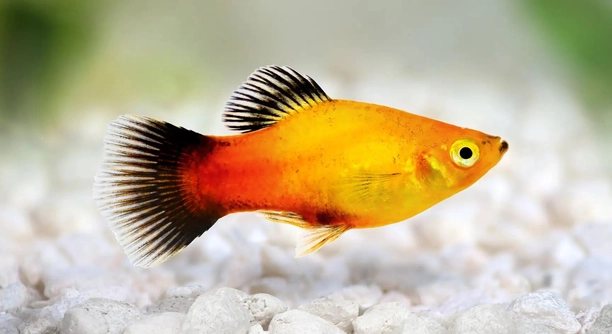
Have you ever watched your platy swim around and wondered if it’s capable of more than just paddling in circles?
Platies can learn to navigate mazes through repeated exposure and positive reinforcement. Their ability to recognize patterns and remember pathways demonstrates simple problem-solving and spatial learning, similar to what is seen in other small fish species.
Training platies in this way offers insight into their mental abilities and adds variety to their environment.
How Platies Learn in Simple Setups
Platies may seem like simple fish, but they are capable of learning when given the right environment. In basic maze setups, researchers noticed that platies improved their time and accuracy after several attempts. They started to remember turns and react to visual cues placed in the maze. These small fish rely on their ability to recognize patterns and familiar objects. Food rewards often motivate them, helping reinforce correct choices. With consistency, platies become quicker and more confident in navigating through simple layouts. While they do not have the same memory as larger animals, their progress shows they are not just swimming randomly. Their behavior suggests a form of trial and error learning, where repeated exposure helps them develop a reliable strategy. This makes them more intelligent than they are often given credit for. Many fish keepers overlook how mentally active platies can be when properly stimulated.
Most of this learning happens when the maze stays consistent, with visible markers and regular rewards.
Over time, platies start associating parts of the maze with the reward. This shows they are forming habits, not just reacting by chance. Simple setups give them a fair chance to show what they can do.
Tips for Training Your Platies at Home
Start by creating a very basic maze using safe materials in their tank.
Keep it simple at first—use just a few turns and place food at the end. Encourage your platy to explore by gently guiding it, but don’t force anything. Bright objects or shapes can help direct them, especially when placed at turning points. Repeat the setup daily to help them remember the path. Eventually, they will begin to associate certain shapes or directions with the reward. Try not to change the layout too often, since too many changes may confuse them. A consistent environment helps them build recognition. Keep each training session short, around ten minutes. Watch their reactions and adjust the maze only once they seem comfortable. Never overcrowd the tank during this process. It’s also important to make sure the water conditions stay stable, as stress can affect their ability to learn. With time and patience, many platies show noticeable improvement.
What to Avoid When Training
Avoid using strong currents or overly tall decorations that block the view of the maze. These can stress your platy or cause confusion, making it harder for them to learn where to go or what to follow.
Loud environments or sudden movements around the tank can also disrupt their focus. Too much noise or activity near the aquarium might cause your platy to freeze or hide, which interrupts training. Changing the maze layout too often is another common mistake. If your platy has just started learning a path, introducing new turns or decorations can reset its progress. Also, avoid overcrowding the tank during sessions—other fish may interfere or distract your platy. Using food that sinks too fast or clouds the water can make rewards harder to find. Stick with visible, clean options. Keeping the environment stable is key to successful learning. Platies do best when things remain predictable.
Skipping rest days between sessions can slow down learning. Training every single day may sound helpful, but it can actually cause more stress than growth. A rest day lets them process and recover. Watch for signs of stress like rapid swimming or hiding, and always adjust based on their behavior and comfort levels.
How to Tell if Your Platy is Learning
Look for signs like your platy swimming directly toward the reward without hesitation. If it makes fewer wrong turns and moves with more confidence, it’s likely remembering the path and learning what to expect at each step.
Consistent performance is one of the clearest signs. When your platy repeats the correct path over several sessions, it shows memory development. You may also notice that it pauses less and swims with more purpose. If your platy starts reacting to visual cues, such as colors or shapes you placed earlier, that’s a strong sign it’s making associations. Timing is another clue—if your platy gets to the reward faster with each session, it means learning is happening. Just remember, some fish learn faster than others. If progress seems slow, try adjusting one thing at a time and watch how they respond. Being patient and staying consistent makes a difference.
Do Platies Enjoy This Kind of Activity
Platies seem to respond well when given gentle challenges. Many show curiosity and become more active when mazes are added to their environment. If the setup is calm and rewarding, it can turn into something they engage with naturally.
This kind of stimulation may help reduce boredom in tanks with limited decoration. Platies often appear more alert and interactive during sessions. When the activity is kept short and positive, it can become part of their daily routine without causing stress or frustration.
How This Affects Other Tank Mates
If you’re training one platy in a shared tank, the other fish might get in the way. Curious tank mates may follow or interfere, which can confuse the one you’re trying to teach. It’s better to move the platy to a separate area during training. This helps avoid distraction and keeps the environment calm.
Final Thoughts on Platy Learning
Even simple efforts to train your platy can reveal just how capable these small fish really are.
FAQ
Can all platies learn to navigate mazes?
Not all platies will respond the same way to training. Some pick it up quickly, while others show little interest. Age, personality, and environment all play a role. Younger platies often explore more and may adapt faster. However, with consistency and a calm setting, most healthy platies can show some improvement.
How long does it take for a platy to learn a maze?
It varies. Some platies start recognizing the path after just a few sessions, while others may take a few weeks. It depends on how often you train, how simple the maze is, and how consistent the rewards are. Short daily sessions usually bring the best results without causing stress.
What type of reward works best?
Small floating food pellets or flakes usually work well. Choose something that your platy likes but doesn’t cloud the water. If the food is too large or sinks too fast, it might not be effective. The key is to use it right after your platy finishes the maze so the connection stays clear.
Can I train multiple platies at the same time?
It’s not recommended. Training multiple platies in the same maze often causes distractions. They may follow each other, fight over the food, or block the path. If you want to train more than one, it’s better to do it one at a time in a separate setup or sectioned area.
Do platies get bored with the same maze?
Yes, over time they may lose interest if the maze doesn’t change or if there’s no challenge. Once they’ve mastered a setup, you can slightly increase the difficulty by adding one or two new elements. Just avoid making too many changes at once, as that can confuse them or reset progress.
Is maze training safe for pregnant platies?
It’s better to avoid training pregnant platies. The added movement and stimulation may cause stress. Pregnant platies often prefer calm, low-activity environments. If you notice one of your platies is pregnant, give her time to rest and avoid extra activities until after she has given birth and recovered.
Can I make a maze using items I already have?
Yes. You can use clean plastic plants, smooth stones, and aquarium-safe decorations. Just make sure nothing has sharp edges or could trap the fish. Arrange the objects to create simple paths and use markers like colored shapes to guide your platy. Keep everything stable so nothing shifts during training.
Do platies remember the maze long-term?
If trained consistently, many platies remember the path for several days or more. However, if training stops completely or the maze is removed, the memory may fade over time. Reinforcement is important. A few short sessions each week can help them keep the memory fresh.
Can maze training help with tank aggression or boredom?
In some cases, yes. Giving your platy a task can redirect its energy and reduce signs of stress or boredom. It may also help reduce mild aggression by keeping it occupied. However, this won’t fix serious behavioral issues. If aggression continues, it’s important to look at tank size, stocking, and water quality.
What signs show a platy is stressed during training?
Watch for hiding, rapid swimming, loss of color, or a lack of interest in food. These are signs that your platy may be overwhelmed or needs a break. If any of these appear, stop the training for a day or two and make sure your tank conditions are stable.
Final Thoughts
Training platies to navigate mazes may seem like a small idea, but it can reveal a lot about how they think and react. These fish are more aware and responsive than many people assume. With just a bit of structure and patience, platies can show learning behavior and make steady progress. It’s not about turning them into perfect maze solvers, but more about offering them a chance to engage in a different way. Even the simplest training setup gives them a new activity that keeps them mentally active. Many fish keepers focus only on feeding and tank cleaning, but adding gentle challenges can help your fish stay more balanced and curious.
Not every platy will show the same level of learning. Some may pick up on the path and visual cues right away, while others take longer or show little change. That’s normal. Just like other animals, fish have different personalities and comfort levels. What matters is creating a calm and safe environment where your platy feels at ease. Forcing or rushing the process won’t lead to better results. Instead, short and consistent sessions help build confidence. It’s also important to give them time to rest between training so they don’t get overwhelmed. Watching their behavior closely is the best way to know when to continue or pause.
Maze training is not something you need to do daily, and it doesn’t require expensive gear. With a little creativity, you can use objects you already have to create interesting paths. The goal is to provide gentle stimulation, not competition. If done well, maze training can become a fun part of your care routine. It brings a new layer of interaction to the tank and can even help you notice other things about your fish—like changes in energy or behavior. Over time, this can help you better understand your platy’s needs. While maze training isn’t necessary for every tank, it’s a simple way to give your fish something extra. Whether or not your platy masters the maze, the activity itself can still offer value.

Hello,
If you enjoy the content that we create, please consider saying a "Thank You!" by leaving a tip.
Every little bit helps us continue crafting quality advice that supports the health, happiness, and well-being of pets around the world, for pets of all shapes, sizes, and species.
We really appreciate the kindness and support that you show us!