
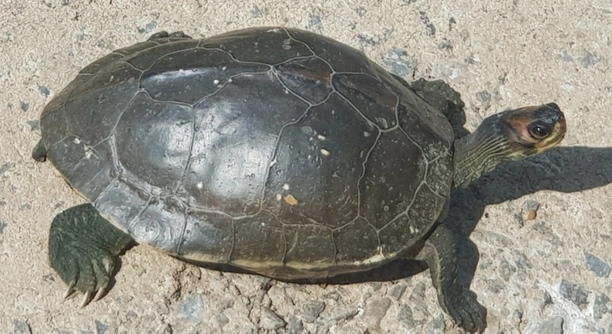
Indian Roofed Tortoises are fascinating creatures, often observed in their natural habitats or as pets. Their behaviors can be quite mysterious, and many people wonder about their ability to recognize themselves and their surroundings. This article explores their reaction to reflections.
Research has shown that many animals, including some reptiles, can recognize their reflection, but Indian Roofed Tortoises are not typically known to pass the mirror test, which is used to determine self-recognition in animals.
Understanding how these tortoises interact with their environment can provide insight into their cognitive abilities. From their behavior around mirrors to how they react to other stimuli, there’s much more to uncover.
What Do Tortoises See in the Mirror?
Indian Roofed Tortoises, like most reptiles, don’t seem to recognize themselves in mirrors. This is often because they lack the cognitive abilities to understand what a reflection means. While animals like elephants and dolphins have been shown to pass the mirror test, reptiles, including tortoises, tend to treat mirrors more like obstacles or curiosities. Their response is usually neutral, sometimes ignoring the reflection altogether. It is important to remember that reptiles have different brain structures and sensory processing systems, so they don’t interpret visual information the same way humans or mammals do. They are more likely to focus on physical stimuli that directly affect their behavior, such as food or movement around them. In short, a mirror might confuse them or simply not register as an important object.
Mirror tests are often used to assess self-awareness in animals, but they aren’t the definitive way to determine intelligence. Tortoises may not see themselves in mirrors, but that doesn’t mean they aren’t intelligent in their own way. They are highly skilled at navigating their environments, finding food, and avoiding predators. Their cognitive abilities may be adapted to their natural needs rather than tasks like recognizing reflections.
In contrast to mammals, reptiles such as the Indian Roofed Tortoise rely more on sensory cues like smell and touch to understand their surroundings. These skills help them survive in the wild, where relying on reflections would be unnecessary. Their focus on practical environmental interactions rather than abstract thought is why a mirror doesn’t seem to hold any significance for them.
The Mirror Test and Self-Recognition
The mirror test has been a popular method for studying animal intelligence and self-awareness. It involves placing a mark on an animal’s body where they can’t see it and then showing them a mirror to see if they will attempt to remove or investigate the mark. Most reptiles, including Indian Roofed Tortoises, don’t engage in this behavior. They typically show no interest in the reflection or simply view it as a part of their environment. While many mammals, birds, and even some fish can recognize themselves, the same can’t be said for reptiles.
Interestingly, some species of tortoises have been shown to exhibit a form of problem-solving behavior, but this doesn’t always translate into the ability to recognize themselves in a mirror. For example, certain species have been observed navigating complex mazes or using tools, but these skills are different from the cognitive process required for self-recognition. Reptiles have evolved in ways that prioritize survival skills rather than abstract thinking, which might explain why they don’t pass the mirror test. Their natural behavior shows that their intelligence is geared toward practicality, not self-awareness in the way mammals experience it.
Thus, while Indian Roofed Tortoises may not understand the concept of a mirror reflection, they are still remarkable animals. Their strengths lie in their ability to adapt to their surroundings, find food, and interact with their environment in ways that help them thrive.
How Tortoises Respond to Other Visual Stimuli
Tortoises are more likely to respond to movement or other environmental cues than their own reflection. When they see something moving, like a potential predator or food, they react accordingly. Their visual system is geared toward noticing changes in their surroundings, rather than focusing on stationary images like reflections.
Tortoises rely on sight for survival, but their vision is not as advanced as mammals. They can detect motion, and their behavior often reflects this. When they see movement, their instinct is to focus on it, either as a threat or as a possible food source. However, static objects, like a mirror, typically don’t grab their attention unless they can interact with them in a meaningful way. Their response to visual stimuli is about practicality, often leading to behaviors that enhance their chances of survival.
This limited focus on static images means that their understanding of the world is rooted in immediate, useful stimuli rather than abstract or non-interactive objects. Unlike humans or other animals with more complex cognitive abilities, tortoises prioritize behaviors that support their basic needs, such as finding food or avoiding danger.
Can Tortoises Learn From Their Reflection?
There is little evidence to suggest that tortoises can learn from their reflection. Their brain structure and natural instincts make them more reliant on direct interaction with their environment. Unlike some animals that can learn through observing reflections, tortoises do not appear to show any change in behavior over time when exposed to mirrors.
Though tortoises are capable of learning and adapting to their surroundings, this usually happens through direct experience. They can become accustomed to the presence of a mirror, but they don’t seem to connect the reflection to themselves or learn from it. Instead, they may eventually ignore the mirror entirely if they find no practical use for it in their day-to-day behavior.
Even though tortoises are not known to learn from their reflection, they have other ways of adapting. They learn to recognize their environment, figure out where to find food, and identify safe places to retreat. These skills are learned through trial and error rather than by reflecting on themselves in a mirror.
Are Mirrors Stressful for Tortoises?
Mirrors may cause confusion or stress for Indian Roofed Tortoises. When exposed to their reflection, they might become agitated or attempt to interact with what they see. Their behavior suggests that they do not understand the reflection and may find it puzzling or even threatening.
This stress is usually temporary and fades once the tortoise becomes accustomed to the mirror. However, some tortoises may show prolonged curiosity, often attempting to interact with the mirror or display defensive behaviors. It’s important to avoid prolonged exposure to mirrors for the well-being of the tortoise, as unnecessary stress could affect their health.
How Do Tortoises Use Their Vision?
Tortoises rely on their vision mainly for detecting movement in their environment, which is crucial for their survival. Their ability to detect changes around them helps them respond to threats or locate food. While they are not known to recognize their reflection, they use their eyesight practically.
Their visual skills are adapted to help them with navigation and identifying objects of interest. Tortoises may focus on movement, such as predators or potential mates, more than stationary objects. Their vision is attuned to the natural world, where constant changes are more relevant than reflections that don’t have a direct impact on their behavior.
Can Tortoises Recognize Other Tortoises?
Yes, tortoises can recognize each other. They have a good sense of smell and can identify familiar individuals through scent, which helps them distinguish between others of their species. This sense of smell is crucial in social interactions and territory recognition.
FAQ
Can Indian Roofed Tortoises see in color?
Indian Roofed Tortoises, like many reptiles, have limited color vision. They can see some colors, but their vision is not as advanced as that of humans or certain mammals. Their eyes are better suited for detecting movement and contrasts, which is more useful for survival. While they may see some colors, they likely don’t have the ability to perceive the full spectrum like humans. Tortoises mainly rely on their other senses, such as smell and touch, for understanding their surroundings.
Do Indian Roofed Tortoises have a good sense of smell?
Yes, tortoises have a well-developed sense of smell. It helps them find food, detect potential mates, and recognize other tortoises. Their sense of smell is crucial for survival, as it helps them locate resources and avoid danger. This sense is more important than their vision in many cases, as they rely on it to understand their environment and navigate effectively.
Are Indian Roofed Tortoises social animals?
Indian Roofed Tortoises are generally solitary animals. They do not form complex social structures like some other animals, but they do interact with other tortoises in specific situations, such as during mating season. Outside of these times, tortoises tend to live alone and are not particularly social. They are independent creatures that prefer spending time on their own.
Can Indian Roofed Tortoises bond with their owners?
Tortoises can become familiar with their owners, but they don’t form the same kind of bond as more social pets like dogs or cats. They can recognize their caretakers over time, especially when it comes to feeding and handling. However, tortoises don’t seek out affection or interaction in the same way. Their connection with humans is more about routine and trust rather than emotional bonding.
Do Indian Roofed Tortoises enjoy being handled?
Most tortoises are not fond of being handled, as they prefer their personal space. Handling can cause them stress, particularly if done too often or incorrectly. It’s important to handle tortoises gently and minimize the time they spend out of their environment. Tortoises may tolerate handling if they feel secure, but it’s best to let them roam in their habitat to reduce stress.
What kind of habitat do Indian Roofed Tortoises need?
Indian Roofed Tortoises require a warm and dry habitat. They thrive in environments with plenty of space to move around, hide, and explore. A secure enclosure with access to a variety of hiding spots, rocks, and water is ideal. They also need a temperature range of 75-90°F (24-32°C) to stay healthy. It’s crucial to provide UVB lighting for their shell and bone health.
Do Indian Roofed Tortoises need water daily?
While they don’t need to be submerged in water like some other reptiles, Indian Roofed Tortoises do require access to fresh water daily. They may not drink water as frequently as other animals, but they do need to stay hydrated. Providing a shallow water dish allows them to drink when necessary and helps with hydration, especially in warm environments.
What do Indian Roofed Tortoises eat?
Indian Roofed Tortoises are primarily herbivores and eat a variety of leafy greens, flowers, fruits, and vegetables. Their diet should consist of high-fiber, low-protein foods like dandelion greens, clover, and various leafy lettuces. They can also eat some fruits like apples or melons in moderation. It’s important to avoid feeding them high-oxalate foods, like spinach, in large quantities as it can affect calcium absorption.
How long do Indian Roofed Tortoises live?
Indian Roofed Tortoises can live for many years, often reaching an age of 50 to 80 years or more in captivity, given the proper care. In the wild, their lifespan may be shorter due to factors like predation and environmental conditions. In captivity, with proper care, they can live a long and healthy life. The key to a long life is providing them with the right habitat, diet, and medical care.
Are Indian Roofed Tortoises good pets for beginners?
Indian Roofed Tortoises can be a good pet for beginners, but they require commitment and proper care. They need a spacious enclosure, a balanced diet, and a consistent temperature to stay healthy. While they are not as interactive as some pets, they are relatively easy to care for if you are prepared to meet their needs. Beginners should do thorough research to ensure they understand the requirements of keeping a tortoise as a pet.
How often do Indian Roofed Tortoises eat?
Indian Roofed Tortoises should be fed once a day, especially when they are young and growing. As adults, they can be fed every other day. Their diet should be varied and consist of leafy greens, fruits, and vegetables. It’s important not to overfeed them, as obesity can be a health issue. Regular, balanced meals will keep them healthy and active.
What temperature should Indian Roofed Tortoises be kept at?
Indian Roofed Tortoises need a warm environment to thrive. Their enclosure should maintain a temperature between 75-90°F (24-32°C). They also require a basking area that is slightly warmer, around 95°F (35°C). Keeping the right temperature is crucial for their digestion, metabolism, and overall health. Without the proper heat and lighting, their immune system can weaken, leading to health issues.
Do Indian Roofed Tortoises shed their shells?
No, tortoises do not shed their shells. Unlike snakes or lizards that shed their skin, tortoises’ shells grow with them throughout their life. The shell grows in layers, and over time, the outermost layers may wear down or become damaged. However, this doesn’t happen in the same way as skin shedding. Regular care and a proper diet will keep the shell healthy and strong.
Can Indian Roofed Tortoises swim?
Indian Roofed Tortoises are not natural swimmers. While they can swim in short bursts, they prefer to stay on land. They are more comfortable in shallow water, where they can drink or soak without the risk of drowning. It’s important not to force them into deep water, as they are not built for swimming long distances.
Final Thoughts
Indian Roofed Tortoises are fascinating creatures with unique behaviors and needs. While they may not recognize their reflection in mirrors or form deep social bonds like other animals, they still have many remarkable traits. Their reliance on their senses, especially smell, for survival shows how well-adapted they are to their environment. They may not need complex cognitive abilities to thrive, but their basic instincts and intelligence help them navigate the world in a way that ensures their survival. Understanding their limitations and strengths helps pet owners provide a better environment and care.
While these tortoises do not pass the mirror test and may not form attachments in the same way as mammals, they can still live fulfilling lives. They are not overly demanding but require a suitable habitat with the right temperature, space, and diet. Their independent nature means they don’t crave constant interaction, but they do enjoy a safe and enriched environment. Offering them proper care means being mindful of their specific needs, such as hydration, appropriate food, and a balanced temperature.
In conclusion, Indian Roofed Tortoises are low-maintenance pets, but they do require some effort to care for properly. Their behavior might seem puzzling at times, especially regarding their lack of self-recognition in mirrors, but it’s important to remember that they are simply following their instincts. By respecting their nature and understanding their basic needs, you can provide them with a long and healthy life. Their unique way of experiencing the world offers a glimpse into how different species interact with their surroundings, even if it’s not the way we might expect.

Hello,
If you enjoy the content that we create, please consider saying a "Thank You!" by leaving a tip.
Every little bit helps us continue crafting quality advice that supports the health, happiness, and well-being of pets around the world, for pets of all shapes, sizes, and species.
We really appreciate the kindness and support that you show us!