
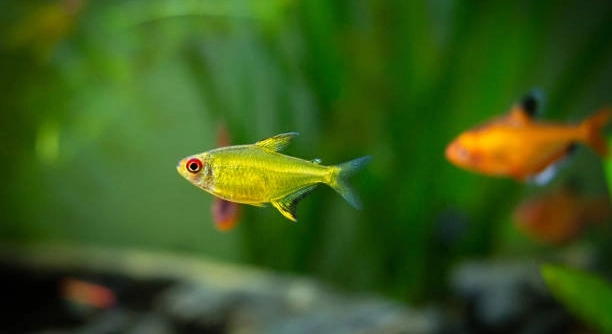
Many fish are known for their graceful movements and colorful displays, but arowanas stand out with their intelligence and curiosity. Observing their environment is a key part of how they interact with other fish in aquariums.
Arowanas are capable of learning from watching other fish, as they exhibit observational learning behaviors. By monitoring the actions and reactions of tank mates, arowanas can adjust their own behavior and feeding strategies effectively over time.
Understanding how arowanas learn can help aquarium owners provide a more enriching environment and promote healthier interactions among their fish.
How Arowanas Observe Other Fish
Arowanas are naturally attentive creatures, often scanning their tank for movement and activity. They notice when other fish find food, interact, or respond to new objects. This observation helps them learn about feeding patterns and social hierarchies. In many cases, younger or less experienced arowanas will mimic the actions of more confident fish to improve their own skills. Watching other fish also teaches arowanas what behaviors are safe and which to avoid. Over time, this can make them more efficient hunters and more aware of potential threats. Even subtle movements, like changes in swimming speed or direction, can provide learning cues. Tank setup and visual access to other fish influence how much they can observe. The size and type of other fish also matter, as larger or more active species tend to be more noticeable. Providing diverse stimuli encourages arowanas to practice and adapt behaviors.
Observing others is a gradual process that improves their instincts and responsiveness in the tank environment.
These learning moments are not just about food. Arowanas notice interactions, such as chasing or hiding, and adjust their behavior accordingly. This can reduce conflicts and improve social balance. By offering a variety of tank mates and environments, owners can support these learning opportunities, helping arowanas stay mentally sharp and active. Regular observation of their responses can give clues about health and stress levels, allowing better care and management.
Signs Your Arowana is Learning
Arowanas may follow other fish to food or explore areas they previously avoided.
When arowana watches carefully, it begins to imitate feeding strategies and movement patterns. They may suddenly show increased confidence or try new techniques for catching food, reflecting the lessons observed. Over weeks, these learned behaviors become consistent, showing the arowana is processing information. Interaction with other fish often improves, as they mimic appropriate social behaviors, avoiding unnecessary aggression or conflict. Changes in how they approach enrichment items, such as floating plants or small decorations, also indicate learning. Recording these behaviors helps track development and adjust the environment to maintain stimulation. Arowanas may also demonstrate patience, waiting for other fish to finish before approaching food, which is a clear sign of observational learning. Overall, attentive monitoring and thoughtful tank arrangements can enhance these learning behaviors and create a healthier, more interactive environment.
Encouraging Observational Learning
Providing arowanas with other fish to watch can improve their feeding and social behaviors. Visual access to active or confident fish encourages them to mimic techniques and responses, supporting mental stimulation and adaptability in the tank environment.
Arowanas respond well when they can see how other fish approach food or interact with their surroundings. By observing, they learn timing, positioning, and techniques that reduce errors or missed opportunities. For example, a shy arowana may notice a more confident fish eating from a specific area and then attempt the same approach. Even subtle behaviors, like watching how a fish navigates obstacles or reacts to changes in the tank, teach important lessons. Over time, this observational learning can improve their overall performance in daily activities and help them adapt to new stimuli more effectively. It also encourages natural instincts and keeps their mind active.
The type of fish provided for observation matters. Smaller, calm fish may teach patience, while larger or more active fish demonstrate agility and assertiveness. Careful selection helps the arowana learn relevant skills without creating stress. Consistent opportunities for observation strengthen the learning process, and varied scenarios improve adaptability. Owners can monitor changes to ensure the lessons are effective, adjusting tank layout or fish combinations as needed. Over time, the arowana becomes more responsive, confident, and socially aware, showing clear benefits from observational learning.
Best Practices for Tank Setup
Separating fish with clear partitions allows safe observation without conflict.
Clear partitions give arowanas the ability to watch other fish while avoiding direct confrontation or stress. This method encourages learning while maintaining safety and balance. By positioning these partitions near feeding areas, arowanas can observe feeding strategies and social interactions more effectively. Regularly changing the location of partitions or the fish on display keeps stimulation high and prevents boredom. It is important to monitor stress signals such as rapid gill movement or erratic swimming to ensure the arowana remains comfortable. Additionally, providing hiding spots on both sides of the partition allows each fish to retreat, promoting a secure environment. Over time, this setup encourages curiosity and observational learning without causing aggression or anxiety. Proper tank design enhances both the mental and physical health of arowanas while supporting natural learning behaviors.
Feeding Techniques Observed
Arowanas often mimic other fish when it comes to feeding. Watching successful strategies helps them adjust their approach and timing, improving efficiency and reducing wasted effort in capturing or finding food.
Observation also teaches patience. Arowanas may wait for other fish to finish or approach food more carefully, which reduces stress and conflict in the tank.
Social Behavior Development
Arowanas learn how to interact by observing dominance, play, and avoidance behaviors among tank mates. They may adopt similar patterns, reducing aggression and fostering smoother interactions. Over time, these observed behaviors help arowanas develop social cues, improving their ability to coexist with other species and respond to changes in the environment.
Impact of Environment
Tank layout, decorations, and hiding spots influence how well arowanas can observe and learn. Clear sightlines and varied terrain increase opportunities for mimicking behaviors effectively.
FAQ
Can arowanas learn from fish in different species?
Yes, arowanas can learn by observing fish of different species. They focus on behaviors rather than the species itself, such as feeding strategies or reactions to obstacles. While not every species interaction is beneficial, observing calm or active fish often teaches useful skills and social cues.
How long does it take for arowanas to show learned behavior?
Learning speed varies depending on the arowana’s age, temperament, and environment. Some fish begin mimicking behaviors within days, while others may need weeks of consistent observation. Repetition and safe observation opportunities are key to faster adaptation. Younger arowanas usually show quicker learning.
Do arowanas need visual access to other fish to learn effectively?
Yes, clear sightlines are important. Arowanas rely heavily on observation to pick up cues. Barriers that obscure view may reduce learning opportunities. Using transparent partitions allows safe observation and helps them process behaviors without stress or direct confrontation.
Will arowanas copy aggressive behavior?
Arowanas may imitate aggression, especially if the observed fish dominates territory or food sources. Careful selection of tank mates is important to prevent stress or escalation. Observing calm, confident fish often encourages positive behaviors instead of aggressive ones.
Can observation improve feeding efficiency?
Absolutely. Arowanas that watch how other fish locate and consume food often adopt similar techniques, reducing failed attempts and waste. They may learn proper timing, positioning, and even adapt to new food types more quickly by watching experienced fish.
Does tank size affect learning?
Yes, larger tanks with varied spaces provide better opportunities for observation. Open areas and clear sightlines allow arowanas to monitor other fish without interference. Crowded tanks may increase stress and limit the ability to learn effectively from their surroundings.
Are there signs that arowanas are learning from others?
Signs include mimicking feeding techniques, trying new swimming patterns, and adapting social behaviors. They may approach previously avoided areas or wait for others to finish before acting. These behaviors indicate active observation and mental processing.
Can observation help reduce stress?
Observation can reduce stress by teaching arowanas predictable behaviors of tank mates. Knowing what to expect, such as feeding routines or social hierarchies, helps them feel safer. However, too many aggressive or fast-moving fish can increase stress instead of reducing it.
Is it necessary to have multiple fish for learning?
While not strictly necessary, having other fish enhances learning opportunities. Arowanas learn from both mistakes and successes of others. Single fish may still learn through trial and error, but observing others accelerates behavioral development and environmental adaptation.
Should tank decorations be changed to encourage learning?
Yes, rearranging objects occasionally helps stimulate observation and problem-solving. It encourages arowanas to watch how others navigate or interact with obstacles. Consistent but varied environments support active learning and maintain mental engagement.
How can I monitor if learning is effective?
Observe changes in feeding efficiency, social interactions, and exploration habits. Documenting behaviors over days or weeks helps track progress. Noticeable improvement in timing, technique, and confidence indicates that observational learning is taking place.
Can arowanas forget behaviors they’ve learned?
Like many animals, arowanas can forget if behaviors are not reinforced. Regular opportunities to observe or practice learned actions help retain skills. Inconsistent exposure may result in temporary or partial loss of learned responses.
Does age affect learning ability?
Younger arowanas tend to learn faster because their brains are more flexible. Older fish can still learn, but it may require more repetition and patience. Consistent observation opportunities are important at any age.
Can observation replace training or feeding routines?
Observation supplements, but does not replace, proper feeding and care routines. It enhances natural behaviors and learning, but structured feeding, clean water, and safe environments remain essential for health and development.
Is it safe for arowanas to learn from aggressive fish?
Observing mild aggression can teach caution, but highly aggressive fish may stress the arowana. Selecting compatible tank mates is important to balance learning opportunities with safety. Monitoring interactions helps ensure observation remains beneficial rather than harmful.
How often should arowanas be exposed to other fish for learning?
Regular daily exposure is ideal, but not constant. Alternating periods of observation with calm, private time reduces stress while providing consistent learning opportunities. Short, repeated sessions often yield better results than prolonged, continuous exposure.
Can observational learning improve tank harmony?
Yes, when arowanas learn social cues, they often interact more smoothly with other fish. Mimicking calm or structured behaviors reduces unnecessary conflict and helps maintain a balanced tank environment. Proper observation opportunities promote both mental and social well-being.
Do arowanas require rewards to reinforce learning?
Rewards are not strictly necessary. Observational learning relies on mimicking and adapting behaviors naturally. However, providing food or enrichment after successful behavior can reinforce positive actions and encourage repeated practice, strengthening learned responses over time.
Can environmental stress impact learning?
Yes, high stress reduces attention and learning ability. Factors like overcrowding, poor water quality, or frequent disturbances can interfere with observational learning. Maintaining a calm, stable environment is crucial for effective behavioral development and adaptation.
Are there signs that observational learning is not working?
Signs include avoidance, aggression, or lack of interest in food or enrichment despite observation. These may indicate stress, unsuitable tank mates, or poor visibility. Adjusting the environment or fish selection can improve learning outcomes and overall well-being.
Does learning from others affect arowana intelligence long-term?
Consistent observational opportunities enhance problem-solving and adaptability. Over time, these experiences strengthen neural pathways, improving decision-making and responsiveness. Mental stimulation through observation supports arowanas’ cognitive development and overall activity levels.
Can observation replace environmental enrichment?
Observation complements, but does not replace, enrichment. Both are important. Watching other fish provides mental challenges, while toys, plants, and varied terrain offer physical stimulation. Together, they support healthy, balanced development.
Are there risks to letting arowanas observe too many fish?
Excessive visual stimuli can cause stress or confusion. Arowanas may become overstimulated or frustrated if they cannot interact safely. Limiting the number of visible fish and controlling observation periods ensures learning remains effective and stress-free.
How do I know which fish are best for my arowana to observe?
Ideal fish are calm, confident, and non-aggressive. They demonstrate behaviors the arowana can safely mimic, such as efficient feeding or smooth swimming. Avoid overly aggressive or highly territorial species, which can induce stress rather than support learning.
Can observational learning help with new tank setups?
Yes, arowanas adapt faster when they can watch other fish explore new spaces. Observing movement, hiding spots, and feeding zones helps reduce anxiety and encourages quicker adjustment to changes in the environment.
How important is repetition in observational learning?
Repetition solidifies learned behaviors. The more the arowana observes and practices, the stronger the response becomes. Consistent opportunities to mimic beneficial actions help maintain skills and ensure behaviors are retained over time.
Can observation improve hunting instincts in arowanas?
Yes, watching other fish locate and capture food can enhance hunting techniques. They learn timing, approach strategies, and spatial awareness. This observational experience helps arowanas become more efficient predators and confident feeders.
Is it possible for arowanas to overlearn from observation?
While overlearning is rare, excessive imitation of stressful or inappropriate behaviors can occur. Monitoring interactions and providing balanced opportunities ensures that observational learning remains beneficial rather than harmful.
Can observation help with disease prevention?
Indirectly, yes. By learning behaviors such as cautious movement, avoiding risky areas, or mimicking healthy feeding routines, arowanas may reduce stress-related vulnerability, which supports overall health. Observational learning alone cannot prevent disease, but it contributes to well-being.
Does the presence of a human affect observational learning?
Humans in the tank environment may influence attention. Some arowanas watch humans for cues, but consistent, non-threatening observation of other fish remains more effective for learning natural behaviors. Reducing unnecessary disturbances improves focus on tank mates.
Can observational learning replace socialization?
Observation is a form of indirect socialization. It enhances understanding of behaviors and improves interactions, but direct social experience is still necessary for developing complete social skills. Both observation and interaction together create the most balanced development.
Are there specific times when arowanas learn best?
Arowanas tend to learn efficiently during active periods, often around feeding times or when tank mates are moving. Calm periods may reduce attention and engagement. Timing observation opportunities with natural activity encourages better learning outcomes.
How do I measure success in observational learning?
Success is seen in consistent behavior changes, improved feeding efficiency, and smoother social interactions. Tracking these over days and weeks shows progress and confirms that observation is effectively contributing to skill development.
Can learning from observation reduce aggression in arowanas?
Yes, when arowanas mimic calm or appropriate social behaviors, they are less likely to engage in unnecessary conflict. Observing structured interactions teaches boundaries and patience, which improves overall tank harmony.
Does repeated observation of the same fish lead to boredom?
It can. Rotating fish or changing positions keeps stimulation high and encourages ongoing learning. Variety prevents monotony and maintains engagement, helping arowanas continue adapting and refining behaviors over time.
Can observational learning affect feeding hierarchy?
Yes, observing dominant fish teaches proper timing and positioning. Arowanas may adjust behavior to avoid conflicts or gain access efficiently, which improves feeding success while maintaining social balance.
Do arowanas learn better individually or in groups?
Groups provide more learning opportunities, but careful management is essential to avoid stress. Individual fish may learn slower but experience less conflict. Balancing group observation with personal space ensures effective learning.
How does age affect what arowanas learn from observation?
Younger arowanas absorb more behaviors quickly, while older fish may take longer but can still learn effectively. Tailoring observation opportunities to age ensures skills are appropriate and achievable for each fish.
Is observational learning permanent?
Behaviors can fade without reinforcement, but consistent practice or repeated exposure solidifies learning. Long-term retention is stronger when observation is paired with active engagement and safe opportunities to mimic.
Can observation help arowanas adapt to new tank mates?
Yes, watching how others behave and interact reduces uncertainty and stress. Arowanas can learn acceptable approaches and avoidance strategies, improving coexistence and minimizing conflict with new fish.
Does water clarity affect learning?
Yes, clear water is essential. Poor visibility reduces observation effectiveness, limiting learning opportunities. Maintaining clean, clear water ensures arowanas can see cues and fully benefit from observational learning.
Can observational learning improve overall tank health?
Indirectly, yes. Learning safe behaviors, reducing aggression, and improving feeding efficiency contributes to a calmer, more balanced environment, which supports the health of all fish.
Does personality influence learning ability?
Yes, naturally curious or attentive arowanas often learn faster. Shyer or less active fish may need more repetition and patience. Recognizing individual temperament helps tailor observation opportunities for maximum benefit.
Can observation encourage enrichment use?
Yes, watching others interact with objects or explore areas encourages arowanas to do the same. This stimulates mental activity, increases exercise, and supports natural instincts, enhancing overall well-being.
Are there limits to what arowanas can learn from observation?
Arowanas primarily learn behaviors relevant to survival, feeding, and social interaction. Complex problem-solving or tasks unrelated to their natural instincts may not be effectively learned through observation alone.
Observing arowanas in a tank shows just how attentive and intelligent they can be. These fish are not only graceful swimmers but also keen learners, constantly scanning their environment and noticing the behavior of other fish. By watching how tank mates approach food, interact with objects, or respond to changes, arowanas gather important information about their surroundings. This observational ability helps them adjust their own actions to fit the situation. For example, a shy arowana may become more confident after seeing a bolder fish approach a new food source. Similarly, watching other fish navigate obstacles or explore corners of the tank can encourage arowanas to try areas they previously avoided. Over time, these small lessons can make arowanas more efficient in feeding, more aware of potential risks, and better able to coexist with other fish. The mental stimulation gained from observing others also contributes to overall well-being, keeping them active and engaged.
Providing opportunities for arowanas to learn from others requires thoughtful tank management. Clear sightlines and appropriate tank mates are important to ensure observation is safe and effective. Transparent partitions can allow arowanas to watch other fish without the risk of confrontation or stress. Introducing both calm and more active species helps them learn a variety of behaviors, from patience to agility. Rotating fish or changing positions occasionally keeps stimulation high and prevents boredom, which supports continuous learning. Environmental features such as hiding spots, floating objects, or open swimming areas further encourage observation and practice. By carefully arranging the tank, owners can create situations that reinforce learning while maintaining harmony among all fish. Attention to water quality, tank size, and stress reduction also plays a role in effective observational learning, as fish are more likely to absorb lessons when they feel safe and comfortable.
Observational learning in arowanas is a slow but valuable process that benefits both mental and physical health. They may mimic feeding techniques, adopt social behaviors, and explore their environment with more confidence. This learning is not immediate but develops gradually with repeated opportunities to observe others. Younger arowanas may adapt faster, while older fish require patience and consistent exposure. While observation does not replace proper feeding, care, or enrichment, it enhances these practices by encouraging natural behavior and reducing stress. Arowanas that can watch and learn often demonstrate better social interactions, smoother feeding routines, and greater adaptability to new situations. Encouraging observational learning supports a well-rounded and engaging environment, allowing arowanas to thrive in captivity. Over time, this natural curiosity and ability to learn from others become part of what makes keeping arowanas both fascinating and rewarding, highlighting the importance of providing opportunities for safe and meaningful observation.

Hello,
If you enjoy the content that we create, please consider saying a "Thank You!" by leaving a tip.
Every little bit helps us continue crafting quality advice that supports the health, happiness, and well-being of pets around the world, for pets of all shapes, sizes, and species.
We really appreciate the kindness and support that you show us!