
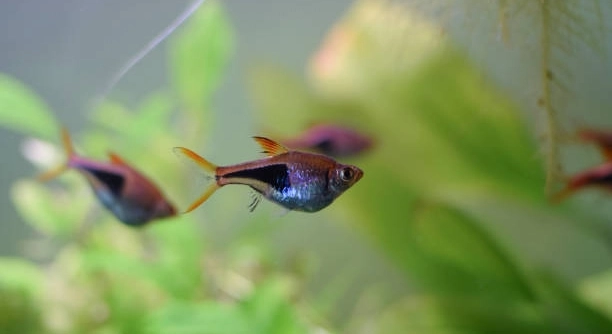
Many aquarium keepers notice small patterns in their fish behavior and wonder how much learning is involved. Rasboras are active, social fish, often seen responding to feeding times, tank movement, and familiar daily care routines.
Rasboras demonstrate basic learning abilities through consistent exposure to repeated stimuli. They can associate specific times, locations, and movements with outcomes such as feeding, indicating routine recognition rather than complex cognition, supported by observational studies in controlled aquarium environments settings.
Simple behaviors often reveal meaningful insights, and understanding rasbora routines helps aquarists create calmer tanks and more consistent daily care.
How Rasboras Recognize Daily Patterns
Rasboras respond strongly to repetition within their environment, especially when daily actions occur in the same order. Feeding at consistent times, approaching the tank calmly, and using the same lighting schedule helps them form expectations. Over time, they begin to gather near feeding areas before food appears and reduce startled movements during maintenance. I have noticed this change after only a few weeks in a stable setup. Their behavior becomes smoother and more predictable, suggesting simple memory rather than instinct alone. These fish rely on visual cues, vibrations, and timing to connect events. When those cues remain steady, rasboras adapt quickly. This adaptation is not complex reasoning, but it shows practical learning. Predictable surroundings allow them to conserve energy and reduce stress. In turn, this leads to better coloration, steadier swimming, and improved social harmony within the group over longer periods with consistent care and minimal sudden environmental changes overall.
Routine learning also affects group behavior. When one rasbora reacts calmly to a repeated action, others often follow. This shared response creates synchronized movement, fewer panic bursts, and a tank that feels balanced. Consistency from the keeper plays a central role during daily care and feeding practices over time consistently.
Rasboras do not need complex training to show learning. Simple repetition is enough. Sudden changes can disrupt this progress and cause skittish behavior. Loud movements, irregular feeding, or constant tank rearranging slow adaptation. I prefer small adjustments spaced over days. This allows the fish to reestablish patterns without stress. A steady routine supports natural schooling behavior and improves feeding response. Over time, these small choices shape how confidently rasboras interact with their surroundings. Stability remains the key factor in maintaining predictable behavior and long term well being across home aquariums with attentive observation and consistent handling habits over extended periods.
Applying Routine Awareness to Better Care
Understanding routine learning helps improve daily care decisions. When actions stay predictable, rasboras remain calmer and feed more reliably. This reduces waste, limits stress related illness, and creates a tank that feels easier to manage. Small habits from the keeper influence outcomes more than equipment choices over time in practice.
Applying this knowledge does not require rigid schedules or constant monitoring. It means being mindful of consistency. Feeding at similar times, approaching the tank slowly, and keeping lighting stable form a reliable structure. I have found that even minor regularity changes behavior within weeks. Rasboras begin to anticipate events and show less frantic swimming. This improves their energy use and supports immune function. Routine also benefits observation. When behavior becomes predictable, deviations stand out quickly. Reduced activity or missed feeding responses are easier to notice. This allows earlier intervention before problems escalate. Tank maintenance also becomes smoother. Fish accustomed to a pattern recover faster after water changes. Overall care feels calmer and more controlled. While rasboras remain simple fish, their ability to adjust should not be underestimated. Respecting their capacity for routine learning leads to healthier fish and a more stable aquarium environment over time. Consistency supports long term success for keepers who value steady systems. I prefer focusing on repetition rather than frequent upgrades. This approach reduces stress for both fish and caretaker, creating a sustainable aquarium that remains enjoyable and manageable with minimal disruption over months with consistent observation and gentle handling practices maintained by attentive owners daily.
Limits of Learning in Rasboras
Rasboras rely heavily on visual and timing cues when learning routines in captivity. Consistent light cycles, feeding locations, and gentle movements help them associate specific actions with outcomes, allowing predictable behavior to form without confusion or stress over time through repeated exposure and stable environmental conditions during daily care routines.
Memory in rasboras is short term but functional for survival in controlled tanks. They remember patterns tied to rewards like food or safety. I have observed them waiting near corners before feeding. This shows association learning rather than deep understanding. Their brains prioritize efficiency, not problem solving. Repetition strengthens these links. When routines remain unchanged, responses become quicker and calmer. If patterns break, learned behavior fades fast. This flexibility allows rasboras to adjust without lingering stress. It also explains why patience matters during early tank setup stages with consistent handling and minimal environmental changes over extended observation periods in aquariums.
Routine learning does not mean rasboras can generalize skills across situations. Each learned response stays tied to a narrow context. Feeding cues do not translate to other tasks. This limits confusion and keeps behavior simple. I find this reassuring as a keeper. It means mistakes are easy to correct. A missed feeding time does not cause lasting disruption. Resetting consistency restores behavior quickly. Rasboras focus on what repeats most. Their learning reflects adaptation, not intelligence in a human sense. This distinction helps set realistic care expectations while preventing overinterpretation of simple observed behaviors in home aquarium settings over time consistently.
Environmental Stability and Routine Success
Tank conditions strongly influence how well routines form. Stable temperature, gentle filtration flow, and uncluttered layouts reduce sensory overload. When the environment stays predictable, rasboras respond more confidently. I notice fewer darting movements and tighter schooling. Calm surroundings support faster routine recognition and steadier daily behavior overall. This consistency lowers stress responses and supports long term health in captivity under attentive and patient care practices maintained across regular maintenance schedules and feeding habits daily routines.
Poor routine formation often stems from frequent changes rather than fish limitations. Rearranging decor weekly, changing feeding times, or abrupt lighting shifts interrupt learning. I learned this after over adjusting early tanks. Rasboras need repetition, not stimulation. Simplifying care helps more than adding enrichment. Small tanks amplify disruption effects, making consistency even more important. Allow routines to settle before making changes. If adjustments are necessary, spacing them out helps preserve learned responses. Observation becomes easier once behavior stabilizes. You can quickly tell when something is wrong. Routine awareness turns daily care into a feedback system. Over time, this approach builds trust and predictability, benefiting both fish welfare and keeper confidence without extra effort while reducing stress related behaviors in home aquariums over long term periods.
Reinforcing Routines Through Feeding Habits
Rasboras respond best to calm, repeated feeding signals in the same area. Using the same container, timing, and movement builds recognition. I keep my motions slow and predictable. This reduces hesitation, improves feeding order, and limits surface rushing during routine meals for calmer group behavior overall in shared tanks consistently.
Consistency matters more than food variety when reinforcing routines. Sudden changes cause hesitation and scattered movement. I avoid switching feeding spots often. When changes are needed, I adjust gradually. This helps rasboras relearn patterns quickly while maintaining confidence and steady group behavior across daily feeding schedules without added stress buildup.
The Role of Lighting in Routine Formation
Lighting routines play a strong role in rasbora behavior and learning. Timed lights help them anticipate activity and rest periods. I use gradual on and off transitions to avoid sudden reactions. When lighting stays stable, swimming becomes smoother and less frantic. Irregular lighting disrupts these patterns quickly. Rasboras rely on brightness changes to mark time rather than internal clocks. Consistent light schedules support feeding routines, schooling cohesion, and rest cycles. This stability reduces hiding and improves observation. Small adjustments should be spaced over days. Stable lighting remains one of the simplest ways to support routine learning without extra intervention effort.
Social Influence on Learned Behavior
Tank mates influence how routines are followed within a group. Calm species support predictable movement, while active fish increase distraction. I choose companions carefully. When social balance is right, rasboras maintain learned behaviors more reliably and show fewer stress responses during daily care activities and feeding times overall consistently maintained.
Can rasboras truly learn routines or are they acting on instinct alone?
Rasboras rely on a mix of instinct and learned association. Instinct guides basic survival responses, but routines form through repetition. When the same actions occur daily, rasboras link cues like movement, light, and timing with outcomes. I see this clearly at feeding time. They gather before food appears, which shows recognition built through experience. This behavior fades if routines stop, proving it is learned rather than fixed.
How long does it take for rasboras to learn a routine?
Most rasboras begin showing routine awareness within one to two weeks. This depends on consistency. Daily feeding at the same time speeds learning. Irregular schedules slow it. In my tanks, stable lighting and calm handling shorten this period. The learning is gradual and subtle. Sudden expectations should be avoided. Patience produces better results and calmer fish behavior overall.
Do rasboras remember routines long term?
Their memory is short term but renewable. Rasboras remember routines as long as they continue. If routines stop, behavior resets within days. This flexibility helps them adjust to changes without lasting stress. I find this useful as a keeper. Mistakes do not permanently affect behavior. Reestablishing consistency restores learned responses quickly and reliably.
Can rasboras learn routines from other fish?
Yes, social cues matter. Rasboras observe each other closely. When a few fish respond to feeding or lighting changes calmly, others follow. This shared response strengthens group learning. I notice this most in larger schools. One calm reaction spreads through the group, reducing panic and improving order during routine activities.
Does tank size affect routine learning?
Tank size influences stability, which affects learning. Smaller tanks change conditions faster, making routines harder to maintain. Larger tanks buffer changes and allow patterns to remain steady. I find routines hold better in moderately sized setups with gentle filtration. Stability supports learning more than space alone, but cramped environments amplify disruption.
Can rasboras be trained beyond basic routines?
Rasboras are limited to simple association learning. They do not generalize skills or solve tasks. Training beyond feeding and movement patterns is unlikely. I avoid expecting more than routine recognition. This keeps care realistic. Their learning supports comfort and predictability, not performance or interaction beyond basic responses.
How does stress affect their ability to learn routines?
Stress blocks routine formation. Loud noises, fast movements, and frequent tank changes interrupt learning. Stressed rasboras focus on avoidance, not association. I see better learning when the tank stays quiet and predictable. Reducing stress speeds routine recognition and improves overall behavior consistency.
Are feeding routines the most important to learn?
Feeding routines are the most noticeable but not the only ones. Lighting and maintenance patterns matter too. Feeding routines improve order and reduce waste. I prioritize feeding consistency first because results appear quickly. Once feeding stabilizes, other routines follow more easily.
Do rasboras respond better to visual or timing cues?
Visual cues matter most. Movement near the tank, container shape, and light changes guide behavior. Timing supports these cues but is secondary. Rasboras do not track time precisely. They respond to repeated signals instead. I rely on visual consistency more than strict schedules.
Is routine learning the same across all rasbora species?
Most rasbora species show similar learning ability, though activity levels differ. More active species adjust faster but also lose routines quicker if disrupted. Calmer species take longer but hold patterns more steadily. I adjust expectations based on species behavior rather than assuming uniform responses.
Can routine learning improve health?
Yes, indirectly. Predictable routines reduce stress, which supports immune function and steady feeding. I notice fewer sudden dashes and better coloration in routine trained tanks. While routines do not prevent illness, they create conditions that support long term stability and easier observation.
What is the most common mistake when trying to establish routines?
Changing too much at once. New keepers often adjust feeding times, decor, and lighting together. This prevents learning. I learned to change one element at a time. Allowing routines to settle creates clearer behavior patterns and calmer fish responses overall.
Final thoughts on rasboras and routine learning come down to understanding their limits and strengths. These fish are not complex thinkers, but they are far from passive. Their ability to recognize repeated patterns helps them cope with captive environments. When daily care follows a steady structure, rasboras appear calmer and more confident. This shows in smoother swimming, tighter schooling, and reliable feeding responses. I find that acknowledging this simple learning ability changes how I approach tank care. Instead of reacting to every small behavior shift, I focus on consistency. Over time, this creates a tank that feels stable rather than reactive. Routine learning is not about control, but about reducing uncertainty. Rasboras thrive when they can predict what happens next. This predictability lowers stress and allows natural behavior to show more clearly in everyday observation.
It is also important to keep expectations realistic. Rasboras will not recognize individual people or perform trained actions. Their learning remains tied to repeated cues and outcomes. This simplicity is not a flaw. It reflects how they evolved to respond quickly to their surroundings. In a home aquarium, this means small changes matter more than dramatic ones. Regular feeding times, steady lighting, and calm movements do more than expensive upgrades. I have seen tanks improve simply by removing unnecessary changes. When behavior stabilizes, problems become easier to notice early. Missed meals, slower swimming, or isolation stand out faster. Routine learning supports observation as much as it supports fish comfort. This balance benefits both the keeper and the animals without adding complexity to daily care habits.
Looking at rasboras through this lens encourages patience. Results do not appear overnight, but they do appear reliably when routines are respected. I prefer this slow improvement over constant adjustment. It creates a sense of rhythm in tank maintenance. Over weeks, behavior becomes familiar and predictable. This does not make care boring. It makes it clearer. Each action has a visible effect, which builds confidence in care decisions. Routine learning also reminds us that fish respond to what we repeat most, not what we intend. Simple consistency often matters more than effort. By working with their natural learning limits, rasboras remain steady, active, and easier to care for long term. This approach keeps aquariums balanced and reduces stress on both sides of the glass.

Hello,
If you enjoy the content that we create, please consider saying a "Thank You!" by leaving a tip.
Every little bit helps us continue crafting quality advice that supports the health, happiness, and well-being of pets around the world, for pets of all shapes, sizes, and species.
We really appreciate the kindness and support that you show us!