
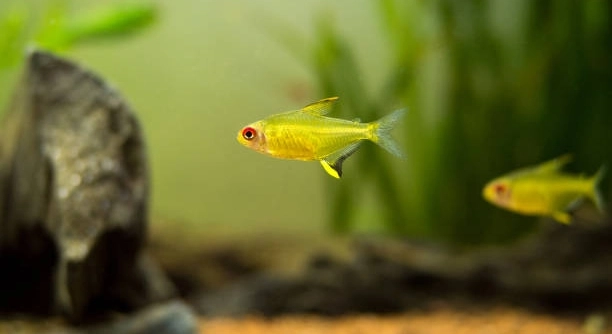
Are your aquarium fish active and lively, swimming gracefully through their tank? Lemon tetras are small, colorful fish that brighten up any home aquarium. Their cheerful presence often makes owners curious about their intelligence and behavior.
Lemon tetras demonstrate basic learning capabilities but are not considered highly trainable. They can recognize feeding patterns, respond to consistent cues, and show memory retention, yet complex trick performance is generally beyond their cognitive range.
Understanding how these fish interact with their environment and routines can enhance care and observation. Exploring their behaviors provides insight into their daily lives and overall well-being.
Understanding Lemon Tetra Intelligence
Lemon tetras are small freshwater fish, yet they show surprising awareness of their surroundings. They quickly learn to recognize feeding times and respond to familiar cues. Their memory is short but sufficient for routine patterns. Observing them over weeks, it becomes clear they adapt to the presence of other fish and environmental changes. These fish also display social behaviors, often swimming in synchronized groups that indicate recognition and coordination. While their intelligence does not match larger fish species, it is enough to make them responsive and engaging in a home aquarium. Providing consistent conditions helps them thrive, and owners often notice subtle differences in behavior between individual fish. Monitoring how they explore decorations, plants, and open swimming space reveals their curiosity. Interaction, such as dropping food consistently in one spot, allows them to learn and anticipate without stress. Overall, understanding these small indicators gives insight into their cognitive abilities and daily activities.
Lemon tetras can learn simple patterns but cannot perform complex tricks. Their intelligence is suited for basic routines.
Observing these fish closely allows you to identify distinct personalities within the school. Each fish may have unique habits, like exploring certain corners of the tank first or reacting differently to sudden movements. By noting these behaviors, you can provide a more comfortable and stimulating environment, ensuring they feel secure. Consistent feeding routines and mild interaction can help them anticipate daily events, making your aquarium a more lively and enjoyable space.
Training and Interaction Tips
Training lemon tetras requires patience and repetition. Short, consistent sessions work best.
Start by establishing a predictable feeding routine. Drop food at the same location and time each day, allowing fish to recognize patterns. Pair this with gentle cues, like tapping near the feeding area or using a small object as a signal. Avoid overstimulation, as these fish are sensitive to sudden changes. Positive reinforcement comes naturally through food rewards, encouraging them to respond to the cues. Over weeks, they may begin swimming toward the feeding area at the cue, showing basic learning. Keep the environment consistent and avoid rearranging decorations frequently, as stability helps them recognize landmarks. Social interaction with other tetras can reinforce group behavior, making training easier. Even though tricks are limited, observing these responses can be satisfying. Training becomes a process of understanding their abilities, offering mental stimulation while strengthening your observation skills. Proper care, patience, and consistency ensure that lemon tetras remain healthy, active, and responsive in their aquatic environment.
Signs Lemon Tetras Can Learn
Lemon tetras respond to repeated cues like feeding times or movements near the tank. They show anticipation and slight changes in swimming patterns, indicating recognition and memory of their environment.
Consistency in routine helps them learn simple patterns. They remember where food appears and may gather near that spot before feeding. Observing their reactions over time, subtle signs of learning emerge, such as increased activity when the cue is given. While they cannot perform complex tasks, these small indicators show their cognitive ability to adapt to predictable events. Recognizing these behaviors allows owners to interact more effectively, fostering a responsive and engaging aquarium environment.
Group behavior also reflects learning. Fish may mimic the movements of more experienced peers when approaching food or exploring new areas. Over time, a routine forms that shows social learning within the school. Individual personalities emerge, influencing how quickly each fish picks up on patterns, and creating variation in responsiveness among the group. Monitoring these differences can make maintaining the tank more rewarding and insightful.
Enhancing Learning Opportunities
Environmental enrichment improves their ability to recognize patterns and respond to cues. Simple tank modifications, like plants or decorations, provide reference points for navigation.
Providing a stable environment helps them adapt and explore confidently. Adding landmarks and keeping water conditions consistent allows them to form spatial memories. Introducing mild variations, such as moving food locations occasionally, encourages problem-solving and mental engagement. Even minor adjustments, like changing the angle of light or adding floating objects, stimulate curiosity. Social interaction also promotes learning, as observing peers can guide behavior. Regular observation and repetition strengthen their recognition skills, making interactions more predictable and enjoyable for both the fish and the owner.
Memory and Recognition
Lemon tetras can remember feeding locations and respond to familiar cues. They show anticipation before food arrives, demonstrating short-term memory and recognition of routine events within their environment.
They also recognize other fish in their school. Patterns in swimming and grouping behaviors indicate awareness of companions and social structure.
How Repetition Helps
Repeated actions like feeding at the same time and place reinforce memory. Consistency teaches them to associate cues with rewards. Over weeks, they respond more quickly to signals and develop predictable behavior. This repetition is key to encouraging learning and building reliable routines for both the fish and the owner.
Observing Individual Differences
Not all lemon tetras react the same way. Each fish may learn at a different pace, showing unique responses to cues and feeding patterns.
FAQ
Can lemon tetras learn tricks like other fish?
Lemon tetras have limited learning abilities compared to larger or more intelligent fish species. They can recognize feeding times and respond to simple cues, but complex tricks or commands are beyond their cognitive skills. Their learning is mostly based on routine and repetition rather than problem-solving.
How long does it take for them to recognize a feeding routine?
With consistent daily feeding at the same time and location, lemon tetras usually begin showing recognition within one to two weeks. You may notice them swimming toward the food area or changing their behavior slightly when a familiar cue is introduced. Patience is important, as each fish may respond at a different rate.
Can they recognize individual people or other animals?
Lemon tetras do not recognize humans individually, but they can distinguish between familiar and unfamiliar movements near the tank. They may also notice other tank mates’ behaviors and respond accordingly, especially within a schooling group where social learning plays a small role in their actions.
Do they have short-term or long-term memory?
Their memory is mostly short-term, lasting days to a few weeks, which is sufficient for learning patterns and routines. They can remember the location of food, hiding spots, or familiar tank arrangements, but sudden changes in environment can temporarily confuse them.
How can I encourage learning and recognition?
Consistency and repetition are key. Feeding at the same time and place helps them anticipate events. Using mild cues like a tap on the tank or a floating object can create associations. Environmental enrichment, such as plants or decorations, provides landmarks that support spatial memory and recognition of their surroundings.
Is it necessary to have multiple lemon tetras for learning?
Lemon tetras are social fish, and schooling behavior can enhance learning. Observing peers allows them to mimic simple behaviors, like approaching food or exploring new areas. While individual fish can learn from routine, group interaction encourages more consistent responses.
What signs indicate they are learning?
Signs of learning include swimming toward the food area before feeding, responding to repeated cues, or showing anticipation when patterns are consistent. Subtle changes in activity or grouping behavior can also indicate recognition and memory, reflecting their ability to adapt to predictable events.
Are there limits to what they can learn?
Yes, lemon tetras are limited to basic pattern recognition and simple social cues. They cannot perform tricks that require complex coordination or reasoning. Their cognitive abilities are best suited for routine behaviors and mild environmental interactions.
Can stress or tank changes affect learning?
Stressful conditions, such as sudden water changes, overcrowding, or aggressive tank mates, can reduce their ability to recognize patterns. Maintaining a stable environment with proper water parameters and minimal disturbances helps them retain learned behaviors and respond consistently to cues.
Should training sessions be long or short?
Short, regular sessions are most effective. Extended interaction can stress the fish, reducing their responsiveness. Brief, consistent routines allow them to form associations without discomfort. Observing small progress over time is more productive than expecting immediate results.
Does age affect their ability to learn?
Younger fish may adapt slightly faster to new routines due to higher activity levels, but adult lemon tetras can also learn basic patterns with consistent repetition. Aging may slow their response time, yet they retain recognition of familiar cues and feeding routines.
Are rewards necessary for learning?
Food serves as the primary reward for lemon tetras. Associating a cue with a food reward reinforces recognition. They respond to positive reinforcement more effectively than negative stimuli, making feeding routines the most practical method for encouraging learning.
Can environmental enrichment improve their learning?
Yes, adding plants, rocks, or decorations provides reference points and encourages exploration. These elements help them form spatial memories, respond to cues, and develop predictable patterns within the tank. Enrichment keeps them mentally stimulated and supports their limited learning capabilities.
How can I track their progress?
Observing and noting changes in behavior, such as approaching feeding spots early or responding to specific cues, helps track progress. Recording patterns over days or weeks provides insight into which cues are most effective and which fish adapt more quickly.
Is it worth trying to train lemon tetras?
Training is limited but rewarding for observation purposes. It enhances understanding of their behavior, encourages interaction, and provides mental stimulation. While tricks are minimal, the ability to recognize patterns and cues adds depth to aquarium care and strengthens the connection between owner and fish.
Final Thoughts
Lemon tetras are small, lively fish that bring color and motion to any home aquarium. While their size may make them seem delicate, they display surprising awareness of their environment and routines. Observing them over time reveals how they respond to cues, feeding schedules, and the presence of other fish in their school. Their intelligence is not advanced compared to larger species, but it is enough to notice patterns and adjust their behavior accordingly. These small behaviors, like gathering near the food area before feeding or reacting to repeated signals, show that they are capable of basic learning. Understanding this aspect of their nature helps aquarium owners provide a more engaging and stimulating environment. Consistency in care and routine allows lemon tetras to feel secure and confident, which in turn makes them more responsive. Their learning abilities are subtle, yet noticeable, and recognizing these patterns can enhance the overall enjoyment of maintaining a home aquarium.
Creating a supportive environment for lemon tetras goes beyond feeding and water quality. Adding decorations, plants, or even mild variations in the tank layout can encourage exploration and mental engagement. These fish respond to landmarks and familiar points, which aids in spatial memory and recognition of routines. Social interaction also plays a role, as lemon tetras often mimic the behaviors of their peers within a school. This social learning, while limited, helps them adapt more effectively to their environment. Observing individual differences within the group can be particularly interesting. Some fish may react quickly to new cues or routines, while others may be slower to adapt. Recognizing these variations helps in understanding the behavior of each fish and tailoring care to suit their needs. Over time, small efforts to create consistent, enriched conditions can improve their responsiveness and overall well-being, making daily observation more rewarding.
While lemon tetras cannot perform complex tricks, their ability to recognize patterns and respond to cues makes them engaging to watch. These fish demonstrate that intelligence comes in different forms, and even small creatures can show learning in subtle but meaningful ways. Patience, consistency, and careful observation are key to supporting their cognitive abilities. By providing a stable environment, regular feeding routines, and gentle enrichment, owners can help lemon tetras thrive. These fish remind us that learning does not have to be dramatic to be interesting. Watching them anticipate feeding times, interact with peers, and explore their surroundings highlights their awareness and adaptability. Focusing on these small but significant behaviors allows owners to appreciate the complexity of even the smallest fish. Overall, lemon tetras provide not only aesthetic beauty but also a chance to observe basic learning and social behaviors in an accessible and enjoyable way, making their care a fulfilling experience.

Hello,
If you enjoy the content that we create, please consider saying a "Thank You!" by leaving a tip.
Every little bit helps us continue crafting quality advice that supports the health, happiness, and well-being of pets around the world, for pets of all shapes, sizes, and species.
We really appreciate the kindness and support that you show us!