
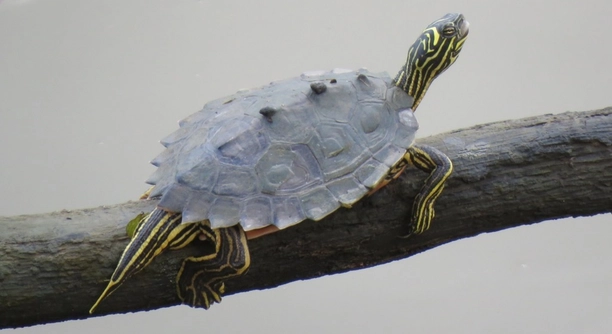
Map turtles are fascinating creatures, known for their unique markings and often elusive nature. While many people are familiar with some common species, there are lesser-known types that remain hidden from most turtle enthusiasts.
Seven rare map turtle species, each with distinctive characteristics, are often overlooked. These turtles can be found in specific regions across North America and exhibit unique patterns, making them valuable to study and conserve.
Learning about these rare species provides a chance to better understand the diversity within the map turtle family. Each species has its own set of interesting traits that make them special and worth discovering.
False Map Turtle (Graptemys pseudogeographica)
The False Map Turtle is a species found in parts of the central United States. It’s known for its olive to brownish color and its striking yellow markings along the head and neck. These turtles are semi-aquatic, often spotted basking on logs or rocks near rivers and streams. They are named “False Map” because their markings resemble the pattern seen on a map, but with some variations. The False Map Turtle can be confused with other map turtles, making it less recognized by the general public.
They prefer habitats with slow-moving rivers, ponds, and lakes. These turtles are shy, making them difficult to spot in the wild, even though they are quite common in some areas.
These turtles are not considered endangered, but like many reptiles, they face challenges due to habitat loss and pollution. Protecting their environment is vital to maintaining healthy populations. As they are often caught in the wild for the pet trade, conservation efforts are needed to ensure their survival.
Pascagoula Map Turtle (Graptemys gibbonsi)
The Pascagoula Map Turtle is native to the Pascagoula River in Mississippi. It is characterized by a distinct yellow and black pattern on its shell and a narrow, pointed head. This turtle is mostly aquatic and rarely seen far from water, spending its time on submerged logs or basking in sunny areas.
This species is at risk due to habitat destruction and water pollution. The Pascagoula River has been affected by development, leading to concerns about the turtle’s long-term survival.
Efforts to preserve the Pascagoula Map Turtle focus on protecting their habitat. The Pascagoula River is an important ecosystem, and keeping it healthy will benefit both this turtle and the many other species that depend on it.
Alabama Map Turtle (Graptemys pulchra)
The Alabama Map Turtle is found mainly in the Alabama and Tombigbee Rivers in the southeastern United States. It has a distinctive greenish-brown shell with intricate yellow markings that resemble a topographical map.
This turtle prefers calm, slow-moving waters with sandy or muddy bottoms. It is known to be quite shy, often retreating into the water when humans approach. The Alabama Map Turtle is not as commonly seen due to its habitat’s remoteness, which makes it less vulnerable to human interference.
Conservation efforts for the Alabama Map Turtle focus on protecting its natural habitat, which is increasingly threatened by pollution and development. Restrictions on river development and efforts to clean up the water are essential to ensure the turtle’s survival. Keeping human impact to a minimum will benefit both the species and the river ecosystem.
Ouachita Map Turtle (Graptemys ouachitensis)
The Ouachita Map Turtle is commonly found in the Ouachita and Arkansas River basins. It features a smooth, olive-brown shell with light yellow markings, giving it a map-like appearance. This turtle prefers habitats with clear water and a mix of sandbars and rocky areas.
The Ouachita Map Turtle is considered a vulnerable species due to habitat destruction and water pollution. Their primary threat comes from human activity, including boating and land development along the rivers. Preservation of their natural environment is crucial to maintaining their population.
Active conservation measures are in place, with an emphasis on reducing pollution levels and ensuring clean water flows through their habitats. Habitat restoration projects are being conducted to repair degraded areas and protect the species for future generations. Effective management of these habitats will help safeguard the Ouachita Map Turtle’s continued existence.
Black-knobbed Map Turtle (Graptemys nigrinoda)
The Black-knobbed Map Turtle is primarily found in the southeastern United States. It has a unique, rugged appearance with a dark, knob-like protrusion on the end of its shell, giving it a distinctive look.
This species thrives in clear, fast-moving rivers and streams. They are excellent swimmers and spend most of their time in the water, rarely venturing onto land. These turtles are also known for their shy nature, often retreating to the water when approached.
Yellow-blotched Map Turtle (Graptemys flavimaculata)
The Yellow-blotched Map Turtle is found in the Pascagoula and Mobile River basins. With its dark shell and bright yellow markings, it is easily recognizable. This species prefers large, slow-moving rivers with plenty of basking areas. However, it is often hard to spot due to its shy nature.
Protection efforts focus on safeguarding their habitat from industrial and agricultural pollution. Like many map turtles, this species faces risks from river modifications, such as damming and water pollution. Preserving the water quality and natural landscape is key to maintaining the Yellow-blotched Map Turtle population.
FAQ
What do map turtles eat?
Map turtles are primarily omnivores, feeding on a mix of plant matter and small animals. Their diet consists of aquatic plants, insects, crustaceans, and small fish. Depending on the species and its environment, they may also eat snails and worms. Juveniles tend to have a more carnivorous diet, while adults shift towards a more herbivorous one as they grow. It’s important to offer a variety of foods in captivity, including leafy greens, insects, and even fish to keep them healthy.
How long do map turtles live?
Map turtles have a relatively long lifespan, living between 20 to 40 years in the wild, depending on the species. Some may live even longer in ideal conditions, especially in captivity, where threats like predators and environmental hazards are minimal. Their lifespan can be shortened due to poor diet, environmental stress, or habitat destruction. Maintaining a stable and healthy environment is key to helping them live a long life.
Are map turtles endangered?
Some species of map turtles are considered vulnerable or endangered due to habitat destruction, water pollution, and illegal pet trade. While many species of map turtles are still thriving, certain types, like the Pascagoula Map Turtle, face significant threats. Conservation efforts are underway in some areas to protect their habitats and ensure their survival. Habitat protection and pollution control are critical in keeping these turtles safe.
Can map turtles be kept as pets?
Yes, map turtles can be kept as pets, but they require specific care. They need a large aquarium with both water for swimming and a dry basking area. The water should be clean and filtered regularly, as turtles are sensitive to water quality. A balanced diet of both plant and animal matter is essential for their health. They are also shy and require a quiet, safe environment. If you plan to keep one, make sure you can provide the necessary space, care, and attention.
How do map turtles reproduce?
Map turtles lay eggs on land, usually in sandy or soft soil near the water. The female digs a hole, lays her eggs, and covers them up before returning to the water. Depending on the species, the eggs hatch in late summer or early fall. The hatchlings are independent as soon as they emerge and make their way to the water. Temperature plays a role in determining the sex of the hatchlings, with warmer temperatures generally resulting in more females.
What habitats do map turtles prefer?
Map turtles thrive in freshwater environments like rivers, lakes, and ponds. They prefer slow-moving water with plenty of submerged rocks, logs, and vegetation for basking. Clear water with good visibility is important for their safety, as they are often quick to dive when they feel threatened. Clean, undeveloped habitats with minimal human disturbance are ideal for map turtles, and they tend to avoid areas with high levels of pollution or activity.
Can map turtles swim?
Yes, map turtles are excellent swimmers. They spend much of their time in the water, using their strong legs to paddle and their webbed feet to propel themselves. They are skilled at navigating fast-moving rivers, which is why many species are found in such habitats. When not swimming, they will often bask on rocks or logs to absorb heat from the sun, helping to regulate their body temperature.
Are map turtles social?
Map turtles are generally solitary animals, although they may occasionally be found basking together in groups. They are not highly social and prefer to spend most of their time alone or with members of their own species. They can be territorial, especially when it comes to basking spots. In captivity, map turtles should be kept individually or in carefully monitored groups to prevent aggression.
How can I tell the age of a map turtle?
The age of a map turtle can be roughly estimated by counting the rings on its shell, similar to counting tree rings. However, this method is not always accurate, as the rings may not form consistently every year. The size of the turtle can also give an indication of its age, as younger turtles grow much faster than older ones. A young map turtle might be only a few inches long, while adults can reach up to 12 inches, depending on the species.
What kind of climate do map turtles need?
Map turtles are typically found in temperate regions, meaning they thrive in climates with distinct seasons. They can tolerate a range of temperatures, but they prefer warm weather for basking. During the winter months, map turtles may brumate, a state of dormancy where they slow down their metabolism. In captivity, providing a temperature gradient in their tank, with warmer areas for basking and cooler zones for swimming, is essential to keep them healthy.
Can map turtles breathe underwater?
No, map turtles cannot breathe underwater. Like all turtles, they need to come to the surface for air. They can hold their breath for extended periods while swimming, but they must regularly surface to breathe. Map turtles are often seen basking on logs or rocks to rest and breathe, and they are very efficient swimmers, diving to catch food or escape threats when necessary.
What is the best tank setup for map turtles?
For a map turtle, the ideal tank setup includes both a water area and a dry basking area. A tank should be large enough to accommodate their swimming needs, with at least 20 gallons of water per turtle. The water should be kept clean and filtered, with a temperature of around 75-80°F. A basking spot with a heat lamp and UVB light is essential for their health, allowing them to regulate their temperature and synthesize vitamin D3. Providing hiding spots and plants can help the turtles feel secure and reduce stress.
What are the signs of a healthy map turtle?
A healthy map turtle will have a clear, bright-eyed appearance with no visible signs of infection or injury. Its shell should be smooth and free of cracks or soft spots. The turtle should be active, swimming and basking regularly. Healthy map turtles eat regularly and are alert when approached. If a turtle is lethargic, has cloudy eyes, or refuses to eat, it may be a sign of illness or poor water quality, and a visit to a veterinarian is recommended.
Final Thoughts
Map turtles are fascinating creatures, each species with its own unique traits and characteristics. From their distinct shell patterns to their preferred habitats, these turtles offer a glimpse into the diversity of aquatic life in North America. While some map turtle species are commonly seen, others remain hidden in more remote areas, making them rare and special to discover. Their intriguing appearance and shy nature make them a favorite for many wildlife enthusiasts, but it’s important to remember the challenges they face in the wild.
Conservation is a key focus for map turtles. Many species are at risk due to habitat loss, water pollution, and the pet trade. As we continue to develop and alter landscapes, the natural habitats of these turtles are often disturbed. This can lead to fewer places where map turtles can thrive. By protecting their environments and reducing human impact, we can help ensure that future generations will have the chance to witness these remarkable reptiles in the wild. Efforts are being made to conserve water quality, restore habitats, and protect endangered species from further decline.
If you are considering keeping a map turtle as a pet, it’s essential to understand their needs. They require specific care, including access to clean water, basking areas, and a balanced diet. Keeping map turtles in suitable environments will not only help them thrive in captivity but will also support efforts to protect wild populations. Whether you are interested in learning more about these turtles or caring for one, it’s clear that map turtles deserve attention and protection. The more we understand them, the better we can contribute to their conservation and ensure they remain a part of our world for years to come.

Hello,
If you enjoy the content that we create, please consider saying a "Thank You!" by leaving a tip.
Every little bit helps us continue crafting quality advice that supports the health, happiness, and well-being of pets around the world, for pets of all shapes, sizes, and species.
We really appreciate the kindness and support that you show us!