
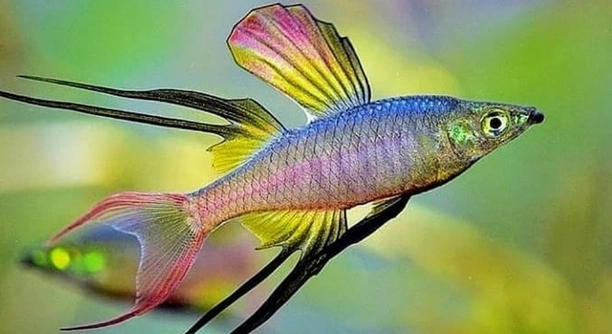
Have you ever watched a group of threadfins swim together, only to notice that a few suddenly break away from the school?
Threadfins may suddenly split from their school due to environmental stressors, changes in water conditions, predation threats, or disruptions in social hierarchy. These factors influence their instinctive behavior, leading to separation from the group’s synchronized movement.
From subtle shifts in current to hidden threats nearby, several influences play a role in shaping how threadfins respond within their aquatic environment.
Environmental Stress and Social Shifts
Threadfins rely heavily on balance and group coordination, but environmental stress can quickly disrupt this rhythm. When water temperature changes, oxygen levels drop, or pollutants rise, the group’s natural order may become disturbed. A sudden shift in these conditions can trigger immediate reactions, causing some fish to stray from the school. Another factor is social hierarchy. Within schools, dominance and submission play subtle roles. If tension arises or an individual feels threatened, breaking away can act as a survival tactic. These splits are not random; they are instinctive responses shaped by the environment and the school’s internal structure.
Smaller disruptions, such as unusual sounds or unexpected vibrations, can also trigger quick movements. Even minor disturbances may make threadfins feel unsafe within the group.
Understanding these reactions helps explain why schools do not always remain intact. While it may appear sudden, each split is usually influenced by specific environmental or social cues.
Predation and Survival Instincts
Predators are one of the strongest triggers for school disruptions, forcing threadfins to make fast decisions.
When predators approach, schools use synchronized movements to confuse and evade attacks. However, not every threadfin reacts the same way. Some break formation, seeking safety by moving apart. This scattering creates unpredictable movement patterns that make it harder for predators to focus on a single target. The instinct to separate, while risky, can increase survival chances in certain moments. Additionally, young or weaker fish may struggle to keep pace with the group, leaving them more vulnerable to splitting away under pressure. Observing these behaviors highlights how survival instincts play a direct role in shaping school dynamics. Threadfins adapt quickly, but these responses often appear sudden and chaotic to observers. By looking closer, the reasons for separation reveal themselves as protective measures shaped by both instinct and environmental pressures, rather than random behavior.
Changing Water Conditions
Even slight changes in water conditions can cause threadfins to split away. A drop in oxygen, shifts in salinity, or temperature fluctuations may stress the school, leading to unpredictable separations among individuals.
Threadfins are highly sensitive to their surroundings, and water quality plays a critical role in their stability. When oxygen levels dip too low, fish may swim away in search of better conditions. Similarly, sudden salinity changes, caused by rainfall or tidal movements, can push individuals to leave. These environmental stressors often influence weaker fish first, who struggle to adapt as quickly as others.
Pollution adds another layer of stress that can affect the entire school. Chemicals or debris in the water may force threadfins to scatter unpredictably. Some fish may separate completely, while others regroup after the disturbance passes. Each reaction depends on the severity of the environmental change and the resilience of the group.
Feeding Behavior and Competition
Competition during feeding can disrupt the balance within a school. Food scarcity or uneven distribution often forces threadfins to break away, seeking resources elsewhere to meet their energy needs.
When food is limited, dominant fish within the school may take priority access, leaving weaker individuals at risk. These individuals may split from the group to find more accessible feeding grounds. Sometimes, the school itself may fragment into smaller groups, each focusing on different feeding spots. This behavior is not random—it reflects survival needs shaped by energy demands. Over time, these feeding-driven separations influence the group’s overall stability and cohesion. By observing these patterns, it becomes clear that competition, resource availability, and hierarchy directly impact the school’s unity.
Human Activity and Disturbance
Boats, fishing gear, and loud noises can disrupt threadfin schools. These disturbances create sudden stress, causing individuals to scatter. Even minor human presence may interfere with their natural patterns, leading to abrupt separations that seem unpredictable.
Light pollution and construction vibrations can also play a role. Threadfins respond quickly to unfamiliar changes, and human activity often introduces irregularities. These disruptions may not permanently scatter a school but can cause temporary breaks that shift their natural cohesion.
Seasonal Movements
Seasonal shifts often influence how threadfins behave. Migration linked to breeding or changing currents can temporarily break schools apart. Fish may split while adjusting to these shifts, then regroup when conditions stabilize, keeping their natural patterns of survival intact.
Disease and Health Factors
Illness or weakness within the school can lead to separations. Sick fish may struggle to match the group’s pace, gradually drifting away. These health-related splits highlight how the school adapts to protect overall strength and stability.
FAQ
Why do threadfins sometimes split away from their school suddenly?
Threadfins may split due to environmental stress, predator threats, or disruptions within their group’s hierarchy. Small shifts in water conditions, such as oxygen or salinity changes, often trigger this behavior. Predation risk and competition during feeding also influence their sudden separations.
Do threadfins split from their school permanently?
In most cases, the separation is temporary. Threadfins may scatter when disturbed but often regroup once conditions stabilize. However, if stressors like poor water quality or lack of food persist, individuals may remain apart for extended periods or even join different groups.
Can human activity cause threadfins to separate?
Yes, human activity plays a significant role. Noise from boats, underwater vibrations, light pollution, and fishing gear can disrupt schools. These sudden disturbances confuse threadfins, leading to splits. Although temporary, repeated disturbances can alter their natural patterns over time.
How does predation affect threadfin school behavior?
Predation is one of the strongest reasons for separations. When a predator approaches, some threadfins may break away while others stay in formation. This unpredictable scattering helps confuse predators, increasing survival chances for at least part of the group.
Do weaker or younger threadfins split more often?
Yes, weaker and younger fish are more likely to fall behind. They struggle to keep pace with stronger individuals, especially during feeding or when predators strike. This can result in separation, sometimes leaving them more vulnerable compared to the rest of the school.
How do seasonal changes influence threadfin schools?
Seasonal changes often trigger migrations. During these periods, schools may temporarily split as individuals adjust to shifting currents, breeding needs, or temperature differences. While fragmentation may appear chaotic, it is often part of a natural cycle tied to survival and reproduction.
Does disease contribute to school separations?
Disease plays a direct role in separations. Ill or weakened threadfins cannot maintain the same speed and coordination as healthy individuals. As a result, they may gradually drift away. In some cases, the school maintains distance to protect overall group stability.
Are threadfins more likely to split in polluted waters?
Yes, pollution often increases the chances of separation. Chemicals, debris, or oil in the water can create stress, pushing threadfins to scatter. Schools may temporarily regroup after the disturbance, but long-term exposure to pollutants weakens their cohesion and survival ability.
Is competition for food a major reason behind school fragmentation?
Competition is a significant factor. When food is scarce or unevenly distributed, dominant fish usually take priority. This forces weaker individuals to split from the school in search of alternative feeding grounds. Over time, this behavior may reshape the structure of the group.
Can threadfins adapt to repeated disturbances?
They can adapt to a degree, but constant disruptions weaken their coordination. While occasional scattering is natural, continuous stress from predators, pollution, or human activity reduces their ability to function as a cohesive school. This impacts survival rates over the long term.
Do threadfins ever leave a school to form a new one?
Yes, sometimes separations lead to new group formations. When environmental factors or social hierarchies shift, smaller groups may branch off and develop their own cohesion. These new schools still follow similar survival strategies, shaped by instinct and environmental conditions.
Are school separations always a sign of stress?
Not always. While many splits are caused by stress, some are natural behaviors linked to feeding, reproduction, or migration. Observing the context is important, as not every separation indicates a threat. Many are temporary and part of their normal life cycle.
Can observing separations help in understanding threadfins better?
Absolutely. By studying when and why threadfins separate, we gain insights into their survival strategies. Each split reveals how they respond to environmental pressures, predators, and internal dynamics. This understanding helps explain their adaptability and resilience in challenging aquatic conditions.
Final Thoughts
Threadfins are fascinating to observe because of the way they move together as one. Their schools flow like a single body, making sudden breaks or separations stand out sharply. While it may seem random when they split, there are always underlying reasons behind the behavior. Environmental factors, predation risks, competition for food, and even health-related issues all play a role in why an individual may leave the safety of the group. By looking closely, it becomes clear that these separations are not acts of disorder but rather adaptive choices. Each split, whether brief or lasting longer, reflects the delicate balance threadfins maintain in response to their environment and survival needs.
The importance of these behaviors lies in what they tell us about the resilience of threadfins. Their ability to adjust to sudden stressors or changes in water quality shows how finely tuned they are to their surroundings. Human activity, from pollution to noise disturbances, adds another layer of influence that can sometimes push these fish to act in ways that appear unpredictable. However, even in these challenging situations, their instinct to adapt remains strong. Observing threadfins can remind us of how fragile aquatic ecosystems are, while also highlighting the strength and flexibility built into natural survival strategies. Each movement and each split is a reminder of how every detail in their environment can shape their choices.
Studying these separations also helps us understand broader ecological patterns. Threadfins, like many schooling fish, rely on collective behavior for safety and success. When that unity is disrupted, it sheds light on the state of the waters they inhabit. Healthy, stable environments allow schools to remain more consistent, while unstable conditions cause visible breaks. This makes their behavior not just interesting but also informative for anyone trying to better understand marine ecosystems. Whether the cause is a predator lurking nearby, shifting seasons, or competition over food, each split adds another piece to the puzzle of their lives. Watching threadfins reminds us that survival is never static—it is about constant adjustment. By recognizing the reasons behind their sudden separations, we can better appreciate both their vulnerability and their remarkable adaptability.
Word count: 421

Hello,
If you enjoy the content that we create, please consider saying a "Thank You!" by leaving a tip.
Every little bit helps us continue crafting quality advice that supports the health, happiness, and well-being of pets around the world, for pets of all shapes, sizes, and species.
We really appreciate the kindness and support that you show us!