
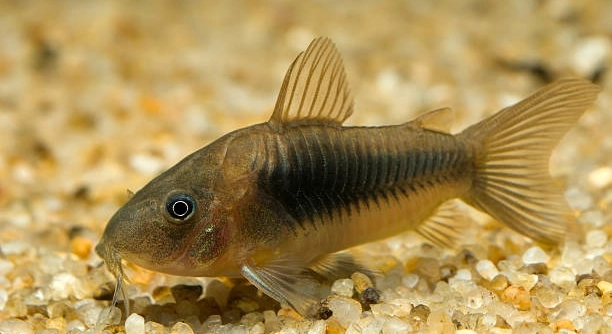
Is your Corydoras catfish always trailing behind other fish, making you wonder if this is normal or something to worry about?
The main reason your Corydoras catfish follows other fish is due to its natural schooling behavior. Corydoras are social creatures that feel safer and more comfortable when staying close to others, even if they are different species.
Understanding why your Corydoras is acting this way can help improve its tank life and ensure it feels safe and secure in your aquarium.
1. Corydoras Are Natural Schooling Fish
Corydoras catfish are peaceful, social fish that enjoy the company of others. In their natural habitat, they move in groups to feel safe and confident. This behavior doesn’t always stop at members of their own species. In a home aquarium, if there are too few Corydoras, they may start following other fish instead. It’s not always about confusion—it’s often just about seeking safety in numbers. This is especially common in tanks where Corydoras are kept alone or with just one or two companions. If they can’t find enough of their kind, they might stick close to anything that seems calm and non-threatening. Their gentle nature also makes it easier for them to blend in with other community fish. Watching them tag along can seem odd at first, but it’s a sign they are trying to stay connected and feel protected in their environment.
They’re not confused—they’re just looking for company.
To help your Corydoras feel more secure, try keeping them in groups of six or more. This encourages natural schooling and reduces stress. When surrounded by their own kind, they’re more active, playful, and display their true behavior. It also helps prevent them from latching onto other fish out of loneliness or insecurity.
2. Your Tank Setup May Be a Factor
Corydoras might follow other fish if the tank lacks proper hiding spots or feels too open. These fish prefer shaded, soft-bottom areas where they can rest and explore safely. If your aquarium setup doesn’t offer that kind of environment, your Corydoras may stick close to other fish for protection. Bright lighting and loud activity outside the tank can also make them feel exposed. A bare or stressful tank will push them to cling to whatever makes them feel safe, even if it’s another species. Adding driftwood, caves, or soft plants can change everything. When the tank feels more like their natural home, Corydoras become less reliant on others for a sense of safety. Sand substrate also allows them to sift and dig, which they enjoy. By adjusting the layout and décor of your tank, you give your Corydoras space to relax, explore, and be themselves without having to depend on other fish for comfort.
3. They Might Be Imitating Feeding Behavior
Corydoras are smart and observant. If they see other fish swimming toward a certain area during feeding time, they may follow along, expecting food. This behavior can become a habit even outside of meal times.
In many community tanks, faster fish tend to get to the food first. Corydoras, being bottom dwellers, often wait for leftovers to settle. But if they notice fish going to a specific spot before food drops, they might start following, hoping to get there early. It’s not uncommon for them to associate certain fish or movements with feeding. Over time, this creates a pattern where they tag along more and more. This kind of behavior doesn’t usually cause harm but can be a sign that your Corydoras are hungry or not getting enough during meals. Making sure food reaches the bottom evenly can help stop them from needing to chase after others.
They may also be trying to figure out which spots in the tank lead to the most food. If your tank mates are messy eaters, Corydoras quickly learn to stick by them. Some even wait underneath larger fish during feeding, grabbing any bits that fall. This kind of following is practical—it helps them eat.
4. They Feel Anxious or Threatened
Corydoras are sensitive to stress. Loud noises, sudden tank movements, or aggressive tank mates can all cause anxiety. When they feel unsafe, they often stay close to other fish that seem calm. It gives them a sense of protection, especially in tanks with lots of activity.
Stress from poor water conditions, aggressive fish, or constant movement outside the tank can make your Corydoras uneasy. When this happens, they may shadow peaceful fish that move slowly or stick to corners. This isn’t just about feeling social—it’s about survival. If a Corydoras catfish senses tension, it will do whatever it takes to feel safe, even if that means following another species around all day. A stressed Corydoras might also show signs like hiding constantly, darting quickly, or avoiding open spaces. Testing your water regularly and choosing the right tank mates can reduce this kind of behavior. Aim for calm, stable conditions and a peaceful tank community.
5. They’re Mistaking Other Fish for Their Own Kind
Corydoras can sometimes confuse similar-looking fish with members of their own species. In tanks with fish that have a similar size, shape, or color, this kind of mix-up can happen, especially when they’re kept alone or in very small groups.
This behavior is more common when the tank lacks other Corydoras. The fish is simply trying to fit in and find safety. It’s not about bonding—it’s more about comfort and instinct. When surrounded by unfamiliar fish, a lonely Corydoras will cling to anything that feels familiar or safe, even if it’s the wrong species.
6. They’re Just Being Curious
Corydoras are naturally curious fish. They like to explore new spaces and investigate movement. If another fish is swimming actively or stirring up the substrate, the Corydoras may follow just to see what’s going on. This doesn’t always mean something is wrong—it’s just part of their normal behavior.
7. It’s a Sign of Social Need
A single Corydoras or one kept in too small of a group will often follow other fish due to social need. These fish thrive when they can interact with their own kind. Following tank mates is their way of filling that social gap, even if it’s not ideal.
Corydoras are not meant to live alone. They rely on group interaction for comfort, communication, and natural behavior. In a small group—or worse, as the only one—they often become more withdrawn or overly attached to other tank mates. Following behavior, in this case, is a coping method. It helps reduce stress, but it’s not the best long-term solution. The simplest way to fix this is to add more Corydoras. A group of at least six encourages schooling, playfulness, and better overall health. You’ll see them move in sync, explore more, and display behaviors that they normally suppress when alone.
FAQ
Can Corydoras live alone?
Corydoras can technically survive alone, but they don’t thrive that way. These fish are naturally social and are happiest in groups. When kept alone, they often become shy, inactive, or stressed. You may notice them hiding more, avoiding open spaces, or clinging to other tank mates. Even if they’re eating and swimming normally, they’re not displaying their full range of natural behaviors. For their mental and physical health, it’s best to keep them in groups of at least six. In a group, they become more confident, active, and playful, which also makes them more interesting to watch.
Why does my Corydoras only follow one specific fish?
Sometimes a Corydoras will attach itself to one fish in particular, especially in tanks where it doesn’t have enough of its own kind. It may feel safer with that fish or associate it with food or calm behavior. This usually means your Corydoras is lacking proper social interaction with its own species. It could also happen if the fish it’s following is non-aggressive and shares a similar swimming pattern. While it might look cute, it’s often a sign that your Corydoras needs more of its own kind to feel secure.
Is following behavior a sign of illness?
Not usually. Following other fish is mostly social or instinctual. But if it’s paired with signs like clamped fins, loss of appetite, sluggish movement, or frequent hiding, then illness could be a factor. In that case, you should test your water, observe for physical symptoms, and isolate the fish if needed. However, healthy Corydoras will often follow other fish out of curiosity or comfort. As long as they’re eating well and moving actively, it’s typically nothing to worry about.
Can following behavior stress other fish out?
In most cases, Corydoras are peaceful and their following behavior doesn’t bother other fish. But if the fish being followed is territorial or easily stressed, it might not like being trailed. This is more likely in smaller tanks with limited space. If you notice signs of aggression or stress—like chasing, fin nipping, or hiding—then you may need to rearrange the tank, provide more hiding spots, or increase your Corydoras group size so they socialize with their own kind instead.
How many Corydoras should I keep to avoid this behavior?
The minimum recommended group is six, but more is even better if your tank size allows. Corydoras are shoaling fish, and the more you have, the more natural their behavior becomes. In larger groups, they’re less likely to follow other species because they’ll have their own group to interact with. A group of six to ten works well in most tanks and can reduce stress, encourage active swimming, and improve overall health.
What other fish do Corydoras get along with?
Corydoras are peaceful and do best with other gentle species. Good tank mates include small tetras, rasboras, guppies, platies, mollies, and dwarf gouramis. Avoid housing them with aggressive or overly curious fish like large cichlids or fin-nippers. Also make sure their tank mates don’t outcompete them for food, since Corydoras feed mostly off the bottom. A calm, balanced community tank helps prevent following behavior caused by stress or fear.
Do Corydoras prefer a certain type of substrate?
Yes, they prefer soft, sandy substrates. Gravel or sharp substrates can hurt their sensitive barbels and discourage natural digging behavior. A fine sand bottom allows them to forage and sift through the substrate comfortably, which is not only healthy for them but also helps reduce boredom. Keeping them on suitable substrate can help them stay active and less dependent on other fish for stimulation or direction.
What if I already have only one Corydoras—can I fix it?
You can absolutely fix it by slowly adding more of their kind. Look for the same species or one with a similar size and temperament. Add them gradually so the tank doesn’t get overwhelmed. As soon as your Corydoras has companions, you’ll likely see the following behavior decrease. They’ll begin schooling, exploring, and showing more relaxed behavior.
Final Thoughts
Keeping Corydoras catfish happy is all about understanding their social nature and tank needs. These fish are peaceful, curious, and highly social. When they follow other fish around, it’s often their way of trying to feel safe or find company. This behavior is usually harmless, but it can also be a sign that they are not fully comfortable in their environment. Whether it’s due to being alone, having too few companions, or feeling anxious in the tank, there’s always a reason behind it. Observing their actions closely helps you figure out what they may need to feel more secure and relaxed.
Many times, this behavior is easy to fix with a few simple changes. Adding more Corydoras to form a proper group can make a big difference. It helps them feel safer, more confident, and more active. Adjusting your tank setup is also important. Giving them soft sand to dig in, hiding spots to rest, and gentle tank mates makes the tank feel more natural. Good water quality and stable conditions also help reduce stress, which lowers the chances of them clinging to other fish. When Corydoras are comfortable, they behave more naturally—they explore, school together, and become a lot more fun to watch.
Every fish behaves a little differently, and not all following is a problem. Some Corydoras are just more curious or playful than others. But if you notice your fish always sticking to one other fish, looking nervous, or hiding often, it may be time to look closer at their setup. It’s not about creating the perfect tank—it’s about giving your fish what they need to feel safe and supported. With the right environment and a small group of their own kind, Corydoras will thrive. Their behavior will become more balanced, and you’ll get to enjoy seeing them at their best. Understanding these simple patterns helps you build a tank that works not just for them—but for you, too.

Hello,
If you enjoy the content that we create, please consider saying a "Thank You!" by leaving a tip.
Every little bit helps us continue crafting quality advice that supports the health, happiness, and well-being of pets around the world, for pets of all shapes, sizes, and species.
We really appreciate the kindness and support that you show us!