
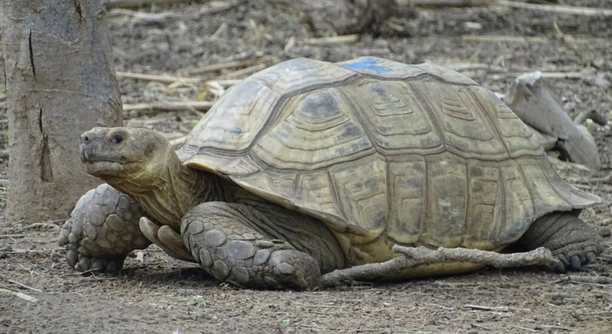
If your sulcata tortoise keeps rubbing against things, you may be wondering what’s causing this behavior. It’s important to understand what’s behind it. Sometimes, simple changes in the environment can make a big difference in your tortoise’s actions.
The behavior of rubbing against objects may stem from various causes, such as shedding, mating behavior, or simply exploring its environment. A tortoise rubbing its shell is often seeking stimulation or trying to mark its territory.
There are a few common reasons behind this action that can help you understand what your tortoise might be experiencing. Keep reading to learn how to address it and ensure your tortoise’s well-being.
Shedding and Discomfort
One common reason your sulcata tortoise might rub against objects is because it’s shedding its scutes. Shedding is a normal process for tortoises, where the outer layer of their shell flakes off to make room for new growth. During this time, they may rub their shells to ease the discomfort or help remove the old scutes.
It’s important to check if your tortoise is going through a shedding phase. If the rubbing becomes excessive or if the tortoise seems to be struggling, it might need extra care. You can help by providing a proper humid environment to assist in the shedding process.
To assist your tortoise, ensure it has access to a space with proper humidity and temperature, as these conditions can make shedding easier. Offering a soaking area for your tortoise can also help loosen the scutes. If the rubbing is accompanied by signs of injury or irritation, a visit to the vet might be necessary.
Mating Behavior
Another possibility for rubbing behavior is mating. Male tortoises often rub or push against objects to show dominance or attract a mate. This type of behavior is more common during breeding seasons, and it’s a natural instinct for male tortoises to display these actions.
During mating season, male sulcata tortoises will often exhibit increased activity and aggressive behaviors, such as head bobbing and rubbing against objects. If you have a female tortoise, this behavior might be directed toward her. While this might be completely normal, keeping a careful watch can help ensure no harm comes to either tortoise.
If the rubbing is persistent or if your tortoise seems stressed, make sure the living environment is suitable for such behavior. You may also want to separate males and females to prevent aggressive interactions if you’re not breeding them.
Exploration and Curiosity
Tortoises are naturally curious creatures, and rubbing against objects can simply be a way for them to explore their environment. They use their sense of touch to learn more about the world around them, including textures and possible food sources.
If your sulcata tortoise is rubbing against walls or other objects, it might just be exploring its space. You’ll often see this behavior when there’s something new in the environment, like a change in their habitat. It’s a sign they’re investigating and trying to understand their surroundings better.
To encourage healthy exploration, make sure your tortoise has a safe, enriched environment with plenty of space to roam. You can add new objects or even hide food around its habitat to spark curiosity. This can help alleviate the rubbing and give them a chance to express their natural instincts.
Stress or Frustration
Stress can cause tortoises to engage in repetitive behaviors, such as rubbing against objects. If your sulcata feels stressed or confined, it might be trying to find a way to express discomfort.
Common stress triggers can include overcrowding, temperature fluctuations, or not having enough space to move freely. If your tortoise has been acting out of character and rubbing against things, it could be a sign that it feels overwhelmed. This behavior can sometimes be linked to an unsuitable living environment, like not having enough hiding spots or stimulation.
Take a look at your tortoise’s living conditions. Make sure there are no loud noises, sudden movements, or too many animals in close proximity. Creating a calm and stable environment can reduce stress and help your tortoise feel more comfortable. You might also want to adjust the habitat’s temperature and humidity for better comfort.
Shell Problems
If your sulcata tortoise is rubbing against things frequently, it could be experiencing issues with its shell. Cracks, infections, or damage to the shell might cause your tortoise to try to rub off discomfort.
Inspect your tortoise’s shell regularly for any visible signs of damage or unusual growths. If you notice any cracks or signs of infection, it’s important to act fast. A damaged shell can lead to serious health complications and discomfort, prompting your tortoise to rub against objects to alleviate the pressure.
If you find any issues, take your tortoise to a vet immediately. Prompt treatment can help prevent further damage and make your tortoise more comfortable.
Improper Diet
Your sulcata tortoise’s rubbing behavior might be linked to an improper diet. Lack of calcium or essential nutrients can cause discomfort, leading to abnormal behaviors like rubbing against surfaces.
Make sure your tortoise’s diet includes enough fiber, calcium, and other essential nutrients. A diet high in greens and low in fruit is ideal. If your tortoise is deficient in certain vitamins or minerals, it may attempt to rub or scratch its body to soothe discomfort.
Regularly providing fresh, high-quality food is key to keeping your tortoise healthy and minimizing behaviors caused by nutritional deficiencies.
Enclosure Size
The size of your tortoise’s enclosure is important in preventing rubbing behavior. If the space is too small, your tortoise may feel cramped and stressed, leading to repeated actions like rubbing against walls.
Ensure that the enclosure provides plenty of room for your tortoise to move around. A spacious habitat will allow your tortoise to explore freely without feeling trapped or restricted. Keep in mind that sulcata tortoises grow quite large, so their enclosure needs to be appropriately sized for their future size as well.
FAQ
Why does my sulcata tortoise keep rubbing its head against things?
Rubbing its head can be a sign that your tortoise is experiencing discomfort or irritation. This could be due to a number of factors, such as shedding, stress, or even an injury. When a tortoise sheds, it may rub its head to help remove dead skin or scutes. However, if the rubbing is persistent, it’s important to check if there’s any injury or irritation on the head. If there’s no sign of shedding, examine the environment for sources of stress, like temperature fluctuations or overcrowding. Consulting a vet can also help determine if there’s an underlying health issue.
How can I tell if my tortoise is rubbing due to mating behavior?
If your tortoise is rubbing against objects, especially if it’s a male, mating behavior could be the cause. Males often rub or push against objects or other tortoises to show dominance or attract females during the breeding season. This rubbing is a natural part of the courtship behavior. If the rubbing is accompanied by head bobbing or other mating gestures, it’s likely related to mating instincts. However, if the behavior is occurring outside of the breeding season or becomes excessive, it may indicate stress or discomfort.
Can rubbing indicate a health issue with my tortoise’s shell?
Yes, rubbing can be a sign that your tortoise is dealing with a shell problem. Issues like cracks, infections, or fungal growth can cause irritation, leading your tortoise to rub against surfaces for relief. If you notice any changes in the texture or appearance of your tortoise’s shell, such as discoloration, softness, or scaly patches, it’s important to seek veterinary attention. In some cases, improper nutrition can also lead to shell deformities. A balanced diet with adequate calcium and UVB lighting is crucial for maintaining a healthy shell.
What are the signs of stress that could cause my tortoise to rub?
Stress can cause your sulcata tortoise to rub against objects as a response to environmental factors. Signs of stress include changes in behavior, such as increased activity, lack of appetite, or excessive rubbing. Stress can be caused by several things: inadequate temperature, overcrowding, or sudden changes in the tortoise’s environment. Providing a stable and calm habitat with proper temperature, humidity, and space is essential for reducing stress. Be mindful of any loud noises or disturbances that could also trigger stress in your tortoise.
Could my tortoise be rubbing because of a lack of space in its enclosure?
Yes, a small or overcrowded enclosure can cause your tortoise to rub against the walls in an attempt to find more space. Sulcata tortoises are large animals that require plenty of room to roam. If the enclosure is too small or lacks enrichment, your tortoise may start to exhibit repetitive behaviors like rubbing, which is often a sign of frustration. Ensure that the enclosure is spacious enough for your tortoise to move around comfortably. As your tortoise grows, you’ll need to adjust the space accordingly to accommodate its size.
How do I prevent my tortoise from rubbing too much?
To prevent excessive rubbing, you first need to identify the underlying cause. If the rubbing is due to shedding, maintaining proper humidity levels can help ease the process. For stress, ensuring your tortoise’s habitat is quiet, spacious, and free from disturbances can make a big difference. If it’s related to mating behavior, consider separating males and females to reduce aggression. Additionally, a balanced diet with proper calcium and UVB exposure is crucial for overall health. Regularly inspect your tortoise for signs of shell issues and consult a vet if necessary.
Should I be worried if my tortoise rubs its face against the glass?
If your tortoise is rubbing its face against the glass, it could be because it’s trying to explore its surroundings or it might be stressed. Tortoises often use their sense of touch to explore, so it’s normal for them to interact with the boundaries of their enclosure. However, if the behavior becomes excessive or seems like a sign of frustration, it could mean that your tortoise is feeling confined or stressed. Check if the enclosure is large enough and ensure it has hiding spots and sufficient enrichment. If the behavior persists, you might want to consult a veterinarian to rule out other possible causes.
Is rubbing a sign of boredom in my sulcata tortoise?
Yes, rubbing can sometimes be a sign of boredom. Tortoises, especially those kept in small enclosures without proper stimulation, may start rubbing against surfaces to entertain themselves or alleviate their frustration. This behavior can be minimized by providing more enrichment in the form of hiding spots, climbing structures, and objects to explore. Sulcata tortoises are intelligent and curious, so offering variety in their environment can help keep them engaged. Additionally, regular out-of-enclosure time can provide your tortoise with the opportunity to explore larger spaces and reduce the tendency to rub.
What can I do if my sulcata tortoise seems to be rubbing excessively?
If your tortoise’s rubbing becomes excessive, the first step is to assess its environment. Ensure the habitat is spacious, calm, and free from stressors like loud noises or other animals. Check for any signs of injury, shell problems, or poor nutrition that might be contributing to the behavior. If the rubbing persists and you’re unable to identify the cause, it’s important to consult with a veterinarian. They can help determine if there’s an underlying health issue that needs attention. Proper care, a balanced diet, and environmental adjustments can often resolve the behavior.
Understanding why your sulcata tortoise rubs against objects can help you provide better care for your pet. There are several reasons behind this behavior, from natural instincts like shedding and mating to signs of stress, injury, or discomfort. Rubbing may simply be a way for your tortoise to explore its environment or alleviate irritation. However, when it becomes excessive or is accompanied by other concerning signs, it’s important to assess its habitat and health to determine the underlying cause.
If you notice your tortoise rubbing against walls or objects frequently, start by checking its enclosure. Make sure it’s large enough and that the environment is calm and stable. Stress caused by overcrowding or temperature changes can lead to unwanted behaviors. A balanced diet with sufficient calcium and proper UVB exposure is also crucial for your tortoise’s overall well-being. In some cases, rubbing may be linked to shedding or mating behaviors, which are natural and temporary, but other times it might signal a problem that needs attention, such as shell issues or injuries.
Ultimately, regular observation and care are key to keeping your sulcata tortoise happy and healthy. Providing a comfortable environment with enough space and enrichment is important for preventing stress and boredom, which can contribute to rubbing. Always keep an eye on your tortoise’s behavior, and don’t hesitate to seek professional advice if you’re unsure of what might be causing the behavior. By taking a proactive approach, you can ensure your tortoise stays comfortable, healthy, and free from any unnecessary discomfort.

Hello,
If you enjoy the content that we create, please consider saying a "Thank You!" by leaving a tip.
Every little bit helps us continue crafting quality advice that supports the health, happiness, and well-being of pets around the world, for pets of all shapes, sizes, and species.
We really appreciate the kindness and support that you show us!