
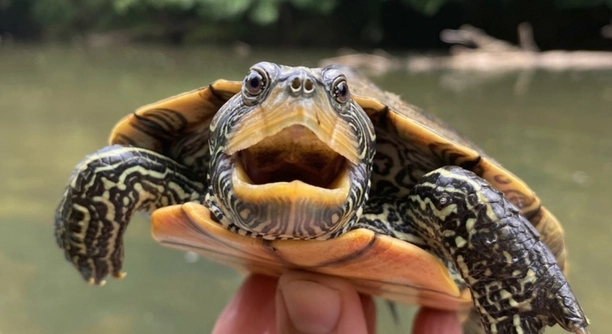
Map turtles are known for their unique behavior of flicking their claws in water. This curious action often catches the attention of many turtle enthusiasts and animal lovers alike.
Map turtles flick their claws in water as a form of communication and self-maintenance. This behavior can be attributed to their instinctual need to remove debris, defend themselves, or engage in social signaling within their environment.
Understanding why map turtles flick their claws can provide insight into their behavior and interactions, making it easier to observe and care for them in their natural habitat.
The Purpose Behind Claw Flicking
Map turtles flick their claws in water as part of a natural behavior. This action serves multiple purposes, from cleaning their claws to interacting with their surroundings. The claws are often used to remove any debris that may have collected on their bodies, which is essential for maintaining proper hygiene. In addition to cleaning, claw flicking may also be a form of communication, signaling to other turtles or responding to environmental stimuli. This action is not random; it is an instinctive behavior that helps them adapt to their environment, whether it be in the wild or captivity. Understanding this behavior provides insight into their overall well-being and how they interact with their habitat.
Their claws are a vital tool for map turtles, helping them with both survival and social behavior. Observing this flicking action can reveal much about their health and social interactions within the group. Over time, this simple behavior has become an important part of how map turtles maintain their environment and themselves.
Flicking claws also helps map turtles maintain balance and cleanliness, making it an essential action for their survival in the wild. By performing this action regularly, map turtles can keep themselves in top condition.
Social Signaling and Communication
In some cases, the flicking of claws may be a form of social signaling. Turtles are solitary creatures but can engage in subtle forms of communication with others of their kind. By flicking their claws, they may express certain emotions, such as irritation or stress, or even indicate a desire to interact. The motion can be noticed by other turtles, creating a form of silent communication. This behavior becomes especially apparent when multiple turtles are in close proximity to one another.
Turtles use a variety of body language cues to communicate, and claw flicking is just one of them. It can help establish dominance or play a role in mating rituals. In certain situations, a female turtle may flick her claws to signal interest to a male, while a male may do so to assert dominance. The action can sometimes indicate a response to external stimuli, such as changes in the environment or potential threats.
By understanding the different purposes behind this claw-flicking behavior, one can appreciate how map turtles use it to communicate and interact with their surroundings. This behavior is one of the many ways these creatures maintain order and clarity in their aquatic environment.
Claw Flicking for Self-Maintenance
Map turtles use their claws to remove debris from their bodies. This behavior helps keep them clean and free from harmful bacteria or parasites that could harm their health. The flicking action is not only useful for removing dirt but also assists in keeping their claws sharp. It is essential for their survival and overall well-being in both natural and captive environments.
As map turtles grow, their claws may become covered in algae, dirt, or even small particles from the water they live in. The flicking of claws helps to ensure that their limbs stay free from buildup that could affect their mobility. Turtles also use their claws to scratch or groom hard-to-reach spots, further helping with self-maintenance. This behavior is instinctual, allowing them to stay clean and healthy.
In some instances, map turtles may engage in more frequent flicking when they are in more polluted or muddy waters. This helps them adjust to their changing surroundings by keeping themselves free from any unwanted elements. It’s a natural, instinct-driven process that keeps them comfortable and functioning in their aquatic habitats.
A Defense Mechanism
Claw flicking can also serve as a defensive mechanism. When map turtles feel threatened, they may quickly flick their claws in the water to either ward off predators or signal discomfort. This motion can make them appear more alert and ready to react to any danger. It is an automatic response to situations that might pose a risk to their safety.
When a turtle feels threatened, its body language will change. The flicking of claws may accompany other signs of distress, such as retreating into their shell or becoming more vigilant in their movements. This quick reaction is part of their survival instincts, allowing them to respond appropriately when in danger. The action is generally harmless but helps signal to any potential threats that the turtle is not an easy target.
By understanding this defensive flicking behavior, we can gain a deeper appreciation for how map turtles protect themselves. It’s not just about cleaning or communicating; it’s also about ensuring their safety in their environment. The flicking claws serve as a multi-purpose tool in their daily lives.
The Role in Social Interaction
Flicking claws may also be used as a subtle form of social interaction between map turtles. When multiple turtles are in the same area, one may flick its claws to get the attention of another. This can signal a variety of things, from an invitation for interaction to a sign of discomfort.
Map turtles are solitary but still have occasional social moments. When interacting with other turtles, flicking claws might indicate a desire for space or a simple acknowledgment. These small, non-verbal cues help maintain a sense of order within their social structure. It’s a method of silent communication.
Environmental Influence on Behavior
Water quality can have an impact on how frequently map turtles flick their claws. In environments where water is murky or contaminated, turtles may flick their claws more often to clean themselves. The action becomes an essential part of their routine for staying healthy in less-than-ideal conditions.
The state of the environment, whether it’s clean or polluted, plays a role in the frequency and intensity of claw flicking. If turtles live in cleaner waters, they may not need to flick their claws as much, since debris is less likely to stick to their bodies. However, murkier environments demand more regular flicking to maintain cleanliness and health.
Observing Turtles in Captivity
In captivity, map turtles often flick their claws just as they do in the wild. However, when kept in tanks, the lack of natural currents can reduce the need for this behavior. The absence of natural water flow means debris may accumulate more easily, prompting turtles to engage in more frequent claw flicking.
Captive environments also lack the diverse array of stimuli found in the wild, so the flicking of claws might also serve as a way to interact with their artificial surroundings. This behavior is sometimes more noticeable when the turtles are in a confined space, where every action counts toward maintaining their comfort.
FAQ
Why do map turtles flick their claws in the water?
Map turtles flick their claws in the water primarily to maintain cleanliness. By using their claws to remove debris, algae, and other particles from their bodies, they ensure that they stay healthy and free from any potential contaminants. This behavior also plays a role in self-maintenance, as it keeps their claws sharp and ready for use.
Is claw flicking a sign of aggression?
Not necessarily. While map turtles may flick their claws in response to stress or discomfort, it is not always an aggressive act. It can be a form of communication, either signaling a desire for space or reacting to an environmental stimulus. In some cases, it may even be a sign of irritation but not direct aggression toward others.
Can claw flicking indicate a problem with the turtle’s environment?
Yes, excessive claw flicking can be a sign that the turtle is trying to adjust to its surroundings. If the water quality is poor or the turtle is feeling discomfort due to environmental conditions, it may flick its claws more often. Regular flicking in these cases can indicate the need for cleaner water or other changes in the habitat.
Do all map turtles flick their claws?
While most map turtles engage in claw flicking, the frequency and intensity of this behavior can vary based on the individual and their environment. Some turtles may flick their claws more often, while others may do it less frequently. Environmental factors, such as water cleanliness and temperature, also influence how often they exhibit this behavior.
Is claw flicking a learned behavior?
Claw flicking is primarily instinctual. Turtles are born with the ability to clean themselves and maintain hygiene, so they naturally engage in this behavior from an early age. However, they may also learn to use their claws for other purposes, such as social interaction, based on experiences within their environment.
Can map turtles flick their claws in both freshwater and saltwater?
Map turtles are primarily freshwater turtles and typically engage in claw flicking in these environments. They do not naturally live in saltwater, as their bodies are not adapted to such conditions. However, if placed in a saltwater environment, their claw flicking behavior may change, but it is not common for them to live in such conditions.
What are some signs that my turtle is stressed or unhappy?
Aside from claw flicking, there are several other signs that a map turtle may be stressed. These include erratic swimming, refusal to eat, staying at the bottom of the tank or hiding more frequently, and excessive basking. If these behaviors are noticed alongside increased claw flicking, it may be time to assess the turtle’s environment and health.
Can map turtles use their claws for defense?
Yes, map turtles can use their claws for defense, but they do not rely solely on them. Claw flicking, when done in response to a threat, is part of their defense mechanism. However, map turtles also have the ability to retreat into their shells for protection, a more effective defense against predators.
Does claw flicking help with mating behavior?
Claw flicking can play a role in mating behavior, but it is not the primary form of communication between males and females. During the mating season, males may exhibit more active behaviors, including claw flicking, to attract females or assert dominance. This could signal the male’s interest or dominance, but other behaviors like physical displays are more common for courtship.
How can I encourage my map turtle to flick its claws less frequently?
If your map turtle is flicking its claws excessively, it could be a sign of stress, discomfort, or environmental factors such as poor water quality. To encourage less frequent flicking, ensure that their environment is clean, the water is properly filtered, and their tank has adequate space for movement. Also, reduce external stressors that could trigger this behavior.
Should I be concerned if my turtle flicks its claws all the time?
Constant claw flicking may be a sign of an underlying issue, such as poor water quality, stress, or an imbalance in the turtle’s environment. If this behavior is continuous, it is important to check the water conditions, food, and tank setup. If the behavior persists, it might be helpful to consult a veterinarian for a thorough health check.
Can map turtles flick their claws while on land?
Map turtles typically flick their claws while in the water, as this is where the action is most effective for cleaning and self-maintenance. On land, their claws may be used for walking or climbing, but they are less likely to flick them unless they are in a stressful or uncomfortable situation.
Is claw flicking a part of the turtle’s normal routine?
Yes, claw flicking is a normal part of a map turtle’s routine. It helps with hygiene and is often seen when they are in the water, where debris can easily collect on their bodies. This behavior is entirely natural and essential for their overall well-being.
Can I tell the age of a map turtle based on its claw flicking?
Claw flicking is not directly related to the age of a map turtle. Turtles engage in this behavior throughout their lives, although the frequency and intensity may change as they grow older. Younger turtles may flick their claws less frequently, while older turtles may engage in it more often due to increased exposure to debris in their environment.
Are there any other benefits to claw flicking for map turtles?
Besides hygiene and communication, claw flicking also helps map turtles maintain balance and keep their claws sharp. Sharp claws are crucial for their ability to climb, dig, and interact with their environment. Flicking their claws keeps them in optimal condition for these activities, ensuring the turtle’s overall health and adaptability.
Final Thoughts
Map turtles flick their claws in water for various reasons, but it mainly serves the purpose of self-care and cleanliness. This behavior helps them remove debris and maintain their health by keeping their shells and claws free from dirt and algae. It’s a natural instinct that is important for their overall well-being, allowing them to stay healthy and protected from potential harm caused by contaminants. Understanding this behavior helps in providing a suitable environment for map turtles, ensuring that they have the clean, healthy conditions they need to thrive.
While claw flicking can sometimes be linked to environmental stress or discomfort, it’s not always a cause for concern. It’s important to observe the context in which the behavior occurs. If a map turtle is flicking its claws excessively, it may indicate the need for improvements in water quality or habitat conditions. On the other hand, occasional flicking is a normal, healthy behavior. It’s essential to strike a balance in monitoring the turtle’s environment and health, as these subtle behaviors offer valuable insights into their needs and state of well-being.
In conclusion, the flicking of claws by map turtles is a natural and beneficial behavior, essential for cleaning and communication. It should be recognized as part of their daily routine, but attention should be given to any changes in frequency or intensity, as this could signal environmental issues or stress. By ensuring that map turtles have a clean, comfortable environment, their health can be better supported, and the natural behaviors they exhibit, like claw flicking, can be properly understood and appreciated.

Hello,
If you enjoy the content that we create, please consider saying a "Thank You!" by leaving a tip.
Every little bit helps us continue crafting quality advice that supports the health, happiness, and well-being of pets around the world, for pets of all shapes, sizes, and species.
We really appreciate the kindness and support that you show us!