
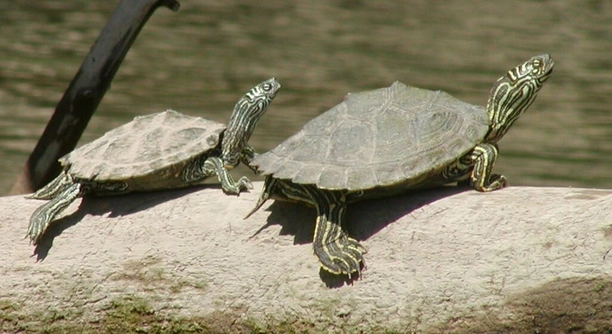
Map turtles are fascinating creatures that often engage in unique behaviors. One such behavior that catches the eye is their tendency to bob their heads. This action has intrigued many turtle enthusiasts and scientists alike.
Head bobbing in map turtles serves several purposes, including communication, mating displays, and territorial signaling. It is a behavior that allows these turtles to express dominance, attract potential mates, or simply interact with others within their environment.
Understanding this behavior can shed light on the complex communication system of map turtles. It also helps to better appreciate their interactions in the wild and how they navigate their social and environmental challenges.
Why Do Map Turtles Bob Their Heads?
Head bobbing in map turtles can be seen in different contexts. It is often observed when a turtle is attempting to communicate with others. In some cases, this is a signal of aggression, while in others, it serves as a courtship display. When competing for mates, males may bob their heads to display their strength or attract attention from females. This is particularly noticeable during the breeding season when competition is heightened.
Head bobbing may also act as a way for map turtles to establish their presence in their environment. By doing so, they communicate their territory to other turtles. It helps reduce physical confrontations by signaling their dominance or intention to defend space. Through this non-verbal communication, they avoid unnecessary conflicts with rivals.
Additionally, head bobbing can signal the turtle’s general well-being. Healthy map turtles tend to exhibit active and consistent head bobbing behavior. This action can be seen as a way to maintain social order, ensuring peace in their immediate environment.
When Does This Behavior Occur?
Head bobbing can become more frequent during specific periods in a turtle’s life. One such period is mating season, where males intensify this behavior to court females. During this time, they display their head bobbing as part of a larger mating ritual. This behavior increases in intensity when other males are present, as the turtles attempt to outcompete one another for the attention of a mate.
Additionally, map turtles may exhibit head bobbing when they feel threatened or challenged. If another turtle approaches their territory or shows signs of aggression, the bobbing increases. The goal is to send a clear message of territorial boundaries. This behavioral pattern helps map turtles maintain a structured hierarchy, reducing unnecessary fights and establishing boundaries in their shared environment.
How Does Head Bobbing Differ Between Males and Females?
Male map turtles are more likely to engage in head bobbing during mating seasons. They use this behavior to attract females, signaling their fitness and readiness to breed. This display is often accompanied by other gestures such as showing off their claws, enhancing their chances of being noticed.
Females, on the other hand, tend to be less frequent in their head-bobbing behavior. When they do bob their heads, it’s often seen during interactions with males or when defending their territory. Unlike males, females generally don’t use this behavior as an active means to attract mates. Their head bobs are more likely to be reactive to the actions of others in their environment.
Males’ head bobbing can also serve as a competitive measure, signaling their dominance over other males. A strong, steady bobbing motion suggests that the turtle is physically fit and capable of defending its territory. These displays are meant to establish hierarchy before a physical confrontation can take place.
Other Factors That Influence Head Bobbing
Map turtles are sensitive to changes in their environment, and these changes can trigger head bobbing. For instance, sudden disturbances or threats to their habitat often lead to an increase in head-bobbing behavior. When a map turtle feels endangered by predators or other turtles, this behavior becomes more intense as a form of warning.
Another influence is the social setting of the map turtles. In groups, interactions can lead to heightened displays of head bobbing. Turtles may engage in this behavior when interacting with unfamiliar individuals, especially in cases where there is competition for food or basking spots. This helps map turtles establish their position in the group and reduce potential conflicts.
Environmental Triggers for Head Bobbing
Changes in environmental conditions can play a role in how often map turtles bob their heads. For example, the presence of new objects or disturbances in their habitat, such as human activity or the movement of other animals, may prompt the turtles to engage in this behavior more frequently.
Turtles may also respond to seasonal changes. As the weather warms up and their environment becomes more active, map turtles may increase their head bobbing to signal readiness for mating or territorial defense. These environmental shifts help to trigger the behavior as they adapt to their surroundings.
What Does Head Bobbing Mean in the Wild?
In the wild, head bobbing can be a key behavior for map turtles to communicate with one another. It helps them maintain social order and boundaries. By displaying dominance or submitting to others, turtles avoid unnecessary physical confrontations. This form of communication ensures their safety and stability within their habitat.
Map turtles also use head bobbing to establish their territory. By marking their space with this behavior, they create an environment where they feel secure and less likely to encounter threats from other turtles. It is a subtle but essential part of their survival strategy.
What Does Head Bobbing Mean in Captivity?
Head bobbing in captivity may not always serve the same functions as it does in the wild. While territorial behavior and mating displays still occur, the lack of natural threats and a more controlled environment can lead to less frequent head bobbing. However, turtles in captivity may still use it for social interaction, especially if they are housed with other turtles.
Captive turtles may also bob their heads as a way of expressing frustration or agitation. If their enclosure is overcrowded or they are not receiving enough space to roam, they may use head bobbing to communicate discomfort or stress.
FAQ
Why do map turtles bob their heads?
Map turtles bob their heads for various reasons, most commonly as a form of communication. Males bob their heads to attract females, signaling their fitness and readiness to mate. This behavior also helps establish dominance in territorial disputes with other males. In general, head bobbing is a way for map turtles to communicate their position in their environment, whether it’s about territory or social interactions with other turtles.
Is head bobbing a sign of aggression?
Head bobbing can indeed be a sign of aggression, especially when it occurs between two males vying for territory or a mate. In these situations, the bobbing is a display of dominance and strength. However, head bobbing isn’t always aggressive. It can also be used for other reasons, like courtship or as a way to communicate with other turtles in a non-threatening manner. The context of the behavior will help determine whether it’s a sign of aggression or a more neutral interaction.
How can I tell if my map turtle is head bobbing because of stress?
If your map turtle is bobbing its head more frequently than usual, it could be a sign of stress. Stress-related head bobbing is often accompanied by other behaviors, such as pacing, aggressive interactions with other turtles, or refusal to eat. Factors like overcrowded enclosures, lack of space, or poor water quality can lead to increased stress, causing the turtle to exhibit more head bobbing. It’s essential to observe the overall behavior and environment to determine whether the head bobbing is stress-related.
Do map turtles always bob their heads in the same way?
No, map turtles don’t always bob their heads in the same manner. The intensity, frequency, and duration of head bobbing can vary depending on the situation. For example, a turtle may have a quick, subtle bob when it’s casually interacting with another turtle, while during courtship, the bobbing may be more pronounced and steady. The head bobbing behavior can also differ between males and females, with males typically using it more often to attract mates or assert dominance.
Is head bobbing dangerous for my map turtle?
Head bobbing is not dangerous to a map turtle in itself. It is a natural behavior used for communication, and it does not typically harm the turtle. However, if head bobbing is happening too often or in situations that indicate stress, it could be a sign of an underlying issue. For example, if your map turtle is bobbing its head excessively because of territorial disputes or aggression, it may lead to physical harm or injury. It’s important to monitor your turtle’s behavior and ensure that its environment is conducive to its health and well-being.
Can I stop my map turtle from bobbing its head?
It’s not advisable to stop your map turtle from head bobbing, as it is a natural and essential part of their communication. However, if head bobbing is happening too frequently or appears to be a sign of distress, it may be worth examining the turtle’s environment. Stress factors such as overcrowding, inadequate space, poor water quality, or lack of hiding spots could cause excessive head bobbing. Addressing these issues can help reduce unnecessary bobbing and improve the overall health and happiness of your turtle.
Is there a difference in head bobbing between species of map turtles?
Different species of map turtles may exhibit slight variations in head bobbing behavior. While the basic function of head bobbing remains the same, certain species may use it more or less frequently depending on their specific social structures and environmental needs. For example, some map turtles might engage in head bobbing more as a mating display, while others may use it more often for territorial reasons. However, the fundamental purpose of the behavior remains consistent across species, as it helps with communication, signaling, and social interactions.
What should I do if my map turtle is head bobbing constantly?
If your map turtle is bobbing its head constantly, it’s essential to assess its environment. Overcrowded enclosures, inadequate space, or water quality issues are common causes of excessive head bobbing. It’s also worth considering whether there are other turtles present that might be triggering the behavior through territorial disputes. If the bobbing is persistent and associated with signs of stress, it may be necessary to adjust the turtle’s living conditions to reduce stress and encourage a more natural behavior.
Does head bobbing have a specific time of day?
There is no specific time of day when map turtles are more likely to engage in head bobbing. However, certain times, like during mating seasons, may see an increase in this behavior, particularly among males trying to attract females. Turtles may also bob their heads more when there is increased activity in their environment, such as when they are sharing space with other turtles or encountering potential threats. If the behavior becomes a consistent part of your turtle’s daily routine, it might be worth monitoring to ensure there are no environmental factors contributing to it.
Can head bobbing be used to identify different types of map turtles?
While head bobbing is a behavior observed in all map turtles, it is not typically used as a way to identify specific species. The general pattern of head bobbing, such as its use for territorial defense or courtship, remains consistent across most species of map turtles. However, subtle differences in the frequency or manner of head bobbing may exist depending on the species and the environment they are in. If you are trying to identify different types of map turtles, it’s best to look at other physical characteristics, such as shell patterns or size, rather than relying solely on head bobbing behavior.
Final Thoughts
Map turtles display head bobbing for a variety of reasons, including communication, courtship, and territorial defense. This behavior is a normal part of their social interactions. It helps establish dominance and marks territories, especially among males during the breeding season. While it may seem strange at first, head bobbing plays an essential role in helping turtles navigate their environment and communicate with each other.
Understanding why map turtles bob their heads can help you better care for them, whether in the wild or captivity. In captivity, head bobbing can sometimes be a sign of stress or discomfort. Monitoring the turtle’s environment and making sure it is spacious, clean, and suitable can help reduce unnecessary head bobbing. When these turtles feel safe and secure, their behavior will likely become more relaxed and natural. It is important to address any stress factors that might cause constant head bobbing or other signs of distress.
In summary, head bobbing is a natural and common behavior in map turtles, essential for their social structure and communication. While it can signal mating readiness or territorial disputes, it may also indicate stress in captivity. Paying attention to their living conditions and ensuring they are healthy can help create a more comfortable environment for these fascinating creatures. Whether observing their behavior in the wild or in your home, understanding the reasons behind head bobbing can improve your relationship with map turtles and their overall well-being.

Hello,
If you enjoy the content that we create, please consider saying a "Thank You!" by leaving a tip.
Every little bit helps us continue crafting quality advice that supports the health, happiness, and well-being of pets around the world, for pets of all shapes, sizes, and species.
We really appreciate the kindness and support that you show us!