
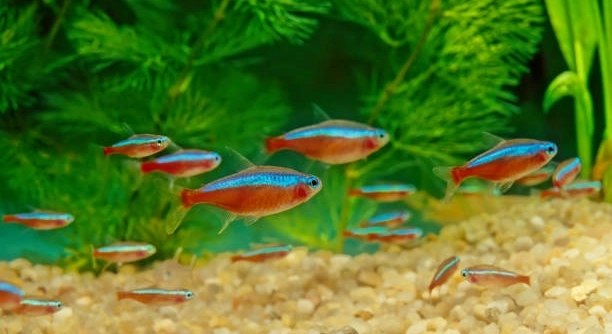
Do your tetras sometimes chase each other around the tank, nip at fins, or cause tension among your peaceful fish community?
The most effective way to prevent aggressive behavior in tetras is to address environmental stressors. These include tank size, group size, water quality, and the lack of enrichment, all of which influence social dynamics and behavior.
Learning how to manage these factors will help you keep your tetras calm, healthy, and better suited for a peaceful aquarium setup.
1. Keep Tetras in Proper Group Sizes
Tetras are schooling fish, which means they thrive when kept in groups. Keeping too few can cause stress, which often leads to aggressive behavior. A group of at least six is recommended for most tetra species. When they are in a proper group, they feel safer, more relaxed, and behave more naturally. If the group is too small, one or two fish may try to dominate the others. This creates tension in the tank and can result in chasing or fin-nipping. Keeping a larger group helps spread out any aggression and keeps individual fish from becoming targets. It also encourages natural schooling behavior, which reduces anxiety and keeps the environment peaceful. Always research your specific tetra species to understand their ideal group number. Some varieties may benefit from even larger schools, especially in bigger tanks. Balance is key to maintaining calm and consistent behavior in your aquarium.
Tetras need company to feel secure. A proper group size gives them comfort, reduces stress, and stops unnecessary aggression before it starts.
When your tetras are kept in the right group size, they are much more likely to exhibit calm and social behavior. They swim together in a coordinated way, showing off their colors without the added stress of territorial disputes. You may even notice them exploring more confidently. A peaceful group dynamic starts with understanding that tetras do not like to be alone. One aggressive fish can sometimes settle down when surrounded by enough others to keep it in check. In small groups, one fish may become dominant and cause trouble. But with a well-sized school, the attention is spread out, and no single fish feels the need to take over. This makes the tank more balanced and enjoyable to watch. Always start by considering how many fish your space can support, then choose the largest healthy group your tank can handle.
2. Provide Enough Space in the Tank
A small tank can make even peaceful tetras feel stressed. Overcrowding creates tension, and that tension often leads to aggression.
If tetras feel cramped, they may lash out at each other as they try to establish space or dominance. A larger tank gives them the room they need to swim freely, school properly, and avoid unnecessary contact. Aim for a minimum of 20 gallons for smaller species like neon tetras, and increase accordingly for larger or more active types. The shape of the tank also matters—longer tanks are better than tall ones, as tetras prefer horizontal swimming space. A well-planned tank should also account for decorations, plants, and hiding spots, which can take up usable space. When you provide enough room, each fish has the chance to create its own comfort zone. This reduces territorial stress and helps prevent fights. Keeping fish happy starts with respecting their need for space.
3. Add Plants and Decorations for Cover
Tetras feel safer when they have places to hide. Plants, driftwood, and decorations help break up sightlines and give them space to retreat.
When the tank has open space only, tetras are forced into constant interaction, which can raise stress levels. This makes it easier for aggression to appear, especially during feeding or if a dominant fish begins to chase others. Live plants like Java fern or Anubias are great because they grow thick and require low maintenance. Artificial plants can also work as long as they have soft edges. Arrange decorations to create shaded areas and hiding spots while still leaving space for schooling. A well-decorated tank not only reduces aggression but also looks more natural. These features help tetras feel more at ease, which leads to better social behavior and overall health.
Cover helps weaker or more passive fish avoid conflict. When they’re not constantly in each other’s view, tension stays low. This is especially helpful for tanks with mixed species, where tetras might feel more pressure to compete for space. Using plants and decorations to divide areas helps limit chasing and bullying. The more options fish have to retreat and rest, the less likely they are to lash out. These small changes can make a big difference in the overall atmosphere of your tank. Balanced placement matters—make sure hiding spots don’t overcrowd the swimming space. A peaceful tank is one where every fish can find a calm corner when needed.
4. Maintain Stable Water Conditions
Water quality affects how fish behave. Poor conditions cause stress, and stressed tetras often act out through aggression or erratic swimming.
Keep water parameters consistent by performing weekly water changes, testing for ammonia, nitrite, and nitrate, and keeping pH within the preferred range for your tetra species. Sudden temperature drops or spikes can also upset their behavior, so use a reliable heater and thermometer. A clean, filtered tank supports stable conditions, but filters should not create strong currents—tetras prefer gentle flow. Even when everything looks fine, regular testing is necessary to catch subtle changes. Stress from poor water can weaken their immune system and increase hostility. Good water quality is one of the most effective ways to reduce conflict in the tank. If a normally calm group becomes aggressive, it’s worth checking if something in the water has changed. Calm water makes for calm fish.
5. Avoid Mixing Incompatible Fish
Some fish are too aggressive or too active for tetras. Fast or fin-nipping species can make tetras feel threatened, which may trigger defensive behavior.
Stick to peaceful tank mates like other small schooling fish, bottom dwellers, or gentle invertebrates. Compatibility helps keep aggression under control.
6. Feed the Right Way
Feeding time can bring out competitive behavior in tetras, especially if there isn’t enough food or it’s all in one spot. Spread the food out across the tank to make sure every fish gets a chance to eat. Use sinking and floating foods to reach all levels of the tank. Overfeeding can harm water quality, while underfeeding creates stress and tension. Aim for small portions two to three times a day. Try feeding with the lights on so all fish are alert and active. A calm feeding routine can make a big difference in how your tetras interact with each other.
7. Remove Bullies if Needed
If one fish continues to act aggressively after changes are made, it may need to be separated. Some individuals simply don’t adjust.
Why do tetras become aggressive sometimes?
Tetras are usually peaceful fish, but they can show aggression when stressed. Common causes include overcrowding, poor water quality, and not having enough hiding places. Sometimes, aggression happens when they feel threatened by other tank mates or when the group size is too small. Territorial behavior can also appear during feeding times if food is limited. Stress makes them more likely to chase or nip at others to protect themselves or their space. Recognizing these causes helps you make the right changes to calm them down and keep the tank peaceful.
How many tetras should I keep together to reduce aggression?
Keeping at least six tetras together helps spread out any aggressive behavior. A proper school makes the fish feel safer and less likely to bully one another. Small groups can cause dominant fish to act out more, while larger schools encourage natural social interaction. Depending on your tank size, you can increase the number. Just make sure the tank is big enough to support them comfortably, so there’s enough swimming space and hiding spots for everyone.
Can the type of tank decorations affect tetra aggression?
Yes, decorations play a big role in reducing aggression. Plants, driftwood, and rocks create hiding places where tetras can retreat when they feel threatened. This breaks up the line of sight and lowers tension. Without enough cover, fish may feel exposed and stressed, which increases aggressive behavior. Use a mix of live or artificial plants along with other decorations to give your tetras plenty of safe spots. But remember, don’t overcrowd the tank—leave enough open space for swimming.
Does water temperature influence tetra aggression?
Water temperature impacts tetra behavior a lot. Sudden changes or temperatures outside their ideal range cause stress, which can lead to aggression. Most tetras prefer temperatures between 72°F and 80°F (22°C to 27°C). Keeping the water stable within this range helps maintain calm behavior. Use a reliable heater and thermometer to avoid fluctuations. Consistent water conditions support healthy immune systems and social interactions, reducing the chance of fighting.
What should I do if one tetra is always aggressive?
If one fish keeps acting aggressively after fixing tank conditions, it might need to be separated. Some individual tetras just don’t fit well in the group or may be naturally more dominant. You can try isolating it temporarily in a separate tank or breeder box to calm things down. If aggression continues, consider permanent removal to protect the rest of your fish. Always observe carefully to avoid injuries and ensure all fish stay safe.
How often should I clean the tank to prevent aggression?
Regular maintenance is key to peaceful tetras. Perform partial water changes weekly, usually around 20-30%, to keep water clean and reduce toxins. Test water regularly for ammonia, nitrite, and nitrate to catch problems early. Dirty or toxic water stresses fish and triggers aggressive behavior. A clean tank supports better health and social balance. Avoid deep cleaning that disrupts beneficial bacteria; focus on gentle, consistent care.
Can feeding habits affect tetra aggression?
Yes, feeding habits are important. Uneven food distribution or insufficient amounts can cause competition and chasing during feeding times. Spread food evenly across the tank and use both sinking and floating pellets to reach all fish. Feed small amounts two or three times a day to prevent overfeeding and poor water quality. Calm, consistent feeding routines help tetras feel secure and reduce fights over food.
Is tank size important for preventing aggression?
Tank size is very important. Small tanks crowd fish and increase stress, often leading to fights. A minimum of 20 gallons is recommended for small tetra species, with larger tanks needed for bigger groups or larger species. Long tanks are better than tall ones because tetras prefer horizontal swimming space. More room lets fish establish territories and avoid constant close contact, which lowers aggressive behavior and improves overall well-being.
Keeping tetras calm and peaceful in your aquarium depends on several important factors. One of the main things to remember is that tetras are social fish and do best when kept in proper group sizes. A small school helps reduce stress and keeps aggressive behavior to a minimum. When fish feel safe and comfortable, they are less likely to fight or chase each other. Along with group size, providing enough space is essential. Overcrowding can cause tension, so it is important to choose a tank that gives your tetras room to swim and explore.
Another key point is the environment inside the tank. Adding plants and decorations gives fish places to hide when they feel threatened. These hiding spots help break up the tank and lower stress, which reduces aggressive interactions. Clean, stable water is also critical. Regular water changes and testing keep water quality high and prevent conditions that cause fish to become stressed or ill. Water temperature should be consistent, as sudden changes can upset the fish and lead to aggression. Feeding your tetras the right amount and spreading food throughout the tank also helps keep peace during mealtime.
Finally, choosing the right tank mates is important. Avoid mixing tetras with aggressive or very active species, as this can make tetras feel threatened and cause them to act out. If a particular fish continues to be aggressive despite your best efforts, it may be necessary to remove or isolate that individual for the well-being of the group. By paying attention to these factors—group size, tank environment, water quality, feeding, and compatible tank mates—you can create a calm and healthy home for your tetras. This leads to happier fish and a more enjoyable aquarium to watch.

Hello,
If you enjoy the content that we create, please consider saying a "Thank You!" by leaving a tip.
Every little bit helps us continue crafting quality advice that supports the health, happiness, and well-being of pets around the world, for pets of all shapes, sizes, and species.
We really appreciate the kindness and support that you show us!