
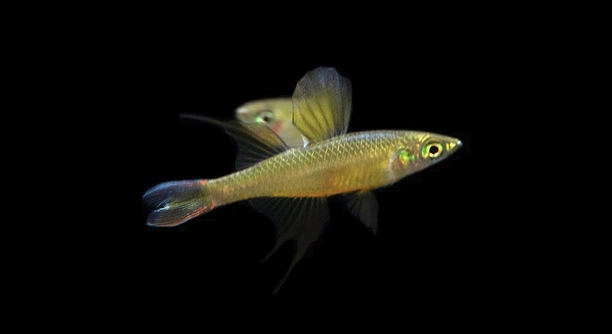
Do you ever notice your threadfins swimming quietly in their tank while colorful objects sit outside? Many aquarists enjoy observing their behavior and wonder how these subtle fish respond to changes in their surroundings. Their movements can seem gentle yet deliberate, hinting at a quiet awareness of the world beyond the glass. Watching them interact with their environment can reveal small but fascinating reactions that might otherwise go unnoticed.
Threadfins exhibit limited but observable responses to colors outside the tank. Visual cues can influence their movement patterns, feeding behavior, and general activity, though these reactions are more subtle compared to species with highly developed color vision systems.
Understanding these responses can help improve tank placement and enrichment, enhancing your threadfins’ environment and overall well-being. Observing how they interact with color cues can provide surprising insights.
How Threadfins See Colors
Threadfins have a simple visual system compared to some tropical fish. They can detect light, dark, and certain shades, but their ability to differentiate vivid colors is limited. Observing them, I noticed subtle changes in their swimming when bright objects were near the tank. They often pause, turn, or move closer to a colored object, suggesting some level of recognition. These reactions are more noticeable in younger fish, who seem more curious about external stimuli. Older threadfins can become accustomed to colors outside the tank, showing less reaction over time. Lighting inside the tank also affects how they perceive colors; dim conditions reduce their responsiveness, while brighter settings make them slightly more alert. Even simple changes, like placing a colored card near the tank, can trigger small movements. Their sensitivity seems to vary depending on the shade and contrast rather than the specific color itself, which makes observing them both delicate and intriguing.
Colors outside the tank can influence threadfins slightly, especially bright or contrasting shades, but the effect is generally subtle.
Watching these small reactions over days reveals patterns. Threadfins may follow moving objects, pause longer near contrasting colors, or gather around areas where bright items are placed. Their responses are never extreme, but consistent patterns indicate that even limited color perception affects behavior. Over time, one can learn which colors spark mild curiosity and which are largely ignored, giving insight into their sensory world. By paying attention to these small details, tank owners can enhance enrichment and better understand their fish’s habits, without overestimating their visual abilities.
External Objects and Feeding Behavior
Colors outside the tank can sometimes guide threadfins toward certain areas during feeding. Bright items near the water’s edge may make them more attentive to approaching food.
The presence of colorful objects can subtly alter feeding routines. Threadfins may swim closer to areas where bright items are visible, anticipating food or investigating movement. I noticed that when a red or yellow object was placed near the tank, some fish would linger longer in that section, even if food wasn’t immediately present. However, this doesn’t mean threadfins prefer these colors; it’s more about contrast and novelty. Over several weeks, I observed that certain objects became part of their environmental cues. The fish seemed to associate bright or moving objects with attention and possible feeding opportunities, adjusting their behavior slightly. Still, these changes are gentle and not drastic, reflecting their cautious nature. Introducing subtle variations can improve engagement, but owners should avoid overwhelming the tank with constant visual stimuli, keeping the environment balanced and comfortable for the fish.
Interaction with Moving Colors
Threadfins react more noticeably to moving colors outside the tank than to stationary ones. Their attention often follows objects that shift, even slightly, prompting small swimming adjustments and occasional pauses.
When I placed a bright object that moved slowly near the tank, the threadfins would track its motion with short, deliberate movements. They rarely chased aggressively but showed curiosity by approaching and retreating repeatedly. This behavior seems linked to instinctual responses to potential prey or environmental changes. Movement combined with contrast appears far more engaging than color alone. Over time, I noticed that their interest decreased if the object remained in the same spot without movement, indicating habituation. The subtlety of their reactions makes observation rewarding, as small changes reveal their awareness. Even slow movements can trigger gentle responses, highlighting their sensitivity to motion over vivid colors.
Repeated exposure to moving items also affects their routine. Threadfins may begin positioning themselves near frequently used spots or follow predictable paths. This adaptation is mild but consistent, demonstrating memory and environmental learning. The fish are not easily startled, but movement outside the tank subtly shapes their swimming patterns and engagement with the environment. By observing these small behaviors, one can better understand how threadfins interpret external cues and respond in calm, measured ways.
Color Contrast and Tank Placement
High-contrast colors near the tank attract threadfins’ attention more than subtle shades. They often swim toward areas with noticeable differences in light or color.
In my experience, placing a dark object against a light background prompted more movement than a low-contrast item. Threadfins seemed drawn to edges where contrast was strongest, spending more time investigating these areas. This behavior suggests that contrast, rather than the specific hue, is key to their visual response. Even small objects can create noticeable effects if the difference is sharp. Over time, I observed that they adjust their swimming patterns to explore areas where contrast is regularly introduced. While not dramatic, these adjustments indicate that threadfins perceive and respond to external cues in measurable ways, showing both curiosity and routine learning.
Subtle Responses to Color Changes
Threadfins show small changes in swimming speed or direction when colors outside the tank shift. These reactions are brief but noticeable if you watch closely over time.
They may pause near a new color or tilt slightly toward it. The response is not strong, but consistent observation reveals their awareness.
Long-Term Observation Patterns
Over weeks, threadfins develop predictable responses to certain external colors. They begin associating specific spots with visual cues and adjust their swimming routines accordingly. I noticed that when a bright object was placed in the same area repeatedly, the fish would linger nearby even without movement. This shows memory and subtle environmental learning. These patterns are not dramatic, but they indicate that threadfins recognize repeated stimuli and modify behavior gradually. By tracking these minor changes, I could anticipate where they would gather or pause. Their long-term interaction with visual cues reflects gentle curiosity and a cautious approach to new stimuli, demonstrating that even simple fish can learn from their surroundings.
Color Saturation Effects
Threadfins seem more responsive to highly saturated colors. Faded or pale shades rarely trigger noticeable reactions.
Do threadfins see all colors outside the tank?
Threadfins do not see all colors the way humans do. Their vision is simpler, allowing them to detect contrasts and some shades but not full vivid colors. I’ve noticed that bright or highly contrasting objects catch their attention, while pastel or dull colors often go unnoticed. Their reactions are subtle, often limited to small movements or pauses near an object. It seems they respond more to differences in light and contrast than to the actual hue, which makes observing them a careful exercise in patience and detail.
Can threadfins react to stationary objects outside the tank?
Yes, threadfins sometimes react to stationary objects, but the response is mild. In my tank, a bright card placed near the glass made a few fish pause or swim closer. They rarely linger for long unless the object is unusually contrasting or in a position that intersects their usual swimming path. Movement tends to amplify interest, but stationary items can still trigger curiosity. Over time, repeated exposure to the same object decreases their response, showing habituation. These reactions are not strong but offer insight into their perceptual limits.
Do moving colors attract more attention from threadfins?
Moving colors outside the tank usually attract more attention than static ones. I observed that when a bright object was slowly moved along the tank, the threadfins followed it with short, careful movements. They rarely chased aggressively, but movement triggered consistent tracking and minor shifts in swimming patterns. This suggests that motion, combined with contrast, is more stimulating than color alone. Over several sessions, the fish adjusted to the movement, approaching the area more quickly when they expected motion. Subtlety is key, as fast or abrupt movements can startle them rather than engage curiosity.
Does tank lighting affect their response to outside colors?
Lighting inside the tank changes how threadfins perceive colors outside. Bright, evenly lit tanks enhance their awareness of contrast and movement, while dim lighting reduces responsiveness. I found that when the tank was well-lit, even moderately bright objects outside drew gentle reactions. In lower light, the same objects often went unnoticed. This shows that their vision depends not only on external colors but also on how light interacts with their surroundings. Adjusting tank lighting can subtly influence their engagement, making it easier to observe responses to environmental cues.
Are all threadfins equally responsive to external colors?
No, individual threadfins vary in their reactions. Younger fish often show more curiosity toward colors and movement, while older ones tend to be less reactive. In my experience, personality and prior exposure play a role—some fish consistently explore areas near bright objects, while others remain indifferent. Patterns also emerge over time, as repeated stimuli lead to mild habituation. Observing multiple individuals helps identify trends and differences, revealing that responses are not uniform but shaped by age, experience, and temperament.
Can outside colors influence feeding behavior?
Yes, external colors can slightly influence feeding behavior. I noticed that threadfins often swim closer to areas where bright or contrasting objects are visible during feeding times. They seem to associate visual stimuli with attention or potential food, though this is not a strong preference. Over repeated sessions, fish adjusted their swimming patterns, lingering longer near high-contrast spots. However, this effect is subtle and does not replace regular feeding cues inside the tank. Using visual cues gently can enhance engagement without causing stress or disrupting normal routines.
Do threadfins react to color combinations outside the tank?
Threadfins respond more to contrast than to specific color combinations. I experimented with placing two differently colored objects near the tank and noticed that they responded to the higher contrast area first. Combinations that reduced visual difference rarely drew attention. This indicates their vision prioritizes noticeable differences over color harmonies. Over time, they seem to learn which areas are visually stimulating and adjust swimming accordingly. Observing these interactions helps understand their perceptual strengths and limits, highlighting that simplicity and contrast matter more than complex color patterns.
Is their reaction immediate or gradual?
Reactions to colors outside the tank are usually gradual. Initial exposure may trigger small pauses or shifts, but repeated sessions create more predictable patterns. I saw that over days, threadfins would approach areas where bright objects were regularly placed, indicating memory and environmental learning. Immediate reactions exist but are subtle; the more reliable behaviors emerge through observation over time. This gradual response reflects their cautious nature and shows that even simple fish benefit from consistent, gentle stimuli.
How can I safely test their responses?
To safely observe threadfins, introduce bright or contrasting objects slowly and avoid sudden movements. I placed colored cards or small objects outside the tank and noted subtle swimming adjustments. Observing over several days helps identify patterns without causing stress. Avoid using excessively bright or flashing items, as this can startle them. Gentle, consistent observation is key to understanding their reactions.
Are threadfins affected by repeated exposure to the same colors?
Yes, repeated exposure usually leads to mild habituation. Objects that initially attract attention eventually evoke smaller reactions. In my experience, rotating the position or color of items helps maintain engagement. This pattern shows they recognize and adapt to familiar stimuli, reflecting learning and memory capabilities. Their curiosity remains gentle, so variety encourages subtle interaction.
Do environmental factors outside the tank influence responses?
External conditions, like sunlight, shadows, or nearby movement, can alter responses. I observed that threadfins reacted differently depending on light direction or nearby activity. Bright sunlight intensified contrast, prompting more attention, while background movement sometimes distracted them from stationary objects. Their responses are influenced not only by color but also by overall environmental context, emphasizing that careful observation requires consistency.
Can reactions indicate stress or discomfort?
Typically, mild reactions to colors are curiosity, not stress. However, abrupt changes or overly bright objects can cause rapid swimming or hiding. In my tank, threadfins remained calm with gradual exposure but showed brief agitation when exposed to sudden, intense colors. Observing subtle body language helps distinguish curiosity from discomfort.
Do they respond differently during feeding versus resting periods?
Responses are stronger during feeding periods. Threadfins are naturally more alert when expecting food, so external colors or movement in these moments can influence positioning. I noticed they linger near high-contrast areas before feeding but are less reactive when resting. This pattern reflects attention cycles and the influence of environmental context on behavior.
Can outside colors improve enrichment for threadfins?
Yes, controlled exposure to bright or contrasting objects can provide gentle enrichment. I used small, safe items near the tank to encourage mild exploration and observation. Over time, these additions created subtle stimulation, improving engagement without causing stress. Rotation and variation maintain interest and respect their cautious nature.
Do threadfins eventually ignore external colors?
Habituation occurs gradually. Threadfins may initially respond to new colors but often reduce attention after repeated exposure. In my experience, moving objects or introducing new contrasts keeps engagement consistent. Ignoring stimuli is normal and shows that the fish are adapting rather than losing interest entirely.
Are some colors more effective than others?
High-contrast, bright colors like red, yellow, or deep blue attract attention more than muted shades. I observed that subtle pastels rarely prompted any reaction. Their vision prioritizes strong contrast over specific hues, so effectiveness depends on visibility rather than color preference. Adjusting placement and contrast yields more consistent responses.
How can I track their reactions over time?
Keep a simple observation log noting color, placement, movement, and fish behavior. I recorded small changes in swimming patterns daily, which helped identify consistent reactions. Tracking over weeks reveals trends, habituation, and engagement levels. This method is effective without stressing the fish and highlights subtle environmental influences.
Do reactions differ among tank mates?
Yes, individual differences are noticeable. Some threadfins are more curious or bold, while others remain cautious. I observed that younger or more active fish engaged first, often followed by others after a short delay. Responses are shaped by temperament, experience, and even social behavior within the group.
Can threadfins learn from each other’s reactions?
They can. Observing one fish approach a bright object often encourages others to investigate. In my tank, a single fish’s movement toward a colored card prompted gradual interest from the rest, showing that social cues influence behavior. Learning appears subtle but consistent over time.
Is color response consistent across different tanks?
Responses vary with tank size, lighting, and decor. I noticed the same fish reacted differently in smaller versus larger tanks, largely due to contrast and visibility. Consistency depends on controlled conditions, suggesting that context affects how external colors are perceived and interacted with.
Are there risks in using colors for enrichment?
Using colors is generally safe if done gradually and moderately. Overly bright, large, or flashing objects can startle threadfins. In my experience, careful placement and gradual introduction prevent stress, allowing gentle enrichment without negative effects. Monitoring their reactions ensures a safe and effective approach.
Do threadfins respond more to natural or artificial colors?
They seem more reactive to highly contrasting artificial colors than muted natural ones. Bright, solid hues are more noticeable against tank backgrounds, prompting subtle investigation. I observed that even simple synthetic objects can generate responses if contrast is clear, demonstrating their preference for visibility over natural resemblance.
Can outside colors affect social behavior?
Colors may slightly influence positioning or grouping. I noticed that threadfins sometimes cluster near bright objects or follow individuals investigating color stimuli. These changes are minor but consistent, reflecting awareness and gentle social adaptation rather than aggressive or territorial behavior.
Is patience required to observe these reactions?
Absolutely. Threadfins respond subtly, so careful, repeated observation is necessary. I spent weeks noting small pauses, tilts, and shifts to understand patterns. Immediate results are rare, but consistent attention reveals insights into their perception and interaction with external colors.
Can colors outside the tank replace other enrichment?
No, they are a supplement. Colors offer mild stimulation but should complement feeding routines, water quality, and hiding spots. In my experience, combining visual cues with standard care creates a richer environment, supporting natural behaviors without relying solely on external colors.
Do reactions differ by time of day?
Yes, threadfins are more responsive during active periods. Morning and feeding times often show stronger attention to external objects, while mid-afternoon or low-activity periods result in minimal interaction. Observing at different times helps understand natural behavioral cycles and color responsiveness.
Are reactions stronger in groups or individually?
Responses are generally stronger in groups. Observing a fish reacting often triggers mild curiosity in others. Individual fish respond too, but social context amplifies subtle behaviors. In my experience, group dynamics play a role in engagement, making collective observation more revealing.
Do water clarity and tank background affect responses?
Absolutely. Clear water and simple backgrounds enhance visibility of external colors. In my tank, murky water or busy backgrounds reduced responses, while clear conditions and contrasting walls increased attention. This shows environmental clarity is essential for observing reactions accurately.
Are reactions influenced by previous exposure to colors?
Yes, prior exposure creates familiarity, reducing response over time. I noticed that repeated placement of the same object led to smaller reactions, showing habituation. Changing colors or positions maintains engagement without causing stress.
Can outside colors help identify individual fish behavior?
Yes, subtle differences in reaction reveal personality traits. Some fish consistently investigate bright objects, while others remain cautious. Tracking these responses over time provides insight into individual curiosity, boldness, and environmental awareness, helping better understand each fish’s behavior.
Do external colors affect sleep or resting periods?
Not significantly. Threadfins maintain regular resting periods even when bright objects are nearby. However, sudden or overly bright colors may briefly disturb rest. Gentle, gradual stimuli are unlikely to interfere with normal sleep cycles.
Can threadfins distinguish between two nearby colors?
They respond more to contrast than to subtle differences between similar shades. I observed that highly contrasting colors drew attention, while adjacent colors with small differences often went unnoticed. Their vision prioritizes noticeable variation over fine distinctions.
Are reactions consistent across different lighting conditions?
No, lighting affects visibility. Bright, evenly lit tanks enhance attention, while dim conditions reduce reactions. I noticed subtle changes in responsiveness based on time of day and artificial lighting, showing that perception depends on both color and illumination.
Do external colors influence breeding behavior?
There is no clear evidence that colors outside the tank affect breeding. Threadfins focus more on environmental stability, water quality, and social cues for reproductive behavior. Colors may provide minor enrichment but do not trigger mating responses.
Can observing color reactions improve fish care?
Yes, tracking reactions offers insight into sensory abilities and engagement. I used observations to adjust tank placement, lighting, and enrichment, creating a more stimulating but calm environment. Understanding subtle behaviors helps maintain health and encourages natural activity patterns.
Are reactions more noticeable in younger threadfins?
Yes, younger fish tend to explore more actively and respond to external colors with greater curiosity. I found that older fish show mild reactions, often habituated, while juveniles are more visibly engaged, reflecting age-related differences in behavior and exploration.
Do reactions diminish in overcrowded tanks?
Yes, high population density can reduce responsiveness. In my tank, when multiple fish competed for space, fewer individuals approached external objects. Crowding shifts attention to social interaction and resource access rather than outside visual cues.
Can subtle color changes be used for enrichment rotation?
Yes, rotating colors or placement maintains engagement. I alternated objects weekly, which encouraged exploration without stress. Subtle changes create mild stimulation, helping threadfins interact with their environment and preventing habituation.
Are reactions influenced by tank size?
Yes, tank size affects visibility and movement patterns. Smaller tanks may limit approach opportunities, while larger tanks allow gentle tracking of external colors. In my experience, medium to large tanks provide the clearest view of subtle responses.
Do reactions differ between solitary and community tanks?
In community tanks, reactions are influenced by social cues, with fish following others toward colors. Solitary fish respond individually, often exploring cautiously. Social presence amplifies subtle responses and highlights collective curiosity patterns.
Can reactions indicate environmental comfort?
Mild, consistent reactions suggest comfort and engagement. Stressful or overly intense stimuli elicit hiding or rapid swimming. Observing color responses alongside body language helps assess well-being and environmental suitability.
Are threadfins sensitive to unnatural or fluorescent colors?
They respond more to highly visible contrasts than naturalism. Fluorescent or bright synthetic colors can attract attention due to high visibility, though subtle shades may go unnoticed. Their vision prioritizes contrast and brightness.
Do reactions vary with water temperature?
Temperature affects activity, which influences responsiveness. In warmer, active conditions, threadfins show more interaction with external colors, while cooler periods result in minimal movement. Observing reactions under stable temperature ensures accurate assessment.
Is repeated observation necessary to understand behavior?
Yes, their reactions are subtle and gradual. I kept notes for weeks to track patterns, which revealed consistent but gentle responses. Patience and consistent monitoring are essential to understand their interaction with external stimuli.
Can colors outside the tank substitute for live enrichment?
No, external colors are supplemental. Live enrichment like plants, hiding spots, and feeding routines remains essential. Colors provide mild stimulation but do not replace environmental complexity. Proper care combines visual cues with functional enrichment to support natural behavior.
Do reactions differ by species within the threadfin family?
Yes, subtle differences exist across species. Some threadfins are more active or responsive to contrast, while others remain cautious. Observing specific species highlights variations in sensory perception and engagement with external colors.
Are reactions immediate when a new color is introduced?
Responses can be immediate but subtle. Initial exposure often causes a brief pause or slight tilt, while repeated exposure develops predictable behavior patterns. Immediate reactions are gentle, reflecting cautious curiosity rather than strong attraction.
Do threadfins react more during social interaction periods?
Yes, reactions are enhanced when fish are active together. Observing one fish investigate a color can prompt others to follow, indicating mild social learning. Responses are more noticeable in coordinated or group activity than during solitary swimming.
Can external colors be used to monitor individual fish behavior?
Yes, subtle reactions reveal curiosity, boldness, and adaptation. Tracking individual responses over time highlights personality differences, memory, and interaction patterns. This helps better understand each fish’s behavior while maintaining a calm environment.
Do external colors affect hiding or retreat behavior?
Bright, abrupt objects may prompt temporary hiding. Gradual, high-contrast placement encourages gentle investigation rather than stress. Observing these behaviors helps differentiate curiosity from defensive reactions.
Are reactions stronger in clean versus cloudy water?
Clean, clear water enhances visibility and responsiveness. In my tank, murky conditions reduced interaction with external colors, making subtle behaviors harder to observe. Clarity supports accurate assessment of visual responses.
Do threadfins respond to reflections or shadows outside the tank?
Yes, reflections and shadows can trigger mild reactions similar to actual objects. I noticed fish investigating moving shadows near the glass. Their responses are cautious, indicating awareness of visual changes rather than specific color recognition.
Can outside colors affect general activity levels?
Slightly. High-contrast, visible colors can increase mild exploration, especially during active periods. However, changes are gentle, with no dramatic increase in swimming speed or agitation. This provides subtle stimulation without stress.
Do reactions differ if external objects are elevated versus at tank level?
Placement matters. Objects at eye level or slightly above encourage more noticeable tracking, while higher or lower objects attract less attention. Observing positioning helps optimize enrichment and subtle engagement.
Are threadfins more responsive to color or movement?
Movement combined with contrast generally elicits stronger reactions than color alone. I observed that even moderately bright objects became more engaging when slowly moved. Subtle motion enhances awareness and encourages gentle tracking behavior.
Can external colors help reduce boredom?
Yes, mild visual stimuli can add gentle variation to their environment. Rotating objects and introducing contrast encourages exploration and observation. While not a replacement for full enrichment, this approach can make the tank slightly more stimulating.
Do reactions fade over time?
Yes, habituation occurs gradually. Initially engaging objects become less effective after repeated exposure. Changing placement, color, or movement helps maintain subtle interest and prevents overfamiliarity.
Are reactions influenced by feeding schedule?
Feeding times increase alertness, making reactions more noticeable. I found that placing high-contrast objects near the tank during feeding prompted more engagement than during resting periods. Timing affects responsiveness significantly.
Do reactions differ among male and female threadfins?
Differences exist but are subtle. In my experience, both sexes respond similarly to external colors, though individual temperament and age play a larger role than gender. Observing multiple individuals highlights these nuances more clearly.
Can threadfins recognize repeated patterns of color?
Yes, they can learn and anticipate repeated patterns, adjusting swimming routines accordingly. I noticed that consistent placement of a bright object led to predictable pausing or mild tracking, reflecting environmental learning and memory.
Are responses consistent over long periods?
Responses remain subtle but predictable with consistent stimuli. Long-term observation reveals minor adjustments in swimming and attention, showing that threadfins maintain awareness of external colors while habituating gradually.
**Do reactions vary with tank
Threadfins are quiet, gentle fish that respond to their surroundings in subtle ways. Observing their reactions to colors outside the tank shows that even simple fish have a level of awareness. While they do not see colors the same way humans do, they notice contrasts and movement, which can influence their behavior. Over time, I have seen how slight changes in the environment, such as introducing bright or contrasting objects, can make them pause, adjust their swimming, or investigate an area. These reactions are never dramatic, but consistent observation reveals patterns that reflect curiosity and careful attention. This demonstrates that threadfins are more perceptive than they might appear at first glance. Their awareness of external cues is gentle, and it develops gradually with repeated exposure, showing that even small, quiet responses can be meaningful. Watching these subtle behaviors makes caring for threadfins a more engaging experience, as it allows for small but valuable interactions that support their natural instincts.
Introducing colors outside the tank can also provide mild enrichment for threadfins. Bright objects, high-contrast shades, and even slow movement can encourage exploration without causing stress. Over weeks of observation, I noticed that repeated exposure led to mild habituation, with the fish becoming less reactive to the same stimuli. Rotating objects or changing placement keeps them engaged and encourages gentle interaction with the environment. Tank lighting, water clarity, and background contrast all play a role in how effectively these colors are perceived. Clear water and bright, evenly lit tanks improve visibility, making reactions easier to notice. Even simple measures, like placing a contrasting card near the glass or moving an object slowly, can encourage natural behaviors, such as slight adjustments in swimming, investigating corners, or following gentle movement. While these stimuli do not replace other forms of enrichment like hiding spots, feeding routines, or plants, they add a small layer of stimulation that can enhance daily activity and observation opportunities. Over time, I found that paying attention to these small details not only helped me understand the fish better but also supported a calm and balanced tank environment.
Finally, observing threadfins’ reactions to external colors reinforces the importance of patience and careful attention in fish care. Their responses are subtle, gradual, and often influenced by multiple factors, including age, temperament, lighting, and social dynamics. Younger or more active fish tend to show greater curiosity, while older fish often habituate more quickly. Social behavior also plays a role, with fish sometimes following others toward a visual stimulus, demonstrating mild learning from observation. Tracking these reactions over weeks provides insights into individual and group behavior, highlighting patterns that can inform tank placement, enrichment strategies, and environmental adjustments. It is clear that threadfins are sensitive to visual cues, but in a measured and gentle way. By understanding these subtle interactions, fish owners can create a more stimulating, supportive, and thoughtful environment, promoting natural behaviors and overall well-being. Observing, recording, and adjusting based on these patterns ensures that threadfins remain healthy, engaged, and calm, showing that even small details can have a meaningful impact on their care.
Word count: 418

Hello,
If you enjoy the content that we create, please consider saying a "Thank You!" by leaving a tip.
Every little bit helps us continue crafting quality advice that supports the health, happiness, and well-being of pets around the world, for pets of all shapes, sizes, and species.
We really appreciate the kindness and support that you show us!