
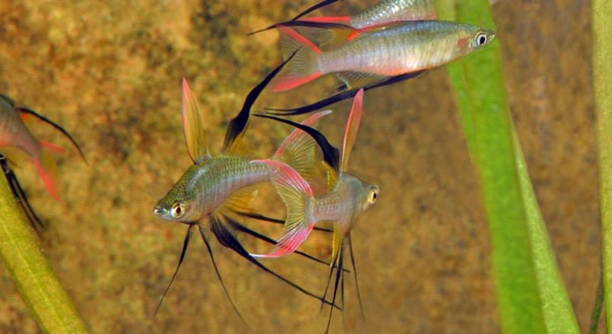
Threadfins are social fish that often swim in groups, creating a sense of unity in their aquatic environment. Their movements appear coordinated, and these gatherings can influence both their feeding patterns and daily behaviors. Observing them reveals subtle interactions within schools.
Threadfins exhibit increased safety in larger groups due to the dilution effect and enhanced vigilance. Predation risk decreases as individual fish are less likely to be targeted, and collective alertness allows quicker responses to threats, improving overall survival chances.
Group dynamics among threadfins reveal behaviors that go beyond mere safety, showing complex social structures and communication patterns within their underwater communities.
How Group Size Affects Threadfin Behavior
When threadfins swim in larger groups, their behavior shifts noticeably. Individual fish tend to stay closer together, maintaining tight formations that reduce the chance of a predator singling out a single fish. This clustering provides a visual signal to predators, suggesting that any attack may be risky. Fish in bigger groups also show increased vigilance. Each fish contributes to scanning for danger, allowing others to focus more on feeding or exploring. Smaller groups or solitary threadfins often appear more cautious, moving slower and spending more time near shelter. In addition to safety, larger groups influence feeding patterns. Fish can coordinate movements to access food more efficiently, taking advantage of collective sensing. This cooperation is subtle but effective, helping threadfins respond to changes in their environment with speed and precision, while maintaining balance and avoiding unnecessary risks.
Even small increases in group size can significantly improve survival rates. Threadfins clearly benefit from numbers.
The social structure of these schools is fluid. Fish may shift positions depending on alertness, hunger, or environmental conditions. Leaders emerge naturally, guiding movement and decisions without formal hierarchy. Observing these dynamics reveals that safety and efficiency are intertwined, showing how natural instincts drive complex group behaviors while maintaining harmony.
Environmental Factors Influencing Safety
Water clarity, currents, and predator presence all affect how secure threadfins feel in groups. Even the largest school may adjust position or speed when conditions change.
Predator density and habitat structure heavily influence group behavior. Open waters encourage larger, tighter schools, while areas with ample cover allow smaller groups to survive. Currents and tides impact energy use; threadfins adapt by spreading out or clustering to maintain stability. Seasonal changes affect food availability, influencing school size and movement patterns. Larger groups provide both protection and efficiency, allowing fish to forage collectively and spot danger early. Temperature fluctuations can affect metabolism and alertness, subtly changing how fish respond to threats. Each environmental factor interacts with group dynamics, demonstrating that threadfins are highly responsive and adaptable. This adaptability ensures survival across varying conditions, highlighting the importance of group cohesion in their daily lives and the delicate balance between risk and opportunity in their habitats.
Predation and Group Safety
Larger threadfin schools reduce individual risk by making it harder for predators to target a single fish. Each fish benefits from shared vigilance, which increases reaction time and overall survival.
Predator behavior strongly influences how threadfins organize themselves. When threats are frequent, schools tighten their formations and move more cautiously. Fish near the edges are often more alert, ready to respond to sudden changes, while those in the center gain protection. This structure minimizes attacks and allows the group to act almost as a single unit. Predators tend to focus on isolated individuals, so staying in numbers is an effective defense. Even subtle adjustments, like small shifts in spacing, can enhance safety significantly.
Safety is also linked to movement patterns. Threadfins adjust speed and direction collectively, responding to environmental cues or predator presence. By mirroring nearby fish, each individual benefits from the group’s collective awareness. This synchronization allows rapid changes in direction, reducing chances of capture. Fish in smaller schools must rely on personal vigilance, which increases stress and reduces feeding efficiency. Group cohesion is therefore not only protective but also supports normal daily activities, making it essential for their survival.
Feeding Strategies in Groups
Threadfins feeding in larger schools find food more efficiently and share information about resource locations. Competition exists but is moderated by coordinated movement.
Group size directly impacts feeding success. Schools can cover wider areas and detect food sources faster than solitary fish. Larger groups allow individuals to forage while others watch for predators, reducing the need for constant vigilance. This balance lets threadfins feed with less interruption and maintain energy for other activities, like escaping threats or migrating. In smaller groups, fish spend more time scanning for danger, which reduces feeding efficiency and increases stress. By working together, threadfins create a dynamic where safety and sustenance coexist naturally, improving overall survival and well-being.
Social Interaction and Coordination
Threadfins in schools communicate subtly through body movements and positioning. Each fish adjusts to neighbors to maintain balance and cohesion.
These interactions strengthen group unity. Fish follow leaders and mimic movements, which improves navigation and predator avoidance. Coordination allows the school to act as a single, responsive unit.
Energy Conservation in Groups
Swimming in larger groups reduces individual energy expenditure. Fish benefit from hydrodynamic effects created by others, easing movement through water. Schools adjust spacing to optimize flow and minimize effort. This efficiency allows threadfins to spend more energy on feeding and vigilance rather than constant swimming.
Seasonal Influence on Group Size
Seasonal changes affect threadfin group size. Food availability, water temperature, and breeding cycles influence how tightly fish cluster. Schools expand when resources are abundant and shrink when conditions are less favorable, showing adaptability to environmental shifts.
Observing Threadfin Behavior
Watching threadfins in natural habitats reveals patterns in feeding, coordination, and safety. Group behaviors provide insight into survival strategies.
FAQ
How do threadfins benefit from being in larger groups?
Threadfins in larger groups enjoy increased safety from predators. The more individuals present, the lower the risk for each fish. Shared vigilance allows some fish to focus on feeding while others watch for danger. Group cohesion also helps with coordinated movement, reducing chances of isolation. Schools can cover more area when searching for food, and energy expenditure is often lower due to hydrodynamic advantages. These benefits make group living an effective survival strategy.
Do threadfins communicate with each other in schools?
Yes, threadfins use subtle cues like body orientation, fin movements, and swimming patterns to coordinate. Fish near the edges are often more alert, signaling danger to those in the center. Leaders naturally emerge during navigation or when detecting threats. Communication is mostly nonverbal but highly effective for maintaining cohesion and ensuring the school reacts as one unit.
Does group size affect feeding efficiency?
Absolutely. Larger groups can locate food faster and feed with less interruption because some members remain vigilant for predators. Smaller groups must divide attention between feeding and scanning for danger, which reduces overall efficiency. By working together, threadfins optimize energy use and increase access to food while staying safer.
How do predators influence school behavior?
Predator presence directly shapes how threadfins organize themselves. Schools tighten formations and move cautiously when threats are high. Fish adjust positions, often with more alert individuals on the edges. This makes attacks less likely to succeed. Even subtle shifts in spacing or speed help the school respond quickly, improving survival chances.
Do environmental conditions change school size?
Yes, factors like water clarity, temperature, currents, and food availability affect group size. Open waters encourage larger schools for protection, while areas with cover allow smaller groups to thrive. Seasonal changes in resources and temperature can cause schools to expand or contract. Threadfins adapt dynamically to maintain safety and feeding efficiency.
Does swimming in a school save energy?
Swimming in groups reduces energy expenditure because fish benefit from the hydrodynamic flow created by neighbors. Tight formations help minimize resistance, allowing individuals to swim farther or feed more efficiently. This energy saving supports other activities like predator vigilance or migration, which are crucial for survival.
Are all threadfins equally alert in a school?
No, alertness varies by position and individual. Edge fish tend to be more vigilant, scanning for predators. Fish in the center rely on the outer members for protection, allowing them to feed or rest. This distribution balances risk and ensures the school operates efficiently without compromising safety.
Do threadfins change movement patterns based on group size?
Yes, movement patterns are highly dependent on the number of fish. Larger schools exhibit synchronized swimming, coordinated turns, and rapid direction changes when threatened. Smaller groups are less coordinated and may move more cautiously. These adjustments help reduce predation risk and maintain balance within the school.
Can threadfins survive alone?
Threadfins can survive individually but face higher risks from predators and reduced feeding efficiency. Solitary fish must constantly watch for danger, which increases stress and energy use. Group living provides both protection and support for daily activities, making survival easier and more efficient.
How do breeding cycles affect school behavior?
Breeding periods influence group structure. Threadfins may form larger aggregations for spawning, providing safety and increasing chances of successful reproduction. After breeding, schools may disperse into smaller units to focus on feeding or finding shelter. Seasonal patterns play a significant role in determining both size and cohesion of groups.
Do all species of threadfins behave the same way in schools?
Behavior varies slightly between species, depending on habitat, predator presence, and feeding habits. However, most threadfins benefit from group living through enhanced safety, coordinated feeding, and energy savings. Differences are usually in the size of schools, spacing between fish, and specific movement patterns.
How long do threadfins maintain group cohesion?
Group cohesion can be temporary or long-term, depending on environmental conditions and predation risk. In areas with high predator activity, schools remain tight and coordinated for extended periods. When food is plentiful and threats are low, schools may relax formation while still maintaining general cohesion.
What is the role of leaders in threadfin schools?
Leaders naturally emerge based on alertness, experience, or position. They guide movement, signal danger, and help maintain coordination. Leadership is dynamic, often shifting between individuals depending on the situation. This flexible system ensures the school can adapt quickly to threats and environmental changes.
Do threadfins learn from each other in groups?
Yes, individuals can observe feeding success, predator responses, and movement patterns of neighbors. Learning occurs passively through imitation, helping fish optimize energy use and improve survival strategies. Group living provides opportunities for shared knowledge, which is harder to gain when solitary.
How does stress differ in solitary versus group-living threadfins?
Solitary threadfins experience higher stress because they must constantly monitor for predators. Groups distribute vigilance, allowing individuals to feed, rest, or navigate more efficiently. Lower stress in schools supports better growth, reproductive success, and overall health, demonstrating the importance of social living.
Are threadfins aware of individual roles in a school?
While not conscious in a human sense, threadfins adjust behavior based on position and neighboring fish. Edge individuals act as sentinels, while center fish focus on feeding. This role differentiation emerges naturally, creating a balanced system that maximizes safety and efficiency for the entire school.
How do threadfins respond to sudden threats in a group?
Schools react almost as a single entity. Fish instantly adjust spacing, speed, and direction. Edge fish may lead evasive maneuvers, while central fish follow closely. This rapid, collective response makes it difficult for predators to isolate a target, increasing survival odds for all members.
What long-term advantages does schooling provide?
Long-term benefits include reduced predation risk, improved feeding efficiency, energy conservation, and social learning. Cohesive groups allow threadfins to thrive in diverse environments, adapt to seasonal changes, and maintain health. Schooling is a central survival strategy that supports growth, reproduction, and overall population stability.
Do environmental disruptions affect school cohesion?
Yes, pollution, habitat changes, or sudden temperature shifts can disrupt group behavior. Schools may break apart temporarily, forcing fish to adapt by seeking shelter or forming smaller groups. Recovery depends on environmental stability and availability of resources, highlighting the sensitivity of group dynamics to external conditions.
Can threadfins recognize familiar individuals?
Some evidence suggests that threadfins may recognize familiar neighbors, helping maintain cohesion and reduce conflict. Consistent associations can improve coordination and streamline responses to threats. While not fully studied, these subtle social bonds contribute to the overall efficiency and safety of the school.
How does age or size affect school participation?
Younger or smaller threadfins often stay near the center for protection, while larger or more experienced fish may occupy edge positions. This natural arrangement balances risk and ensures that vulnerable individuals benefit from group living while experienced members help maintain vigilance.
Do threadfins ever leave schools voluntarily?
Occasionally, individuals may leave temporarily for feeding, exploration, or reproduction. However, leaving increases vulnerability, so departures are usually brief. Most fish return to the group, indicating that the benefits of schooling outweigh the risks of isolation.
Are there differences in behavior between wild and captive threadfins?
Captive threadfins may form smaller groups due to space constraints. Predation pressure is absent, which can reduce tight schooling behavior. However, many natural behaviors, including coordination, feeding strategies, and social interactions, remain evident, suggesting strong innate tendencies toward group living.
How do threadfins coordinate during migration or long movements?
During extended movements, threadfins rely on visual cues and synchronized swimming. Leaders guide direction, and the school maintains cohesion through continuous adjustments. Energy-saving formations and shared vigilance allow the group to travel efficiently while minimizing risk, demonstrating advanced social coordination even in larger scales.
Do threadfins show individual personalities within schools?
Yes, some fish are more cautious or bold, affecting their position and role within the school. Edge fish are often more vigilant, while others may focus on feeding. These subtle differences help distribute tasks and maintain balance, showing that group living accommodates individual tendencies effectively.
How quickly can threadfins adapt to changes in their environment?
Threadfins respond rapidly to changes such as predator appearance, water currents, or food availability. School formation, movement patterns, and spacing adjust within moments, demonstrating remarkable adaptability and the advantage of collective awareness in managing environmental challenges.
Does group living impact reproduction?
Yes, schooling can increase reproductive success. Larger aggregations provide protection during spawning, reduce predation on eggs or fry, and improve synchronization of mating activities. Social interactions also help individuals locate suitable partners and optimize timing for successful reproduction.
How do threadfins maintain balance within the school?
Balance is achieved through constant adjustments in position, speed, and spacing relative to neighbors. Each fish responds to nearby movements, ensuring even distribution and preventing collisions. This collective feedback system allows schools to move efficiently and maintain cohesion under varying conditions.
Can threadfins survive in unstable environments without schools?
Survival is possible but more difficult. Solitary fish face higher predation risk and must expend more energy on vigilance. Lack of shared information reduces feeding efficiency and responsiveness to threats. Schooling provides a buffer against these challenges, making social living a critical factor for long-term survival.
Do threadfins exhibit leadership rotation in schools?
Leadership is fluid, with individuals taking turns based on alertness, experience, or position. This rotation ensures that no single fish bears the full burden of vigilance and navigation, allowing the school to respond flexibly to changing conditions while maintaining overall cohesion.
How important is visual communication in threadfin schools?
Visual cues are essential for coordination. Fish monitor fin movements, body orientation, and spacing to synchronize actions. These cues allow the group to execute rapid maneuvers, avoid predators, and maintain structure without relying on vocal or chemical signals, which may be less effective underwater.
Do threadfins ever compete within schools?
Competition exists mainly during feeding. Individuals may jostle for positions or access to food, but the overall structure minimizes conflicts. Coordination and spacing rules help reduce aggressive encounters, ensuring that competition does not compromise group cohesion or safety.
How does school density affect predator avoidance?
Higher density increases protection because predators struggle to single out individuals. Dense formations enhance collective awareness, allowing for faster reaction times. Sparse schools are more vulnerable, as individual fish are easier targets and have fewer neighbors to detect threats.
Do threadfins benefit from mixed-species schools?
Mixed-species aggregations can provide additional safety and increase feeding efficiency. Other species may have different vigilance levels or sensory capabilities, enhancing collective awareness. However, coordination can be more complex, requiring adjustments to movement and spacing patterns to maintain cohesion across species.
How do human activities impact schooling behavior?
Fishing, pollution, and habitat destruction disrupt natural schools. Overfishing can reduce numbers, making it harder for remaining fish to form protective groups. Pollution or structural changes in habitats may force schools to adjust spacing or disperse, increasing vulnerability and altering natural behaviors.
Are threadfins able to recover schooling behavior after disruption?
Yes, if environmental conditions stabilize, schools gradually reform. Fish reassociate based on familiar cues, visual recognition, and instinctive schooling behaviors. Recovery may take time, especially after severe disturbances, but the tendency to form groups remains strong due to the survival advantages it provides.
Do threadfins adjust schooling during extreme weather events?
During storms or rapid environmental changes, schools tighten, slow down, or seek shelter. Increased cohesion helps reduce energy expenditure and prevents individuals from being swept away. Rapid adjustments show the flexibility and resilience of their group behavior.
How long can threadfins maintain cohesion under constant threat?
Cohesion can persist as long as threats remain. Fish adjust positions, spacing, and speed continuously, distributing vigilance among members. Over extended periods, energy expenditure rises, but the benefits of protection outweigh the costs, highlighting the adaptive value of schooling behavior.
Do threadfins exhibit social learning for predator avoidance?
Yes, individuals observe neighbors’ responses to threats and adjust their own behavior accordingly. This passive learning improves reaction times, coordination, and overall survival. Group living enhances the spread of this knowledge more efficiently than solitary living.
Can threadfins anticipate threats in groups?
Through coordinated scanning and shared vigilance, schools can respond to distant cues, such as shadows or movements in water. This anticipation allows rapid adjustments, reducing predation risk. Collective awareness acts as an early warning system that benefits all members.
Are threadfin schools always uniform in structure?
Not always. School density, spacing, and formation vary with environmental conditions, predator presence, and group size. Flexibility allows schools to optimize protection, feeding efficiency, and energy use depending on the situation, demonstrating adaptive and dynamic social behavior.
Do threadfins show preference for certain group sizes?
Optimal group size depends on predation risk, food availability, and habitat. While larger schools provide safety, very large groups may increase competition for food. Threadfins adjust school size naturally, balancing protection with feeding opportunities to maximize survival and efficiency.
How does schooling impact long-term survival rates?
Schooling reduces predation, improves feeding efficiency, and conserves energy, all of which contribute to higher long-term survival. Fish in cohesive groups experience lower stress, better growth, and greater reproductive success, demonstrating that group living is a crucial factor in maintaining healthy populations.
Are threadfin schools stable over time?
Schools are dynamic, with membership changing as individuals join, leave, or shift positions. Stability is higher when environmental conditions are favorable and predation risk is moderate. Even with constant flux, cohesion is maintained through coordinated movement and shared vigilance, ensuring continued survival advantages.
Do threadfins adapt schooling strategies for human-influenced environments?
Yes, in areas impacted by human activity, fish may form tighter schools, move to safer locations, or adjust feeding times. Adaptation is crucial for coping with altered predator patterns, reduced habitat space, and changes in food availability, highlighting their behavioral flexibility.
Can schooling behavior indicate ecosystem health?
Threadfin school dynamics reflect environmental conditions. Disrupted cohesion, smaller group sizes, or altered movement patterns may signal habitat degradation, pollution, or predator imbalance. Observing schools provides insights into overall ecosystem health and the sustainability of aquatic populations.
Do threadfins maintain group memory?
Evidence suggests familiarity with neighbors can persist over time. Recognizing consistent group members improves coordination, reduces conflicts, and strengthens overall cohesion. This social memory supports long-term stability and efficiency in the school.
How does school formation affect predator hunting success?
Tightly formed schools reduce predator success by making it harder to isolate targets. Rapid, synchronized movements and collective awareness make attacks less predictable. This strategy increases survival rates for the entire group.
Are juvenile threadfins more dependent on schools than adults?
Yes, juveniles rely heavily on group protection. They often stay in the center, reducing exposure to predators. Adults occupy edge positions and help maintain vigilance. This arrangement balances risk, ensuring younger fish survive to maturity while supporting the overall school’s cohesion.
Do threadfins in schools show individual specialization?
Some fish consistently occupy particular positions or roles, such as edge sentinels or central feeders. While flexible, these tendencies help maintain structure, efficiency, and safety. Individual behavior complements the collective, allowing the school to function smoothly under varying conditions.
How do threadfins handle sudden group splits?
If a school splits due to predators or environmental obstacles, fish quickly regroup or form temporary smaller schools. Rapid reformation relies on visual cues and instinctive coordination, ensuring protection and feeding efficiency are maintained despite temporary disruptions.
Are threadfins affected by noise pollution in their schooling behavior?
Excessive underwater noise can disrupt coordination and vigilance. Fish may tighten formations or move to quieter areas, altering natural patterns. While schooling persists, disturbances may reduce feeding efficiency and increase stress, highlighting sensitivity to environmental changes.
Can threadfins learn from other species in mixed schools?
Yes, observing feeding and predator responses of other species helps threadfins adjust behavior. Mixed-species interactions enhance awareness and improve survival, although coordination can be more complex due to differing movement patterns and vigilance levels.
Do threadfins prefer certain positions within a school?
Positions are influenced by size, experience, and alertness. Central positions offer safety, while edges allow quick responses to threats. Preference may also depend on feeding priorities and energy conservation, reflecting individual strategies within the group structure.
How do threadfins manage conflicts within a school?
Minor conflicts occur during feeding or positioning. Fish resolve disputes through subtle adjustments, such as slight changes in spacing or position. Aggression is minimized to maintain cohesion and ensure the group remains effective in feeding and predator avoidance.
Do threadfins adjust schooling behavior seasonally?
Yes, environmental conditions, resource availability, and breeding cycles influence school size and cohesion. Larger groups often form during breeding or abundant food periods, while smaller groups appear when conditions are less favorable, demonstrating flexibility in response to changing seasons.
How important is schooling for threadfin survival overall?
Schooling is critical. It provides protection, improves feeding, reduces stress, and supports social learning. Cohesive groups allow threadfins to navigate challenges, adapt to environmental changes, and maintain population stability, showing that social behavior is essential for long-term survival and success.
Final Thoughts
Threadfins are a remarkable example of how social behavior can enhance survival in aquatic environments. Their tendency to form schools provides numerous advantages, from protection against predators to improved feeding efficiency. Being part of a group allows each fish to share vigilance, reducing individual stress while allowing more energy for daily activities like foraging and exploring. Schools also improve coordination during movement, helping fish respond quickly to threats or environmental changes. This ability to move and act collectively ensures that threadfins maintain balance and safety while navigating their habitats. Over time, the repeated benefits of group living have made schooling a central aspect of their behavior.
The social dynamics within threadfin schools are subtle yet highly effective. Fish adjust their position based on neighbors, with individuals near the edges typically more alert and those in the center benefiting from added protection. Leaders emerge naturally, guiding movement and decision-making without formal hierarchy, while all members participate in maintaining cohesion. These interactions are fluid and responsive to changes in the environment, predator activity, or availability of food. Group size plays a significant role, influencing both energy conservation and efficiency. Larger schools provide better protection and allow more coordinated feeding, while smaller groups or solitary fish experience higher risk and stress. Through these strategies, threadfins demonstrate the importance of social organization in survival.
Environmental factors also shape schooling behavior. Water clarity, currents, temperature, and predator presence all influence how threadfins organize themselves and move as a group. Seasonal changes and shifts in food availability can cause schools to expand or contract, demonstrating adaptability to changing conditions. Even under human-influenced pressures like habitat disruption or pollution, threadfins adjust their formations and behavior to maintain protection and efficiency. Observing their schools reveals a balance between risk, energy management, and survival strategies. Overall, the behavior of threadfins highlights the critical role of group living, showing how cohesion, coordination, and adaptability work together to support long-term health, safety, and success in their natural environments.

Hello,
If you enjoy the content that we create, please consider saying a "Thank You!" by leaving a tip.
Every little bit helps us continue crafting quality advice that supports the health, happiness, and well-being of pets around the world, for pets of all shapes, sizes, and species.
We really appreciate the kindness and support that you show us!