
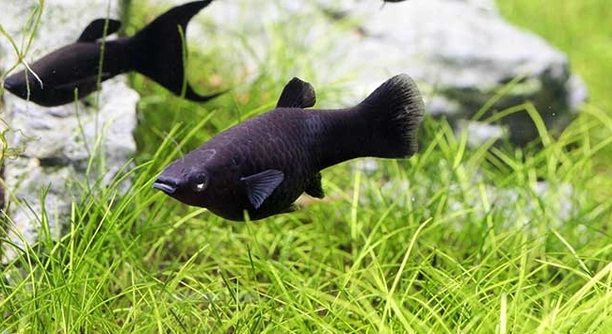
Do you ever notice your Black Molly swimming close to the aquarium glass, seemingly studying its own reflection? Many fish owners observe this behavior and wonder what exactly captures their fish’s attention in these moments.
Black Mollies can recognize reflections in glass but do not fully understand them as another fish. They may respond to their reflection with curiosity or territorial behavior, interpreting it as a possible rival or companion in their environment.
Observing this behavior can reveal interesting aspects of their social interactions and natural instincts in the tank. Understanding it helps create a more harmonious environment for your fish.
How Black Mollies React to Their Reflection
Watching my Black Molly approach the glass is always a little surprising. They often swim back and forth, sometimes pausing as if deciding what to do. Some Mollies may dart quickly, displaying signs of alertness or mild aggression. Others linger calmly, almost studying the movements of the “other fish” in the reflection. This behavior can vary based on the fish’s age, personality, and current mood. Younger Mollies tend to be more curious, exploring the mirrored image for longer periods, while older ones may only glance briefly. Their reactions are not necessarily a sign of stress, though prolonged agitation should be monitored. Glass reflections are static and cannot interact, but Mollies respond as though they are seeing another living being. This natural curiosity can teach owners more about their fish’s temperament and social instincts. Observing without interfering helps them feel secure while exploring these reflections.
Black Mollies do not recognize themselves; their reactions are instinctive and often linked to social behavior or territorial instincts in their habitat.
Over time, I noticed that the context of the tank influences these reactions. Bright lighting or a busy background may distract them from the reflection, while a calm environment encourages longer observation. Adding plants or hiding spots can reduce aggressive responses to the glass image. Mollies often repeat this behavior, but it usually does not affect their eating or swimming routines. Watching them interact with the reflection is a subtle way to see natural behaviors that might not appear during regular tank activity. The key is to maintain consistent tank conditions so that curiosity does not become stress.
Managing Reflection Behavior in Your Tank
Minor reflection behaviors are usually harmless and require no intervention.
If reflections cause stress, simple adjustments can help. Reducing direct light on the glass, rearranging decorations, or adding more plants can minimize the fish’s focus on its own image. Some Mollies may become territorial, flaring fins or chasing the reflection, but these behaviors often decrease over time. Providing multiple hiding spots helps the fish feel safe, letting them choose when to engage with the reflection. Feeding schedules and regular tank maintenance also reduce agitation, keeping the fish occupied and comfortable. Consistent observation allows owners to notice changes in behavior, which can indicate stress or illness. Recognizing the normal reactions to glass reflections ensures Mollies remain healthy and active, while also giving insight into their natural instincts and social tendencies.
Recognizing Stress from Reflections
When a Black Molly becomes overly focused on its reflection, signs of stress can appear quickly. Rapid darting, constant fin flaring, or hiding for long periods may indicate that the fish feels threatened or uneasy in the tank.
Stress responses vary between individual Mollies. Some may flare their fins aggressively at the reflection, chasing it repeatedly across the glass. Others may retreat behind plants or decorations, avoiding the mirrored image entirely. These reactions often happen in tanks with bright lighting or minimal hiding spaces, where the reflection is more noticeable. Observing your Molly closely helps determine whether this behavior is occasional curiosity or persistent stress. Adjusting the tank setup, adding plants, or altering lighting can reduce these stress responses, promoting calmer behavior.
Over time, I noticed that Mollies that seemed initially stressed gradually adapted if given enough space and environmental enrichment. Providing multiple hiding spots and reducing reflective surfaces allowed them to explore the tank without constant confrontation. Social interactions with other fish also distracted them from the reflection, encouraging normal swimming patterns. Consistent observation ensures that minor stress does not escalate into long-term health problems, allowing Mollies to remain active and confident in their habitat.
Preventing Reflection-Induced Stress
Simple tank modifications can prevent stress from reflections. Adding plants or repositioning decorations breaks up reflective surfaces and provides safe zones.
Reflections can trigger territorial or anxious behavior, but changes to the tank environment help reduce this. Covering or dimming glass, adjusting lighting, and placing decorations strategically can distract Mollies and limit their focus on mirrored images. Observing interactions with other fish allows natural social behaviors to replace attention to reflections. Consistent feeding routines and environmental enrichment, like plants and ornaments, create a stable, comfortable environment. Mollies thrive when stress triggers are minimized, and small changes can significantly improve their comfort levels. Regularly monitoring behavior ensures these adjustments are effective and promotes a healthy tank dynamic.
Glass vs. Other Surfaces
Black Mollies react differently to glass than to other tank surfaces. Glass produces clear, sharp reflections, making the image more noticeable.
Other surfaces, like acrylic or textured backgrounds, do not reflect as clearly. Mollies tend to ignore these, focusing more on movement and shapes rather than mirrored images.
Social Behavior and Reflections
Reflections can mimic social interactions for Black Mollies. They may approach the glass as if greeting another fish, sometimes flaring fins or circling slowly. This behavior gives insight into their natural instincts for establishing territory or interacting with others. While it is not true social interaction, it temporarily satisfies some curiosity and competitive instincts within the tank environment. Observing these behaviors can help owners understand each Molly’s personality and hierarchy tendencies without introducing additional fish, which can sometimes cause real stress or conflict. Monitoring responses allows subtle adjustments in tank setup to reduce unnecessary agitation while supporting normal social instincts.
Lighting Effects
Lighting intensity affects how clearly reflections appear. Bright lights increase visibility, while dim lighting reduces focus on mirrored surfaces.
FAQ
Do Black Mollies recognize themselves in the mirror?
Black Mollies do not recognize themselves in reflections. They respond instinctively, treating the reflection as another fish. This can lead to curious investigation, territorial displays, or fin flaring. Understanding this helps you interpret behavior without assuming the fish feels self-awareness.
Why does my Black Molly chase its reflection?
Chasing a reflection is often a territorial or competitive reaction. The fish perceives a rival in the mirrored image and may flare fins or swim aggressively. This behavior is usually harmless but can become stressful if constant or prolonged. Providing hiding spots or reducing reflective surfaces helps.
Is chasing the reflection harmful?
Short bursts of chasing or flaring are not harmful. Prolonged agitation, stress, or refusal to eat may indicate that the reflection is negatively affecting the fish. Adjusting tank setup and monitoring interactions ensures health and reduces unnecessary stress.
Can reflections cause aggression toward other fish?
Yes, some Black Mollies may become more aggressive toward tank mates if they are consistently reacting to reflections. Aggressive behavior usually subsides once the fish adapts or the environment is adjusted to reduce mirrored stimuli.
How can I minimize reflection-related stress?
Use plants, decorations, or background materials to break up reflective surfaces. Adjust lighting to reduce glare on glass. Adding hiding spaces allows the fish to retreat when feeling threatened. These small changes create a calmer tank environment.
Do Black Mollies prefer reflections over other fish?
No, reflections are temporary stimuli. Mollies may investigate reflections out of curiosity, but they rely on actual fish for social interaction. Tank mates provide normal social cues that mirrors cannot replicate.
Does tank size affect reflection behavior?
Smaller tanks can amplify reflection behavior because the mirrored image is more noticeable and confined. Larger tanks provide more space and distractions, which may reduce the time spent interacting with reflections.
Do all Black Mollies react the same way?
Individual personality plays a role. Some are more curious or aggressive, flaring fins frequently at the reflection. Others may be timid, glancing briefly before swimming away. Observing each fish helps tailor adjustments to reduce stress and encourage normal behavior.
Can reflections affect feeding habits?
Occasionally, overly focused Mollies may be distracted from feeding, especially if the reflection is in a feeding area. Ensuring consistent feeding routines and reducing reflective surfaces can help maintain normal eating patterns.
Should I cover the tank at night?
Covering the tank or reducing light at night limits reflections and provides a sense of safety. Mollies are calmer in low-light conditions, which helps regulate sleep and reduces unnecessary agitation from mirrored images.
Do reflections replace social interaction?
Reflections do not replace real social interaction. While Mollies may investigate mirrored images, actual fish interactions are essential for maintaining natural social behavior, establishing hierarchy, and promoting mental stimulation.
How long do Mollies typically interact with reflections?
Interaction duration varies. Some may engage for a few minutes, while others spend longer periods, especially in quiet, well-lit environments. Regular observation ensures that prolonged interaction does not indicate stress or agitation.
Can reflections help understand a fish’s personality?
Yes, observing how a Black Molly reacts to a reflection provides insight into curiosity, territorial instincts, and social tendencies. It is a useful, non-invasive way to gauge temperament and adjust tank conditions accordingly.
Do reflections cause breeding behavior?
Reflections alone rarely trigger breeding behavior. Mollies require real tank mates and specific environmental conditions to engage in reproductive activity. Reflections may increase activity levels but do not substitute for proper breeding cues.
Is this behavior common in other livebearers?
Many livebearers, including Platies and Guppies, exhibit similar reflection responses. They often investigate, chase, or display fin flaring, showing that this is a shared instinct among small, social freshwater fish.
Can reflection behavior indicate health issues?
Unusual or extreme responses may signal stress or illness. For example, constant darting, lethargy, or refusal to eat alongside reflection interaction could indicate health concerns. Monitoring behavior alongside water quality and tank conditions is important.
How can I safely test reflection behavior?
You can temporarily place a reflective surface outside the tank for observation. Limit exposure time and watch for signs of stress. Using this approach helps understand natural reactions without creating prolonged agitation.
Does water clarity affect reflection behavior?
Yes, clearer water makes reflections more visible, increasing interaction. Murky or slightly tinted water reduces clarity and may lower engagement with mirrored images. Maintaining water quality benefits overall health while influencing interaction with reflections.
Can multiple reflections confuse Mollies?
Yes, multiple reflective surfaces may cause confusion or overstimulation. Fish might dart between reflections, display frequent fin flaring, or seem stressed. Simplifying reflective elements and adding visual breaks reduces potential stress.
Do Black Mollies eventually ignore reflections?
Over time, many Mollies lose interest in reflections as they realize no other fish responds. Environmental enrichment, social interaction, and tank changes can accelerate this adjustment, promoting calmer behavior and normal activity patterns.
Black Mollies are curious fish, and their interactions with reflections in the glass reveal a lot about their natural instincts. Watching them approach, flare their fins, or investigate the mirrored image is a way to observe their behavior without introducing other fish. This curiosity is instinctive rather than self-aware. Mollies treat the reflection as another fish, which can result in a variety of behaviors ranging from playful investigation to mild aggression. These responses are normal and are part of how they assess their environment. Paying attention to these behaviors can help owners better understand their fish’s personality, including traits like curiosity, territorial instincts, and levels of confidence. Observing without interfering allows them to explore naturally, while subtle environmental adjustments can prevent stress and ensure that these interactions remain harmless.
Reflections can also provide useful insight into the social tendencies of Black Mollies. Some fish are more territorial and will respond aggressively to what they perceive as another fish, while others are more timid and will simply observe or retreat. This difference in behavior is influenced by personality, age, and tank conditions. Environmental factors, such as lighting and the presence of plants or hiding spots, play a significant role in how a fish reacts. Bright lights and empty tanks can make reflections more prominent, sometimes leading to longer periods of agitation. On the other hand, well-decorated tanks with multiple hiding spots can reduce aggressive reactions and make interactions with reflections brief and harmless. Regular observation can help owners identify which fish need more space or environmental enrichment, and which are naturally more relaxed. Understanding these patterns allows for better tank management, ensuring all fish coexist peacefully and remain healthy.
Creating a calm environment is the best approach to managing reflection-related behavior. Simple steps like adjusting lighting, placing plants strategically, and covering reflective surfaces can reduce unnecessary stress. Reflections may initially attract attention, but Mollies often lose interest once they understand no other fish responds. Maintaining a stable feeding routine and clean water conditions also helps them remain active and comfortable. Ultimately, reflections are a natural part of a Black Molly’s environment and observing how they react can provide insight into their behavior without causing harm. Paying attention to these details not only keeps the fish healthy but also allows owners to appreciate their personality and natural instincts in the tank.

Hello,
If you enjoy the content that we create, please consider saying a "Thank You!" by leaving a tip.
Every little bit helps us continue crafting quality advice that supports the health, happiness, and well-being of pets around the world, for pets of all shapes, sizes, and species.
We really appreciate the kindness and support that you show us!