
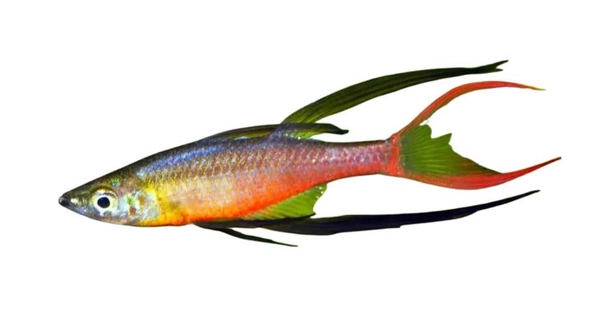
Have you ever noticed the shimmering colors of threadfin rainbowfish and wondered how they navigate their surroundings? These small, lively fish respond to their environment in subtle and fascinating ways that are often overlooked.
Threadfin rainbowfish exhibit limited sensitivity to magnetic fields. Studies suggest their navigation primarily relies on visual cues and water currents, while magnetic perception plays a minor, if any, role in their behavior and orientation within freshwater habitats.
Understanding this aspect of their biology can improve aquarium care and help enthusiasts provide a more suitable environment for these delicate fish.
How Threadfin Rainbowfish Sense Their Environment
Threadfin rainbowfish rely mostly on visual and tactile cues to understand their surroundings. Their bright coloration helps them communicate with other fish and recognize mates. They use sight to detect movement, identify food, and avoid predators. Water currents also provide information about their environment. These fish are highly sensitive to changes in light and motion, which allows them to navigate effectively even in crowded tanks. Observing their behavior closely can reveal patterns in swimming, feeding, and interaction with other species. Magnetic fields, if perceived at all, do not seem to guide their movement significantly. Instead, environmental factors like water flow, temperature, and tank layout have a much greater influence. Providing a well-structured habitat with clear sightlines and gentle currents supports their natural behavior. Monitoring these aspects ensures the fish remain healthy and display their characteristic vibrant colors consistently throughout their life in captivity.
They are highly adaptive but still depend on external cues more than magnetic perception.
Proper tank setup with visual markers and mild currents enhances their activity and wellbeing, making them more responsive and lively.
Testing Magnetic Sensitivity
Experiments on fish often involve controlled environments with magnetic fields applied to test responses.
Researchers have observed that threadfin rainbowfish show minimal reaction when exposed to magnetic field changes. In laboratory settings, some fish may alter swimming patterns slightly, but these adjustments are inconsistent and rarely sustained. Most responses can be attributed to stress or curiosity rather than genuine magnetic detection. Magnetic sensitivity in fish is generally more pronounced in migratory species, which rely on Earth’s magnetic field for navigation over long distances. Threadfin rainbowfish, being freshwater and non-migratory, lack the specialized receptors found in those species. The conclusion is that their perception of magnetic fields is weak, if present at all. Aquarium owners focusing on tank layout, water quality, and light conditions are more likely to influence fish behavior and health than attempting to manipulate magnetic factors. These findings help clarify how to create environments that truly benefit these delicate, colorful fish.
Factors That Influence Behavior
Threadfin rainbowfish behavior is strongly influenced by water quality, temperature, and tank structure. Clear sightlines and proper lighting encourage natural swimming patterns, while overcrowding or poor conditions can lead to stress and reduced activity.
Water temperature should be consistent, ideally between 24–28°C, to maintain metabolism and activity levels. Proper filtration keeps water clean, reducing stress and susceptibility to disease. Tank decorations should allow swimming space while providing hiding spots. Even minor changes in pH or hardness can affect behavior, making it essential to monitor parameters regularly. Social dynamics also play a role; they thrive in small groups where hierarchy is stable, avoiding aggressive interactions. Observing their response to these environmental factors can help in understanding natural tendencies and improving care. Small adjustments in habitat often yield noticeable improvements in activity and coloration, showing how sensitive they are to their immediate surroundings.
Diet variety also shapes behavior. Feeding small, frequent meals keeps fish energetic and promotes natural foraging instincts.
Providing consistent water conditions and adequate social structures ensures threadfin rainbowfish remain active, healthy, and visually vibrant in captivity.
Comparing Sensory Abilities
Vision is the primary sense for threadfin rainbowfish, helping them detect food and threats efficiently.
Their color perception allows recognition of mates and rivals, guiding social interactions. Lateral line systems detect water movement, providing spatial awareness in the tank. Magnetic perception is negligible compared to these senses, as they do not migrate long distances or rely on magnetic navigation. Observing their reaction to visual and tactile stimuli reveals their main sensory priorities. Even slight changes in lighting or movement provoke immediate responses, whereas magnetic field changes do not trigger consistent behavior.
Balancing sensory stimulation through varied environments and consistent routines supports their wellbeing. They respond positively to gentle water currents, light variation, and structured tank spaces, which mimic natural conditions. Overstimulating or neglecting environmental cues can lead to stress and reduced activity. Recognizing which senses guide their daily life allows caretakers to maintain a habitat that encourages natural behaviors. By prioritizing vision and tactile feedback, the overall health, interaction, and coloration of threadfin rainbowfish are enhanced, leading to a more stable and visually appealing aquarium display.
Magnetic Field Experiments
Threadfin rainbowfish show very limited response when exposed to artificial magnetic fields. Most observed changes in movement are minor and inconsistent, suggesting they do not rely on magnetic cues for orientation or navigation.
Even in controlled tests, responses are sporadic. Visual and tactile cues remain dominant in guiding their behavior, while magnetic fields appear negligible.
Implications for Aquarium Care
Since magnetic fields have little impact, focusing on water quality, lighting, and tank layout is more effective. Proper care ensures fish remain healthy and display natural behavior. Maintaining stable temperature, clean water, and visual cues supports their wellbeing, while unnecessary manipulation of magnetic fields does not improve outcomes.
Observing Natural Behavior
Watching threadfin rainbowfish in a well-structured tank reveals their true activity patterns. Swimming routines, social interactions, and foraging instincts are best understood through observation rather than artificial stimuli.
FAQ
Do threadfin rainbowfish rely on magnetic fields for navigation?
Threadfin rainbowfish do not rely on magnetic fields for navigation. Observations and experiments show that they respond primarily to visual cues and water movement. Magnetic perception, if present, is extremely weak and does not significantly influence swimming patterns, orientation, or behavior. Visual and tactile information dominate their spatial awareness.
Can magnetic fields affect their health or stress levels?
There is no strong evidence that magnetic fields impact their health or stress. Poor water quality, inconsistent temperatures, overcrowding, or improper tank setup are far more significant factors influencing stress and wellbeing. Magnetic manipulation in a home aquarium is largely unnecessary and does not improve fish health.
How can I tell if my fish are stressed?
Signs of stress include hiding excessively, erratic swimming, loss of appetite, faded colors, and reduced social interactions. Ensuring proper water conditions, stable temperature, and adequate space typically resolves these issues. Observing behavior over time is essential to identify changes that might indicate stress.
Do they respond to changes in tank layout?
Yes, threadfin rainbowfish respond quickly to changes in tank layout. Adding decorations, rearranging plants, or creating new hiding spots can temporarily alter swimming patterns. They adapt well if changes are gradual, but sudden, drastic alterations may increase stress levels. Providing clear sightlines and swimming space is important.
Is lighting important for their daily activity?
Lighting is crucial for their behavior and color display. Proper day-night cycles support natural rhythms, feeding, and social interactions. Bright, consistent lighting encourages normal swimming and schooling behavior, while dim or irregular light can lead to lethargy and color dulling. Adjusting lighting gradually helps them adapt.
What role does social grouping play in behavior?
Social grouping strongly affects behavior. Threadfin rainbowfish are schooling fish that feel safer and more active in small groups. Isolated individuals may show stress and reduced activity. Observing interactions within the group can reveal hierarchy, compatibility, and natural schooling patterns, which is vital for maintaining a healthy tank dynamic.
Are there signs of magnetic sensitivity at all?
Experiments suggest only very weak or inconsistent signs. Occasionally, a fish may alter movement slightly in strong artificial magnetic fields, but this is not a reliable behavioral response. Their primary sensory inputs remain visual cues, water currents, and environmental stimuli rather than magnetic fields.
How should I focus care instead of worrying about magnetic fields?
Focus on water quality, temperature stability, appropriate diet, and tank structure. Monitoring pH, hardness, and cleanliness ensures health. Providing plants, swimming space, and hiding spots supports natural behaviors. Consistency in these factors is far more important than any magnetic considerations.
Can they sense other environmental cues better than magnets?
Yes, visual cues, light levels, water movement, and chemical signals are far more influential. Lateral line systems detect current and nearby objects, while sight helps locate food and mates. Magnetic fields are negligible in comparison. Proper tank setup emphasizing these cues improves wellbeing and behavior.
Do they need special equipment to compensate for magnetic sensitivity?
No special equipment is necessary. Standard aquarium care—heating, filtration, and lighting—meets their needs. Ensuring environmental stability is sufficient, and there is no practical benefit to magnetic field devices for threadfin rainbowfish. Regular observation and adjustments to habitat are more effective.
How long does it take for them to adapt to changes?
Adaptation depends on the magnitude of changes. Minor modifications, like rearranging plants, may take a few hours to a day. Larger changes, such as adding new fish or altering water conditions, can take several days to a week. Patience and gradual adjustment reduce stress and maintain natural behavior.
Are there any studies confirming their insensitivity to magnetic fields?
Yes, controlled studies indicate limited to no magnetic sensitivity in threadfin rainbowfish. Most reliable behavioral experiments show that movement patterns are driven by visual and tactile cues. Only migratory species demonstrate strong magnetic perception, unlike freshwater, non-migratory fish like threadfin rainbowfish.
What practical steps improve their wellbeing most effectively?
Maintain clean water, stable temperatures, gentle currents, adequate swimming space, and consistent lighting. Provide small groups for social interaction and varied diet for energy. Monitoring behavior and adjusting the environment according to observed needs has the greatest impact on health and activity.
Do they react to sudden magnetic changes?
Reactions to sudden magnetic changes are rare and inconsistent. Most observed responses are likely coincidental or caused by stress from other factors. Visual and tactile cues remain the primary influence on movement, schooling, and feeding behavior.
How important is tank size for their behavior?
Tank size directly affects swimming freedom, social interaction, and stress. Small tanks can cause crowding and aggression, while spacious tanks encourage natural schooling and exploration. Proper space also allows hiding spots and clear swimming paths, which are essential for maintaining calm and active fish.
Can their behavior indicate environmental issues better than sensors?
Yes, watching behavior often reveals water quality or stress issues before test kits detect problems. Reduced activity, faded color, or unusual hiding patterns signal the need for environmental adjustments, making behavioral observation a practical tool for maintaining a healthy tank.
Do all individuals respond the same way to changes?
No, individual fish vary in temperament and sensitivity. Some may react more strongly to tank modifications or social shifts, while others remain calm. Observing each fish allows tailored care to ensure the wellbeing of the entire group.
Are there any long-term effects from ignoring water or social needs?
Yes, prolonged poor conditions can lead to chronic stress, weakened immune systems, and faded coloration. Social neglect or overcrowding may trigger aggressive behaviors, reducing overall activity and lifespan. Consistent, attentive care prevents these negative outcomes and supports healthy, active fish.
What is the easiest way to maintain stable conditions?
Regular water testing, gradual adjustments, consistent feeding schedules, and stable temperature control are the most practical steps. Observing fish behavior alongside these measures helps identify subtle changes early, ensuring that the tank remains a suitable environment for threadfin rainbowfish.
How often should I monitor their tank?
Daily observation combined with weekly water testing is ideal. Watching swimming patterns, feeding behavior, and interactions ensures problems are caught early. Consistent monitoring keeps the environment stable, prevents stress, and supports healthy behavior, without needing to consider magnetic influences.
Write in simplistic style 3 paragraphs for the header: Final Thoughts. Use a neutral tone. (write at least 400 words)

Hello,
If you enjoy the content that we create, please consider saying a "Thank You!" by leaving a tip.
Every little bit helps us continue crafting quality advice that supports the health, happiness, and well-being of pets around the world, for pets of all shapes, sizes, and species.
We really appreciate the kindness and support that you show us!