
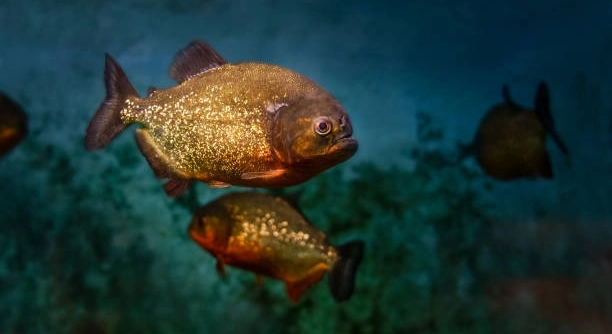
Piranhas are fascinating fish known for their sharp teeth and swift movements in freshwater rivers. These creatures display unique patterns on their bodies that are rarely seen outside their natural habitats. Understanding these patterns can reveal much about their behavior and environment.
The seven piranha patterns found only in the wild are distinct markings shaped by genetics and environmental factors. These patterns serve purposes such as camouflage, signaling, and species identification within their natural river ecosystems.
Exploring these patterns helps us appreciate the diversity of piranhas and the specific roles their markings play in survival and interaction.
The Stripe Pattern
The stripe pattern on some piranhas is one of the most common and recognizable. These stripes usually run horizontally along the body, varying in thickness and color intensity depending on the species and their environment. In the wild, stripes help piranhas blend with underwater plants and shadows, making it harder for predators to spot them. This pattern can also play a role in social signaling within groups, allowing individuals to recognize one another. The stripes often become more vivid during mating seasons, indicating readiness to reproduce. Different rivers and regions produce subtle variations in stripe patterns, showing how nature shapes these fish uniquely. Observing these stripes up close in their natural habitat can reveal much about the health and behavior of the piranha. Understanding the stripe pattern is essential for researchers and hobbyists who want to identify species accurately or study their ecology in the wild.
Stripe patterns give piranhas a natural advantage, helping with camouflage and communication in fast-moving waters.
Learning about this pattern opens up more appreciation for how piranhas adapt and survive in complex environments with many predators and competitors.
The Spotted Pattern
Spotted piranhas have irregular dots scattered across their bodies, which vary widely in size and shape. This pattern is less uniform than stripes and provides excellent camouflage among rocks and dappled sunlight in the water. Spots can also indicate age and maturity, as older piranhas often show more distinct markings. These patterns develop naturally based on genetics but are enhanced by the surrounding habitat. When piranhas gather in groups, the spots can confuse predators, making it difficult to single out one fish. In addition, the spots may play a role in mating displays, signaling fitness and health. Unlike stripes, spots do not follow a clear line but cover the body in a seemingly random arrangement that is unique to each fish. Observing spotted piranhas offers a glimpse into the variety of survival strategies fish use in their natural rivers and streams.
The Iridescent Pattern
The iridescent pattern on some piranhas shines with a rainbow-like shimmer that changes with light angles. This reflective quality helps them blend with the moving water surface, confusing predators and prey alike.
This shimmering effect comes from microscopic scales that reflect light differently depending on the environment. In fast-flowing rivers, the iridescence helps piranhas stay hidden as the light flickers across the water. It also plays a role during social interactions, catching the attention of other piranhas without making them too visible to threats. The intensity of the iridescence can vary between individuals and species, often influenced by water clarity and diet. This pattern is subtle but effective, showing how even small adaptations help piranhas thrive in diverse habitats.
Scientists study iridescent patterns to understand better how fish use light to communicate and protect themselves. These patterns remind us that beauty in nature often has a practical purpose, combining survival with visual appeal.
The Banding Pattern
Banding patterns consist of distinct, alternating dark and light bands across the piranha’s body. These bands act as natural camouflage in the patchy light of shaded river areas.
Banding helps piranhas break up their body outline, making them less visible to predators. The bands also vary in width and number depending on species and age. In some cases, the bands can signal dominance or health during social encounters, allowing piranhas to identify rivals or mates without unnecessary aggression. This pattern is especially common in species that live among roots and submerged branches, where shadow patterns are complex. Over time, the bands can fade or intensify, reflecting changes in the fish’s condition or environment. Observing banded piranhas provides insight into how visual signals support survival and social structure in aquatic ecosystems.
The Checkerboard Pattern
The checkerboard pattern shows a grid-like arrangement of dark and light patches across the piranha’s body. This pattern helps break up the fish’s outline, making it harder to detect in complex underwater environments.
Each patch varies slightly in shape and size, creating a unique mosaic that blends with rocks and plants. This pattern is rare but effective for camouflage in shallow, rocky riverbeds where light and shadow form natural grids.
The Solid Color Pattern
Some piranhas display a solid color pattern, often a deep red or silver tone. This uniform coloration can signal maturity and fitness to other fish, serving as a visual cue during mating or territorial displays.
Solid colors also help these piranhas blend into open water environments, where clear visibility demands simple but effective camouflage against predators and prey alike.
The Blotched Pattern
Blotched patterns consist of irregular, larger spots that cover the body in a scattered fashion. These blotches create a disruptive effect, making it difficult for predators to focus on a single target during movement or attacks. The pattern’s randomness varies among individuals and changes slightly with age or environmental conditions, highlighting its role in survival and concealment.
The Translucent Pattern
Some piranhas exhibit a translucent pattern where parts of their fins or body appear semi-transparent. This trait helps them blend into the water by reducing their visible outline, especially in clearer streams where predators rely heavily on sight. Translucence provides an extra layer of protection in such environments.
FAQ
What causes the different piranha patterns in the wild?
Piranha patterns are mainly caused by genetics, which determine the basic colors and markings each species has. However, environmental factors like water clarity, light exposure, and habitat type also influence how these patterns develop and appear. For example, piranhas living in darker, shaded rivers often have more pronounced camouflage patterns. Diet and age can also play a role in pattern intensity. Together, these factors create the variety of unique markings seen only in natural habitats.
Are these patterns important for piranha survival?
Yes, these patterns are crucial for survival. Camouflage patterns like stripes, spots, and blotches help piranhas hide from predators and sneak up on prey. Patterns also assist in social behaviors, such as recognizing other piranhas or signaling readiness to mate. Without these natural markings, piranhas would be more vulnerable to threats and less effective hunters. The patterns act as both protection and communication tools, finely tuned to their wild environments.
Do piranha patterns change over time?
Patterns can change slightly as piranhas age or move between different environments. Younger piranhas may have fainter markings that become more vivid with maturity. Environmental changes, like water quality or habitat shifts, can also affect how bright or distinct their patterns look. However, the basic pattern type—such as stripes or spots—usually stays consistent throughout their lives. These gradual changes reflect the fish’s adaptation and health in the wild.
Can piranha patterns be seen in captivity?
Some patterns can appear in captivity, but they are often less vivid or detailed compared to wild piranhas. Tank conditions differ from natural habitats, affecting light, water flow, and diet, all of which influence pattern development. Stress and limited space can also dull colors. Captive breeding may produce offspring with different patterns than their wild counterparts. For those wanting to see authentic piranha patterns, observing them in the wild or in well-maintained naturalistic aquariums is best.
Do piranha patterns help in identifying species?
Yes, patterns are an important tool for identifying piranha species. Each species tends to have a specific pattern type or combination of markings. For example, some have bold stripes, while others feature spots or blotches. These visual clues help researchers and hobbyists distinguish between similar-looking species. However, because patterns can vary within species, it’s important to use other characteristics like body shape and fin structure alongside markings for accurate identification.
How do patterns affect piranha behavior?
Patterns influence how piranhas interact with each other and their environment. Bright or distinct patterns often indicate health and dominance, helping fish avoid fights or attract mates. Camouflage patterns reduce visibility to predators, allowing piranhas to be more confident hunters. Some patterns change intensity during breeding seasons, signaling reproductive status. Overall, patterns serve as a silent language that shapes piranha social structure and survival strategies.
Are there any threats to piranha patterns in the wild?
Habitat destruction, pollution, and climate change threaten the environments where piranhas live, which can impact their patterns. Poor water quality and loss of natural hiding spots reduce the effectiveness of camouflage. Changes in diet or stress can dull their markings, making them more vulnerable. Conservation efforts that protect river ecosystems help preserve these natural patterns and the ecological roles piranhas play. Maintaining clean, healthy habitats is key to keeping these unique patterns alive.
Can humans mimic piranha patterns?
Humans can recreate piranha patterns in art, textiles, and design, inspired by their natural beauty and complexity. These patterns appeal due to their bold contrasts and intricate arrangements. While artificial, such mimicking highlights the fascinating diversity found in nature. It also raises awareness about the importance of preserving wild species and their unique traits. However, real piranha patterns remain a product of millions of years of evolution, unmatched by any human-made design.
What should I know before trying to observe piranha patterns in the wild?
Observing piranha patterns in the wild requires care and respect for their habitat. Piranhas live in fast-moving, often murky waters, so proper safety measures are important. Use binoculars or underwater cameras for close views without disturbing the fish. Patience is key, as patterns may be hard to see when fish move quickly. Understanding local regulations and protecting natural areas ensures that piranha populations remain healthy for future observation.
How do patterns help piranhas during mating?
During mating, patterns often become more vivid or change slightly, signaling readiness to breed. Bright colors and clear markings attract mates by showing good health and genetic quality. Patterns also help piranhas identify suitable partners within their species, avoiding crossbreeding. This visual signaling improves reproductive success and helps maintain strong, healthy populations in the wild.
Final Thoughts
Piranha patterns are more than just interesting designs on fish bodies. They are important tools that help these animals survive in their natural environments. Each pattern serves a purpose, whether it is for hiding from predators, signaling other piranhas, or attracting mates. Understanding these patterns gives us insight into how piranhas live and interact with their surroundings. These markings show how nature shapes life in many different ways, helping creatures adapt to changing conditions and challenges in the wild.
These unique patterns are also a reminder of the variety found in nature. Even though piranhas may look similar at first glance, their different markings make each species and individual special. This diversity is key to the health of their ecosystems. Patterns help piranhas find food, avoid danger, and reproduce successfully. Without these natural adaptations, they would have a harder time surviving. By studying these patterns, researchers can learn more about piranha behavior, evolution, and how to protect their habitats.
It is important to remember that piranha patterns are best seen in their wild homes. Captive environments can change how these patterns look, sometimes making them less clear or bright. Protecting natural habitats is essential for keeping these fish and their patterns healthy and intact. When we appreciate piranhas for the complex creatures they are, we also see the value in conserving the rivers and forests where they live. These patterns are small but powerful signs of life’s ability to adapt and thrive.

Hello,
If you enjoy the content that we create, please consider saying a "Thank You!" by leaving a tip.
Every little bit helps us continue crafting quality advice that supports the health, happiness, and well-being of pets around the world, for pets of all shapes, sizes, and species.
We really appreciate the kindness and support that you show us!