
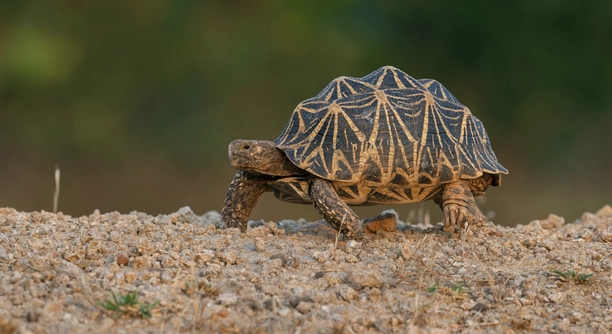
Indian Star Tortoises are a popular pet choice, known for their beautiful shells and calm nature. If you own one, you may wonder how to determine its gender. This simple guide will help you identify whether your tortoise is male or female.
To tell if your Indian Star Tortoise is male or female, observe key physical traits. Males tend to have a concave plastron, a longer tail, and a more vivid coloration, while females are generally larger with a flatter plastron.
Knowing these traits will help you differentiate between male and female tortoises. Understanding the differences will guide you in providing the best care for your tortoise.
Physical Differences Between Male and Female Indian Star Tortoises
The most obvious way to tell the difference between male and female Indian Star Tortoises is by looking at their physical features. Males typically have a concave plastron, which helps them mount females during mating. Their tails are longer and thicker than females, often extending beyond the edge of their shells. Additionally, males usually have more vibrant colors, especially around the head and neck, as they are more visually striking to attract mates. Females, on the other hand, have a flatter plastron, making room for egg-laying. They are also generally larger in size, with a rounder shape compared to the males.
The gender differences can be subtle when the tortoises are young, so it may take some time for them to become apparent. In older tortoises, however, these features become more defined, making it easier to distinguish males from females.
If you’re not able to distinguish by shape alone, you may want to use a few other methods. A combination of these physical traits should provide a more accurate picture of whether your Indian Star Tortoise is male or female.
Behavior Differences: Males Are More Active
Males are often more active than females, especially when they are searching for mates. They tend to roam more frequently, displaying an energetic and sometimes aggressive nature. If you have both a male and female in the same habitat, the male may exhibit more noticeable courtship behaviors, such as chasing or attempting to mount the female. These actions are all related to mating instincts, which males carry out more vigorously.
Females, being less active in comparison, often spend more time resting or foraging. They tend to be less territorial and will usually stay in one spot longer. Understanding these behavioral traits can provide further insight into your tortoise’s gender.
Tail Length and Shape
The tail is another key feature for distinguishing male and female Indian Star Tortoises. Males typically have longer, thicker tails that extend well past their shells. In contrast, females have shorter tails, which are more tucked beneath their body. This difference is especially noticeable when they are fully grown.
In addition to being longer, a male’s tail is also more curved. The tail’s shape helps with mating, allowing it to fit more easily into the female’s cloaca. This feature, when combined with other characteristics like plastron shape, makes it easier to determine the gender.
The shape and length of the tail are more evident as the tortoise matures, and can be a useful tool in gender identification. If you find it difficult to spot this trait, pairing it with other features can give you a clearer understanding of your tortoise’s sex.
Size and Growth Rate
Size is another differentiator between male and female Indian Star Tortoises. Females are generally larger, growing up to 12 inches in length, while males usually stay smaller, around 8 to 10 inches. This difference in size is linked to their roles in reproduction.
The larger size of females gives them the necessary room to carry and lay eggs. Males, being smaller, don’t have this need for extra space. If you’re unsure about your tortoise’s gender, comparing its size to other known males or females in the same species can be helpful.
It’s important to remember that these size differences become more noticeable as they age. Younger tortoises of both genders can appear similar in size, so the full growth of your tortoise may reveal its true sex. This growth pattern is typical in the species, so it’s a natural sign.
Plastron Shape
The plastron, the underside of the tortoise’s shell, is a key feature for identifying gender. Males have a concave, or inward-curved, plastron, which allows them to mount females during mating. Females have a flatter plastron to accommodate their eggs.
This difference is more noticeable in adult tortoises, as younger ones may have less-defined plastron shapes. If you’re still unsure, combining this observation with other physical traits will help confirm your tortoise’s gender.
Tail Position
Another simple method for determining sex is by looking at the tail position. Males usually hold their tails outward and slightly curved, while females’ tails rest more centrally. The tail position is often subtle but can help when identifying the gender alongside other signs.
Behavior During Mating Season
During the mating season, male Indian Star Tortoises often become more aggressive and active. They may chase females, attempting to mount them. This behavior can occur whether or not the female is receptive, as males have a strong mating instinct.
Females, on the other hand, will typically show less aggression. Their behavior becomes more focused on foraging or resting. Observing these differences during breeding times can give you further insight into your tortoise’s gender.
FAQ
How can I tell the difference between a male and female Indian Star Tortoise when they are young?
When Indian Star Tortoises are young, distinguishing between males and females can be tricky. At this age, their physical differences are less defined, and the traits that become more noticeable as they mature are not yet visible. However, there are a few subtle clues. Males may have slightly longer tails, but the plastron is often still flat in both genders. As they grow older, these differences will become more distinct. It’s best to wait until the tortoises are around 4 to 5 years old for clear signs.
Do Indian Star Tortoises change their gender as they grow?
No, Indian Star Tortoises do not change gender as they grow. The gender of your tortoise is determined from birth and remains the same throughout their life. However, as they mature, the physical traits that differentiate males from females, such as the shape of the plastron, tail length, and overall size, become more apparent. Therefore, while their gender remains constant, you’ll notice clearer signs as they reach maturity.
Do male and female Indian Star Tortoises have different life spans?
There is no significant difference in the lifespan of male and female Indian Star Tortoises. Both genders can live for up to 50 years or more with proper care. While females may be larger and more robust, males don’t tend to live significantly shorter lives. What matters more for longevity is diet, environment, and healthcare rather than gender.
Why is the male Indian Star Tortoise smaller than the female?
The male Indian Star Tortoise is typically smaller than the female because of their different roles in reproduction. Males do not need as much size to carry and lay eggs, unlike females. This size difference is natural and helps with the tortoises’ reproductive needs. A larger size in females gives them the capacity to carry eggs, which is why they grow larger.
How do I tell the sex of my Indian Star Tortoise if it’s not displaying any of the traits yet?
If your tortoise is not showing clear traits like a concave plastron, longer tail, or size difference, it might be too young to determine the sex. In this case, it’s best to wait a bit longer, as these physical signs become clearer as they grow older. You can also observe behavior around mating season, as males tend to be more active and aggressive.
Can I keep both male and female Indian Star Tortoises together?
Yes, you can keep both male and female Indian Star Tortoises together. However, it’s important to monitor them, especially during mating seasons, as males can become aggressive towards females. If you notice signs of stress or harm, it may be best to separate them temporarily. It’s essential to provide plenty of space, hiding spots, and resources for each tortoise to avoid territorial behavior.
Do Indian Star Tortoises need a mate to be healthy?
No, Indian Star Tortoises do not need a mate to remain healthy. While they may display mating behaviors, particularly during the breeding season, they do not require a mate for survival. Having a tortoise as a pet does not depend on whether they are paired with another tortoise. Proper care, diet, and habitat are more important factors for maintaining a healthy tortoise.
What is the best way to care for a female Indian Star Tortoise during the breeding season?
During the breeding season, female Indian Star Tortoises may exhibit changes in behavior, such as increased rest or irritability. It’s important to provide a calm and stress-free environment for them. Ensure they have access to a proper diet, including calcium-rich foods, as egg-laying can deplete calcium reserves. Make sure your tortoise has a suitable nesting area if there is a chance she may lay eggs. Regular health check-ups are also a good idea to ensure she is in good condition.
Can I breed my Indian Star Tortoises at home?
Breeding Indian Star Tortoises should only be attempted by experienced keepers. It’s important to understand the responsibilities that come with breeding, including providing proper care for the hatchlings. You must be prepared for the legal and ethical implications of breeding, as this species is protected in some regions. Make sure you understand the regulations, provide suitable habitats, and ensure you have a plan for the offspring before considering breeding.
How can I ensure my Indian Star Tortoise lives a long, healthy life?
To ensure your Indian Star Tortoise lives a long, healthy life, provide it with a well-balanced diet that includes vegetables, fruits, and high-quality tortoise pellets. Provide a spacious, secure habitat with access to UVB lighting, which is vital for their bone health. Regular veterinary check-ups and keeping an eye out for signs of illness will also help ensure your tortoise stays in good health.
Determining whether your Indian Star Tortoise is male or female can be an interesting and rewarding experience. By observing their physical traits, behaviors, and subtle signs like the shape of their plastron and tail, you can get a clear idea of their sex. While young tortoises can be tricky to identify, as they grow older, their gender becomes more apparent. This understanding helps you care for them in the best way possible and provides insight into their natural behaviors.
It’s important to remember that each tortoise is unique, and these gender differences can vary slightly between individuals. However, the physical traits we’ve discussed, such as size, tail shape, and plastron curvature, are usually reliable indicators. Behavior, especially around mating season, can also provide clues. Males are often more active and aggressive, while females tend to be more passive and focused on foraging and resting. Understanding these differences will give you a better picture of your tortoise’s personality and needs.
Ultimately, knowing whether your Indian Star Tortoise is male or female can enhance your experience as a tortoise owner. It allows you to provide better care, set up their habitat accordingly, and even plan for future breeding if desired. Regardless of gender, all tortoises require proper care, diet, and attention to live a long, healthy life. Whether your tortoise is male or female, they can bring great joy and fascination to your life with their unique behaviors and stunning appearance.

Hello,
If you enjoy the content that we create, please consider saying a "Thank You!" by leaving a tip.
Every little bit helps us continue crafting quality advice that supports the health, happiness, and well-being of pets around the world, for pets of all shapes, sizes, and species.
We really appreciate the kindness and support that you show us!