
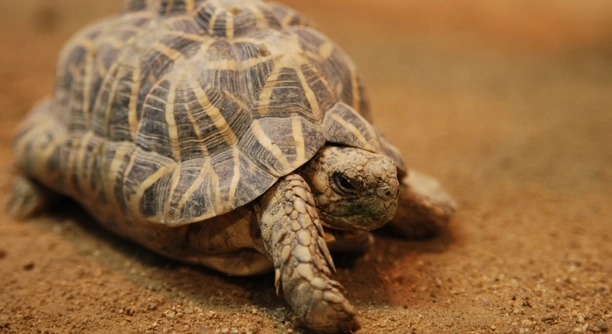
Identifying gender differences in Indian star tortoises can be tricky, but knowing what to look for helps. These reptiles have specific traits that set males and females apart, making it easier to identify them with some practice.
The most reliable way to determine gender differences in Indian star tortoises is by examining their physical characteristics. Males tend to have a concave plastron, longer tails, and slightly more vibrant coloring, while females are generally larger with a flat plastron.
Understanding these differences is key to properly identifying the gender of your tortoise. There are several helpful tips that can guide you in this process.
Physical Differences Between Male and Female Indian Star Tortoises
When observing Indian star tortoises, the most noticeable difference between males and females is their size. Males are generally smaller than females, which are more robust. The female’s larger size helps her carry eggs. The concave plastron, located on the underside of the tortoise, is another distinguishing feature. This concave shape in males allows them to mount females during mating. The male’s tail is longer and extends beyond the edge of the shell, while the female’s tail is shorter and thicker.
The shape of the plastron plays a crucial role in gender identification. Males use their concave plastrons to better align with the female’s body during copulation. In contrast, females have a flat plastron that provides more space for carrying eggs. Understanding these characteristics can make it easier to identify the gender of your tortoise.
Males may also have a slightly more vibrant color than females. However, this is not always the case, as some variations can occur. The differences in tail length are one of the most reliable indicators for accurate gender identification.
Tail Length and Position
One of the most straightforward ways to determine the gender of an Indian star tortoise is by observing the tail. Males have longer, thinner tails that extend well beyond the edge of the shell, while females have shorter and thicker tails that are tucked under their bodies. This is due to the reproductive organs of the male being located at the tip of the tail, which requires extra length.
The length and positioning of the tail are key factors in sexual dimorphism in tortoises. These features are not only used for mating but also serve to differentiate genders in a practical way. Understanding this simple but effective method is essential for anyone caring for these reptiles.
Plastron Shape
The plastron, the underside of the tortoise’s shell, is another defining characteristic. Males have a concave plastron, which helps them fit onto the female during mating. In contrast, females have a flat plastron, allowing more room for their eggs. The plastron shape is one of the easiest ways to tell the gender of Indian star tortoises.
A concave plastron in males is necessary for successful copulation. This feature allows the male to align his body with the female during mating. A flat plastron in females helps accommodate the developing eggs inside her body, giving her a larger, more spacious appearance. While size is the most noticeable difference between the genders, the plastron shape is often a more reliable indicator.
It is important to note that younger tortoises may not show as obvious plastron differences. As the tortoises mature, the sexual dimorphism becomes more apparent. Therefore, careful observation over time is essential in ensuring accurate gender identification. Keeping this in mind helps prevent confusion when observing your tortoise’s features.
Size Differences
Size is one of the most noticeable differences between male and female Indian star tortoises. Generally, females are larger than males, with females growing to lengths of about 12 to 14 inches, while males usually reach around 8 to 10 inches. This size difference is essential for reproduction.
Larger females have more space to carry and protect their eggs, which is a crucial factor for their survival. Males, being smaller, can move more easily and are lighter, which can be advantageous during mating. Although size can sometimes be misleading due to variations in diet and health, it is still one of the most reliable indicators for gender identification.
As your tortoise grows, this size difference will become more evident. However, younger tortoises may not show clear size differences, making gender identification more difficult early on. In such cases, you may need to wait until the tortoise matures before these differences become apparent.
Tail Position
The tail position is another easy way to distinguish between male and female Indian star tortoises. Males have longer tails that extend beyond the edge of the shell, while females have shorter tails that are tucked under their bodies. This difference is particularly noticeable when the tortoise is viewed from behind.
The male’s longer tail is necessary for copulation, as the reproductive organs are located at the tip of the tail. On the other hand, the female’s tail is shorter and designed to remain tucked away to protect her reproductive organs. This clear distinction makes tail position a key feature in gender identification.
Behavior Differences
Behavior can also provide clues to the gender of Indian star tortoises. Males tend to be more active and can exhibit mating behaviors such as chasing females and attempting to mount them. This behavior often occurs during the breeding season, when males are seeking to mate.
In contrast, females are generally less active in terms of mating behaviors. Instead, they focus on nesting and protecting their eggs. During the breeding season, females may become more aggressive if they feel their nesting area is threatened. These behavioral traits provide valuable insights into the gender of your tortoise.
FAQ
How can I tell the difference between male and female Indian star tortoises?
The easiest way to tell the difference is by observing the size, tail, and plastron. Males are typically smaller, with longer tails that extend beyond the shell and concave plastrons. Females are larger and have a flat plastron. These physical differences are the most reliable indicators.
What is the purpose of the concave plastron in males?
The concave plastron in males allows them to better align with the female during mating. This concave shape helps the male to fit more comfortably on top of the female, making mating easier. This feature is particularly noticeable during the breeding season.
Do female Indian star tortoises always grow larger than males?
Generally, yes. Females of this species are usually larger than males, often growing up to 12 to 14 inches in length, while males typically reach around 8 to 10 inches. This size difference is crucial for females to carry and protect their eggs. However, size may not be as pronounced in young tortoises.
Can I determine the gender of my Indian star tortoise at a young age?
It can be challenging to determine the gender of very young tortoises because the physical traits are not fully developed yet. As the tortoises mature, the size, plastron shape, and tail differences will become more apparent, making it easier to identify the gender.
Do Indian star tortoises’ tails look the same?
No, the tails of male and female tortoises are different. Males have longer, thinner tails that extend beyond the edge of the shell, while females have shorter, thicker tails that are tucked under their bodies. The tail length is a reliable method for gender identification.
Are there other ways to identify the gender of my tortoise besides size and tail?
Yes, behavior is another way to determine gender. Males are more active and often exhibit mating behaviors, such as chasing females and trying to mount them. Females, on the other hand, tend to focus on nesting and may become more territorial.
Is it normal for male and female Indian star tortoises to look similar at first?
Yes, in the early stages of their life, male and female Indian star tortoises may look very similar. As they mature, their physical features like size, tail length, and plastron shape become more distinct. Patience is required when identifying their gender at a young age.
What should I do if I’m unsure about the gender of my tortoise?
If you are uncertain, you can consult a reptile veterinarian or an expert in tortoise care. They will be able to provide more accurate identification based on the tortoise’s physical traits and behavior. Keep an eye on your tortoise’s development, as the gender will become clearer with time.
Are there any exceptions to the common physical traits of males and females?
While most Indian star tortoises follow the typical size and tail differences, there can be some variation. Certain environmental factors, such as diet and habitat, may influence their growth. However, the general patterns of size, plastron shape, and tail length remain reliable in most cases.
Can I breed Indian star tortoises if I have one male and one female?
Yes, if you have one male and one female, they can potentially breed. However, breeding should only be done under appropriate care conditions. The female will need a suitable nesting area to lay her eggs. Mating behavior can sometimes be aggressive, so it’s essential to monitor their interactions.
Final Thoughts
Identifying the gender of Indian star tortoises is an essential aspect of understanding their behavior and needs. By observing the size, plastron shape, tail position, and behavior, you can easily distinguish between males and females. These physical traits, along with a few behavioral cues, make gender identification relatively straightforward as the tortoises mature. While younger tortoises may present some challenges in determining their gender, the differences become more apparent with age, allowing you to better care for your pet.
Males and females each have unique physical characteristics that serve specific purposes. Males are generally smaller, with longer tails and concave plastrons, which help them during mating. Females, being larger, have flatter plastrons and shorter tails. These distinctions not only help with reproduction but also contribute to each gender’s behavior and role in the species. Knowing the gender of your Indian star tortoise can improve your understanding of their needs and help you provide the best care.
By being aware of these differences, you are better equipped to support the well-being of your tortoise, whether you are managing a single pet or multiple tortoises. It is important to continue observing and learning as your tortoises grow. Understanding gender differences can also help you prepare for potential breeding or offer insights into their health and behavior. Knowing the basics of gender identification is an important step toward responsible tortoise care.

Hello,
If you enjoy the content that we create, please consider saying a "Thank You!" by leaving a tip.
Every little bit helps us continue crafting quality advice that supports the health, happiness, and well-being of pets around the world, for pets of all shapes, sizes, and species.
We really appreciate the kindness and support that you show us!