
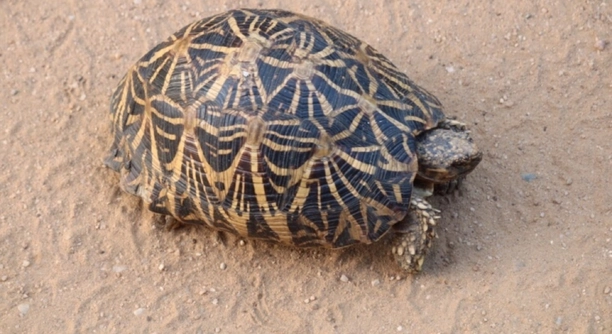
Indian star tortoises are known for their beautiful, intricate shell patterns. Their unique designs are more than just aesthetic; they carry interesting facts about their species. These patterns make them fascinating creatures to study.
The patterns on an Indian star tortoise’s shell are primarily used for camouflage and protection. Their striking star-like shapes serve as a natural defense mechanism, helping them blend into their environment and evade predators.
The patterns also hold cultural significance and can be a clue to their health. These fascinating characteristics can teach us a lot about their environment, behavior, and even their evolutionary adaptations.
The Origin of the Star Pattern
The star-shaped patterns on an Indian star tortoise’s shell are not just a random feature. They have evolved to help the tortoise survive in its natural habitat. These patterns provide camouflage, allowing them to blend into the dry, grassy environments of India and Sri Lanka. The intricate lines mimic the appearance of light filtering through trees, which can help them hide from predators like birds of prey.
The star shapes themselves are made up of fine, geometric lines that create a striking, symmetrical design. It’s a natural protective feature that works remarkably well. Not only does it hide them from predators, but the colors also make it difficult for the tortoises to be seen by other animals, even when they move slowly.
This pattern, which seems purely decorative to us, is a finely tuned tool for survival. Over time, these tortoises have adapted to use their shells not just for protection but as a way to hide in plain sight, blending seamlessly into the environment.
How Do the Patterns Form?
The way the patterns form is a fascinating process. The colors and shapes appear as the tortoise grows, influenced by genetics. Their shells are made up of layers, with each layer contributing to the overall pattern.
The patterns are essentially the result of growth rings on their scutes, the individual plates on their shells. As they grow, these rings develop differently in each tortoise, creating the unique designs we see. Factors like diet and climate can subtly influence the way their patterns emerge, although genetics play the biggest role.
Understanding how these designs form adds another layer to appreciating their beauty. The way nature crafts such intricate and purposeful patterns is a reminder of how every detail in an animal’s appearance has a function, whether we realize it or not. The tortoises’ shells are like natural works of art, each one entirely unique.
The Role of Shell Patterns in Mating
The star pattern on an Indian star tortoise’s shell is not only for camouflage but may also play a role in attracting mates. Males often display brighter and more distinct patterns than females. These more noticeable designs might serve as signals to indicate fitness and attract a mate.
Mating behaviors in Indian star tortoises are influenced by these unique shell patterns. The more vivid and symmetrical the pattern, the more likely the male is to be noticed by females. These visual cues allow females to assess potential mates, with well-marked tortoises often being seen as healthier or more genetically suitable. This reliance on pattern recognition makes their appearance a key part of their mating strategy.
Interestingly, the patterns can also help tortoises in establishing territory. Males with more vibrant shells may use their appearance to intimidate rivals, signaling dominance and the ability to compete for mates. These visual markers are important in both attracting mates and maintaining social hierarchy among tortoises.
The Impact of Environmental Factors
Environmental factors like climate and diet can slightly alter the appearance of a tortoise’s shell pattern. Temperature fluctuations, for example, can influence the intensity of the shell’s colors, with hotter climates potentially producing more vibrant patterns.
Food sources also play a role in the development of these patterns. A tortoise’s diet, rich in certain plants, can impact the rate at which it grows, affecting the formation of the shell. While genetics determine the basic framework of the patterns, these external influences can add subtle variations to each individual’s design. This means that the same species in different locations might have slightly different shell appearances.
Understanding these environmental impacts helps in tracking the health of tortoises in the wild. By studying how their shells evolve under varying conditions, researchers can gain insights into how environmental changes affect wildlife patterns and even their survival. This highlights the complex relationship between an animal’s environment and its physical traits.
The Symmetry of the Patterns
The symmetry in the shell patterns of Indian star tortoises is striking. Each line and shape is mirrored on opposite sides of the shell, creating a balanced, harmonious design. This symmetry plays a role in their camouflage and overall survival strategy, making them harder to detect by predators.
This evenness is not just aesthetically pleasing; it serves a deeper purpose. The consistent patterns help the tortoise maintain its natural defense mechanism. The uniform lines are harder to recognize in their natural habitats, which often have a similar repeating structure, such as dried grass and leaves.
Shell Patterns and Longevity
As Indian star tortoises age, their shell patterns may change slightly. Older tortoises may exhibit darker or more worn patterns. These subtle changes could indicate their health and longevity. Understanding these patterns over time helps researchers track the life stages of individual tortoises.
The Beauty of Imperfection
No two Indian star tortoises share the same pattern. Every tortoise’s design is unique, making each one a masterpiece in its own right. Even though their patterns follow a general template, small differences add personality. These imperfections make them even more fascinating.
FAQ
Why are the patterns on the Indian star tortoise’s shell so important?
The patterns on an Indian star tortoise’s shell play a crucial role in their survival. These intricate designs provide camouflage, helping them blend into their natural surroundings and avoid predators. The star-like shapes on their shells mimic the environment, such as dry, grassy areas or the dappled light through trees. This camouflage is essential for hiding from birds of prey, the tortoise’s main predators. The patterns are not just for looks; they are functional and aid in the tortoise’s survival in the wild.
Do the patterns on their shells change over time?
Yes, the patterns on an Indian star tortoise’s shell can change as they grow older. While the overall shape of the pattern remains the same, the color intensity can fade or darken with age. Young tortoises often have brighter and more distinct patterns. As they mature, their shells may become slightly more worn, and the contrast between the light and dark patterns may lessen. This natural aging process is a sign of their health and age. However, the general pattern structure remains consistent throughout their life.
Are all Indian star tortoises’ patterns the same?
No, each Indian star tortoise has a unique pattern. While they share similar star-shaped designs, no two tortoises look exactly alike. The arrangement of lines, colors, and shapes on their shells differs from one individual to another. This individuality makes each tortoise’s shell a one-of-a-kind masterpiece. The uniqueness of the patterns is due to genetic factors that determine how the patterns form. These differences can help researchers identify individual tortoises, especially in the wild.
Do Indian star tortoises’ patterns help them attract mates?
Yes, the patterns on their shells do play a role in mating. Males, in particular, tend to have more vibrant and well-defined patterns compared to females. These striking patterns act as visual cues for females, who may use them to assess the fitness of potential mates. A brightly patterned shell might signal that the tortoise is healthy and strong, making it more attractive to a mate. These visual cues are an important part of their mating behavior.
Can the environment affect the patterns on their shells?
Yes, the environment can influence the patterns on an Indian star tortoise’s shell. While genetics is the primary factor in how the patterns form, environmental conditions like diet, temperature, and climate can affect the intensity and development of the patterns. For example, tortoises living in warmer climates may have more vivid colors on their shells, while those in cooler areas may have lighter patterns. Additionally, the availability of food and the tortoise’s overall health can slightly alter the shell’s appearance over time.
Why do some tortoises have darker or lighter shells?
The color of an Indian star tortoise’s shell can be influenced by several factors, including age, genetics, and environmental conditions. As tortoises age, their shells often become darker, especially around the edges of the scutes. This darkening process is a natural part of aging. In younger tortoises, the colors tend to be lighter and more vibrant. The tortoise’s diet and exposure to sunlight can also impact the shell’s appearance, with darker shells possibly indicating more exposure to sunlight or certain types of food.
How do Indian star tortoises’ shells protect them?
The shell patterns themselves provide camouflage, but the shell as a whole serves as an important defense mechanism. The hard, durable shell protects the tortoise from predators and harsh environmental conditions. It acts like a shield, preventing injury and shielding the tortoise from extreme temperatures. When threatened, the tortoise can retract its head and legs into its shell for protection. The smooth surface and curved shape of the shell also help deflect attacks, offering an additional layer of defense.
Are the patterns on the Indian star tortoise’s shell used for identification?
Yes, the unique patterns on each Indian star tortoise’s shell can be used for identification. Just like fingerprints in humans, the intricate designs are one-of-a-kind to each tortoise. Researchers and wildlife experts can identify individual tortoises by studying the patterns on their shells. This is particularly helpful in conservation efforts, where tracking and monitoring individual tortoises helps scientists gather important data about their health, behavior, and populations in the wild.
What role do the lines and shapes on the shell play?
The lines and shapes on the Indian star tortoise’s shell are not just decorative; they serve important functions. The star-like lines help break up the outline of the tortoise’s shell, making it harder for predators to spot them. These geometric shapes and their arrangement provide a form of camouflage, allowing the tortoise to blend seamlessly into its environment. In addition, the shapes and lines may play a role in regulating temperature, helping the tortoise stay cool in hot environments by reflecting sunlight.
Do the shell patterns help with their survival in the wild?
Absolutely. The intricate patterns on the shell of the Indian star tortoise provide critical survival advantages. The star shapes break up the outline of the tortoise, helping it stay hidden in its natural surroundings. This camouflage is especially effective in environments like grasslands and forests where light and shadow patterns on the ground mimic the tortoise’s shell design. By blending in with their surroundings, these tortoises can avoid detection by predators, ensuring their survival in the wild.
Can the patterns on their shells be affected by human activity?
Human activity can indirectly affect the patterns on Indian star tortoises’ shells. Habitat destruction and pollution may force tortoises into environments that do not support the development of their natural patterns. Additionally, human interaction, such as handling, can stress tortoises, potentially impacting their health and the development of their shell patterns. Conservation efforts that protect their natural habitats and minimize human interference are crucial in maintaining the integrity of their shell patterns.
Final Thoughts
The Indian star tortoise’s shell is a true marvel of nature. Its unique star patterns are not just beautiful; they serve multiple purposes that help the tortoise thrive in its natural environment. These intricate designs offer camouflage, protecting the tortoise from predators by allowing it to blend seamlessly into its surroundings. This ability to hide in plain sight is an essential survival tool for these creatures, who rely on their shells for protection and defense. Over time, the patterns also help researchers identify individual tortoises, providing valuable insights into their behavior and health.
It’s fascinating to think that the star patterns are not random, but are the result of both genetics and environmental factors. As tortoises grow older, their shells undergo subtle changes, with some becoming darker or lighter depending on their age and exposure to the elements. Temperature, diet, and other environmental conditions can also impact the intensity and appearance of the patterns. While genetics plays a primary role, the environment can add variations, making each tortoise’s shell unique. This combination of natural design and external influences creates a diverse range of patterns that make every tortoise an individual.
The Indian star tortoise’s shell patterns offer a glimpse into the complex relationship between an animal and its environment. These patterns, which help with survival and reproduction, also highlight the beauty and intricacy of nature’s design. From protecting the tortoise from predators to assisting in mate selection, the shell serves as a vital tool in their life. Understanding the patterns on their shells not only enhances our appreciation for these creatures but also underscores the importance of preserving their natural habitats. As we continue to study these tortoises, we gain a deeper respect for the wonders of the natural world and the ways in which animals adapt to their environments.

Hello,
If you enjoy the content that we create, please consider saying a "Thank You!" by leaving a tip.
Every little bit helps us continue crafting quality advice that supports the health, happiness, and well-being of pets around the world, for pets of all shapes, sizes, and species.
We really appreciate the kindness and support that you show us!