
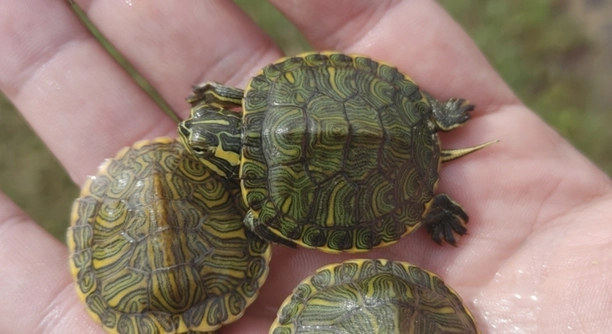
Identifying the age of a yellow-bellied slider can be a fun and insightful task. These turtles grow and change in distinct ways as they age. Knowing their age can help in caring for them properly.
The age of a yellow-bellied slider can be identified by observing physical characteristics such as size, shell patterns, and growth rings. These clues, when combined, offer a clear indication of their age and stage in life.
By understanding these signs, you’ll gain a better appreciation for your turtle’s development. It also aids in providing the best care possible for your yellow-bellied slider.
Size of the Shell
The size of your yellow-bellied slider’s shell is a significant clue to its age. As hatchlings, they are usually about 1 to 1.5 inches long. Their growth slows down a bit after that, but they continue to grow steadily until they reach adulthood. At around 5 years old, their shell length could be around 5 inches, and by 10 years, it may reach 8 inches or more.
If your turtle has a shell length of 6 to 8 inches, it’s likely between 5 and 10 years old. Larger than that, and it’s probably older. Keep in mind that the growth rate can vary depending on diet, environment, and overall health. So, while the size is a helpful guide, it’s not always a perfect indicator.
You should also consider the shape and condition of the shell. A smooth, shiny shell often indicates a younger turtle, while a more worn or slightly rougher shell suggests an older one. The shell’s color might also change slightly with age, becoming duller as they grow.
Growth Rings on the Shell
Growth rings are another obvious sign of age. Like the rings of a tree, they develop as the turtle grows. These rings form on the scutes, which are the individual plates on the shell.
Each ring generally represents a year of growth. However, growth rings can sometimes be misleading. If the turtle is underfed, sick, or kept in poor conditions, the rings may not form as expected. In healthy turtles, you’ll see more prominent rings, especially in younger ones.
Shell Condition
A yellow-bellied slider’s shell changes as it ages. Younger turtles tend to have smoother, shinier shells. As they grow older, the shell becomes more rugged and may show signs of wear and tear. You may notice small scratches, chips, or dullness in older sliders, reflecting their age.
A healthy shell should not be overly damaged. If your slider’s shell looks unhealthy or cracked, it may be due to improper care, diet, or living conditions, which can also affect its aging process. Over time, older turtles may develop a slightly less vibrant shell color, indicating their maturity.
A yellow-bellied slider’s shell health can also reveal its lifestyle and environment. A rough shell with more visible wear could indicate that it’s been more active or exposed to harsher conditions over time. On the other hand, if it remains glossy with minimal marks, your turtle might still be quite young.
Head and Limb Size
As yellow-bellied sliders age, their head and limbs grow proportionately larger. Juveniles typically have smaller heads in relation to their body size. As they grow older, their limbs, neck, and head expand, giving them a more balanced appearance.
This proportional growth is more noticeable when the slider reaches adulthood. The head may appear wider, and the neck becomes longer and thicker. The legs also become more muscular, allowing the turtle to swim faster and maneuver more easily. Older sliders are often noticeably bulkier.
It’s also worth considering their overall physicality. A fully mature yellow-bellied slider will appear more solid and less streamlined than a younger one. If your turtle has noticeably grown in size, it’s a clear sign that it is no longer a hatchling or juvenile.
Behavior and Activity Level
Younger yellow-bellied sliders tend to be more active and playful. They are curious and will frequently swim around, bask, and explore their environment. As they age, their activity level may decrease, and they become more sedentary. Older sliders are often less energetic, spending more time basking or resting.
While this is a common trend, the activity level also depends on factors like diet, habitat, and health. An older turtle in a well-maintained environment might still be quite active, but generally, as they age, their pace slows. You can gauge their age by observing how active or passive they are.
Mating Behavior
Mating behavior can also provide clues to a yellow-bellied slider’s age. Younger turtles typically don’t engage in mating, while adults start to show mating behavior around 3 to 5 years of age. Male sliders become more aggressive and often perform a specific courtship display to attract females.
Older males might become even more persistent with courtship, but they may have less energy than younger males. Female sliders will also show signs of mating readiness as they reach maturity, which is usually around 4 to 6 years old.
FAQ
How fast do yellow-bellied sliders grow?
Yellow-bellied sliders grow relatively quickly in their first few years. As hatchlings, they are around 1 to 1.5 inches long. Within the first year, they can grow to about 3 inches, and by the time they are 5 years old, they can reach 5 to 6 inches. Growth slows after that, but they may still continue to grow at a slower rate until they are about 10 years old.
The growth rate can vary based on diet, environment, and overall health. If the turtle has access to ample sunlight and proper nutrition, it will grow faster. However, poor living conditions can stunt growth and affect the turtle’s overall well-being.
How can I tell if my yellow-bellied slider is still a hatchling?
A hatchling yellow-bellied slider is usually about 1 inch long when it hatches. You can identify a hatchling by its small size and its soft, smooth shell. They are also very active and curious. If your slider has a very small shell and shows these behaviors, it is likely a hatchling.
Keep in mind that hatchlings may change in appearance quickly as they grow. Within the first year, they will start to show significant growth. If your slider is still under 3 inches, it’s probably a young turtle but not a hatchling anymore.
How long do yellow-bellied sliders live?
Yellow-bellied sliders can live a long time in captivity, often reaching 20 to 30 years with proper care. Some have even been known to live longer, up to 40 years. In the wild, they may live slightly shorter lives due to predators, disease, or environmental factors.
Their lifespan is influenced by the quality of their care, including their diet, habitat, and overall health. A healthy, well-maintained turtle can live well beyond its expected lifespan, but without proper care, their life expectancy will decrease.
What are the signs that my yellow-bellied slider is aging?
As yellow-bellied sliders age, they tend to show a few physical and behavioral changes. These include a rougher, duller shell, a decrease in activity level, and changes in their feeding habits. Older turtles also often have a broader head and thicker limbs compared to younger ones.
In terms of behavior, older sliders might spend more time resting and basking rather than swimming and exploring. Their mating behaviors might become less intense as they age as well. If you notice these changes, it’s a sign that your slider is maturing.
Do yellow-bellied sliders’ shells change color as they age?
Yes, the color of a yellow-bellied slider’s shell can change as it ages. Younger turtles typically have a bright, vibrant shell with clear markings. As they age, the colors may become duller, and the patterns might become less distinct. This can happen naturally as part of the aging process.
However, other factors such as diet, environmental conditions, and health can also influence the color of the shell. For example, if the turtle’s diet lacks essential nutrients or it is not exposed to enough UV light, the shell may lose its vibrancy more quickly.
Can I tell the age of my yellow-bellied slider just by looking at it?
While you can get a good idea of your yellow-bellied slider’s age by examining its size, shell condition, and behavior, determining the exact age can be difficult without more precise indicators. Growth rings can help estimate age, but they can sometimes be misleading due to environmental factors.
The most reliable way to estimate age is to combine all the clues you can observe—size, behavior, shell condition, and even the turtle’s reproductive status. For a more accurate estimate, you can consult a vet who specializes in reptiles.
Why is my yellow-bellied slider not growing?
If your yellow-bellied slider isn’t growing, it could be due to several reasons. A poor diet, insufficient UV light, or improper water conditions can all stunt growth. Sliders need a balanced diet, including protein, vegetables, and calcium, as well as a proper basking area with UVB lighting to promote healthy growth.
Additionally, health issues like parasites or infections can also slow growth. If you notice your turtle is not growing as expected, it’s a good idea to check its living environment and consult with a reptile vet to rule out any medical problems.
How can I keep my yellow-bellied slider healthy as it ages?
To keep your yellow-bellied slider healthy throughout its life, it’s important to maintain a proper diet, a clean tank, and adequate UVB lighting. As they age, sliders may need a more specialized diet to ensure they get the necessary vitamins and minerals.
Providing a large enough habitat with both water and basking areas will also help them stay active and healthy. Regular vet checkups are also recommended, especially as they age, to catch any health issues early on. Regular water changes and a good filtration system are essential for maintaining water quality.
What should I do if I think my yellow-bellied slider is sick?
If you notice changes in your yellow-bellied slider’s behavior, such as a loss of appetite, lethargy, or shell damage, it may be a sign of illness. Other symptoms, like abnormal swimming, difficulty breathing, or eye swelling, should also be taken seriously.
The first step is to check its environment, ensuring that the water is clean, the temperature is appropriate, and the basking area has proper lighting. If the conditions are ideal and the turtle is still showing signs of illness, it’s best to take it to a reptile vet for an examination. Early treatment is key to preventing further health issues.
Final Thoughts
Identifying the age of a yellow-bellied slider can be tricky, but paying attention to certain characteristics can provide helpful clues. Size, shell condition, and growth rings are some of the most reliable ways to estimate a slider’s age. As the turtle grows, changes in behavior and physical appearance become more apparent. You can learn a lot about their life stage by observing how they move, what they eat, and how their shell looks over time.
It’s important to note that while these methods give a good estimate, they are not always 100% accurate. Factors like diet, environment, and health play a role in how quickly a turtle grows and changes. For instance, a turtle that is underfed or living in poor conditions might grow slower than one that is properly cared for. Shell color, size, and behavior can vary based on the individual slider. That’s why it’s best to consider multiple factors together rather than rely on just one clue.
Whether you are caring for a young hatchling or an older slider, understanding its age can help you provide better care. As turtles age, their needs might change, so it’s essential to adjust their environment and diet accordingly. Keeping track of your turtle’s age and noticing the subtle changes in its behavior and appearance will help ensure that it stays healthy and happy throughout its life.

Hello,
If you enjoy the content that we create, please consider saying a "Thank You!" by leaving a tip.
Every little bit helps us continue crafting quality advice that supports the health, happiness, and well-being of pets around the world, for pets of all shapes, sizes, and species.
We really appreciate the kindness and support that you show us!