
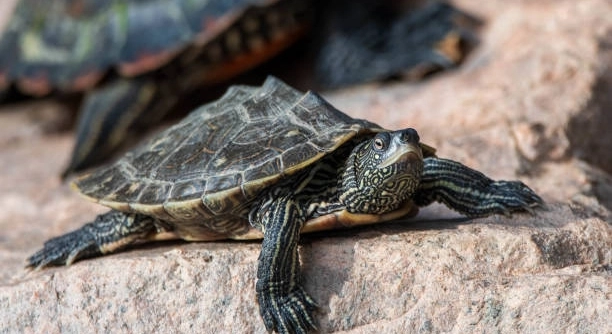
Map turtles are a fascinating species found in North America. Known for their intricate markings and shy nature, these turtles are a unique part of the wild ecosystem. Let’s take a closer look at what makes them so interesting.
Map turtles are named for the map-like patterns on their shells. These turtles live primarily in rivers and lakes, preferring calm, warm waters. Their habitat plays a key role in their survival, offering both food and shelter.
There is much more to map turtles than their appearance. Their behavior, diet, and conservation efforts highlight their importance in the wild. Keep reading to learn more about these incredible reptiles.
The Fascinating Shell Patterns of Map Turtles
Map turtles stand out because of the unique patterns on their shells. These markings resemble topographic maps, which is why they’re named after them. Each turtle’s pattern is different, much like human fingerprints. The patterns can range from lines and swirls to more intricate designs, giving them a distinct look. These patterns are not just for show—they provide camouflage in their natural habitat, helping them blend in with rocks and water surfaces. The markings are a helpful defense mechanism, protecting map turtles from predators. It’s also believed that these markings may play a role in regulating temperature, but this remains under study. The combination of these patterns and their unique, somewhat shy behavior makes map turtles incredibly interesting to observe in the wild.
Map turtles have a great connection to their environment, and these markings offer them several survival advantages. These patterns help them evade danger by blending with natural surroundings.
Interestingly, the patterns on their shells can also give scientists clues about the health of different populations of map turtles. By studying these markings, researchers can learn more about the turtles’ environment and migration habits. As a species, map turtles rely heavily on clean, calm water and river systems for their survival. Their delicate shell patterns are a reflection of how they have adapted to their surroundings over time, giving them an advantage in remaining safe from predators.
The Behavior and Feeding Habits of Map Turtles
Map turtles have a reputation for being shy and reclusive. They are mostly active during the daytime, foraging along the water’s edge. Their diet is varied, including aquatic insects, small fish, and plants. They tend to be selective feeders, hunting for specific prey, which helps maintain the balance of their ecosystems. Map turtles are also known for basking in the sun, warming themselves on logs or rocks to regulate their body temperature. This behavior is essential for their overall health, as it allows them to digest food properly and stay active.
Map turtles are known to be territorial, especially when it comes to basking spots. They often compete with other turtles for space, sometimes leading to a display of aggression.
Map turtles have a specialized feeding strategy, primarily choosing soft-bodied invertebrates and small aquatic animals. This is why their habitats must include clear waters with an abundance of these food sources. While they are known to eat algae and some plant life, protein from animals plays a crucial role in their diet. Their strong jaws are designed for catching and crushing prey. In the wild, map turtles have a significant role in controlling insect populations and maintaining a balanced food chain. When they bask, it’s a way for them to replenish their energy after feeding. Their territorial behavior also extends to these sunbathing areas, where they feel most comfortable and secure.
Map Turtle Conservation Challenges
Map turtles face several threats in the wild, especially from habitat destruction and pollution. Waterways are being altered by human activity, affecting their ability to find food and clean water. Climate change is also a growing concern, altering the temperatures that map turtles rely on to survive.
Pollution in the rivers and lakes where map turtles live is harmful to both their food sources and health. Chemical runoff, plastic waste, and invasive species all put pressure on their population. Moreover, as these turtles depend on specific water conditions, any changes can significantly affect their survival.
In some areas, map turtles are facing pressures from illegal collection for the pet trade. While not as widely sought after as other species, the demand still impacts their numbers. Their slow reproduction rates also make it difficult for their populations to recover from these challenges. Conservation efforts are ongoing but require increased attention and action to protect both their habitats and the species itself.
The Role of Map Turtles in Ecosystem Health
Map turtles play a key role in their ecosystems by controlling insect populations and promoting the growth of plants. As they feed on aquatic insects and small fish, they help maintain the balance in their habitats. This balance is crucial for ensuring the overall health of the waterways they inhabit.
Their feeding habits help control the number of small invertebrates and aquatic vegetation, preventing these species from taking over and affecting the quality of the environment. Additionally, as map turtles are preyed upon by larger animals, they serve as an important food source for many species higher up the food chain. This interdependent relationship highlights their role in maintaining biodiversity.
As map turtles help manage the growth of aquatic plants, they contribute to maintaining a healthy ecosystem. The removal of too many plants could lead to water quality degradation, affecting not just turtles but other creatures relying on the same habitat. This makes map turtles an essential part of keeping their environment balanced and healthy.
Map Turtle Habitat Preferences
Map turtles thrive in slow-moving rivers, lakes, and ponds with plenty of basking spots. Clean water is essential for their survival, as they depend on aquatic plants and animals for food. These turtles are most commonly found in areas with sandy or muddy bottoms that offer shelter.
Their preferred habitats are often characterized by vegetation along the banks, which provides shade and areas to rest. They are also attracted to places with ample basking spots, such as logs, rocks, or sandbars. Such areas are important for regulating their body temperature and absorbing sunlight.
Map turtles are sensitive to changes in their habitat. Any disturbance to these water bodies, such as pollution or construction, can drastically affect their living conditions and food sources. As a result, these turtles require stable environments to thrive.
The Importance of Map Turtle Nesting Sites
Map turtles typically nest on sandy riverbanks or other soft areas close to the water. The female turtles lay their eggs in shallow nests where the warmth of the sun helps incubate them. These nesting areas are crucial for the next generation.
The number of eggs a female lays can vary, but the choice of a suitable site plays a huge role in the survival of the offspring. The eggs rely on the right temperature and moisture levels to hatch successfully. Any disruption to these nesting areas can harm the turtle population.
Turtles are very vulnerable during the nesting season. Predators, such as raccoons or birds, often raid the nests, eating the eggs before they hatch. This further decreases their chances of population growth, making the preservation of safe nesting areas a high priority for conservation efforts.
FAQ
What do map turtles eat?
Map turtles primarily feed on aquatic insects, small fish, and plants. They are opportunistic feeders and will eat what is available in their environment. Their diet mainly consists of insects, worms, and mollusks, which they catch with their strong jaws. These turtles are also known to consume algae and other vegetation, although their main source of nutrition comes from animals.
How do map turtles reproduce?
Female map turtles lay eggs in sandy or soft soil areas, usually on riverbanks. After mating, the female digs a shallow nest where she deposits her eggs. The eggs are left to incubate in the sun’s warmth, and after a few months, hatchlings emerge. The hatchlings make their way to the water immediately after hatching.
Are map turtles good pets?
Map turtles can be kept as pets, but they require special care. They need a large, clean aquarium with plenty of space to swim and bask. Additionally, map turtles have specific lighting and temperature needs, so maintaining the right conditions is crucial. Keep in mind that map turtles can live for many years, and their dietary and habitat needs can be challenging to meet.
Where are map turtles found?
Map turtles are found throughout North America, particularly in the United States. They are commonly found in rivers, lakes, and ponds in the central and southeastern parts of the country. Some species of map turtles are specific to certain regions, such as the Mississippi River or the Gulf Coast.
How long do map turtles live?
Map turtles can live up to 30 years or more in the wild, though they typically live around 20 years in captivity. Their longevity depends on their environment and overall health. In the wild, they face natural threats like predators and habitat destruction, but with proper care, they can live long lives in captivity.
Do map turtles hibernate?
Yes, map turtles do hibernate, but only during the colder months. When temperatures drop, they become less active and enter a period of dormancy, usually staying at the bottom of ponds or rivers. During hibernation, their metabolic rate slows down, and they can survive without food for several months.
How can you tell if a map turtle is sick?
A sick map turtle may show signs such as lethargy, loss of appetite, or an abnormal shell appearance. If the turtle’s eyes are swollen or have discharge, it may have an infection. Other signs include difficulty swimming or unusual behavior. It’s important to take the turtle to a veterinarian experienced with reptiles for proper care if these symptoms appear.
What is the lifespan of a map turtle in captivity?
Map turtles can live anywhere from 15 to 30 years in captivity, depending on how well they are cared for. Providing a suitable environment with clean water, proper lighting, and an appropriate diet will help them live a long, healthy life. Regular health check-ups and a proper habitat are essential for longevity.
Do map turtles need to be in water all the time?
Yes, map turtles need to be in water most of the time. They are aquatic creatures that spend much of their lives in rivers or lakes. They require access to clean, shallow water for swimming and feeding. However, they also need basking spots to regulate their body temperature.
Are map turtles endangered?
Some species of map turtles are considered endangered or threatened, mainly due to habitat loss, pollution, and illegal collection. Conservation efforts are crucial to protecting their populations, particularly by preserving their natural habitats and ensuring clean water systems. It’s important to follow regulations regarding wild turtles and avoid taking them from the wild.
What is the role of map turtles in their ecosystem?
Map turtles play an important role in their ecosystems by controlling insect populations and contributing to the health of aquatic vegetation. They help regulate the numbers of insects and small animals in the water, preventing overpopulation. Their presence also influences the growth of aquatic plants, which is essential for maintaining balanced ecosystems in their habitats.
Can map turtles live with other turtles?
Map turtles can live with other turtles, but their tank or habitat should be large enough to accommodate multiple animals. It’s important to monitor the interactions between turtles, as some may display territorial behavior. Also, different species of turtles may have different needs, so ensuring compatibility is key.
How can you help conserve map turtles?
Conserving map turtles involves protecting their natural habitats by preventing pollution, reducing human interference in their ecosystems, and supporting conservation programs. Avoiding illegal collection and advocating for the preservation of wetlands and rivers where they live also plays an essential role in their conservation. Supporting local wildlife organizations is a way to contribute to their protection.
Do map turtles bask in the sun?
Yes, map turtles bask in the sun regularly. Basking is vital for regulating their body temperature, which helps them digest food and maintain energy levels. They are often seen basking on logs, rocks, or other elevated surfaces near the water. Providing a basking area in captivity is essential for their health.
What do map turtle hatchlings look like?
Map turtle hatchlings are small, typically around 1 to 2 inches long. They have soft, flexible shells that are dark green or brown with the characteristic map-like patterns. As they grow, their shells harden and become more distinct. Hatchlings are vulnerable to predators, so they must quickly find water after hatching.
How do map turtles avoid predators?
Map turtles use their excellent camouflage to avoid predators. Their intricate shell patterns help them blend into their environment, particularly when they are underwater or basking on rocks. If threatened, they often retreat into the water to escape. Additionally, their shy and cautious nature keeps them out of sight from potential dangers.
Final Thoughts
Map turtles are fascinating creatures with unique characteristics that make them stand out in the world of reptiles. Their intricate shell patterns are not just visually striking but serve important functions, such as camouflage and temperature regulation. These turtles are highly adapted to their environments, with a diet that includes aquatic insects, small fish, and some plants. They play a crucial role in their ecosystems by controlling insect populations and supporting the growth of aquatic vegetation. Without these turtles, their habitats could become unbalanced, affecting the health of the entire ecosystem.
Despite their important role in the environment, map turtles face several challenges. Habitat destruction due to human activity, pollution, and climate change all pose threats to their survival. The loss of suitable nesting sites and the destruction of clean waterways further complicate their conservation efforts. In some areas, map turtles are also at risk of being taken from the wild for the pet trade, adding additional pressure on their already vulnerable populations. These factors, combined with their slow reproduction rates, make it harder for map turtle populations to recover.
However, there are ways to protect and conserve these remarkable reptiles. By supporting conservation efforts, protecting their natural habitats, and reducing pollution, we can help ensure that map turtles continue to thrive in the wild. Understanding their behaviors, needs, and challenges is an important first step in preserving their populations. If we can work together to address these threats, map turtles can remain a valuable part of our ecosystems for generations to come. Their ability to survive in changing environments is a testament to their resilience, but with the right protection, they can flourish in the wild.

Hello,
If you enjoy the content that we create, please consider saying a "Thank You!" by leaving a tip.
Every little bit helps us continue crafting quality advice that supports the health, happiness, and well-being of pets around the world, for pets of all shapes, sizes, and species.
We really appreciate the kindness and support that you show us!