
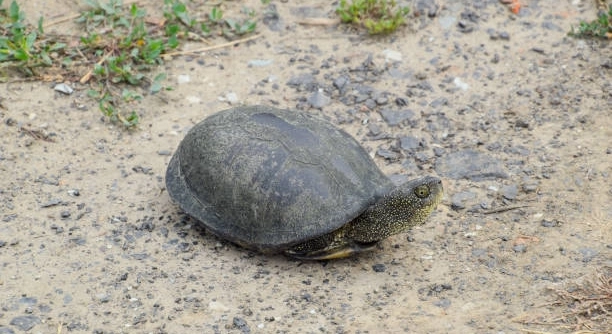
Determining the sex of a musk turtle can be tricky, especially for beginners. It’s essential to understand key physical differences to identify whether your musk turtle is male or female.
Musk turtles display distinct physical traits based on gender. Males typically have longer tails, a more concave plastron, and larger claws. Females usually have shorter tails, a flatter plastron, and smaller claws. These features help in sex differentiation.
Recognizing these characteristics will assist in properly identifying your musk turtle’s sex and understanding its behavior.
Physical Traits of Male and Female Musk Turtles
Male musk turtles have specific characteristics that make them easier to distinguish. Their tails are longer than females, and they tend to have a more concave plastron (the underside of their shell). These features help them during mating, as the concave plastron allows for a better fit against the female’s shell. Additionally, males often have larger front claws, which they use for courtship displays, grabbing onto females during mating rituals.
Females, on the other hand, have shorter tails and a flatter plastron. Their claws are smaller, as they don’t need them for mating behaviors. The differences are not always immediately obvious, especially in young turtles, as their physical traits develop with age. Understanding these distinctions can help you know more about your turtle’s biological sex.
The differences between male and female musk turtles are mostly related to mating and reproductive behaviors. Knowing these traits will help you understand your turtle’s development and behavior better, whether you’re caring for one as a pet or studying them.
How Behavior Reflects Gender
Males are generally more active and often display territorial behaviors, especially when they feel the presence of another male. They may swim around a lot or try to chase after females, often moving quickly to attract attention. This is in stark contrast to females, who tend to stay calm and are less likely to exhibit these active behaviors.
Observing their behavior can provide another layer of understanding about your musk turtle’s gender. While males are more active, females will likely spend more time hiding, resting, or simply swimming peacefully. This behavior is not only related to sex but can also reflect their roles in reproduction. Males’ heightened energy levels are tied to their search for mates, while females focus on creating and protecting their nests.
Identifying these behavioral differences can complement the physical traits and help you determine the sex of your turtle with greater accuracy. It’s important to remember that their behaviors can change depending on environmental factors, such as the presence of other turtles or seasonal changes.
Key Differences in Shell Shape
Male musk turtles have a more concave plastron to assist with mating, while females have a flatter plastron. This shape difference is most noticeable when the turtle reaches maturity.
The concave shape of the male’s plastron allows it to fit more comfortably against the female’s body during mating. This is crucial for proper mating alignment and successful reproduction. The flatter plastron of the female provides a larger space for carrying eggs. The shape is easier to spot as the turtle ages, with younger turtles often showing less distinction in plastron shape.
Both male and female plastrons serve unique functions that are important for their reproductive roles. Understanding these shapes will give you more clarity when identifying the sex of your musk turtle, especially as they mature.
Tail Length and Shape
Male musk turtles have noticeably longer tails than females, and this difference can be key to identifying their sex. The tail length is especially evident when the turtle is viewed from behind.
The male’s tail extends beyond the edge of the shell, making it easily visible. This longer tail allows the male to position itself during mating. In contrast, the female’s tail is much shorter, and it usually remains hidden under the shell. While this difference is clearer in adult turtles, it can still be seen in juveniles as they mature.
The tail difference is one of the easiest features to identify when sexing a musk turtle. If you look carefully at the length and visibility of the tail, you’ll be able to discern the sex more clearly.
Claw Size
Male musk turtles typically have larger front claws than females. These claws are used during courtship to grasp females during mating.
The larger claws help males hold onto the female while mating, making them a crucial part of the reproductive process. In females, the claws are smaller and less developed, reflecting their more passive role in courtship.
The difference in claw size can be a useful indicator when trying to determine the sex of a musk turtle, especially as the turtle matures.
Behavior During Mating Season
During the mating season, males become more active and display courtship behaviors. They may swim rapidly or engage in chasing, trying to attract females.
Males will often use their front claws to stroke the female’s face or shell. This behavior is part of their mating ritual. Females are less active during this time, focusing more on finding a suitable place to nest. Their behavior tends to be more reserved compared to the males’ energetic courtship.
These differences in behavior are typical during the breeding period and can provide a clear indication of sex.
Nesting Behavior
Females are the ones that lay eggs, so their behavior involves seeking out safe, dry spots for nesting. This is crucial for the development of their offspring.
Males, on the other hand, don’t exhibit nesting behavior. They focus on finding mates and defending their territory. Females will prepare nesting sites and sometimes dig to create a suitable environment for their eggs. Understanding these behaviors can help you distinguish between males and females based on their actions rather than physical features alone.
FAQ
How can I tell if my musk turtle is male or female?
To determine if your musk turtle is male or female, look for differences in tail length, plastron shape, claw size, and behavior. Males have longer tails, a concave plastron, and larger claws, while females have shorter tails, a flatter plastron, and smaller claws. Observing their behavior during mating season can also provide clues, as males become more active, while females are more passive and focused on nesting.
At what age can you tell the sex of a musk turtle?
You can generally start to distinguish between male and female musk turtles around 2 to 3 years of age. Younger turtles may not show the full extent of their sexual dimorphism, such as tail length or plastron shape, but as they mature, these differences become more pronounced. Adult males typically have noticeably longer tails and larger claws, while females maintain a more compact, flatter shape.
Do male musk turtles always have longer tails than females?
Yes, male musk turtles usually have longer tails compared to females. The male’s tail extends beyond the edge of the shell, which is a distinctive feature. The tail serves an important role in mating, allowing the male to align properly with the female. In contrast, the female’s tail is shorter and usually stays hidden under the shell.
Are male musk turtles more aggressive than females?
Male musk turtles can display more aggressive behavior, especially during mating season. They may chase after females or engage in territorial displays against other males. This behavior is typically driven by the need to find a mate. Females, however, are generally calmer and less aggressive, as their focus shifts more towards nesting and protecting eggs.
How do musk turtles mate?
Musk turtles mate when a male approaches a female and begins courting her. The male may use his front claws to stroke the female’s face or shell. Once the female is receptive, the male positions himself behind her, using his long tail to align with her. This process happens underwater, and after successful mating, the female will carry the fertilized eggs until she finds a suitable place to nest on land.
Do female musk turtles lay eggs without mating?
No, female musk turtles require mating with a male to produce fertilized eggs. If a female does not mate, she may still produce infertile eggs, but these eggs will not hatch. Mating ensures that the eggs are fertilized and capable of developing into viable offspring. In some cases, females may retain sperm for multiple seasons, allowing them to lay fertilized eggs even without frequent mating.
How often do musk turtles lay eggs?
Musk turtles typically lay eggs once a year, usually in the warmer months. After mating, the female will seek out a suitable nesting spot, often on dry land or in soft soil. She will dig a hole, lay her eggs, and cover them to protect them from predators. The incubation period for musk turtle eggs can vary, but it typically lasts 60 to 90 days, depending on the temperature and environmental conditions.
Can I keep a male and female musk turtle together?
Yes, you can keep a male and female musk turtle together, but it’s important to monitor their behavior closely. Males can sometimes become overly aggressive, especially during mating season, and may stress the female. It’s crucial to provide enough space and hiding spots for both turtles. If the male is too aggressive, it may be necessary to separate them to avoid injury or stress.
Do male musk turtles grow larger than females?
Male musk turtles do not generally grow larger than females. In fact, females tend to be slightly larger in some species of musk turtles. However, the size difference is usually minimal, and it’s more common to use physical traits like tail length, plastron shape, and claw size to differentiate between males and females.
How can I tell if my musk turtle is ready to breed?
Musk turtles typically show signs of readiness to breed during the mating season, which usually occurs in spring and early summer. Males will become more active, often chasing females or displaying courtship behaviors, such as claw stroking. Female musk turtles will start to seek out nesting sites and display behaviors like digging. If these signs are present, your musk turtle may be ready to breed.
Final Thoughts
Identifying the sex of your musk turtle can seem challenging at first, but by understanding key physical traits and behaviors, the process becomes much easier. Male and female musk turtles show distinct differences in tail length, plastron shape, and claw size. These characteristics become more noticeable as the turtles mature, making it easier to differentiate between the sexes. Behavior during mating season also provides valuable clues, as males tend to be more active, while females focus on nesting.
Understanding these differences not only helps with identifying the sex of your musk turtle, but it also contributes to better care. Recognizing when your turtle is ready to breed, or when it’s time for nesting, can improve the turtle’s overall well-being. Males and females have different needs during the breeding season, and being able to identify their sex allows you to provide more tailored care. Whether you are keeping a single turtle or a pair, knowing their sex can make managing their habitat and ensuring their health much easier.
While sexing a musk turtle may seem like a small detail, it plays a significant role in their care and management. It can influence their diet, habitat needs, and overall behavior, particularly if you’re dealing with a breeding pair. Keeping an eye on physical traits, as well as being mindful of changes during mating season, can help you provide the best environment for your turtle. With patience and observation, you’ll gain a clearer understanding of your turtle’s sex and how to care for them accordingly.

Hello,
If you enjoy the content that we create, please consider saying a "Thank You!" by leaving a tip.
Every little bit helps us continue crafting quality advice that supports the health, happiness, and well-being of pets around the world, for pets of all shapes, sizes, and species.
We really appreciate the kindness and support that you show us!