
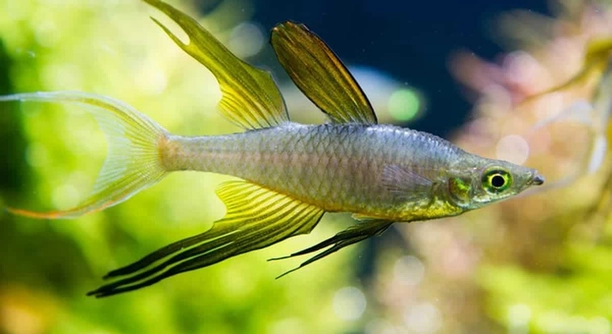
Threadfins are fascinating fish often observed gliding gracefully through shallow waters. Their shimmering bodies and active movements make them captivating to watch, sparking interest in their behaviors and responses in different environments.
Current research suggests that threadfins do not consistently recognize their own reflection over time. While they may initially react to mirrors with curiosity or aggression, there is limited evidence that repeated exposure leads to self-recognition or altered behavior.
Exploring their reactions offers insight into their cognitive abilities and helps us better understand how these fish interact with their surroundings.
How Threadfins React to Their Reflection
When threadfins first encounter their reflection, they often show signs of curiosity. They may swim back and forth or tilt their bodies to inspect the image more closely. Some display aggressive behaviors, such as pecking at or nudging the mirror, as if confronting a rival. These responses are more pronounced in larger individuals, possibly due to territorial instincts. Over time, many threadfins appear to lose interest, suggesting that the initial reaction is more about investigating an unfamiliar object rather than recognizing themselves. Observing these behaviors can be quite engaging, as it shows how instinct and perception shape their actions. It also highlights the limits of self-awareness in fish compared to mammals or birds. Overall, these interactions are brief and variable, providing a glimpse into their cognitive capabilities and how they process unexpected stimuli in their environment.
Their responses tend to diminish with repeated exposure, showing little evidence of learning to identify themselves.
Careful observation indicates that reactions vary based on age, size, and environment. Younger fish are often more curious, while older ones might ignore the reflection entirely. Environmental factors such as water clarity, tank size, and presence of other fish influence behavior as well. In natural settings, threadfins rarely encounter reflective surfaces, so these responses are largely experimental. Studies suggest that while they react to their reflection initially, they do not develop behaviors that indicate self-recognition, like using the reflection to examine hidden marks or adjusting movements purposefully. Instead, the mirror acts as a stimulus that fades in novelty, and over time, threadfins treat it as part of the surroundings rather than a distinct entity. This pattern underscores the importance of understanding their cognition in realistic habitats.
Factors Affecting Recognition
Size, age, and social context influence threadfin responses to reflections.
Environmental conditions significantly shape how threadfins interact with mirrors. Clear water allows them to see reflections more vividly, increasing initial curiosity or territorial behavior. In crowded tanks, they may show less interest because other fish provide stimulation. Light levels and surface movement also affect visibility and perception, making reactions more variable. Understanding these factors helps explain inconsistencies across studies.
Behavioral patterns indicate that threadfins respond instinctively rather than through self-awareness. Initial reactions are driven by curiosity or perceived threats, not reflective comprehension. Repeated exposure does not lead to deliberate self-inspection or adjustment. This distinction is crucial when assessing cognitive abilities in fish. Researchers have noted that mirror exposure can cause stress in some individuals, while others quickly habituate. Social context further affects responses; isolated fish may show more pronounced behaviors than those in groups. By considering these variables, observers can better interpret what threadfins are experiencing and avoid misattributing intelligence or self-recognition where it is absent. Careful experimentation helps differentiate between instinctive reactions and genuine cognitive insight, providing a clearer picture of their behavioral capabilities.
Learning and Habituation
Threadfins quickly lose interest in repeated reflections. Their initial curiosity fades, showing they do not associate the image with themselves.
Habituation occurs when threadfins encounter the same stimulus multiple times. At first, they may swim rapidly, approach cautiously, or exhibit aggressive behaviors. Over several exposures, these reactions decrease noticeably. This decline indicates that while they can perceive changes in their environment, they do not develop self-recognition. Their responses shift from active investigation to passive ignoring, highlighting the limits of their learning in this context. Researchers observe that threadfins treat the mirror more as a neutral object than a social rival after repeated encounters.
This pattern emphasizes the distinction between instinctive reaction and learned behavior. While threadfins adjust their responses based on repeated exposure, they do not demonstrate reflective cognition. Understanding this difference helps clarify their cognitive capacities and how they interact with unexpected environmental stimuli. Observing habituation provides insights into fish behavior, showing adaptability without self-awareness.
Comparisons with Other Fish Species
Some fish, like cichlids and cleaner wrasses, display clearer signs of self-recognition.
Unlike threadfins, species such as cichlids may use reflections to investigate marks on their bodies or modify behavior based on visual feedback. Cleaner wrasses have demonstrated mirror test responses indicating recognition and problem-solving abilities. Comparing threadfins to these species highlights varying cognitive levels in fish. The contrast shows that self-recognition is not universal and depends on ecological demands, social behavior, and brain complexity. Threadfins primarily rely on instinctive reactions, whereas others exhibit behaviors suggesting advanced visual processing and memory.
Studying these differences provides context for evaluating fish cognition. Threadfins’ limited recognition suggests simpler processing of visual stimuli, while cichlids and wrasses engage in reflective behavior. Environmental pressures likely influence these abilities. Species with complex social interactions or territorial needs may benefit from recognizing themselves in reflections. Threadfins, adapted to different ecological niches, show that learning and memory do not always translate to self-awareness. Comparing species helps researchers understand how evolution shapes cognitive abilities and why mirror responses vary so widely among fish.
Visual Perception in Threadfins
Threadfins rely heavily on vision to navigate their environment. They can detect movement, shapes, and light contrasts, which helps them find food and avoid predators.
Their visual system is adapted for shallow, sunlit waters, making reflections visible but not necessarily meaningful.
Mirror Exposure Experiments
Controlled experiments show that threadfins respond strongly at first but quickly habituate. Mirrors placed in tanks elicit rapid swimming, pecking, or close inspection. Over repeated exposures, their interest diminishes. These experiments demonstrate that initial reactions are driven by novelty, not self-recognition. Researchers use these trials to study learning and behavioral flexibility rather than cognitive awareness. Patterns observed help distinguish between instinctive curiosity and reflective thinking in fish, offering insight into how threadfins process unusual stimuli without developing awareness of themselves.
Implications for Fish Cognition
Observing threadfins emphasizes that not all fish develop self-recognition. Their reactions reflect instinct and environmental awareness rather than reflective thought.
FAQ
Do threadfins recognize themselves in mirrors?
Threadfins do not appear to recognize themselves. Initial reactions, such as approaching or pecking at a reflection, are usually responses to novelty or perceived rivals. Over time, repeated exposure causes their interest to fade, indicating habituation rather than self-recognition. Their behaviors show awareness of movement but not reflective cognition.
Why do threadfins react aggressively at first?
Aggressive behaviors are often territorial or instinctual. When a threadfin sees a reflection, it may interpret it as another fish entering its space. This leads to pecking, rapid swimming, or circling. These actions are not signs of understanding that the reflection is itself but rather instinctive responses to unfamiliar stimuli in their environment.
How long does it take for them to lose interest in mirrors?
The timeframe varies depending on age, size, and environmental factors. Younger threadfins are generally more curious and may react longer, while older fish quickly ignore the mirror. Habituation typically occurs after a few days of repeated exposure, showing that their learning is based on repeated encounters rather than recognition.
Do environmental conditions affect their responses?
Yes, water clarity, tank size, lighting, and presence of other fish all influence reactions. Clear water makes reflections more visible, increasing initial curiosity. Crowded or stimulating environments may reduce interest because other fish or objects occupy attention. Lighting changes and surface movement also affect how reflections are perceived, impacting behavior patterns.
Can repeated exposure improve their recognition abilities?
No, repeated exposure does not result in true self-recognition. While threadfins may change behaviors, such as ignoring the reflection or approaching it less aggressively, this is a form of habituation. They learn that the reflection poses no threat or reward, but they do not develop reflective thought or awareness of themselves.
How do threadfins compare to other fish species in mirror tests?
Some species, such as cichlids and cleaner wrasses, show behaviors that suggest self-recognition, like inspecting marks on their bodies or adjusting movements in response to reflections. Threadfins, however, show primarily instinct-driven behaviors. Comparing them highlights differences in cognitive abilities across species, emphasizing that mirror recognition is not universal among fish.
What does this tell us about their cognitive abilities?
Threadfins demonstrate learning and adaptation but limited reflective thought. They perceive changes in their environment, respond to novelty, and adjust behaviors, but these actions are driven by instinct and habituation. Their cognitive capacity allows survival and environmental interaction without self-awareness, showing that learning can occur independently of recognition.
Are there any practical reasons to study their reactions to mirrors?
Studying threadfin responses helps researchers understand fish cognition, learning, and behavior in controlled settings. It provides insights into how different species process stimuli, adapt to novel situations, and interact with their environment. These findings inform aquarium management, species-specific care, and broader studies of cognitive evolution in aquatic life.
Could mirror exposure cause stress in threadfins?
Yes, initial encounters can trigger stress, especially if aggressive responses are frequent. Prolonged exposure is generally tolerated once they habituate. Observing stress indicators like rapid swimming or repeated pecking helps ensure that experiments or aquarium setups do not negatively impact their wellbeing.
Do social factors influence their reactions?
Social context matters. Isolated threadfins often react more strongly, while fish in groups may show subdued responses due to shared environmental stimulation. Presence of other fish can divert attention from mirrors, reducing curiosity or aggression and affecting behavioral patterns observed in studies.
Can we use this information for better aquarium practices?
Understanding threadfins’ reactions can improve tank design, enrichment, and stress management. Mirrors or reflective surfaces can be used cautiously to stimulate natural behaviors temporarily. Ensuring varied environments and proper social settings helps maintain mental and physical wellbeing, aligning with their natural instincts and limitations.
Are all responses to reflections purely instinctual?
Mostly, yes. Threadfins’ reactions are driven by movement detection, territorial instincts, and curiosity. Habituation over time demonstrates learning without awareness. Their behaviors are adaptive and functional rather than indicative of self-recognition, reflecting how instinct and environmental perception guide daily activity.
Do age and size make a difference in behavior?
Younger and smaller fish tend to explore reflections longer, while older and larger individuals quickly lose interest. This variation likely reflects developmental stages, energy levels, and experience with environmental stimuli. Understanding these differences helps researchers interpret behaviors accurately and design appropriate observational studies.
How reliable are mirror tests for assessing fish cognition?
Mirror tests provide insight into perception, learning, and behavior but have limitations. They reveal how fish respond to novel stimuli but do not always measure self-awareness. Results vary by species, context, and individual traits, so they should be combined with other behavioral studies for a fuller picture of cognition.
Do threadfins ever use reflections to modify behavior intentionally?
No evidence suggests intentional use. They may approach or investigate initially, but this is driven by curiosity or instinct. Unlike species showing self-recognition, threadfins do not adjust actions to inspect hidden marks or solve problems using reflections, reinforcing the distinction between habituation and cognitive awareness.
Can understanding their behavior help in conservation efforts?
Yes, observing reactions and cognitive limits informs habitat enrichment and management strategies. By knowing how threadfins perceive and interact with stimuli, caretakers and researchers can create conditions that reduce stress and encourage natural behaviors, contributing to healthier populations both in captivity and in natural settings.
Are threadfins unique in their lack of self-recognition?
Not entirely. Many fish species respond to reflections without recognizing themselves. Threadfins exemplify this pattern, showing that while instinct and learning are widespread, self-awareness is rare. Comparing species highlights the evolutionary and ecological factors that shape cognitive abilities across fish.
Is it possible future research could show different results?
Future studies may refine understanding, particularly using advanced observation or varied experimental designs. While current evidence shows limited self-recognition, new methods could reveal subtle behaviors or learning patterns not previously detected, offering a more nuanced view of threadfin cognition and environmental interaction.
Threadfins are fascinating creatures with behaviors that can seem surprising at first glance. Observing them respond to reflections shows a mix of curiosity and instinct, rather than self-awareness. When they first encounter a mirror, their reactions are often strong—they may swim rapidly, approach cautiously, or even show signs of aggression. These behaviors can be engaging to watch because they highlight how animals interact with new and unusual stimuli in their environment. While some fish demonstrate the ability to recognize themselves, threadfins do not appear to develop this capability. Their responses fade over time, indicating habituation rather than recognition. This pattern reflects their cognitive limits and shows that learning can occur without self-reflective thought.
Over repeated exposures, threadfins adjust their behavior based on familiarity rather than understanding. Initially, the reflection triggers heightened activity or territorial instincts, but with time, they often ignore it entirely. This habituation is a common trait among fish and other animals, demonstrating that adaptation does not necessarily imply awareness of oneself. The way threadfins respond to mirrors can provide useful insight into how they perceive the world around them, how they process visual stimuli, and how instinct drives behavior in familiar and unfamiliar situations. Understanding these reactions is important for researchers, aquarium caretakers, and anyone studying fish cognition, as it helps differentiate between instinctive reactions, learning, and reflective thought. By studying threadfins in controlled settings, it becomes clearer how different species vary in cognitive complexity and environmental awareness.
Considering these observations, it is evident that threadfins’ behaviors are largely shaped by instinct, environmental perception, and habituation. They adapt to repeated stimuli, adjusting their reactions over time, yet do not demonstrate reflective cognition or self-recognition. This does not mean they are not intelligent; rather, their intelligence is expressed differently, through environmental awareness and survival instincts. Comparing threadfins to other species, such as cichlids or cleaner wrasses, underscores the diversity in fish cognition and the ways different species have evolved to interact with their surroundings. Studying these differences enriches our understanding of aquatic life and the limits of fish cognition. Observing threadfins provides a glimpse into how instinct, learning, and environment intersect to shape behavior, reminding us that not all intelligence requires self-awareness. Their reactions to reflections, while simple, offer meaningful insight into how they interact with their world and adapt to new situations.

Hello,
If you enjoy the content that we create, please consider saying a "Thank You!" by leaving a tip.
Every little bit helps us continue crafting quality advice that supports the health, happiness, and well-being of pets around the world, for pets of all shapes, sizes, and species.
We really appreciate the kindness and support that you show us!