
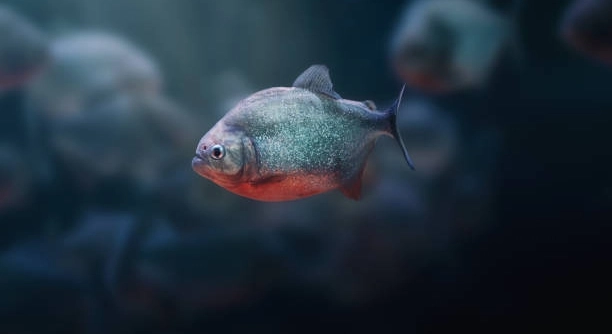
Piranhas are known for their sharp teeth and powerful bite, but they also produce unique sounds underwater. Scientists use hydrophones to capture these noises and learn more about their behavior and environment. These sounds give insight into how piranhas communicate.
Hydrophones record a variety of piranha sounds, including biting, chasing, and social interactions. These acoustic signals vary in frequency and duration, providing important data for understanding piranha communication and social structure within their aquatic habitats.
Exploring these captured sounds helps reveal the hidden world of piranha interactions and their role in aquatic ecosystems. This article presents seven distinct piranha sounds recorded by hydrophones.
Types of Piranha Sounds Captured by Hydrophones
Piranhas produce several distinctive sounds underwater, each serving different purposes. The most common noises include biting sounds, which occur when they tear into prey or objects. These bites create sharp, snapping noises that hydrophones can easily pick up. Another sound type is the chase sound, a rapid series of pulses when piranhas are pursuing prey or competing with others. Hydrophones also capture social sounds, softer and more continuous, which piranhas use for communication within their group. These sounds can vary in pitch and rhythm, depending on the situation. Some piranhas make grunting noises when disturbed or stressed, which can alert others nearby. Hydrophones allow researchers to analyze these acoustic signals in detail, helping identify patterns linked to behavior, environment, and social dynamics. Understanding these sounds provides a clearer picture of how piranhas interact beneath the water’s surface and respond to threats or opportunities.
Hydrophone technology has greatly advanced the study of aquatic animal behavior by recording these sounds in their natural habitats.
Listening closely to these varied sounds helps researchers distinguish between aggressive behavior, mating calls, and social bonding among piranhas. This acoustic data is crucial for monitoring populations and their environmental responses. Hydrophones offer a non-invasive way to study these fish, capturing real-time sounds without disturbing them.
The Importance of Hydrophone Recordings in Piranha Research
Hydrophone recordings provide valuable insights that traditional observation methods cannot achieve alone. They enable scientists to monitor piranha behavior continuously and remotely, even in murky or inaccessible waters. This method reveals patterns in piranha communication, such as when groups signal danger or coordinate hunting efforts. The sounds can also indicate stress levels or environmental changes affecting the fish. Hydrophones help detect subtle differences between species or populations based on their acoustic signatures, improving classification and understanding of biodiversity. Additionally, recording these sounds aids conservation efforts by highlighting how piranhas respond to habitat changes or human interference. The technology is essential for studying nocturnal activities, as many piranha sounds occur when visual observation is impossible. By analyzing sound patterns, researchers gain a fuller understanding of piranha social structures and ecological roles, which informs better management and protection strategies for their aquatic environments.
Hydrophone Setup and Challenges
Hydrophones must be placed carefully to capture clear piranha sounds without interference. Positioning them in flowing water and near piranha habitats is essential. Background noise from other aquatic animals or water currents can affect recording quality.
Setting up hydrophones requires patience and precision. Researchers often deploy multiple devices to cover different locations and depths, ensuring a comprehensive capture of piranha sounds. The equipment must be waterproof and durable to withstand underwater conditions over extended periods. Handling interference from water movement and other species is a major challenge. Filtering and analyzing the recordings demand advanced software to isolate piranha sounds from the ambient noise. Despite these obstacles, hydrophones provide invaluable data for studying these fish in their natural environments.
Regular maintenance is necessary to keep hydrophones functioning optimally. Data retrieval often involves physically recovering the devices, which can be difficult in remote or hazardous locations. Researchers balance these practical challenges with the benefits of obtaining authentic acoustic information.
Analyzing Piranha Sound Patterns
Piranha sound patterns reveal complex communication methods. By studying frequency, duration, and repetition, researchers decode signals related to behavior or environmental cues.
Detailed analysis shows that some sounds correspond with feeding aggression, while others indicate social interaction or mating readiness. Patterns in pulse rates or pitch changes provide clues to the emotional state of the fish. Comparing sounds across species helps identify differences in communication styles or habitat adaptations. Temporal patterns also indicate when piranhas are most active vocally, often at dawn or dusk. The combination of sound properties forms an acoustic vocabulary that piranhas use for survival and interaction.
Advanced acoustic software supports researchers by visualizing sound waveforms and isolating specific calls. This technology facilitates comparisons across different groups and environments, improving understanding of piranha ecology. These findings assist conservation by highlighting how environmental stress affects communication efficiency and social behavior.
Biting Sounds and Their Role
Biting sounds are sharp snaps made when piranhas tear into prey or objects. These noises help signal aggression and feeding behavior. Hydrophones capture these distinct sounds clearly, allowing detailed study.
These biting sounds also serve to warn other fish to stay away. The intensity and frequency of the bites can indicate the level of threat or competition within a group.
Social Communication Through Sound
Piranhas use softer, continuous sounds to communicate socially within their groups. These noises maintain group cohesion and coordinate movements, especially in crowded environments. Hydrophone recordings reveal a variety of calls that differ in pitch and rhythm, reflecting social interactions.
Environmental Impact on Piranha Sounds
Changes in water temperature, pollution, and habitat disturbance affect how piranhas produce and respond to sounds. Noise pollution from human activity can mask their communication, potentially disrupting social behavior and survival.
Future Research Directions
Further hydrophone studies can explore how environmental changes influence piranha sound patterns. Understanding these effects is crucial for conservation and habitat management efforts.
FAQ
What are hydrophones, and how do they work?
Hydrophones are underwater microphones designed to capture sound waves traveling through water. They convert these sound waves into electrical signals that researchers can record and analyze. Hydrophones are sensitive enough to pick up a wide range of aquatic noises, including piranha sounds. Their ability to operate underwater without disturbing wildlife makes them essential tools for studying fish behavior.
Why study piranha sounds?
Studying piranha sounds helps scientists understand how these fish communicate and interact. Piranhas use sounds for feeding, socializing, and warning others. By capturing these noises, researchers can learn about their behavior, social structure, and responses to environmental changes. This knowledge supports conservation efforts and improves understanding of aquatic ecosystems.
How clear are the recordings from hydrophones?
Recordings from hydrophones can be very clear if placed correctly and environmental noise is minimal. However, water currents, other animals, and human activity sometimes interfere. Researchers use filters and software to isolate piranha sounds and reduce background noise, improving clarity and data quality.
Do all piranha species make the same sounds?
No, different piranha species produce distinct sounds with varying frequencies and patterns. These differences help researchers identify species and understand how each communicates within its habitat. Some species may be more vocal during feeding, while others use sounds mainly for social interaction or mating.
Can humans hear piranha sounds without equipment?
Most piranha sounds are too faint or high-pitched for humans to hear unaided. Hydrophones amplify and translate these underwater noises into audible sounds for humans. This technology allows scientists to study piranha communication that would otherwise go unnoticed.
How do piranhas use sound during feeding?
During feeding, piranhas produce rapid, sharp biting sounds. These noises may intimidate prey or competitors, signaling aggression and dominance. Hydrophone recordings help identify these specific feeding sounds, providing insight into hunting strategies and group dynamics.
What challenges do researchers face when recording piranha sounds?
Challenges include placing hydrophones in fast-moving water or dense vegetation, where positioning is tricky. Background noise from other aquatic animals or water movement can mask piranha sounds. Retrieving equipment from remote or hazardous locations also presents difficulties. Despite these, hydrophones remain vital for gathering data.
How do environmental factors affect piranha communication?
Environmental factors like water temperature, pollution, and noise from boats or machinery can disrupt piranha communication. Noise pollution may mask important social or warning sounds, reducing their effectiveness. Understanding these effects helps protect piranhas and their habitats.
Are piranha sounds useful for conservation efforts?
Yes. Sound monitoring helps track piranha populations and behavior changes over time. It can signal stress or habitat degradation early. This information guides conservation actions and habitat management, ensuring healthier aquatic environments for piranhas and other species.
What future research is planned for piranha acoustics?
Future research aims to deepen understanding of how environmental changes impact piranha sound production and reception. Studies may explore how noise pollution alters social behavior or feeding efficiency. Researchers also plan to compare acoustic patterns among species to learn more about evolutionary adaptations.
Final Thoughts
Piranha sounds captured by hydrophones offer valuable insight into the behavior and communication of these fish. The recordings reveal a range of noises related to feeding, social interaction, and warning signals. Understanding these sounds helps researchers observe piranhas in their natural habitat without disturbing them. It also provides important data on how they respond to environmental changes and challenges. This knowledge is crucial for preserving the health of aquatic ecosystems where piranhas live.
The use of hydrophones to study piranha sounds comes with technical and practical challenges. Placing the devices correctly, filtering out background noise, and retrieving data require careful planning and effort. Despite this, hydrophones remain one of the best tools available for underwater acoustic research. They allow scientists to listen to subtle sound patterns that are otherwise inaudible to humans. These patterns contribute to a more complete understanding of piranha behavior and social structures.
Looking ahead, ongoing research will continue to explore how environmental factors affect piranha communication. Noise pollution, habitat changes, and water quality all have potential impacts on how these fish use sound. By monitoring these changes, researchers can better protect piranha populations and their habitats. The study of piranha sounds is part of a larger effort to maintain balanced aquatic ecosystems. This work benefits not only piranhas but also the many species that share their environment.

Hello,
If you enjoy the content that we create, please consider saying a "Thank You!" by leaving a tip.
Every little bit helps us continue crafting quality advice that supports the health, happiness, and well-being of pets around the world, for pets of all shapes, sizes, and species.
We really appreciate the kindness and support that you show us!