
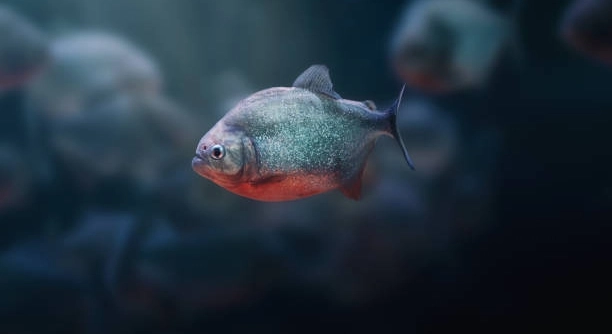
Piranhas are often seen only as fierce predators, but their behaviors during nighttime reveal a different side. These fish show surprising habits that point to their intelligence and adaptability in the dark waters they inhabit.
Piranhas exhibit several night habits that indicate advanced cognitive functions. These include coordinated group hunting, environmental awareness, and communication through movement patterns. Such behaviors demonstrate problem-solving skills and social interaction, reflecting a higher level of intelligence than commonly assumed.
Exploring these nighttime behaviors offers insight into piranhas’ true nature beyond their aggressive reputation. Their intelligence shapes how they survive and thrive in their environment.
Coordinated Group Hunting
Piranhas often hunt in groups, especially at night, to increase their chances of catching prey. This behavior shows advanced cooperation, as each fish seems to have a role during the hunt. By working together, they can surround and trap prey more effectively than when hunting alone. This coordinated effort reduces the energy spent chasing food and maximizes the chances of success. It also shows that piranhas are not just mindless predators but capable of working within a social structure. Their ability to communicate through body movements and positioning helps maintain this group coordination. This habit improves survival rates and supports the entire group’s well-being. It also suggests an understanding of shared goals and the benefits of teamwork among these fish.
Group hunting helps piranhas adapt to different prey and environmental challenges. It shows intelligence through strategic planning and communication.
This hunting method reveals the complexity of piranha social behavior. It involves more than instinct, requiring awareness and quick decision-making to adjust to prey responses. Group hunting also means piranhas monitor each other’s actions closely, indicating memory and learning. This strategy balances risk and reward, conserving energy while increasing food intake. Overall, it is an effective nighttime survival tactic that highlights their cognitive abilities.
Environmental Awareness During Nighttime
Piranhas remain highly alert at night to avoid predators and locate food. Their keen senses adapt to low light conditions, allowing them to detect movement and vibrations in the water. This heightened awareness is essential for survival and shows advanced sensory processing.
At night, piranhas rely on their lateral lines and keen eyesight to monitor surroundings. This vigilance helps them react quickly to threats or opportunities. Their ability to navigate and hunt in darkness reflects strong spatial awareness. This skill prevents collisions, conserves energy, and enhances hunting success.
Piranhas use environmental cues like water currents, temperature, and sound to find prey and avoid danger. Their sensory adaptation allows them to interpret subtle changes, showing complex interaction with their habitat. This behavior involves learning from past experiences and adjusting actions accordingly. It reveals an intelligent approach to managing risks and rewards in a challenging environment. Nighttime environmental awareness is crucial for piranha survival and reflects cognitive depth. It also shows their capability to process multiple inputs and make quick decisions in real time.
Communication Through Movement
Piranhas use subtle body movements to communicate during nighttime activities. These signals help coordinate hunting and warn of nearby dangers.
These movements include fin flicks, changes in swimming speed, and positioning relative to others. Such nonverbal communication allows the group to stay organized without attracting predators. It shows piranhas understand the importance of signaling within their social structure. This form of communication requires interpreting and responding to others’ actions quickly, which indicates cognitive complexity.
Movement-based communication also helps maintain social bonds within the group. It allows piranhas to share information about food sources or threats silently. This system reduces conflict and improves group cohesion. These interactions demonstrate that piranhas rely on more than instinct—they use learned behaviors to survive and cooperate effectively during the night.
Problem-Solving Skills
Piranhas demonstrate problem-solving when encountering obstacles or unfamiliar situations at night. They adjust their tactics rather than relying solely on instinct.
For example, when prey hides or escapes, piranhas change their hunting approach, showing flexibility. This adaptability is a sign of intelligence, as they learn from experience and modify their behavior to improve outcomes. They may try different angles or strategies to capture prey, rather than repeating failed attempts. This trial-and-error process reflects memory and reasoning capabilities.
Problem-solving also appears when piranhas navigate complex environments. They use cues like water flow and light changes to avoid hazards and find food. This ability to analyze and respond to new information helps them survive in unpredictable conditions. It proves that their intelligence supports survival beyond simple reflexes. Such behavior reveals piranhas as capable, adaptive fish that respond thoughtfully to challenges in their habitat.
Memory Retention
Piranhas can remember locations and past experiences, which helps them find food and avoid danger. This memory plays a key role in their survival at night.
They recall safe hiding spots and where prey is likely to appear. This ability reduces risk and increases hunting success.
Social Hierarchy Awareness
Piranhas recognize their place within the group. They adjust their behavior based on rank to maintain order and reduce conflict.
Higher-ranking fish lead during hunts and decision-making, while lower-ranking ones follow. This awareness helps the group function smoothly.
Adaptation to Changing Conditions
Piranhas quickly adjust to changes in water temperature and currents at night. This flexibility is vital for survival.
They modify movement and hunting strategies to suit new conditions and maintain effectiveness.
Rest and Energy Conservation
At night, piranhas reduce activity to conserve energy while staying alert. This balance supports long-term survival and readiness.
FAQ
How do piranhas communicate at night?
Piranhas use subtle body movements to communicate during nighttime. These include fin flicks, changes in swimming speed, and specific positioning in the water. Such signals allow them to coordinate group hunting and warn each other of threats without making noise that might attract predators.
Are piranhas truly intelligent compared to other fish?
Yes, piranhas show several signs of intelligence, including problem-solving, memory retention, and social awareness. Their ability to adapt hunting strategies and communicate with each other reflects cognitive skills beyond simple instinct. Compared to many fish species, piranhas demonstrate complex social behaviors.
Do piranhas hunt alone or only in groups?
While piranhas can hunt individually, they often hunt in coordinated groups, especially at night. Group hunting improves their efficiency by surrounding prey and sharing the effort. This cooperative behavior highlights their social intelligence and survival skills.
What senses do piranhas rely on most during nighttime?
At night, piranhas depend heavily on their lateral line system to detect water vibrations and movement. Their eyesight also adapts to low light, helping them spot prey and predators. These combined senses provide excellent environmental awareness in the dark.
How do piranhas solve problems during hunting?
Piranhas display flexibility by changing hunting tactics if prey escapes or hides. They may alter their approach angle or switch strategies, showing learning from experience. This trial-and-error behavior indicates cognitive processing rather than simple reflex action.
Do piranhas remember safe spots or food locations?
Yes, piranhas retain memories of safe hiding places and areas where prey is abundant. This memory helps them avoid danger and optimize hunting routes. Such spatial memory is vital for their nighttime survival and efficiency.
How does social hierarchy affect piranha behavior?
Piranhas recognize their rank within the group. Higher-ranking individuals often lead hunts and make decisions, while lower-ranking ones follow. This social structure reduces conflict and helps maintain order during cooperative activities.
How do piranhas adapt to changes in their environment at night?
Piranhas quickly adjust to changes like shifts in water temperature and currents. They modify swimming speed and hunting techniques to maintain success. This adaptability shows their awareness of environmental conditions and survival instincts.
Do piranhas rest at night?
Piranhas reduce their activity levels at night to conserve energy but remain alert for threats or opportunities. This balance between rest and vigilance supports their long-term survival by preserving stamina while staying prepared.
Are piranha night habits unique among fish?
While other fish also show some nighttime intelligence, piranhas’ combination of group coordination, communication, problem-solving, and environmental awareness is notably advanced. Their behaviors reveal a higher level of cognitive function than many aquatic species.
Can piranhas recognize individual group members?
Piranhas appear to recognize familiar individuals within their group, which helps maintain social cohesion. This recognition supports teamwork and reduces aggression, contributing to more effective group hunting and protection.
Why is studying piranha night habits important?
Understanding piranha nighttime behavior offers insight into their ecological role and intelligence. It challenges stereotypes of piranhas as only aggressive predators, showing their complex social systems and adaptive skills.
How do piranhas avoid predators at night?
Piranhas use their heightened senses to detect approaching threats early. Their group formations also provide safety in numbers, making it harder for predators to target a single fish.
Do piranhas use sounds to communicate at night?
There is little evidence that piranhas rely on sound for nighttime communication. Instead, they depend more on visual signals and water movement detection to interact silently and effectively within the group.
Can piranhas learn from experience?
Yes, piranhas demonstrate learning through their ability to modify hunting strategies and navigate environments. This capacity for learning indicates cognitive flexibility, which supports survival in changing conditions.
This FAQ covers key aspects of piranha intelligence shown through their night habits. Their complex behaviors reflect more than instinct, revealing social structures, memory, problem-solving, and adaptability. These traits contribute to their success as both predators and group members.
Final Thoughts
Piranhas are often misunderstood as simple, aggressive fish driven only by instinct. However, observing their night habits reveals a different side—one that shows intelligence and adaptability. Their ability to communicate quietly through movements, remember locations, and adjust their behavior depending on the situation demonstrates cognitive skills not usually expected in fish. These behaviors suggest that piranhas use more than just reflexes to survive. They rely on learning and social interaction, which helps them work together and face challenges in their environment effectively.
The social structure of piranhas plays a vital role in their survival, especially at night. Recognizing their place within the group allows them to cooperate without conflict, sharing responsibilities like hunting and protection. This hierarchy also helps maintain order and efficiency. Piranhas adapt to environmental changes quickly by adjusting hunting techniques and movements, which shows flexibility and awareness. These qualities reflect a level of intelligence that goes beyond simple predator instincts. Nighttime provides a unique setting where these behaviors become clearer, revealing how piranhas navigate the challenges of low visibility and increased risk.
Understanding piranha intelligence through their night habits helps reshape common views about these fish. They are not just dangerous animals but creatures capable of memory, problem-solving, and social cooperation. Recognizing these traits emphasizes the importance of studying animal behavior in different contexts to gain a fuller picture. Piranhas’ nighttime actions are an example of how even species with a fierce reputation possess complex abilities. This insight encourages appreciation for their role in the ecosystem and their adaptive strategies for survival.

Hello,
If you enjoy the content that we create, please consider saying a "Thank You!" by leaving a tip.
Every little bit helps us continue crafting quality advice that supports the health, happiness, and well-being of pets around the world, for pets of all shapes, sizes, and species.
We really appreciate the kindness and support that you show us!