
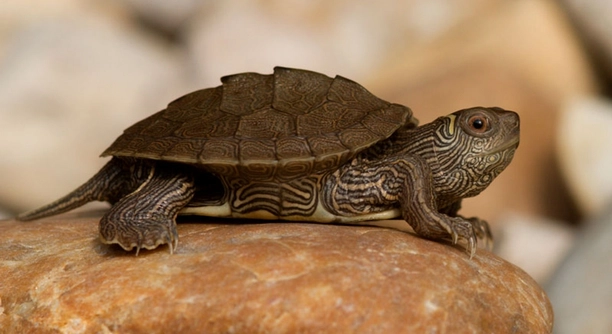
Wild map turtles are fascinating creatures that live in freshwater habitats across North America. Their behavior offers a glimpse into their unique survival strategies and social interactions, making them an interesting subject for wildlife enthusiasts.
Wild map turtles exhibit a variety of behaviors, including basking in the sun, foraging for food, and interacting with other turtles. These behaviors are essential for their survival, as they help with digestion, temperature regulation, and territorial defense.
Their social structures and habits provide an interesting view of how these turtles thrive in their natural habitats. Understanding their behavior helps us appreciate the complexities of their existence in the wild.
## Map Turtle Basking Habits

Map turtles often spend a good portion of their day basking on rocks, logs, or other elevated surfaces in the sun. This helps regulate their body temperature, essential for proper digestion and metabolism. Basking also allows them to dry out and remove parasites.

Turtles choose specific spots based on safety and exposure to sunlight. They may compete for prime locations with other turtles. Basking helps map turtles maintain their health and stay warm enough to move efficiently.

Their basking habits reveal much about their social dynamics and habitat preferences.
## Feeding Patterns
Map turtles have a varied diet that includes aquatic plants, insects, small fish, and algae. Their feeding depends on the availability of these food sources. They are opportunistic feeders and adjust their diet based on seasonal changes.
Foraging often takes place in shallow water where they can find easier access to food. Their diet is crucial for their growth and maintaining energy. They rely on their sharp beaks to tear apart prey.
Understanding their feeding habits helps explain their adaptability to different environments.## Social Interactions
Map turtles tend to be solitary creatures but are known to gather in groups when basking or during the breeding season. They may establish territories and engage in some competition with each other. This social behavior is often linked to survival strategies and reproduction.
While basking, male map turtles are often seen trying to impress females by displaying certain behaviors, such as head bobbing or extended limbs. These interactions highlight their reproductive instincts. However, outside of breeding periods, map turtles typically prefer their own space. They do not engage in deep social structures like some other species.
Territorial disputes can happen, especially in areas where food or basking spots are limited. Despite their solitary nature, map turtles can interact in ways that are essential to maintaining their well-being.## Nesting and Egg Laying
Nesting is a vital part of map turtle behavior. Females usually leave the water to find a suitable spot on land to lay their eggs. This process takes place during the warmer months, as the conditions need to be just right for the eggs to develop properly.
The female map turtle typically digs a hole in sandy soil to bury her eggs. She will then cover them up, leaving them to incubate on their own. The temperature of the environment plays a key role in determining the sex of the hatchlings. If the temperature is warmer, more females tend to hatch; cooler temperatures tend to produce males.
Once the eggs hatch, the tiny turtles must make their way to the water quickly, often facing various dangers along the way. Their survival instinct drives them to the water’s edge as they begin their life cycle in the wild.## Swimming and Movement
Map turtles are strong swimmers, using their webbed feet to propel themselves through the water with ease. Their streamlined bodies make them well-suited for life in aquatic environments. They can move quickly when they feel threatened or need to find food.
They often swim in a slow, deliberate manner, especially when they are foraging or exploring their habitat. Map turtles are generally more active in the water than on land, where they tend to move slower. Their ability to navigate efficiently in water helps them stay safe and thrive in their environment.## Defensive Behavior
When threatened, map turtles have a range of defensive behaviors. They can retreat quickly into their shells for protection. Their hard, armored shells act as shields against predators. If they feel unsafe, they will often swim to deeper waters to escape.
These defensive behaviors are vital for their survival in the wild. However, if cornered, map turtles might attempt to bite or make quick movements to deter threats. Their quick reflexes and strong instincts help them avoid danger in their habitats.## Communication
Map turtles communicate mainly through body language. They use head movements, such as bobbing or waving, to signal others. These actions can indicate territorial behavior or a readiness to mate. While they do not vocalize much, these movements speak volumes.
In the wild, communication helps map turtles avoid conflicts, establish dominance, and interact with potential mates. Observing these behaviors reveals how they maintain balance within their environment and stay connected with others of their species. Their subtle communication techniques are vital for survival.## FAQ
**What do map turtles eat?**
Map turtles have a varied diet, including aquatic plants, small fish, insects, and algae. Their diet may change depending on what is available in their environment. In general, they are opportunistic feeders, eating whatever they can find that is easy to catch or forage. They have strong jaws and sharp beaks, which they use to tear apart food.
Map turtles are also known to consume mollusks, snails, and even carrion when food is scarce. Their diet is crucial to their growth and health, as it provides the necessary nutrients for survival. The food they eat helps them maintain the energy needed for swimming, basking, and foraging.
**How long do map turtles live?**
Map turtles can live up to 30 to 40 years in the wild, though their lifespan can vary depending on factors like habitat quality and exposure to predators. In some cases, turtles in protected environments, like zoos, can live longer with proper care. The survival rate of hatchlings is relatively low due to natural threats, but once they reach maturity, their chances of survival increase significantly.
Map turtles are slow to reach adulthood, taking several years to fully mature. As they age, their chances of living a long life improve, especially if they are in an area with plenty of food and limited predators. Their longevity depends on a combination of environmental factors and their ability to avoid threats.
**Are map turtles endangered?**
Map turtles are not considered endangered, but some species are at risk due to habitat loss and pollution. The Mississippi map turtle and the Texas map turtle, for example, face threats from human activities, such as damming rivers and destruction of wetland habitats. Conservation efforts are underway in some regions to protect these turtles and their environments.
In some areas, map turtles are also affected by illegal pet trade and the loss of suitable nesting sites. Protecting their habitats and ensuring clean water sources are essential to preserving the species. While not all map turtles are endangered, it is important to monitor their populations to avoid future threats to their survival.
**Do map turtles make good pets?**
Map turtles can make good pets for experienced turtle owners who can provide the proper care and environment. They need a spacious aquatic tank with access to both water and a dry basking area. A proper UVB light source and temperature regulation are crucial for their health.
Caring for a map turtle requires dedication, as they need regular water changes, a well-balanced diet, and enough space to move around. They also need to be kept in clean, warm water, with a filter to maintain water quality. While they can be low-maintenance compared to some pets, map turtles are best suited for people familiar with reptile care.
**How do map turtles breed?**
Map turtles breed during the warmer months, typically in the spring or early summer. During mating season, males often display head bobbing and limb movements to attract females. Once a female has been successfully courted, she will leave the water to find a suitable nesting site.
Female map turtles dig a hole in sandy soil or other loose material to lay their eggs. After laying the eggs, the female covers them up and returns to the water. The eggs incubate on their own for several weeks, with the temperature of the surroundings playing a key role in determining the sex of the hatchlings. Once the eggs hatch, the young turtles must make their way to the water.
**What is the best environment for map turtles?**
Map turtles thrive in freshwater environments, preferring slow-moving rivers, lakes, and ponds with plenty of basking spots and aquatic vegetation. The water should be clean and well-oxygenated, with access to both shallow areas for feeding and deeper areas for swimming.
The temperature of the water should be kept in a range of 75 to 85 degrees Fahrenheit to keep the turtles healthy. Providing a dry basking area is also essential, where the turtles can soak up the sun and regulate their body temperature. A well-maintained habitat is key to ensuring the health and happiness of map turtles.
**Can map turtles live with other turtles?**
Map turtles can live with other turtles of similar size and species, especially if they are raised together. However, they can become territorial, particularly when food is scarce or during mating seasons. This may lead to fights or aggressive behavior if they feel their space is being invaded.
In a pet environment, it is essential to provide enough space for multiple turtles to bask and forage without competition. If housed with other species, it's important to monitor them closely for signs of stress or aggression. In the wild, map turtles are often solitary and prefer to be alone unless they are breeding or basking together in groups.
**What are the main predators of map turtles?**
Map turtles face several predators, including birds of prey, raccoons, foxes, and even large fish. Eggs and hatchlings are particularly vulnerable to predation, with many young turtles falling prey to birds or mammals before they can reach the water.
Once mature, map turtles have fewer natural predators, but they must still avoid larger animals that may threaten them, such as snapping turtles or alligators in some areas. The hard shell provides protection, but map turtles must remain vigilant to survive in the wild.
**How can I tell the age of a map turtle?**
The age of a map turtle can be roughly estimated by examining the rings on its shell. Similar to tree rings, the shell's growth patterns can indicate the turtle's age, with each ring representing a year of growth. However, this method is not always precise, as growth rates can vary depending on the environment and the turtle's diet.
Another way to estimate a map turtle’s age is by its size. Younger turtles are smaller, while older turtles tend to have a larger and thicker shell. However, since map turtles can live for many decades, estimating their age can sometimes be challenging without knowing their exact birth date.Final Thoughts
Map turtles are fascinating creatures that play an important role in freshwater ecosystems. Their behaviors, such as basking, feeding, and nesting, are all tied to their survival. Understanding these habits can give us a better appreciation for how they live and thrive in their natural habitats. By observing their actions, we can see how these turtles adapt to different environmental conditions and interact with their surroundings.
While map turtles are not currently endangered, some species face challenges due to habitat destruction and pollution. Protecting their environment is crucial for their survival. Ensuring clean water, safe basking areas, and a healthy food supply helps maintain their populations. Conservation efforts are needed to preserve their habitats and ensure that future generations of map turtles continue to thrive in the wild.
For those interested in keeping map turtles as pets, it’s important to provide the right environment and care. A proper tank setup, a balanced diet, and regular maintenance of their habitat are necessary to keep them healthy and happy. These turtles can live for many years, making them a long-term commitment. Whether in the wild or in captivity, map turtles require attention to detail in their care to ensure they lead fulfilling lives.

Hello,
If you enjoy the content that we create, please consider saying a "Thank You!" by leaving a tip.
Every little bit helps us continue crafting quality advice that supports the health, happiness, and well-being of pets around the world, for pets of all shapes, sizes, and species.
We really appreciate the kindness and support that you show us!