
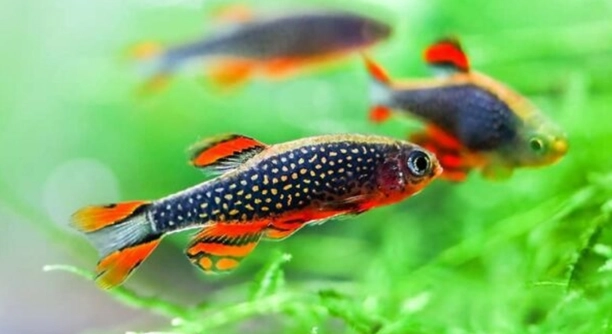
Wild-type danios swim freely in rivers and streams, showing natural behaviors shaped by their environment. Tank-bred danios, on the other hand, are raised in controlled aquariums where conditions are stable and predictable.
Wild-type danios differ from tank-bred danios in coloration, size, behavior, social interactions, feeding habits, stress response, and adaptability. These differences arise from genetic diversity, environmental pressures, and selective breeding practices in captivity.
Recognizing these distinctions can help hobbyists provide better care and maintain healthier aquariums for both types of danios.
Coloration Differences
Wild-type danios usually have more vivid and varied colors, often displaying blue, gold, and silver stripes that shimmer under natural light. Tank-bred danios tend to have paler or uniform colors, as selective breeding focuses more on patterns and hardiness than natural vibrancy. The wild ones can appear iridescent, reflecting subtle greens and blues depending on the angle of light, while tank-bred danios often have solid or faded stripes. Environmental factors also play a role—water clarity, diet, and natural sunlight enhance wild coloration. Tank conditions are stable, so color changes are minimal. Observing a wild-type danio can feel almost like watching tiny moving jewels, each fish slightly unique. In contrast, tank-bred varieties are often more predictable in appearance, which appeals to aquarists wanting uniformity. Coloration is not just for aesthetics; it also signals health and vitality in wild fish. Recognizing these differences helps in understanding their needs and natural traits.
Coloration in wild-type danios is brighter and more varied due to natural environmental factors and genetic diversity. Tank-bred danios show muted colors from selective breeding.
Appreciating these color differences can guide proper tank setups and enhance overall fish health, making care more effective and satisfying.
Size and Growth
Wild-type danios generally grow slightly smaller, with leaner bodies adapted to flowing waters, whereas tank-bred danios often appear thicker and more robust due to controlled feeding and space.
Tank-bred danios reach maturity faster because they receive regular meals and live in stress-free conditions. They can grow more uniformly, making them easier to manage in aquariums. In contrast, wild-type danios may experience fluctuating growth rates influenced by food availability, predators, and seasonal changes. These differences affect tank stocking choices and social dynamics, as size influences hierarchy and swimming patterns. Providing adequate space and a varied diet is important for both types to maintain healthy growth. Wild-type fish may also retain slimmer, more streamlined shapes ideal for swift movements, while tank-bred varieties can develop fuller bodies, which might affect agility. Understanding these size and growth differences ensures better compatibility when mixing danios and helps prevent stress or competition-related issues. Observing how each type grows over time can be fascinating and provides insight into their natural versus captive lifestyles.
Behavior Differences
Wild-type danios are more active and cautious, constantly exploring their environment. Tank-bred danios are calmer, often less reactive to sudden movements, as they are accustomed to stable conditions.
In natural habitats, wild-type danios must avoid predators and compete for food, which makes them quick, alert, and sometimes unpredictable. They swim in tight schools, change direction rapidly, and show bursts of speed to escape danger. Tank-bred danios, however, are used to regular feeding schedules and lack predators. This leads to more relaxed swimming patterns and less stress-related behavior. They are easier to handle in tanks, but their responses can seem dull compared to the vibrant energy of wild fish.
Wild-type danios also display more complex social interactions, such as chasing, circling, or even subtle displays of dominance. These behaviors help maintain order within schools and improve survival in the wild. Tank-bred danios may copy some behaviors but often lack the intensity, as selective breeding and captivity reduce the need for constant vigilance. Watching these natural behaviors can be striking and reminds you of how environment shapes activity.
Feeding Habits
Wild-type danios forage constantly for insects, algae, and small crustaceans, requiring variety in their diet. Tank-bred danios are used to prepared flakes or pellets and feed at predictable times.
Feeding wild-type danios is instinct-driven, as they must search, chase, and consume multiple food types. They nibble constantly and rarely overeat, which keeps them slim and active. Tank-bred danios adapt to routine feeding, consuming larger portions in one sitting and often storing energy as body mass. This difference affects digestion, metabolism, and overall health. Providing live or frozen foods in addition to flakes can stimulate tank-bred danios’ natural foraging instincts, promoting better health and more dynamic behavior.
Diet also influences color and energy. Wild-type danios’ natural diet contributes to brighter stripes and agile movements, while tank-bred fish may appear paler or slower without variety. Mixing foods and mimicking natural feeding patterns can improve well-being. Watching wild-type feeding behavior highlights their alertness and quick reactions, which contrasts with the slower, predictable habits of tank-bred varieties. Adapting feeding routines for tank-bred fish helps bridge some of these natural differences.
Social Interactions
Wild-type danios maintain tight schools, constantly communicating through movement and subtle gestures. Tank-bred danios are more relaxed and may swim loosely, showing less social complexity.
Schooling helps wild fish avoid predators and coordinate for food. Tank-bred danios still group but show fewer coordinated behaviors, as their environment lacks threats.
Stress Response
Wild-type danios react quickly to changes, hiding or darting when sensing danger. Their stress responses are sharp and immediate, shaped by natural pressures and predator presence.
Tank-bred danios experience stress differently. Sudden changes may startle them, but prolonged stress is less frequent due to controlled conditions. They adapt to tank disturbances more easily, showing fewer extreme reactions.
Adaptability
Wild-type danios adjust to variable water conditions, temperature changes, and new surroundings with remarkable resilience. They survive and thrive despite unpredictable environments and limited resources.
Genetic Variability
Wild-type populations show higher genetic diversity, helping maintain strong health and natural traits. Tank-bred lines often have limited genetic variation, making them more uniform but sometimes prone to hereditary issues.
FAQ
What is the main difference between wild-type and tank-bred danios?
The primary difference lies in their environment and genetics. Wild-type danios live in rivers and streams, where natural selection shapes their size, coloration, and behavior. Tank-bred danios are raised in aquariums, so their traits are influenced by selective breeding and consistent care. Wild fish are leaner, more active, and show brighter colors, while tank-bred fish are usually calmer, slightly larger, and more uniform in appearance.
Are tank-bred danios less healthy than wild-type?
Not necessarily. Tank-bred danios can be very healthy if they receive proper care, a balanced diet, and adequate space. However, wild-type danios benefit from higher genetic diversity, which can make them more resilient to diseases and environmental changes. Tank-bred fish may have inherited weaknesses due to selective breeding, so monitoring water quality and nutrition is important.
Can wild-type and tank-bred danios live together?
Yes, they can coexist, but there are considerations. Wild-type danios are more active and may stress tank-bred fish if the tank is small. Providing plenty of swimming space, hiding spots, and even schooling groups helps reduce stress and ensures a peaceful environment for both types. Observing interactions closely is important during the first few weeks.
Do wild-type danios eat differently than tank-bred?
Yes. Wild-type danios forage constantly for small insects, algae, and crustaceans, so they are used to varied, frequent meals. Tank-bred danios are accustomed to flakes or pellets and eat at set times. Introducing live or frozen foods to tank-bred fish can encourage natural foraging behaviors and improve overall health.
How do behaviors differ between the two types?
Wild-type danios are quick, alert, and reactive due to predators and competition in the wild. They swim in tight schools, dart suddenly, and show social behaviors like chasing and circling. Tank-bred danios are calmer, swim more loosely, and are less reactive to sudden movements because they are used to controlled, safe conditions.
Do wild-type danios show better coloration naturally?
Yes. The vibrant stripes and iridescence of wild-type danios are influenced by diet, sunlight, and genetic diversity. Tank-bred danios often have paler or more uniform colors due to selective breeding and stable tank conditions. Providing high-quality food can enhance coloration in tank-bred fish, but it usually won’t fully match wild vibrancy.
Which type is easier to care for?
Tank-bred danios are generally easier for beginners. They are more tolerant of common tank fluctuations, adapt to feeding routines, and rarely require specialized care. Wild-type danios demand more attention to water quality, tank space, and diet variety, making them slightly more challenging but rewarding for those who enjoy observing natural behaviors.
Does tank size matter for both types?
Absolutely. Both wild-type and tank-bred danios need space to swim and school comfortably. Wild-type fish especially benefit from longer tanks with flowing water simulation to match their natural environment. Tank-bred danios are more forgiving but still need room to avoid stress and maintain social harmony.
Are there breeding differences?
Yes. Wild-type danios spawn naturally in flowing water and require conditions similar to rivers for successful reproduction. Tank-bred danios adapt to aquarium breeding more easily, responding to light cycles and prepared spawning setups. Breeding success is higher in captivity due to controlled conditions and food availability.
Which danio is better for display aquariums?
It depends on your goal. Tank-bred danios offer consistent coloration, size, and calm behavior, making them ideal for neat, predictable displays. Wild-type danios bring natural vibrancy and active schooling behaviors, which can make a tank look lively and dynamic. Both types have unique appeal depending on your preference.
Can tank-bred danios develop wild-like traits?
Some behaviors can be encouraged by replicating natural conditions, such as varied diets, hiding spots, and gentle water currents. However, genetics and long-term breeding history limit full development of wild-like coloration, speed, or social complexity. Environmental enrichment can improve their overall health and behavior but won’t completely replicate wild traits.
How long do each type typically live?
Both wild-type and tank-bred danios live around three to five years in proper conditions. Wild-type fish may face higher mortality in the wild, but in aquariums with good care, their lifespan is similar to tank-bred counterparts. Regular maintenance, balanced diets, and monitoring stress are key for longevity.
Do wild-type danios require special water conditions?
Yes. Wild-type danios are accustomed to slightly flowing, well-oxygenated water with variable temperatures. Tank-bred fish tolerate stable, controlled conditions better but also benefit from clean water, regular filtration, and moderate water flow. Mimicking natural parameters improves health, activity, and coloration in wild-type fish while keeping tank-bred varieties comfortable.
Are wild-type danios more sensitive to disease?
Wild-type danios tend to be hardy due to genetic diversity, but they are less accustomed to artificial tank conditions and sudden water changes. Tank-bred danios can develop susceptibility to certain illnesses if bred from limited gene pools, so maintaining proper hygiene, quarantine procedures, and balanced diets is important for both types.
Can both types adapt to different tank mates?
Yes, with care. Wild-type danios may stress easily with aggressive or slow-moving tank mates due to their high activity level. Tank-bred danios are generally more tolerant, but compatibility depends on size, temperament, and swimming habits. Monitoring interactions helps prevent bullying and stress in mixed groups.
Do feeding schedules affect behavior?
Yes. Wild-type danios are used to constant foraging and may remain active throughout the day. Tank-bred fish adapt to scheduled feedings and may become less active between meals. Offering multiple small feedings or live foods can simulate natural behavior and keep tank-bred danios more engaged.
Is tank maintenance different for each type?
Wild-type danios benefit from clean water with moderate flow to mimic their natural environment. Tank-bred fish are more forgiving but still need regular water changes, monitoring of parameters, and adequate filtration. Both types require similar levels of care, but wild-type fish show greater sensitivity to sudden changes in water chemistry.
Can wild-type danios improve the activity level of tank-bred danios?
Yes, adding wild-type danios to a group of tank-bred fish can increase swimming activity and social interactions. However, ensure the tank is large enough to accommodate differences in behavior, and introduce wild-type fish gradually to prevent stress or aggression. Observing their dynamics over time helps maintain a balanced environment.
Do both types show schooling behavior equally?
Both types school, but wild-type danios form tighter, more coordinated groups due to predator avoidance instincts. Tank-bred fish may swim loosely and follow simpler patterns. Encouraging proper group sizes and tank layout can enhance schooling behaviors in tank-bred fish, though they may never match the intensity of wild-type coordination.
How can I improve the well-being of both types?
Provide clean, oxygenated water, varied diets, and enough swimming space. Adding hiding spots and simulating natural conditions can reduce stress. Observing behavior regularly helps identify any issues early. Encouraging natural behaviors like foraging and schooling supports both health and vitality for wild-type and tank-bred danios alike.
Are there visual signs to tell them apart easily?
Yes. Wild-type danios usually display brighter, iridescent stripes and leaner bodies, while tank-bred varieties are paler, slightly thicker, and have more uniform patterns. Behavior also helps: wild-type fish are more active, alert, and responsive, whereas tank-bred fish appear calmer and less reactive.
Do tank-bred danios require less stimulation than wild-type?
Generally, yes. Tank-bred fish are adapted to stable environments and predictable feeding. Wild-type danios benefit from stimulation such as live foods, water movement, and varied tank layouts to maintain activity, coloration, and health. Both benefit from enrichment, but the need is stronger for wild-type fish.
Can environmental changes stress either type?
Sudden changes in water temperature, chemistry, or tank layout can stress both types, but wild-type danios react more intensely due to natural vigilance. Tank-bred danios tolerate small fluctuations better but prolonged or extreme changes can still cause stress. Gradual adjustments reduce negative impacts.
Do tank-bred danios need schooling partners?
Yes, they thrive in groups of at least five to six. Social interactions reduce stress, encourage movement, and prevent boredom. Wild-type danios also school, but their natural instincts make tight, coordinated swimming more critical for health and comfort.
Are there differences in reproduction?
Wild-type danios require flowing water and specific conditions to spawn naturally, while tank-bred danios reproduce more easily in aquariums with prepared setups. Fertility rates are generally higher in captivity due to controlled feeding and light cycles. Breeding wild-type fish often needs more effort and attention.
Do tank-bred danios need more frequent water changes than wild-type?
Not necessarily. Both require clean, oxygenated water, but wild-type fish are used to naturally flowing, self-cleaning environments. Tank-bred fish tolerate stable conditions but still need regular water changes to prevent waste buildup and maintain overall health. Maintaining proper filtration is essential for both.
Can stress affect coloration?
Yes. Stress can dull the stripes of both wild-type and tank-bred danios. Wild-type fish may show temporary color fading during disturbances, while tank-bred varieties may lose vibrancy if exposed to poor water conditions or overcrowding. Stable, enriched environments preserve natural coloration.
Do wild-type danios need higher oxygen levels?
Yes, they are accustomed to flowing water with high oxygen content. Tank-bred danios are more tolerant of stable, less oxygenated conditions but benefit from aeration or gentle water movement for overall health. Ensuring proper oxygenation supports activity, feeding, and resilience in both types.
How important is tank size for social behavior?
Critical. Both types need room to swim freely, school, and interact naturally. Wild-type fish need extra space to express their high activity and tight schooling, while tank-bred fish adapt better to smaller tanks but still benefit from room to reduce stress and encourage natural movement.
Can tank-bred danios develop diseases more easily?
They can be more susceptible to hereditary conditions from limited genetic diversity, but proper care reduces risk. Wild-type fish are hardy genetically but may struggle in confined, artificial environments. Regular monitoring, quarantine for new fish, and clean water minimize disease for both types.
Do tank decorations affect their behavior?
Yes. Hiding spots, plants, and natural layouts encourage exploration, reduce stress, and promote natural behaviors in both types. Wild-type danios particularly benefit from complex setups that simulate flowing water environments, while tank-bred fish use decorations more for shelter and comfort.
Is diet variety essential?
Yes. Both benefit from varied diets including flakes, frozen foods, and occasional live prey. Wild-type fish require it for natural foraging habits and coloration, while tank-bred fish improve health, color, and activity when given variety beyond standard pellets or flakes.
Do temperature changes affect both types equally?
Wild-type danios are used to seasonal temperature variations and adapt well within moderate ranges. Tank-bred fish prefer stable temperatures, and sudden changes can stress them. Gradual adjustments help both types stay healthy and active.
Can introducing wild-type danios improve a tank’s ecosystem?
Yes, their active behavior can encourage movement and interaction among other fish. They help simulate a natural dynamic environment. However, tank size, compatibility, and careful observation are necessary to prevent stress or aggression toward tank-bred danios.
Are wild-type danios more expensive than tank-bred?
Typically, yes. Wild-type fish are harder to source and less uniform in appearance. Tank-bred danios are widely available, more affordable, and bred for consistency, making them a common choice for most aquarium setups.
Do both types respond to training or conditioning?
Yes, but in different ways. Wild-type danios are more reactive and can be conditioned to recognize feeding cues or mild environmental signals. Tank-bred fish are calmer but respond well to routines and can learn to associate feeding with signals like tapping or hand movements.
Are there differences in lifespan between the types?
Both types live around three to five years with proper care. Wild-type fish may face shorter lifespans in captivity if conditions don’t mimic natural environments, while tank-bred fish thrive under stable care, sometimes reaching the higher end of the lifespan range.
Does water flow affect activity levels?
Yes. Wild-type danios are energized by moderate currents, which encourage natural swimming and schooling. Tank-bred fish tolerate low flow but benefit from gentle water movement, which stimulates activity and reduces boredom in confined spaces.
Are tank-bred danios less agile?
Generally, yes. Without natural predators or flowing water, tank-bred danios develop less speed and agility. Wild-type fish maintain strong, rapid movements suited for survival in rivers and streams, showing sharper reflexes and coordination during swimming.
Can enrichment improve tank-bred behavior?
Yes, adding plants, currents, live foods, and interactive elements encourages activity, social behaviors, and natural instincts. While it cannot fully replicate wild traits, enrichment enhances health, mental stimulation, and overall well-being for tank-bred danios.
How can I identify stress in both types?
Look for faded coloration, clamped fins, erratic swimming, or hiding excessively. Wild-type danios may react sharply, darting or schooling tightly. Tank-bred fish may become lethargic or refuse food. Monitoring behavior and water quality helps prevent prolonged stress.
Is there a difference in predator awareness?
Yes. Wild-type danios are highly alert to potential threats, often schooling tightly and darting at movement. Tank-bred fish are less sensitive to sudden motions, showing calmer, slower reactions due to generations in predator-free environments.
Do breeding setups differ for wild-type and tank-bred?
Yes. Wild-type danios require tanks that mimic flowing streams with varied substrates and cover. Tank-bred danios breed more easily in simple tanks with prepared spawning mops or substrates. Environmental control allows higher spawning success in captivity.
Can both types coexist peacefully with other small fish?
Yes, if tank conditions are adequate. Wild-type danios need active, similarly sized companions to reduce stress. Tank-bred fish are tolerant but still require compatible species. Monitoring for aggression and providing space ensures harmony in mixed-species tanks.
How does water hardness affect them?
Wild-type danios are adapted to moderately soft to slightly hard water. Tank-bred fish tolerate a wider range, but extremes in hardness can affect health, breeding, and coloration for both types. Testing water and maintaining proper parameters is important.
Do tank-bred danios show schooling instincts if raised alone?
Some instinct remains, but schooling behavior is weaker if they grow without companions. Introducing other danios improves social patterns and reduces stress. Wild-type fish show stronger schooling instincts regardless of early isolation.
Can diet influence behavior differences?
Yes. High-quality, varied foods stimulate natural foraging, activity, and coloration. Wild-type danios maintain behavior patterns through natural diets. Tank-bred fish benefit from occasional live or frozen foods to encourage exploration, agility, and mental engagement.
Are wild-type danios more sensitive to light?
They prefer natural light cycles and may be more reactive to sudden brightness changes. Tank-bred fish adapt to stable indoor lighting but still respond to day-night cycles, which influence activity, feeding, and breeding.
Do wild-type danios show more complex mating behavior?
Yes. Wild-type males display chasing, circling, and subtle courtship gestures shaped by survival needs. Tank-bred danios perform similar behaviors but often less intensely, as artificial conditions reduce competition and the need for elaborate displays.
Can tank-bred danios revert to wild-type traits over generations?
Not fully. Selective breeding has reduced wild traits like coloration intensity, speed, and complex behaviors. Some behaviors can be encouraged with environmental enrichment, but genetic limitations prevent a complete reversion to wild characteristics.
Are there differences in fin shape or size?
Wild-type danios often have more streamlined fins suited for quick movements in currents. Tank-bred fish may develop slightly rounder or fuller fins due to slower swimming and controlled tank environments. This affects agility and display behaviors.
Do tank-bred danios require less oxygen than wild-type?
Generally, yes. Wild-type danios thrive in well-oxygenated, flowing water, while tank-bred fish tolerate lower oxygen levels. Aeration benefits both types, maintaining activity and health, especially in densely stocked tanks.
Can both types survive in outdoor ponds?
Yes, but conditions matter. Wild-type danios adapt well to seasonal changes, moderate currents, and natural food sources. Tank-bred fish survive best in stable, sheltered ponds with consistent feeding and water quality. Monitoring temperature and predators is essential for survival.
Do both types show territorial behavior?
Wild-type danios display subtle dominance interactions within schools, maintaining hierarchy and order. Tank-bred fish show less aggression, but males may chase or compete during breeding. Providing adequate space reduces conflicts and stress in both types.
Can tank-bred danios develop better coloration with sunlight?
Yes, moderate exposure to natural or full-spectrum light enhances pigments and brightness. Wild-type danios naturally reflect sunlight in rivers, while tank-bred fish show improved color with careful light management and quality nutrition.
Are there differences in fin damage recovery?
Wild-type danios heal quickly due to robust genetics and active swimming. Tank-bred fish may take longer if genetics are limited or water quality is poor. Maintaining clean water and proper nutrition speeds recovery in both types.
Do both types respond to seasonal changes?
Wild-type danios adjust behavior, breeding, and activity according to seasons. Tank-bred fish respond less intensely but can still react to light cycles and temperature changes. Simulating seasonal shifts benefits health and natural behaviors.
Can tank-bred danios show schooling hierarchy?
Yes, but less pronounced. Wild-type fish maintain tight, clear hierarchies, while tank-bred fish show looser social structures. Group size, tank layout, and observation influence the development of hierarchy among tank-bred danios.
Do wild-type danios show more stress in captivity initially?
Often, yes. Sudden changes in tank size, water chemistry, or confinement can trigger heightened stress responses. Tank-bred fish are more accustomed to aquarium life and adapt faster, though monitoring both types is necessary for smooth acclimation.
Can tank-bred danios benefit from live plants?
Absolutely. Plants provide hiding spots, stimulate exploration, and mimic natural environments. Both types use them for shelter, and wild-type danios also gain environmental enrichment that encourages natural behaviors like foraging and schooling.
Do both types need similar water filtration?
Yes, both require clean, well-filtered water. Wild-type fish benefit from moderate currents, while
Wild-type and tank-bred danios each have their own unique traits that make them interesting to keep. Wild-type danios are more colorful, active, and alert, which reflects their life in rivers and streams. Their behaviors, from schooling tightly to quick darting movements, are shaped by the need to survive in changing environments. They forage constantly and respond to changes in light, temperature, and water flow, which makes them lively and engaging to observe. Their genetics are more diverse, which often leads to stronger resilience against certain diseases and environmental stress. Keeping wild-type danios requires more attention to water quality, space, and enrichment, but the reward is a tank that closely reflects the energy and variety found in nature.
Tank-bred danios, on the other hand, are adapted to life in aquariums. They are calmer, more predictable, and easier to care for in small or moderately stocked tanks. Their growth tends to be more uniform, and they handle regular feeding schedules and controlled water conditions well. While their colors may be less vivid than wild-type danios, selective breeding has produced consistent patterns and body shapes, which many hobbyists find appealing. Tank-bred fish are often less reactive to sudden changes, making them easier to manage with other tank mates. Providing them with enrichment like plants, gentle currents, or live foods can improve their activity levels and overall health, helping them display some natural behaviors without the challenges of wild life.
Understanding the differences between these two types of danios can help anyone make informed choices when setting up an aquarium. If the goal is to replicate natural behaviors and vibrant appearance, wild-type danios offer a lively and dynamic addition, though they require careful attention. Tank-bred danios are ideal for those seeking reliable, manageable fish that thrive in controlled conditions. Both types benefit from clean water, sufficient swimming space, a varied diet, and observation of their behavior to ensure health and comfort. Recognizing the unique needs and traits of wild-type and tank-bred danios allows for better care, healthier fish, and a more enjoyable aquarium experience overall.

Hello,
If you enjoy the content that we create, please consider saying a "Thank You!" by leaving a tip.
Every little bit helps us continue crafting quality advice that supports the health, happiness, and well-being of pets around the world, for pets of all shapes, sizes, and species.
We really appreciate the kindness and support that you show us!