
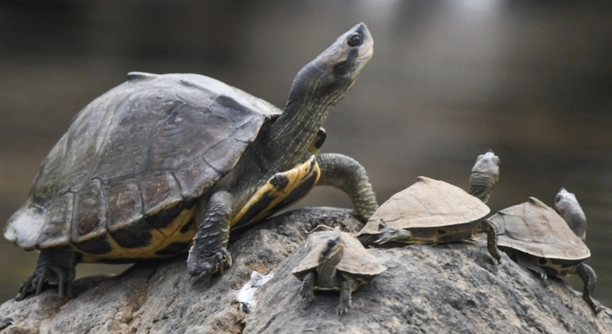
Your Indian Roofed Tortoise may often be seen rubbing its shell against objects, which can leave you wondering about its behavior. Understanding why it does this can help you ensure it stays healthy and comfortable.
Rubbing its shell is a common behavior among Indian Roofed Tortoises, often associated with shedding or cleaning their shells. It can also be a sign of territorial behavior or an attempt to scratch an itch.
This article will help you understand the reasons behind this behavior and how to address it. Keep reading to learn more about how to care for your tortoise’s needs.
Why Is My Indian Roofed Tortoise Rubbing Its Shell?
Rubbing its shell on objects is a natural behavior for your Indian Roofed Tortoise. It could be attempting to shed the old layers of its shell, as this process is a regular part of its growth. Tortoises, like many reptiles, go through shedding to allow their shells to expand and remain healthy. You may notice your tortoise rubbing itself against rough surfaces to help loosen these old layers. It is essential to keep its environment clean to aid in this process. Keeping surfaces like logs or rocks can help provide the necessary friction for this behavior.
It’s also worth noting that some tortoises rub their shells to help with skin shedding. This helps to remove dead skin cells that accumulate, especially around the neck and limbs.
In addition to shedding, rubbing may also be a sign that your tortoise is trying to mark its territory. Tortoises can be quite territorial, and they may use objects in their environment to assert dominance. This behavior can often be observed in males during the breeding season. Ensuring your tortoise has a large enough space with appropriate objects to interact with will help alleviate some of this stress.
What Can You Do to Help?
If you notice your tortoise rubbing its shell excessively, it might be due to dry skin or improper environmental conditions. Tortoises need a humid environment to prevent their skin from drying out, especially during shedding periods. Make sure your tortoise’s habitat includes a humidity level of about 50-60% to promote healthy skin shedding. It is also helpful to offer a shallow water dish, where your tortoise can soak and hydrate.
Additionally, providing objects like logs or rocks for rubbing can mimic natural behavior and help your tortoise with shedding. This can reduce stress and improve your pet’s overall comfort.
Shedding and Shell Care
Shedding is a common reason your tortoise rubs its shell. As it grows, the shell becomes larger and needs to be replaced. This process usually occurs in small patches, and rubbing helps loosen the old layers. Keeping the environment suitable for shedding is essential for its health.
Your tortoise may rub against rough surfaces to help remove dead skin and old shell layers. This behavior is perfectly normal, but it’s important to ensure that it is not excessive. If you notice that shedding becomes irregular or the shell appears damaged, check the humidity and temperature in its habitat. Proper conditions will allow for smoother shedding and healthier skin.
If your tortoise is rubbing excessively, it might be a sign of discomfort. Dry skin or dehydration can cause it to try and scratch its shell more. Ensure that its living area is humid enough to support natural skin and shell shedding. Adding a water source for soaking can help ease this process.
Territorial Behavior and Stress
Rubbing can also be linked to your tortoise’s territorial instincts. Male tortoises, in particular, may rub their shells against objects to assert dominance. This behavior is often observed more during breeding season but can occur throughout the year, especially if it feels threatened.
If your tortoise is in a smaller enclosure, it might be more likely to display territorial behavior. Providing more space can reduce stress and prevent unnecessary rubbing. Tortoises, being solitary creatures, don’t like feeling crowded. Offering hiding spots or objects like rocks or logs gives them space to retreat and feel secure. By maintaining a calm, larger environment, you can help keep your tortoise at ease and reduce any territorial behaviors.
Dry Skin or Irritation
Dry skin is another common cause of rubbing. If your tortoise’s environment lacks humidity or hydration, it may try to rub its shell to alleviate the discomfort. This is especially true when the air is too dry, causing skin and shell to become stiff.
To prevent dry skin, maintain a humidity level between 50-60% in the enclosure. Ensure your tortoise has access to clean water for soaking. A humid hide can also help your tortoise shed properly and prevent irritation. Proper hydration is key to keeping your tortoise comfortable and minimizing shell rubbing behavior.
Improper Diet
An improper diet can also contribute to unusual behaviors, including rubbing. A lack of essential nutrients, such as calcium, can cause shell problems and discomfort. Tortoises need a balanced diet rich in leafy greens, vegetables, and calcium supplements. Without this, they may experience irregular shell growth.
If your tortoise isn’t getting enough nutrients, its shell may develop soft spots or become malformed, leading to rubbing. Ensure your pet’s diet includes the right balance of calcium, vitamin D3, and other important vitamins to support healthy shell growth. Additionally, consider offering calcium blocks or dusting food with calcium powder.
Mating Behavior
Mating behavior can trigger rubbing, especially in males. During mating season, male tortoises may rub their shells on objects or even other tortoises to assert dominance or attract a mate. This behavior is more common when there are multiple tortoises in the same space.
If you have a male tortoise in a group, ensure that the enclosure is large enough to reduce stress and prevent aggressive behaviors. Mating behavior can also lead to increased rubbing, so giving your tortoise a quiet and comfortable space to retreat to is important.
FAQ
Why is my tortoise rubbing its shell on rocks or other objects?
Rubbing its shell against objects is a natural behavior, often linked to shedding or scratching. Tortoises regularly shed their outer shell layers, and rubbing helps remove old skin and scales. This behavior is especially common when your tortoise is growing, and the shell is expanding. Rocks or rough surfaces can provide the necessary friction for the shedding process. If the rubbing is excessive, check for dry skin or signs of irritation, as dehydration or low humidity may also cause it to rub more than usual.
Is it normal for my tortoise to rub its shell on the ground?
Yes, rubbing its shell on the ground is completely normal. It’s often part of the process of skin and shell shedding. Tortoises need a surface with texture to help them shed properly, and the ground or rocks often provide just the right amount of friction. However, if the rubbing becomes overly frequent or aggressive, it may be a sign of other issues like dry skin or discomfort. Make sure your tortoise’s habitat has adequate humidity and space to roam freely.
How can I tell if my tortoise is rubbing because of irritation?
If your tortoise is rubbing its shell more often than usual, it could be trying to relieve irritation caused by dry skin, an uncomfortable shell, or environmental factors. Signs of irritation include red or inflamed skin around the shell, excessive rubbing, or your tortoise becoming more restless than normal. Check your tortoise’s skin and shell for dryness or cracks. To address this, ensure that the habitat has proper humidity, access to water, and a balanced diet to avoid dehydration and support healthy shedding.
How do I know if my tortoise is shedding?
Shedding is a natural process for tortoises, and it often involves the removal of dead skin or old shell layers. You may notice pieces of old skin or shell flaking off, especially around the edges of the shell. During this time, your tortoise might rub its shell against objects to help shed these layers. Shedding should be gradual, with only small patches coming off at a time. If you notice large or irregular patches shedding, or if the shell becomes damaged, it’s important to evaluate the environmental conditions and check if your tortoise needs help with hydration or humidity.
Can I do anything to help my tortoise shed its shell?
To help your tortoise shed its shell properly, make sure the humidity in its enclosure is between 50-60%. Dry air can make shedding difficult and cause discomfort. You can also provide a shallow water dish for soaking, which helps the tortoise stay hydrated and supports skin and shell health. Offering textured surfaces like rocks or logs will help your tortoise shed by providing friction. If shedding seems abnormal, make sure your tortoise is getting the right nutrients, especially calcium and vitamin D3, as deficiencies can lead to shell problems.
Is shell rubbing a sign of stress in my tortoise?
While shell rubbing can be due to natural behaviors like shedding or territorial marking, it can also be a sign of stress. If your tortoise feels crowded, threatened, or uncomfortable in its environment, it may rub its shell to cope. Stress can result from small enclosures, lack of hiding spots, or other tortoises competing for space. Ensure your tortoise has enough room, hiding areas, and appropriate items to interact with. If the rubbing continues or worsens, it might be time to assess the habitat for potential stressors.
Why does my tortoise rub its shell on other tortoises?
Rubbing on other tortoises, especially males, can be linked to mating behavior. Male tortoises often rub their shells against other tortoises to show dominance or to get the attention of a potential mate. This behavior can increase during the breeding season. However, if there’s aggression or signs of injury, it could be a result of territorial disputes. Make sure that your tortoises have enough space and separate territories to reduce conflicts. If there are no other tortoises present, the behavior could be linked to territoriality or stress.
Should I be concerned if my tortoise is rubbing its shell constantly?
Excessive shell rubbing can be a concern if it occurs more than usual. While rubbing is a natural behavior related to shedding or territoriality, constant rubbing can signal discomfort. Dry skin, an improper diet, or an unsuitable environment can contribute to this behavior. Make sure your tortoise’s habitat has the right humidity, temperature, and enough space. If the rubbing persists, consult a veterinarian to rule out any health issues, such as skin problems or shell deformities.
Can a lack of calcium cause my tortoise to rub its shell?
Yes, a lack of calcium in your tortoise’s diet can lead to shell issues and may cause it to rub its shell more frequently. Calcium is essential for the growth and strength of the shell. If your tortoise isn’t getting enough calcium, it could experience soft or malformed shell growth, prompting it to rub against objects to relieve discomfort. Ensure your tortoise has a balanced diet with adequate calcium, which can be provided through leafy greens, calcium supplements, or calcium-rich foods.
Final Thoughts
Rubbing its shell is a natural and common behavior for your Indian Roofed Tortoise. Whether it’s to help with shedding, scratch an itch, or assert dominance, this action is usually nothing to worry about. It’s important to observe your tortoise’s behavior closely and pay attention to any changes, especially if the rubbing becomes excessive or different from its normal routine. In most cases, this behavior is just part of its natural habits. However, if you notice signs of discomfort, dryness, or injury, it’s worth investigating further to ensure your tortoise is comfortable and healthy.
Environmental factors play a big role in why your tortoise rubs its shell. If the humidity in the habitat is too low, your tortoise may rub its shell more often as it tries to help shed its skin. The right humidity levels (around 50-60%) are crucial for its well-being. Proper hydration and access to water are equally important to avoid dry skin, which could cause excessive rubbing. Additionally, the enclosure should offer enough space and places to hide, as stress from overcrowding or lack of privacy can contribute to shell rubbing as well.
If your tortoise’s rubbing seems abnormal or if there are signs of injury or discomfort, it’s always a good idea to consult with a vet. Sometimes, an underlying health issue such as a calcium deficiency or shell deformities may be causing the behavior. By maintaining a proper environment, ensuring a balanced diet, and observing your tortoise’s behavior closely, you can provide the best care for your pet. Remember that while some rubbing is completely normal, any drastic changes should be addressed promptly to keep your tortoise happy and healthy.

Hello,
If you enjoy the content that we create, please consider saying a "Thank You!" by leaving a tip.
Every little bit helps us continue crafting quality advice that supports the health, happiness, and well-being of pets around the world, for pets of all shapes, sizes, and species.
We really appreciate the kindness and support that you show us!