
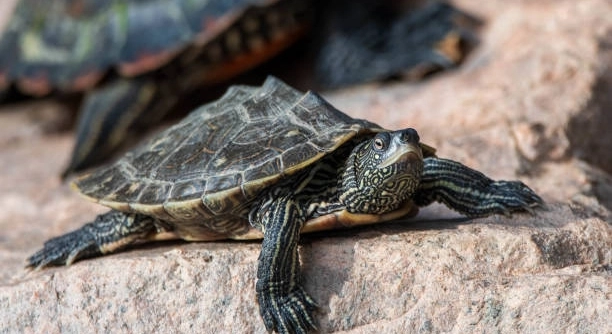
Map turtles are fascinating creatures, and many owners enjoy watching their turtles bask in the sun. Understanding their behavior can help ensure they thrive in their environment. One question often asked is why they seem to prefer basking in the morning.
The main reason map turtles bask in the morning is due to their need for warmth and sunlight. As cold-blooded reptiles, they rely on external heat sources to regulate their body temperature, which is most effective in the morning sun.
This behavior can be influenced by environmental factors such as temperature and light. By understanding these factors, you can create a better habitat to support your turtle’s well-being and natural routines.
The Importance of Temperature Regulation for Map Turtles
Map turtles, like many other reptiles, rely heavily on their surroundings to maintain their body temperature. Being cold-blooded, they cannot produce heat internally and must absorb it from external sources. Basking in the morning sun helps them raise their body temperature, allowing for normal metabolic functions. Without this essential heat, map turtles may become sluggish or even sick.
Morning sunlight is particularly effective because it is less intense than midday heat, which can sometimes cause stress in turtles. In the morning, the sun’s rays are still at a low angle, providing a gentler warmth that is ideal for basking. Overheating can be just as harmful as being too cold, so mornings give the perfect balance for map turtles to regulate their body temperature without the risk of becoming too hot.
A map turtle’s basking time and position will change depending on environmental conditions. Factors like air temperature, humidity, and light availability all play a role in determining when and how long your turtle will bask. If the temperatures drop in the evening, your turtle may spend more time basking in the morning to absorb as much warmth as possible before the day cools down.
How Light Affects Basking Behavior
Turtles are sensitive to light cycles, and their basking patterns are influenced by this. They naturally respond to the length of daylight to determine when to bask.
As daylight hours shorten in the colder months, your turtle may extend its basking period in the morning, trying to gather as much light as possible. Additionally, artificial light in their enclosures can mimic natural sunlight and encourage more consistent basking habits.
Natural Behavior and Routine
Map turtles are creatures of habit. They tend to follow a routine when it comes to basking. In the wild, they often bask in the early hours of the day to warm up before searching for food. This behavior is closely tied to their survival needs and instinct.
In the wild, basking in the morning gives map turtles time to gather energy for the day ahead. They rely on the sun to raise their body temperature and help them digest food effectively. As your turtle gets accustomed to its enclosure, it will likely stick to similar routines, often basking in the early morning hours. This habit helps them stay active and healthy throughout the day.
Additionally, map turtles are more likely to be active during daylight, especially in the early morning. Their natural instincts encourage them to bask while the temperatures are still comfortable, which gives them a chance to prepare for more activity later in the day. Keeping this in mind when designing their habitat can help you meet their natural needs.
Adjusting the Habitat for Basking Needs
The environment you create for your map turtle plays a significant role in its basking routine. To support its morning basking behavior, ensure your turtle’s basking spot is positioned to receive sunlight during the early hours of the day.
Use heat lamps that can mimic sunlight and place them where your turtle can easily reach the warmth. Ensure there’s a slight temperature gradient between the basking area and the rest of the tank. This way, your turtle can choose where it feels most comfortable. The basking platform should be dry and easy to climb onto, providing your turtle with the best conditions for basking.
Environmental Factors Influencing Basking
Changes in temperature and light availability can affect when your map turtle chooses to bask. If the weather gets cooler or the day is cloudy, your turtle may delay basking or seek a more sheltered area.
Map turtles are more likely to bask on sunny mornings when the weather is mild. Cloudy or rainy weather can make them less active and more inclined to stay in the water or on cooler surfaces. Adjusting their habitat to offer a stable temperature can help maintain their basking routine.
Potential Health Issues from Inconsistent Basking
If a map turtle does not bask regularly, it can face health problems like a weakened immune system or shell deformities. Regular basking helps ensure the turtle gets the necessary UVB light to process calcium properly, which is crucial for strong bones and a healthy shell.
If your turtle isn’t basking enough, it may indicate that the habitat isn’t set up properly, or there are temperature inconsistencies. Over time, the lack of UVB light can lead to metabolic bone disease or shell rot. Ensuring the proper temperature and lighting will help keep your turtle healthy.
Importance of Monitoring Temperature
Keeping an eye on your turtle’s basking area temperature is important. If it’s too hot or too cold, your turtle might avoid basking altogether.
A temperature range of 85-90°F (29-32°C) for the basking spot is ideal for most map turtles. It’s best to monitor the temperature regularly using a reliable thermometer to avoid causing stress or discomfort for your turtle.
FAQ
Why does my map turtle only bask in the morning?
Map turtles are cold-blooded, so they need external heat to regulate their body temperature. They prefer basking in the morning because the sunlight is gentler, helping them warm up slowly without risking overheating. In the wild, this behavior allows them to gather energy for the day ahead. When they are kept in an enclosure, you can replicate this routine by providing ample morning light or artificial heat sources that mimic sunlight.
Can my map turtle bask too much?
While basking is essential for your map turtle’s health, too much time in direct heat can be harmful. Prolonged exposure to high temperatures without access to water can cause dehydration or overheating. It’s important to ensure your turtle has access to a cooler area and water where it can retreat when needed. Regular observation will help you gauge how much basking time is healthy for your turtle.
How long should my map turtle bask each day?
Map turtles generally bask for about 2-4 hours each day. However, this can vary depending on factors like temperature, light availability, and the turtle’s overall health. Some turtles may bask for longer periods, especially if they are not getting enough UVB light. Monitor their behavior to ensure they’re getting adequate basking time but also have the opportunity to cool down when necessary.
Can I force my map turtle to bask?
It’s not a good idea to force your turtle to bask. Map turtles have natural instincts and will choose when they need to bask based on their environment. If your turtle is not basking, check the temperature and light conditions in its habitat. Make sure the basking spot is comfortable, and the water temperature is not too cold. Forced basking can cause stress and disrupt their natural behavior.
What temperature should the basking spot be for my map turtle?
The basking area should be between 85°F and 90°F (29-32°C). This temperature range allows the turtle to regulate its body heat without risking overheating. If the temperature is too low, your turtle may not bask at all. Too high, and it could cause stress or dehydration. Use a reliable thermometer to check the temperature regularly.
How do I set up the basking area for my map turtle?
To create a suitable basking area, place a basking platform where it can access both heat and light. You can use a heat lamp or UVB light to replicate sunlight. Ensure that the platform is dry and easy for your turtle to climb onto. The basking spot should be close enough to the heat source but not too close to avoid overheating. Also, provide enough space for your turtle to comfortably move around.
Why does my map turtle avoid basking during the day?
If your map turtle avoids basking during the day, it might be due to an imbalance in the temperature or light in the enclosure. Too much heat or not enough light can discourage basking. Other factors, like stress or illness, could also be a cause. Check for changes in your turtle’s environment and ensure it has access to both heat and UVB light.
Can my map turtle bask at night with a heat lamp?
While heat lamps provide warmth, it’s best for your turtle to bask during the day, as they are naturally active during daylight hours. Basking at night is not ideal because they need natural light cycles to regulate their behavior. If your map turtle needs nighttime warmth, make sure to use a heat lamp that does not emit light, which can disturb their sleep cycle.
How can I tell if my map turtle is not getting enough basking time?
Signs that your map turtle may not be getting enough basking time include lethargy, lack of appetite, or shell deformities. If your turtle isn’t basking enough, it might also develop soft or weakened shells due to a lack of UVB exposure. Make sure the basking area is well-lit and heated properly to encourage your turtle to bask.
Should I provide UVB light for my map turtle if it’s already basking outside?
If your map turtle spends time basking outside, it may still need additional UVB lighting inside its habitat. UVB rays are essential for the synthesis of vitamin D3, which helps in calcium absorption. Without UVB light, your turtle may develop health problems such as metabolic bone disease, even if it is getting sunlight. A UVB light source inside the tank ensures that your turtle gets the proper nutrients year-round.
What if my map turtle won’t bask in the morning?
If your map turtle isn’t basking in the morning, there could be several reasons, such as temperature imbalances, lack of light, or stress. First, check if the basking area is at the correct temperature and has access to enough UVB light. If these conditions are ideal, observe your turtle for any signs of illness or stress that could be preventing basking behavior.
Final Thoughts
Understanding why your map turtle prefers to bask in the morning is key to creating the best environment for its well-being. As cold-blooded creatures, map turtles depend on the sun to regulate their body temperature, which helps them stay active and healthy. The morning sunlight is often gentler and provides the right amount of heat without the risk of overheating. Ensuring that your turtle has access to this warmth is essential for its daily routine and health. This natural basking behavior allows them to gather energy and regulate their bodily functions, which is crucial for their overall development and happiness.
It is also important to create an environment that mimics their natural habitat. Map turtles are used to basking in natural sunlight, and setting up proper lighting in their enclosures is a key part of replicating this. Providing the right heat and UVB lighting during the day helps your turtle maintain a consistent basking routine. Without these conditions, your turtle might become stressed or develop health issues like shell deformities or weak bones. A stable basking area with the correct temperature will encourage your turtle to bask regularly, helping it stay healthy and strong.
Lastly, keep in mind that every turtle is unique, and their behavior might vary depending on factors like age, health, or environmental conditions. Regularly observing your map turtle’s behavior can give you valuable insights into its needs. By understanding why it prefers to bask in the morning and ensuring the proper habitat, you’ll help your turtle live a happy and healthy life. Paying attention to small details, like temperature and light exposure, can make a big difference in how your turtle behaves and thrives in its environment.

Hello,
If you enjoy the content that we create, please consider saying a "Thank You!" by leaving a tip.
Every little bit helps us continue crafting quality advice that supports the health, happiness, and well-being of pets around the world, for pets of all shapes, sizes, and species.
We really appreciate the kindness and support that you show us!