
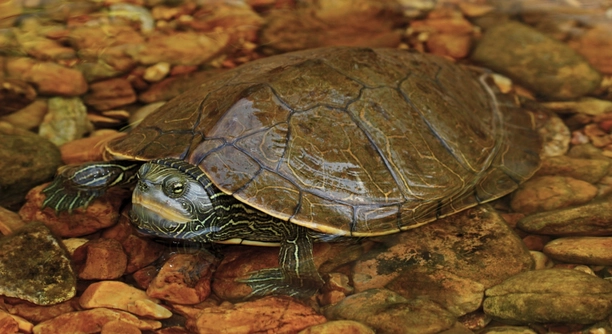
Ouachita map turtles are known for their beautiful and distinctive shells. These unique patterns often spark curiosity. Understanding why these turtles have such specific markings can provide insight into their behavior and how they adapt to their environments.
The distinct shell patterns of Ouachita map turtles are influenced by genetics, environmental factors, and evolutionary adaptations. These markings help the turtles camouflage in their habitats, providing protection from predators and aiding in temperature regulation.
Their shells are more than just decoration. By exploring their development and environment, we can better understand how these turtles thrive in their natural habitats and how their patterns play an essential role in their survival.
How Ouachita Map Turtles’ Shell Patterns Develop
Ouachita map turtles are known for their beautiful, intricate shell patterns that set them apart from other turtles. These patterns are influenced by various factors, including genetics, environmental conditions, and even their early stages of life. The coloration on their shells usually consists of bright yellow or orange markings on a darker background. These markings vary from one turtle to another, providing each individual with a unique look. It’s not just for show though—the patterns play an essential role in how they survive. The patterns help them blend into their environment, offering protection from predators.
Their shells evolve gradually, with younger turtles having lighter and more vibrant markings that become more muted over time. This shift may reflect changes in their surroundings or diet. As the turtles grow, their shell patterns may become more intricate, indicating their age and overall health. It’s fascinating to think that these natural features are so adaptive and can help the turtles thrive.
The way their patterns evolve helps map turtles blend into their environment. As they age, the markings may fade or change based on where they live. The connection between their growth and shell patterns shows just how important these traits are.
Why These Patterns Matter
Camouflage plays a vital role in the survival of Ouachita map turtles. As they often live in murky waters with dense vegetation, the markings on their shells make it easier for them to remain hidden from predators. This protection allows them to feel safe while they go about their daily activities.
In addition to offering camouflage, their shell patterns help them regulate body temperature. The dark spots absorb more heat from the sun, allowing the turtles to warm up faster when they bask. This heat absorption can be crucial, especially in cooler weather. By changing the way light interacts with their shells, they ensure they maintain the energy needed for daily functions.
By examining these features, we can see that a turtle’s shell pattern does more than look interesting—it serves a significant role in its survival. This understanding deepens our appreciation for how well these creatures have adapted to their environment.
Environmental Factors Affecting Shell Patterns
Ouachita map turtles’ shell patterns can be heavily influenced by their surroundings. Factors such as water quality, temperature, and the type of habitat can all have an impact. For example, turtles living in clearer waters may develop lighter shells compared to those living in murky or darker environments.
When these turtles are exposed to different conditions, such as varying temperatures or changes in their habitat, their shell patterns can also adapt. Warmer environments may lead to brighter or more defined markings, while cooler habitats may cause the markings to become less prominent. It’s fascinating how these environmental elements can shape the way the turtles look over time.
Shell patterns can also be affected by the amount of sunlight they receive. Turtles that bask in more sunlight often show darker patterns, as their shells absorb more heat. On the other hand, those that spend more time in the shade might have lighter shells. This is another way turtles adjust to their environment for better survival.
The Role of Diet in Shell Development
Diet plays a surprisingly large role in the development of a turtle’s shell patterns. A balanced diet full of essential nutrients, such as calcium and vitamin D, supports healthy shell growth. This directly influences how the shell’s patterning will form as the turtle matures.
Nutrient deficiencies can lead to abnormal shell growth, affecting the patterns. If a turtle lacks key vitamins or minerals, it may develop irregular or faded markings. For example, a lack of calcium can cause shell deformities, altering the natural designs that usually appear.
Turtles need a mix of protein, vegetables, and calcium-rich foods to support their growth. A steady supply of nutrients ensures that their shells develop properly, with clear, vibrant markings. This highlights just how important diet is in shaping not only their health but also their distinct appearance.
Genetic Influence on Shell Patterns
Genetics is the primary factor behind the initial shell pattern of Ouachita map turtles. These patterns are inherited from their parents, who pass down a combination of traits. The genes determine the color, shape, and size of the markings on their shells, making each turtle unique.
Even though environmental factors can affect shell patterns, genetic traits are still the foundation. The way these traits are inherited can create variations within a population. Some turtles may have more defined patterns, while others may display lighter, more subtle markings. These differences can help identify specific turtles.
How Habitat Size Affects Shell Development
The size of a turtle’s habitat can influence how its shell develops. In larger habitats, turtles have more opportunities to interact with different environmental factors, such as varying water temperatures and sunlight exposure. These interactions can result in more noticeable or distinctive patterns on their shells.
Smaller, confined spaces, on the other hand, may limit these environmental influences, leading to less variation in their shell markings. Turtles living in such environments may have more uniform shells. Habitat size plays an essential role in the turtles’ ability to express the full range of genetic and environmental traits.
FAQ
Why do Ouachita map turtles have unique shell patterns?
Ouachita map turtles have unique shell patterns due to a combination of genetics, environmental factors, and diet. These patterns help them blend into their surroundings, offering camouflage and protection. Additionally, the markings can be influenced by the amount of sunlight and the types of habitats they live in. Over time, the patterns may change as the turtle matures, adapting to its environment.
How do environmental changes affect their shell patterns?
Environmental factors, such as water clarity, temperature, and sunlight, can impact the shell patterns of Ouachita map turtles. Turtles living in areas with clear water might develop lighter shell markings, while those in darker, murkier waters may have darker shells. Temperature can also play a role—warmer environments tend to result in brighter or more defined patterns, while cooler conditions can cause markings to become less noticeable.
Can the diet of a Ouachita map turtle affect its shell?
Yes, diet plays a crucial role in the development of shell patterns. A healthy, balanced diet that provides essential nutrients like calcium and vitamins supports proper shell growth. A lack of these nutrients can lead to abnormalities in the shell, such as fading markings or even deformities. Turtles that receive the proper nutrition tend to have more vibrant and well-defined patterns on their shells.
Do Ouachita map turtles’ patterns change over time?
Yes, the shell patterns of Ouachita map turtles can change as they grow. Younger turtles often have lighter and more defined markings, which may become more muted or less noticeable as they age. This change can be due to environmental influences, such as shifts in habitat or exposure to different temperatures, or it may simply be a natural progression as the turtle matures.
How do genetics affect the patterns on a turtle’s shell?
Genetics determine the initial shell patterns of Ouachita map turtles. These patterns are inherited from the parents, and the combination of genes passed down influences the color, shape, and size of the markings on their shells. While environmental factors can modify these patterns, the genetic blueprint plays a significant role in their development.
Are there any ways to influence a turtle’s shell pattern?
While genetics largely determine the shell patterns, environmental factors can still influence the final appearance. For example, exposing a turtle to different lighting, temperatures, or habitats may lead to subtle changes in its shell. However, these changes are typically limited and don’t dramatically alter the genetic shell pattern.
What is the purpose of the patterns on a Ouachita map turtle’s shell?
The patterns on a Ouachita map turtle’s shell primarily serve as camouflage. The markings help them blend into their environment, particularly in areas with lots of vegetation or murky water, making it harder for predators to spot them. Additionally, darker shell areas can absorb more heat, helping the turtle regulate its body temperature.
How do habitat size and environmental factors affect shell patterns?
The size of a turtle’s habitat plays a role in how its shell develops. In larger habitats with more varied conditions, turtles have more exposure to environmental factors, which may lead to more noticeable or unique patterns. Smaller, more confined habitats may limit these factors, resulting in less variation in their shell markings.
Are Ouachita map turtles’ shell patterns consistent across all individuals?
No, the shell patterns of Ouachita map turtles vary widely from one individual to another. While there may be common traits, such as yellow or orange markings on a dark shell, each turtle’s pattern is unique. This variation is influenced by genetic differences, environmental conditions, and diet.
Can the shell patterns indicate the age or health of a turtle?
Yes, in many cases, the shell patterns can offer clues about the age or health of a turtle. For example, younger turtles often have more vibrant and distinct markings. As they age, the patterns may become more faded or muted. Additionally, unhealthy turtles might show irregularities or damage to their shells, which can affect the patterns. Proper diet and care are crucial for maintaining healthy shell development.
How do Ouachita map turtles’ patterns compare to other turtle species?
Compared to other species, Ouachita map turtles have distinct, colorful shell patterns that set them apart. While many turtles have plain or slightly patterned shells, Ouachita map turtles often feature intricate yellow or orange markings on a dark background. These patterns are more complex and vibrant than those of other species, making them visually striking. The way the patterns develop, influenced by genetics and environment, also varies from one species to another.
Can the patterns on a turtle’s shell be used to identify individual turtles?
Yes, the unique shell patterns of Ouachita map turtles can be used to identify individual turtles. Just like fingerprints in humans, no two turtles have exactly the same shell markings. Researchers often use these patterns to track and study specific turtles in the wild. This allows for better understanding of their behavior, health, and movements over time.
Final Thoughts
Ouachita map turtles are truly remarkable creatures, not only because of their unique appearance but also because of the important role their shell patterns play in their survival. These turtles have evolved over time to develop distinct shell markings that provide camouflage, help with temperature regulation, and protect them from predators. Their patterns are influenced by a mix of genetic factors, environmental conditions, and diet, making them a fascinating subject for study. The way their shells change as they grow further highlights how adaptable these turtles can be in response to their surroundings.
It’s clear that the development of a Ouachita map turtle’s shell goes beyond just being a beautiful feature. The bright, contrasting patterns on their shells are an evolutionary advantage, helping them blend in with their habitats. Whether they are basking in the sun or hiding in the water, these patterns ensure that they can go about their lives with added protection. Environmental factors like temperature and sunlight exposure can alter these markings over time, showing just how flexible their patterns can be. In addition, a healthy diet supports the development of strong, vibrant shell patterns, further emphasizing the connection between their environment and their physical traits.
Understanding these patterns and their purpose deepens our appreciation for the Ouachita map turtle. Their shells are more than just decoration; they are essential tools for survival. By taking care of these turtles and preserving their habitats, we can help ensure that these unique patterns continue to thrive for generations to come. Whether in the wild or in controlled environments, these turtles serve as a reminder of how nature has shaped them to survive in an ever-changing world. Their fascinating shell patterns are a testament to the complexity and beauty of the natural world.

Hello,
If you enjoy the content that we create, please consider saying a "Thank You!" by leaving a tip.
Every little bit helps us continue crafting quality advice that supports the health, happiness, and well-being of pets around the world, for pets of all shapes, sizes, and species.
We really appreciate the kindness and support that you show us!