
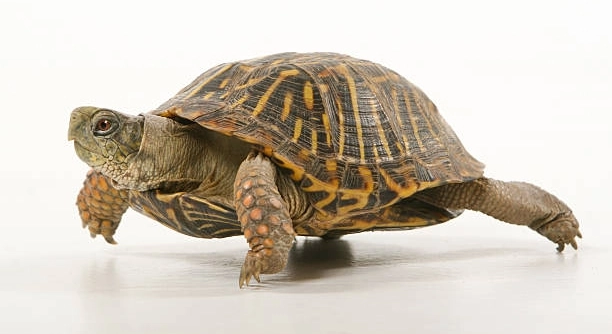
Box turtles are fascinating creatures, and you might be curious about how fast they can move. Whether you’re an animal enthusiast or just someone who’s stumbled upon these interesting reptiles, you’re in the right place.
Box turtles typically move at a speed of 0.2 to 0.5 miles per hour (0.3 to 0.8 kilometers per hour). This may seem slow, but it’s actually quite fast for a turtle, as they are designed for a more sedentary lifestyle.
While their pace may seem leisurely, understanding their speed in different situations can offer a unique perspective on how they live and interact with their environment.
How Fast Can Box Turtles Move in the Wild?
Box turtles are not built for speed, but they can surprise you with how quickly they can cover short distances when needed. While their top speed is about 0.2 to 0.5 miles per hour, they can move faster than you’d think in the wild. They mostly use this speed to avoid danger or when they need to find food or shelter. Unlike other turtles that may live in water, box turtles live on land, and their movements are adapted for that environment.
These turtles spend much of their time slowly exploring forests, grasslands, and wetlands. They rely on their hard shell for protection against predators. The slow pace is mostly a defense mechanism, helping them stay hidden from any threats. Their legs, designed for land travel, can move them forward with surprising efficiency.
Their movements might seem slow, but there is a purpose behind it. Moving cautiously and steadily is how box turtles have survived for millions of years. When it comes to foraging or exploring, these turtles make the most of their time without rushing.
How Do Box Turtles Compare to Other Animals?
Comparing box turtles to other animals reveals just how unique their pace really is. A rabbit, for example, can run up to 35 miles per hour, making the turtle’s pace seem incredibly slow. However, the turtle’s lifestyle is designed for a different type of survival.
While box turtles can’t outrun predators, their hard, dome-shaped shell gives them a level of protection that faster animals don’t have. In addition to this defense, their slow, methodical movements help them avoid unnecessary risks. They don’t have to worry about running from predators because they simply hide in their shells when threatened. Unlike animals that have evolved for speed, box turtles thrive by using patience and careful movements.
When compared to more mobile creatures, box turtles stand out because of how they adapt to their slower pace. Instead of rushing, they navigate their environment with caution. This method has worked well for them, especially considering their long lifespan.
Box Turtles and Their Speed in Captivity
In captivity, box turtles tend to move a bit slower than they would in the wild. Their environment is more controlled, which reduces the need for them to travel long distances. This slower pace is influenced by factors like temperature, food availability, and the lack of predators.
When kept as pets, box turtles may not feel the need to rush. They have a steady supply of food and water, so there’s no urgent need to move quickly to find resources. However, their instinct to explore and forage will still drive them to move around their enclosure. If they feel safe and comfortable, they may move even slower, taking their time to observe their surroundings.
Even though they may not be as fast as other animals, box turtles still need space to roam. It’s important to set up an environment where they can move freely and satisfy their natural instincts. Providing enough space helps keep them healthy and happy.
Why Box Turtles Aren’t Speedsters
Box turtles are not built for speed, and their anatomy reflects this. With their thick, heavy shells and sturdy legs, they are better suited for steady, deliberate movements than for running. Unlike some animals that rely on speed to escape danger, box turtles have developed a more cautious approach to survival.
Their slow pace is a defense strategy. The heavy shell acts as protection, allowing them to withdraw into it when they feel threatened. This is why you won’t often see a box turtle running away from predators—they rely on their shell and natural camouflage instead. Their speed isn’t important for evasion, but rather for moving through their environment at a pace that works for them.
By not rushing through their habitat, box turtles focus on slowly exploring their surroundings. This helps them find food and stay alert without drawing attention to themselves. Their evolutionary design has made them perfectly suited for a slower, more methodical way of life.
Box Turtles in Their Natural Habitat
In their natural habitat, box turtles are more likely to travel longer distances to find food, mates, or shelter. Their pace is still slow, but they cover more ground when necessary. The wild provides the stimulation they need, encouraging them to move when there’s a purpose.
Box turtles in the wild are also influenced by seasonal changes. During warmer months, they tend to be more active, looking for food and water. However, their movement is still slow and deliberate, relying on their steady pace to avoid drawing attention from predators. They know when to speed up and when to stay still.
While their speed isn’t impressive, the box turtle’s ability to navigate various terrains, from forests to wetlands, shows how well they have adapted to their environment. Slow but steady, they know exactly how to move through their world.
Factors Affecting Box Turtle Speed
Several factors can influence how fast a box turtle moves. Temperature plays a key role; colder weather can make them more sluggish, while warmer conditions can make them more active. Their age and health also affect their speed.
A young, healthy box turtle might move faster than an older one, who may be less active due to age or health issues. Even in captivity, factors like stress or illness can cause a box turtle to move more slowly. Therefore, while their top speed is generally slow, these factors can change how quickly they get around.
The environment also affects their movement speed. If they feel safe and secure, they are likely to move slower, taking their time to explore. On the other hand, if they sense danger, they might try to move quicker, though still not at the speed of other animals.
Box Turtles Compared to Other Turtles
Compared to other species of turtles, box turtles are relatively slow. Aquatic turtles, for example, can swim at speeds of up to 5 miles per hour. On land, box turtles are much slower, primarily due to their design, which favors defense over speed.
Box turtles move at their own pace, but compared to sea turtles or freshwater turtles, they are much more sedentary. Sea turtles may travel long distances in a short amount of time when migrating, while box turtles take their time moving between feeding grounds or their burrows. Even though they share the same name, these different species have vastly different lifestyles and speeds.
What sets box turtles apart is their unique ability to protect themselves by retreating into their shells. This tactic helps them avoid relying on speed to escape predators.
FAQ
How fast can a box turtle run?
Box turtles typically move at a speed of 0.2 to 0.5 miles per hour (0.3 to 0.8 kilometers per hour). While this might seem slow, it’s relatively fast for a turtle. They are not built for speed, but their movement is enough for their needs. They rely more on hiding and defense rather than running from predators.
Do box turtles move faster in the wild?
Yes, box turtles can move slightly faster in the wild compared to captivity. In their natural habitat, they may need to cover more ground to find food or shelter, which can prompt them to move a bit quicker. However, their movement is still slow and deliberate, as they are designed to be cautious.
How do box turtles move?
Box turtles move using their sturdy legs, which are adapted for walking on land. Their slow pace is ideal for exploring forests, grasslands, and wetlands. They use their legs to walk steadily, and their hard shell provides protection when they feel threatened, allowing them to retract into it.
Do box turtles get tired quickly?
Since box turtles aren’t built for fast movement, they do get tired if they have to move over long distances. However, they are well-suited to traveling at a slow pace, so they don’t tire out as quickly as other animals might. They are also more likely to stop and rest when they need to.
Why are box turtles so slow?
Box turtles are not built for speed. Their thick, heavy shells provide protection, but they also limit their ability to move quickly. Their evolutionary design is more focused on defense rather than escape, making slow and deliberate movement their best survival strategy.
Can box turtles move quickly when they feel threatened?
While box turtles can move faster than usual when they feel threatened, they don’t run like other animals. Instead, they tend to rely on their shells for protection. They may try to move a little quicker to find safety, but their speed is still relatively slow compared to other creatures.
Are box turtles slow compared to other types of turtles?
Yes, box turtles are slower than many other turtle species. Aquatic turtles, like sea turtles, can swim at speeds of up to 5 miles per hour. Even other land-based turtles, like desert tortoises, can move faster than box turtles, whose main strategy is to stay hidden or retreat into their shells rather than run.
How fast do box turtles move in captivity?
In captivity, box turtles tend to move slower due to factors like a stable food source, lack of predators, and a controlled environment. They are less likely to feel the need to move quickly, which can make them appear even slower. However, their pace can still vary depending on their health and activity level.
What factors can affect a box turtle’s speed?
Several factors can affect how fast a box turtle moves, including temperature, age, health, and environment. Box turtles are cold-blooded, so colder temperatures can make them slower. Older turtles or those in poor health may also move more slowly. In a safe and familiar environment, they may take their time, while in an unfamiliar or stressful situation, they might try to move faster.
Can box turtles sprint?
No, box turtles cannot sprint. Their bodies are designed for slow, deliberate movements, and they are not capable of rapid bursts of speed. Their slow pace allows them to explore and avoid danger by retreating into their shells rather than relying on speed to escape threats.
Do box turtles need a lot of space to move?
Yes, box turtles need a lot of space to move around. Even though they move slowly, they still require ample space to explore, forage for food, and exercise. A cramped environment can lead to stress and health issues, so providing enough space is important for their well-being.
How long does it take for a box turtle to move from one place to another?
Box turtles can take hours to move from one place to another, depending on the distance. Since they are slow movers, it can take them a long time to travel even short distances. The actual time will depend on the terrain, the turtle’s health, and whether they stop to rest or eat along the way.
Can a box turtle outrun a predator?
No, box turtles cannot outrun predators. Their main defense is their hard shell, which they can retreat into when threatened. While their slow pace is effective for moving through their environment, speed is not their means of avoiding danger. Instead, they rely on hiding or staying still.
What do box turtles do when they move?
When box turtles move, they are typically exploring their surroundings in search of food, water, or shelter. Their slow movement is part of their methodical approach to life, taking their time to observe their environment. They may also move to find a mate or establish their home territory.
Can box turtles climb?
Box turtles can climb small obstacles, such as low rocks or logs, but they are not known for being great climbers. Their legs are designed for walking, not for climbing or leaping. They may be able to scale small barriers if they need to, but they prefer to stay on the ground where they feel secure.
Final Thoughts
Box turtles are not the fastest creatures, but their slow and steady pace is part of what makes them unique. While they may not race through the forests or fields, their movements are well-suited for their lifestyle. Box turtles don’t need speed to survive. They rely on their hard, protective shells to keep them safe from predators. When faced with danger, they simply retreat into their shells, rather than running away. This is a strategy that has worked well for them throughout history.
Understanding their speed helps us appreciate how well box turtles have adapted to their environment. They don’t need to rush or travel fast because they are already perfectly equipped to move at a slower pace. Whether in the wild or in captivity, box turtles continue to thrive by sticking to what they know best—moving carefully and deliberately. This slower movement allows them to observe their surroundings, find food, and stay safe without expending unnecessary energy.
While box turtles may not be fast, they don’t need to be. Their evolutionary traits, like their protective shells and slow movements, have allowed them to survive and adapt to different environments. In the wild, they are cautious, using their steady pace to navigate their habitats. In captivity, they can move even slower due to fewer dangers and a steady supply of food. Whether in the wild or as pets, box turtles show us that sometimes, taking things slow can be the best approach.

Hello,
If you enjoy the content that we create, please consider saying a "Thank You!" by leaving a tip.
Every little bit helps us continue crafting quality advice that supports the health, happiness, and well-being of pets around the world, for pets of all shapes, sizes, and species.
We really appreciate the kindness and support that you show us!