
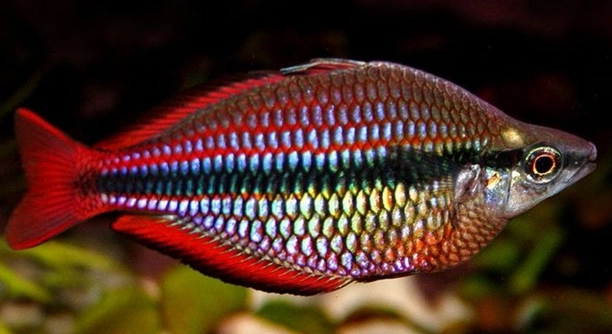
Rainbow fish are known for their stunning colors and lively movements. Many wonder if these fish are aware of their reflections when they swim past mirrors or glass in their environment.
Rainbow fish do not recognize their reflections in the same way humans or some other animals do. While they may react to the visual stimulus, it is more likely a response to movement rather than self-awareness.
This topic brings fascinating insights into how animals perceive themselves and their surroundings. Understanding their behavior can lead to a better appreciation of their unique traits and instincts.
Do Rainbow Fish Understand Their Reflections?
Rainbow fish are often seen swimming gracefully around their tank, their colorful bodies flashing in the light. It’s a common question: Do they notice their reflections in the glass? While we humans naturally look at mirrors to see ourselves, rainbow fish do not seem to have the same recognition. Instead, they may respond to the movement they see in the glass. This reaction is typically more of a territorial or instinctual response rather than an awareness of their own image.
These fish rely heavily on their instincts. Their behavior towards reflections could be driven by the movement they perceive, rather than understanding it as a mirror image. They might swim up to the glass or act defensively, especially if the reflection mimics their movements.
Rainbow fish are beautiful, but their interactions with reflections are simpler than we might assume. Their responses are more about navigating their environment and reacting to what appears to be another fish. They don’t recognize the reflection as a self-image or even as a form of communication. While they may briefly seem to interact with their reflection, it’s likely that they are reacting to the visual input as if it’s another animal in their space.
How Fish Perceive Their Environment
Fish, like rainbow fish, have different ways of perceiving their environment. Their primary senses—sight, smell, and touch—allow them to navigate through their world. Unlike humans, they don’t process reflections as we do. Most fish are more focused on the immediate surroundings, searching for food or interacting with other fish.
These instincts guide them in daily activities, from avoiding predators to seeking mates. Reflections, however, don’t play a large role in their behavior. A fish may investigate something that looks like another fish, but they don’t seem to be concerned with self-image. Their focus remains on the real, tangible elements of their world.
Rainbow Fish Behavior Around Glass
Rainbow fish often display curious behavior when they encounter a reflective surface. They may swim up to the glass, follow the movement, or even appear to challenge the reflection. This behavior can seem like they are interacting with another fish, but it’s simply a response to the visual stimuli.
Their reactions, though interesting, are driven more by instinct than self-awareness. When they see their reflection, they likely interpret it as another fish, which triggers their natural response. This behavior is common in many fish species, as they are wired to react to movement or shapes, even if they don’t understand what it is.
Despite their vibrant colors and lively swimming patterns, rainbow fish do not engage with their reflections as if they recognize themselves. Instead, their behavior is influenced by their need to explore and react to perceived threats or new stimuli in their environment. Their attention is primarily focused on the real world, not on self-image or reflection.
Why They Don’t Recognize Their Reflection
Fish like rainbow fish don’t have the mental faculties to process their reflection the way humans do. Their brains are not wired for self-recognition, unlike some animals that can distinguish their reflection as themselves. For example, animals like primates and dolphins have shown signs of self-awareness when exposed to mirrors.
Rainbow fish, on the other hand, are driven by instincts and immediate survival needs. Their reactions to their reflection are simple—essentially, they are responding to a visual cue. It’s not a form of self-consciousness but more of an automatic response to something they perceive as part of their environment.
Fish rely heavily on sensory input to navigate their world. Sight, smell, and touch are their primary tools, and reflections don’t provide much of a survival benefit. Their attention is more focused on the movements around them, like potential prey or predators. Understanding this helps us see that fish behaviors are deeply rooted in instinct.
Fish Reactions to Glass Tanks
Rainbow fish often appear fascinated by the glass walls of their tank. They may swim along the sides, nudging the glass or even tapping it with their bodies. This behavior is part of their natural curiosity and exploration.
While it may seem like they are engaging with their reflection, they are more likely reacting to the space or looking for something else. Fish, in general, tend to interact with transparent barriers because they see movement beyond them, which sparks their curiosity. They may also be looking for other fish or food.
Can Fish See Through Glass?
Fish cannot see through glass as we do. Glass is transparent to us, but for most fish, it’s just a clear barrier. They can sense movement on the other side but do not recognize it in the same way humans would.
Their limited vision means they don’t process glass as something to avoid or navigate, unlike obstacles like rocks or plants. Instead, they tend to respond to the movement they sense, which can lead to repeated behaviors like swimming along the glass.
Differences in Fish Species
Not all fish react the same way to reflections or glass. Some species might show more curiosity or engage more with the glass due to different levels of instinctual behavior. This is particularly true in species that are more territorial or social.
Fish like rainbow fish tend to show mild interest and sometimes confusion when they see a reflection. Their instincts guide them to react in ways that would be appropriate if the reflection were a real fish. These responses are generally harmless, but they show how fish perceive their environment differently than humans.
FAQ
Do rainbow fish recognize themselves in mirrors?
Rainbow fish do not recognize themselves in mirrors. They may react to the reflection, but their behavior is based on instinct rather than self-awareness. When they see a reflection, they likely treat it as another fish, prompting them to react defensively or curiously, which is typical of many fish species. Unlike some animals that can pass the “mirror test” (like dolphins or primates), rainbow fish do not have the cognitive ability to recognize their own image.
Why do rainbow fish swim towards the glass?
Rainbow fish may swim toward the glass because they are curious or responding to movement they detect. Since glass tanks are transparent, fish might see other fish or objects beyond the glass, causing them to swim along it. This can seem like an interaction with their reflection, but it’s really just a response to seeing movement outside the tank.
Are fish aware of their surroundings in the same way humans are?
Fish are aware of their surroundings, but they perceive the world differently than humans. Their senses, such as sight, smell, and touch, guide them through their environment. They rely on these senses to find food, avoid predators, and interact with other fish. However, their perception is more instinct-driven and less focused on self-awareness or complex understanding of their environment like humans have.
Do fish get stressed by seeing their reflection?
Fish, including rainbow fish, may show signs of stress if they encounter their reflection repeatedly. They could perceive it as a threat, especially if the reflection behaves like another fish. This can lead to aggressive behavior or swimming in circles. However, the stress caused by a reflection is usually minimal and temporary. If fish are constantly exposed to their reflection, they may exhibit repetitive behaviors, but it generally does not cause lasting harm unless they experience other environmental stressors.
Can I help my rainbow fish avoid their reflection?
To help rainbow fish avoid their reflection, consider placing decorations or plants along the walls of the tank. This can block their view of the glass, preventing them from reacting to their own image. You can also adjust the lighting to reduce glare, which may make reflections less visible. Additionally, using a tank with frosted or opaque walls can eliminate the issue altogether.
Is it normal for fish to swim along the glass?
Yes, it’s normal for fish to swim along the glass. This behavior is often part of their exploration process. They may be looking for food, interacting with other fish, or simply moving around the tank. It’s also common for fish to follow the edges of the tank as they become familiar with their environment. This is typical and does not necessarily indicate distress or confusion.
How can I tell if my fish are stressed?
Fish can show signs of stress in several ways. Common indicators include erratic swimming patterns, such as swimming in circles or darting around the tank, rubbing against surfaces, or hiding more than usual. If a fish becomes aggressive towards tank mates or spends a lot of time near the surface gasping for air, it may be stressed. Ensuring your tank is properly maintained and that water conditions are ideal can help reduce stress.
Why do fish swim in front of the glass?
Fish often swim in front of the glass because they are either curious or trying to explore their environment. In some cases, they may sense movement beyond the tank or be attracted to light. Fish are naturally drawn to areas where they can detect activity, and glass gives them a clear view of what’s outside, which can be particularly interesting.
Do fish get lonely in a tank?
Fish, particularly social species, can feel lonely in a tank if they are kept alone for long periods. Rainbow fish, while not highly social, may benefit from being housed with others of their kind. Some fish thrive in groups, and being around other fish can provide them with companionship and reduce stress. If you keep a single fish, it’s important to ensure its environment is stimulating enough to keep it active and happy.
How does the reflection affect a fish’s behavior long-term?
The reflection may cause short-term behavioral changes in a fish, such as increased aggression or territorial behaviors. Over time, if a fish continually reacts to its reflection, it could lead to stress or exhaustion. However, once the fish learns that the reflection doesn’t pose a threat, its behavior may return to normal. Continuous exposure to reflections could result in unhealthy levels of stress, especially if the tank environment doesn’t allow the fish to avoid the glass.
What should I do if my fish seems obsessed with its reflection?
If your fish appears obsessed with its reflection, it might be helpful to make adjustments to the tank. Adding plants, rocks, or other objects can block the fish’s view of the glass, reducing the chances of it reacting to its image. If the behavior continues, try adjusting the lighting or changing the tank setup. In extreme cases, moving the tank to a different area of the room or using an opaque tank can completely eliminate the issue.
Do fish have a memory of their reflection?
Fish do not seem to have long-term memory when it comes to their reflection. While they may respond to it when they first encounter it, they likely do not remember the reflection after a short period. Their behavior is more instinctual and based on immediate stimuli, so they don’t form memories of their reflection as humans or some animals do.
Final Thoughts
Rainbow fish, like many other fish species, do not have the ability to recognize their reflection. They may react to what they see in the glass, but this is simply a response to movement, not self-awareness. When they swim up to the glass or seem to interact with their reflection, it’s because they are reacting to what appears to be another fish or movement in their environment. This behavior is instinctive and part of how they explore their surroundings. It’s a natural reaction, but not an indication that the fish understand what a mirror is or that they know the reflection is themselves.
Fish rely on their instincts more than their ability to think or reason in the way humans do. They use their senses—sight, smell, and touch—to navigate their world. When it comes to their reflections, rainbow fish are not engaging in complex thought processes. They are simply reacting to the visual stimulus they see in the glass. Unlike humans or certain animals with advanced cognitive abilities, fish do not have the mental capacity to recognize themselves in mirrors. Their focus is mostly on immediate survival needs, like finding food or avoiding danger, rather than on understanding their own image.
For aquarium owners, understanding how rainbow fish perceive their environment can help create a better habitat for them. If reflections seem to cause stress or confusion, taking steps to minimize their exposure can improve the fish’s well-being. Placing plants or decorations along the tank’s walls, adjusting lighting, or providing a tank with frosted sides can reduce the chances of the fish becoming fixated on their reflection. Overall, while rainbow fish may seem to respond to their reflection, it’s important to remember that this is not a sign of self-awareness, but rather a simple instinctual reaction to their surroundings.

Hello,
If you enjoy the content that we create, please consider saying a "Thank You!" by leaving a tip.
Every little bit helps us continue crafting quality advice that supports the health, happiness, and well-being of pets around the world, for pets of all shapes, sizes, and species.
We really appreciate the kindness and support that you show us!