
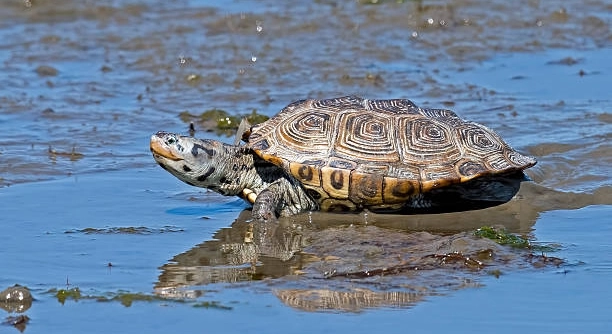
Diamondback Terrapins are fascinating creatures, often admired for their unique appearance and behavior. As pet owners, we may wonder about their social needs and whether these turtles experience feelings of loneliness in their environments.
Diamondback Terrapins are not known for being highly social animals. They are solitary by nature, though they can tolerate the presence of other terrapins in certain situations. They generally do not form deep social bonds like some other species.
While these turtles are not social in the way some animals are, understanding their needs and how they interact with their environment can help improve their care. There are still factors to consider when keeping them happy and healthy.
Are Diamondback Terrapins Naturally Solitary?
Diamondback Terrapins are typically solitary animals. In their natural habitat, they spend most of their time alone, basking on rocks or swimming in brackish waters. They don’t actively seek out interaction with other terrapins or animals, which is why they are often considered to be non-social. Their solitary nature is tied to their survival instincts, where they focus more on finding food and maintaining their territory rather than forming bonds with others. Though they can live alongside other terrapins in larger enclosures, they generally prefer not to interact much.
Terrapins don’t show signs of loneliness, but they do thrive in environments where they can be left undisturbed. Their need for space and calm is a defining characteristic.
If you observe your terrapin closely, you’ll notice that they tend to keep to themselves, whether they are resting or swimming around. They are not as social as other turtle species, which might seek out more interaction. Keeping them in the right habitat can help them live a comfortable life, even without much companionship. However, it’s important to provide them with enrichment and adequate space to roam, as this ensures their well-being.
Socializing Diamondback Terrapins
While they don’t crave companionship, it’s still important to pay attention to how they interact with their environment. Diamondback Terrapins are not hostile towards each other, but they can become stressed if their territory is threatened. The need for personal space is essential to their comfort. When housed with other terrapins, they may exhibit territorial behaviors, but this can often be avoided by ensuring there’s enough room for everyone.
A terrapin may enjoy the company of others if the space provided is large enough. In such settings, they may sometimes be seen resting near one another, though they won’t engage in play or social activities like some other reptiles. It’s more of a passive coexistence, where they focus on their own survival rather than forming relationships.
Providing your terrapin with a proper environment, including hiding spots, basking areas, and clean water, will help them feel secure. If kept with others, ensure there are no threats to their space, and monitor them closely for signs of stress.
Can Diamondback Terrapins Live Alone?
Diamondback Terrapins can live alone without issue. In fact, they are often more comfortable in solitary environments where they don’t have to share their space with other animals. A single terrapin can thrive as long as their basic needs are met.
When housed alone, the terrapin can enjoy its space without the stress of territorial disputes. Their solitary nature doesn’t cause them distress, as they don’t depend on others for social interaction. They will bask, swim, and explore their surroundings freely, without any competition for resources. A solo terrapin can live a healthy, stress-free life, provided that they have access to a well-maintained habitat.
Having a single terrapin can make it easier to monitor their behavior, health, and overall well-being. You don’t have to worry about conflicts, and you can give them the exact amount of space and resources they need. As long as their needs for UV light, clean water, and adequate food are met, they will adapt well to living alone.
What Happens When You Keep Multiple Terrapins Together?
Keeping multiple terrapins together is possible, but it requires careful planning. They can live in groups if the enclosure is large enough, but there’s a risk of territorial disputes. This can lead to stress and health issues if not managed well.
When multiple terrapins are kept together, it’s essential to ensure they have enough space to avoid conflicts. If they feel crowded, they may become territorial, aggressive, or stressed. They might also fight over basking spots or food. However, if their habitat provides plenty of room and each terrapin has its own space to rest and eat, they can coexist peacefully.
Before adding multiple terrapins to your setup, make sure there’s sufficient room, hiding places, and basking spots. Monitor their interactions closely, especially when introducing new individuals. Some may become more aggressive at first, so gradual introductions and careful observation are crucial for ensuring their well-being.
How to Tell if a Terrapin is Lonely
Terrapins don’t show loneliness in the way that social animals do. However, signs like lack of appetite, excessive hiding, or unusual behavior could indicate stress, possibly from inadequate space or environmental factors.
If your terrapin seems more withdrawn than usual, it’s important to check their habitat for any issues. Terrapins may also become less active or eat less if they’re feeling stressed. It’s always worth observing if the tank size is appropriate and if they have plenty of hiding places and basking areas. These adjustments can improve their overall well-being.
What Can You Do to Help a Lonely Terrapin?
To help a lonely terrapin, focus on enriching its environment. Introduce new decorations, plants, or items to keep the terrapin stimulated. A terrapin’s solitary nature can be balanced with a proper setup that mimics its natural habitat.
A larger tank can provide your terrapin with more space to explore. Adding items like driftwood, rocks, or plants can create hiding spots that give them more comfort and security. If the terrapin seems inactive, this could be a sign that its environment needs some adjustments to encourage more activity.
Managing Multiple Terrapins Together
If you decide to house multiple terrapins, ensure there’s enough room for each to feel secure. Add hiding spots, basking areas, and plenty of swimming space. Careful management is key.
FAQ
Do Diamondback Terrapins get lonely?
Diamondback Terrapins are solitary by nature. They do not require social interaction to thrive. They are more focused on survival, like finding food and maintaining their space, rather than seeking companionship. While they can tolerate other terrapins, they don’t form emotional bonds.
If housed alone, they generally do well and are not prone to loneliness. Their behavior is more about adapting to their environment than about needing interaction with others. As long as they have the right setup, they can live happily on their own. Their needs are mainly environmental and physical rather than emotional.
Can I keep multiple Diamondback Terrapins together?
It is possible to keep multiple Diamondback Terrapins together, but it requires sufficient space. A larger tank or habitat is essential to avoid territorial issues. Terrapins are known to get territorial, especially in smaller spaces. Conflicts over basking areas or food can arise.
If you choose to house multiple terrapins, make sure there are plenty of basking spots, hiding areas, and space for each to swim freely. Keep an eye on their behavior. If they show signs of aggression or stress, it may be necessary to separate them. Introducing new terrapins gradually can also help minimize stress.
What is the best tank size for Diamondback Terrapins?
For one Diamondback Terrapin, a tank of at least 40 gallons is recommended. The larger the tank, the better, as terrapins need plenty of room to swim and explore. If you plan to keep multiple terrapins, you will need even more space—about 75 gallons for two.
A bigger tank allows for proper water filtration, which is crucial for their health. It also provides ample space for basking and hiding, which helps reduce stress. Proper tank setup and water quality are essential to keeping them healthy, happy, and comfortable.
Do Diamondback Terrapins need other terrapins to be happy?
No, Diamondback Terrapins do not need the company of other terrapins to be happy. They are solitary creatures by nature and do not rely on social interactions to thrive. A terrapin can live happily alone, as long as it has the proper environment.
However, it’s essential to ensure they are provided with enough stimulation in their environment. Things like plants, rocks, and hiding spots can provide mental enrichment. When they feel secure in their space, they can live contentedly without needing companionship from other terrapins.
How do I know if my Diamondback Terrapin is stressed?
Signs of stress in a Diamondback Terrapin may include reduced appetite, lethargy, or excessive hiding. Stress can also manifest as increased aggression toward other terrapins, if they are housed together. If your terrapin is pacing or constantly trying to escape the tank, this could be another sign of discomfort.
Poor water quality, an inadequate tank setup, or a lack of hiding spots can contribute to stress. Check the water temperature, filtration system, and lighting. A comfortable and properly set up environment is key to reducing stress and keeping your terrapin healthy.
What should I feed my Diamondback Terrapin?
Diamondback Terrapins are omnivores, so their diet should include a mix of plant matter and animal proteins. Offer them a variety of foods, such as commercial turtle pellets, aquatic plants, insects, and small fish. Occasional treats like worms or crickets can also be added to their diet.
Make sure to provide a balanced diet to ensure they receive all the necessary nutrients. A vitamin and mineral supplement can help if you’re unsure about the nutritional content of the food you’re providing. Avoid overfeeding, as it can lead to obesity and other health issues.
How can I prevent my Diamondback Terrapin from becoming bored?
To prevent boredom, provide your Diamondback Terrapin with a varied environment. Adding rocks, driftwood, and plants can give them places to explore and hide. Regularly change the layout of their tank to keep things interesting. You can also introduce new objects for them to interact with.
Giving them opportunities to climb or swim in different areas of the tank can keep them mentally and physically stimulated. It’s important to remember that while they are solitary, they still need environmental enrichment to stay active and healthy.
Is it necessary to provide UVB lighting for Diamondback Terrapins?
Yes, UVB lighting is essential for Diamondback Terrapins. UVB light helps them produce vitamin D3, which is necessary for calcium absorption and bone health. Without adequate UVB exposure, terrapins can develop shell deformities or metabolic bone disease.
A proper UVB light should be placed above the basking area, as this is where they’ll absorb the most benefit. Be sure to replace the bulbs every 6 to 12 months, as their effectiveness decreases over time. Proper lighting helps maintain the health of your terrapin and supports its natural behaviors.
Do Diamondback Terrapins need to be in the water all the time?
Diamondback Terrapins are semi-aquatic, meaning they need both water and land areas in their tank. They spend most of their time in the water, but they also need a dry, basking area to rest and warm up. This helps them regulate their body temperature and dry off after swimming.
Ensure that the water is deep enough for them to swim comfortably, and the basking area is accessible and large enough for them to stretch out. They’ll use both areas throughout the day, so a balance between water and land is crucial to their well-being.
Final Thoughts
Diamondback Terrapins are solitary creatures by nature, and they do not require companionship to live a happy, healthy life. While they can tolerate being housed with other terrapins, it’s important to ensure there is enough space and resources for each one to feel comfortable. These turtles are more focused on survival and maintaining their space than forming social bonds. As long as their environment is well-maintained, with clean water, proper lighting, and enough room to roam, they can thrive even when kept alone.
When considering whether to house multiple terrapins together, it’s essential to monitor their behavior closely. While they can coexist peacefully in large tanks, there’s always the risk of territorial disputes, especially in smaller enclosures. The key is to provide plenty of space, hiding spots, and basking areas to prevent stress and conflict. If there are signs of aggression or territorial issues, it might be necessary to separate them. Gradual introductions and careful observation can help ensure that multiple terrapins live together without causing harm to one another.
Ultimately, the most important factor in caring for Diamondback Terrapins is providing an environment that meets their physical and mental needs. Whether kept alone or with others, their habitat should be spacious, secure, and enriched. By focusing on creating a comfortable and stress-free environment, you can ensure that your terrapin is healthy and happy, regardless of its social needs. These turtles don’t require constant interaction, but they do need a proper setup to stay content and thrive. With the right care, your terrapin can live a long and healthy life.

Hello,
If you enjoy the content that we create, please consider saying a "Thank You!" by leaving a tip.
Every little bit helps us continue crafting quality advice that supports the health, happiness, and well-being of pets around the world, for pets of all shapes, sizes, and species.
We really appreciate the kindness and support that you show us!