
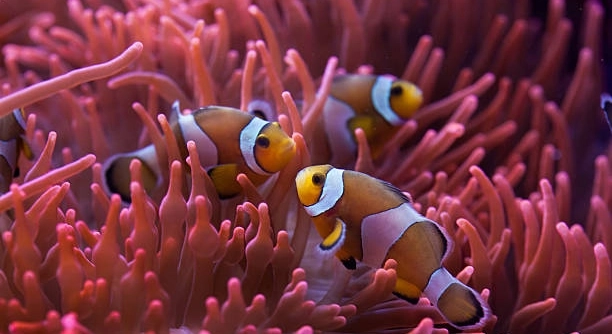
Clownfish are popular in marine aquariums and known for their bright colors and unique behavior. Many people find their social habits fascinating, especially how they interact with each other in their natural environment. This article looks at their pairing behavior.
Research shows that clownfish do form long-term pairs, often maintaining monogamous relationships. These pairs work together in defending their territory and raising offspring, which is essential for their survival and reproductive success. Their bonds are stable but can change if one partner disappears.
Understanding clownfish pairing reveals more about their social structure and helps improve how they are cared for in captivity and the wild. This knowledge is important for both hobbyists and marine biologists.
How Clownfish Choose Their Partners
Clownfish usually pair up for life, but the process of choosing a partner is influenced by several factors. In their natural habitat, clownfish live in groups dominated by a breeding pair. The female is usually the largest, while the male is smaller but still dominant over others. When a breeding female dies or disappears, the male changes sex and becomes the new female. Then, one of the non-breeding males becomes the new partner. This social structure helps maintain balance within the group. Clownfish recognize each other through visual and chemical cues, which helps strengthen their bond. Their partnerships involve cooperation in defending their territory and caring for eggs. This cooperation increases the chances of survival for their young. Overall, the way clownfish choose partners is closely tied to their social hierarchy and environmental conditions.
These social dynamics make clownfish pairing a complex and adaptive behavior that supports their survival.
The stability of clownfish pairs depends on their ability to maintain territory and mutual support. Territory is critical for breeding and protection from predators. Both partners work together to guard their anemone home and defend against intruders. Their cooperation extends to caring for their eggs, with the male often taking the lead in cleaning and aerating them. This shared responsibility strengthens their bond. Environmental factors like food availability and population density also influence pair stability. If conditions become unfavorable, pairs may dissolve or reorganize. Understanding these behaviors highlights the importance of social bonds for clownfish survival and reproductive success.
The Role of Environment in Clownfish Pairing
Environmental conditions play a significant role in how clownfish form and maintain pairs.
Changes in habitat quality, food supply, and presence of predators can affect pair formation and longevity. For example, a crowded reef with limited anemone space may force clownfish to compete more aggressively for partners and territory. Food scarcity can increase stress and reduce reproductive success. On the other hand, a healthy environment supports stable pair bonds and successful breeding. Researchers have found that clownfish can adapt to changing conditions by adjusting their social behavior. These adaptations include shifting pair roles or moving to new territories. Monitoring environmental factors is essential for understanding clownfish social systems and managing their populations in the wild and captivity.
Clownfish Communication in Pairs
Clownfish use body movements and sounds to communicate with their partners. These signals help maintain their bond and coordinate activities like defending territory.
Their communication includes popping and clicking noises, which can indicate aggression or submission. Visual cues such as fin displays and color changes also play a role in their interactions. These signals ensure both partners understand each other’s status and intentions. Strong communication helps prevent conflicts and strengthens their cooperation. It also supports synchronization during breeding and caring for eggs, making their partnership more effective in raising offspring.
This system of communication is vital to the success of their pairing and daily survival, reflecting their complex social behavior.
Impact of Pairing on Clownfish Behavior
Pairing affects many aspects of clownfish behavior, especially their territoriality and breeding habits. Paired clownfish tend to be more aggressive in defending their anemone, protecting both themselves and their eggs from intruders. This protective behavior increases the survival rate of their offspring. Paired fish also coordinate movements closely, which reduces energy expenditure and stress. The partnership encourages a more stable social environment, which is crucial for growth and reproduction. Unpaired clownfish often face more competition and are less successful in breeding. Understanding these behavioral changes highlights the importance of pairing for the overall health and longevity of clownfish populations.
Lifespan of Clownfish Pairs
Clownfish pairs can last for several years, depending on environmental conditions and health. Stable pairs are common in healthy reef environments where resources are abundant.
If one partner dies or disappears, the remaining clownfish may find a new mate or change sex to maintain the breeding pair. This flexibility helps keep the population stable despite changes.
How Captivity Affects Clownfish Pairing
In captivity, clownfish pairing can be less stable due to limited space and artificial environments. Stress and competition may increase, affecting their natural behavior.
Aquarium conditions that mimic their natural habitat help improve pair bonding and breeding success. Careful management of tank mates and environment supports healthier, longer-lasting pairs.
Size and Pairing Hierarchy
Size determines rank in clownfish pairs, with the female being largest. This hierarchy guides which fish become breeders.
The largest fish dominates breeding, while smaller ones wait their turn, following the social structure to keep peace.
Breeding Frequency of Paired Clownfish
Paired clownfish breed regularly during favorable seasons, producing multiple batches of eggs. This frequent reproduction supports population growth in the wild.
How long do clownfish pairs usually stay together?
Clownfish pairs can stay together for several years, especially in stable environments with plenty of resources. Their bond is often lifelong unless one partner dies or is removed. In such cases, changes in social rank and sex allow the pair to reform quickly, ensuring breeding continuity.
Do clownfish only pair with one partner in their lifetime?
Typically, clownfish form monogamous pairs that last a long time. However, if a partner disappears, the surviving fish may change sex or find a new mate within their social group. This flexibility helps maintain breeding pairs despite environmental changes.
Can clownfish change sex?
Yes, clownfish have a unique ability called sequential hermaphroditism. The dominant male can change into a female if the breeding female is lost. This process ensures that the pair remains intact and breeding continues without interruption.
How do clownfish choose their partners?
Clownfish choose partners based largely on size and social hierarchy. The largest fish becomes the breeding female, while the next largest male partners with her. Non-breeding fish wait in line, adapting their behavior based on group dynamics and available territory.
Do clownfish communicate differently when paired?
Yes, paired clownfish use specific sounds and body movements to communicate. These signals help coordinate defense of territory and breeding activities. Communication reduces conflicts within the pair and supports cooperation in raising offspring.
What happens if one clownfish in the pair dies?
If one partner dies, the remaining fish may change sex or pair with another available fish in the group. This adaptability is vital for the survival of their lineage and maintains social stability within their environment.
Are clownfish pairs more aggressive than single clownfish?
Paired clownfish tend to be more territorial and aggressive in defending their home. This behavior helps protect their eggs and ensures a safer environment for reproduction. Single clownfish are generally less aggressive but may compete for territory.
Does the environment affect clownfish pairing?
Yes, environmental factors such as food availability, space, and predator presence influence pairing. Healthy habitats support stable pairs, while stressful conditions may cause pairs to break up or change partners more frequently.
How does captivity affect clownfish pairs?
In captivity, limited space and artificial conditions can stress clownfish, leading to less stable pairs. Providing an environment close to their natural habitat improves their chances of forming and maintaining strong partnerships.
Can clownfish live without a partner?
Clownfish can survive without a partner, but their breeding success decreases significantly. Being paired increases protection, cooperation, and reproductive opportunities, which contribute to their overall wellbeing and longevity.
How often do clownfish breed when paired?
Paired clownfish breed regularly during favorable conditions. They produce multiple batches of eggs, sometimes every few weeks, depending on food and environmental quality. This frequent breeding supports population growth.
What role does size play in clownfish social structure?
Size determines rank and breeding roles within clownfish groups. The largest fish is the female, the next largest is the breeding male, and smaller fish are non-breeding. This hierarchy ensures orderly social interactions and breeding success.
Are clownfish faithful to their partners even in captivity?
Clownfish in captivity tend to maintain pair bonds similar to those in the wild if conditions are suitable. Stressful or crowded tanks may disrupt pairs, but careful management can encourage faithful partnerships.
How do clownfish pairs care for their eggs?
In pairs, the male usually takes a lead role in cleaning and fanning the eggs to provide oxygen. Both parents guard the nest against predators. This shared effort increases the likelihood of egg survival and healthy offspring.
Can clownfish form pairs outside their species?
Clownfish generally pair within their species. While some species may tolerate others nearby, breeding usually occurs only between the same species to ensure genetic compatibility.
Is it possible for clownfish pairs to dissolve naturally?
Pairs may dissolve if environmental pressures rise or one partner is removed. New social dynamics can lead to re-pairing or changes in hierarchy, but stable pairs tend to persist under favorable conditions.
Clownfish pairing behavior is an interesting example of how animals adapt to their environment and social structure. They often form long-lasting pairs that work together to defend their territory and raise their young. This partnership increases their chances of survival and successful reproduction. The bonds between clownfish are supported by communication and cooperation, which help them maintain their social roles and responsibilities. These relationships are flexible, allowing the fish to adjust if one partner disappears or conditions change. This flexibility is key to their ability to thrive in the wild.
The environment plays a major role in how clownfish pair and behave. In healthy reef systems, stable pairs are more common because food and shelter are abundant. In less ideal environments, pairs may break apart or reorganize to better fit available resources. In captivity, clownfish can struggle to maintain stable pairs unless their tank mimics natural conditions closely. Providing enough space, proper water quality, and compatible tank mates can improve their chances of forming healthy pairs. Understanding these environmental effects helps both hobbyists and scientists support clownfish health and reproduction.
Clownfish pairs are more than just a simple pairing for reproduction. They show complex social behavior involving communication, cooperation, and role flexibility. Their ability to change sex, defend territory together, and care for their eggs highlights the importance of partnership in their life cycle. Learning about clownfish pairing sheds light on broader animal behaviors and the need for balanced ecosystems. By recognizing how these small fish interact and adapt, we gain a deeper appreciation for their role in the ocean and how to better protect their habitats.

Hello,
If you enjoy the content that we create, please consider saying a "Thank You!" by leaving a tip.
Every little bit helps us continue crafting quality advice that supports the health, happiness, and well-being of pets around the world, for pets of all shapes, sizes, and species.
We really appreciate the kindness and support that you show us!