
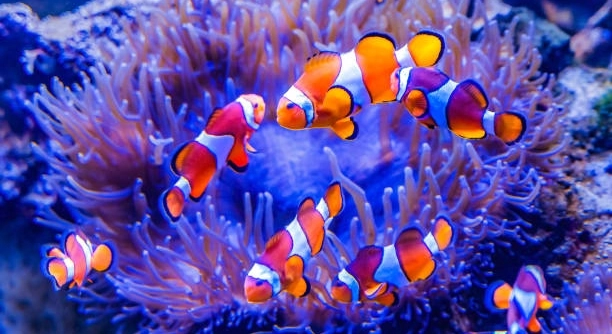
Clownfish are popular marine fish known for their bright colors and unique relationship with sea anemones. Many people are interested in how these fish behave, especially regarding their social and mating habits. Understanding their partner dynamics helps reveal more about their fascinating lives.
Clownfish generally form monogamous pairs and rarely change partners once bonded. Their social structure is based on strict hierarchies, and if one partner dies or disappears, the surviving fish may find a new mate. Otherwise, they tend to stay loyal to the same partner.
Exploring the behavior of clownfish partnerships provides insight into their social order and survival strategies in the wild. This article sheds light on how these vibrant fish maintain their bonds over time.
Social Structure of Clownfish
Clownfish live in groups with a clear social hierarchy. At the top is the dominant female, followed by a dominant male, and then smaller, non-breeding males. This structure keeps the group stable and organized. If the dominant female dies, the dominant male changes sex and becomes the new female. Then, the largest non-breeding male becomes the new dominant male. This process, called sequential hermaphroditism, is unique and helps maintain the balance within the group. Because of this social order, clownfish rarely change partners unless there is a death or absence of a mate. Their lives are closely tied to their roles in the group and their connection to the host anemone, which provides safety. This behavior helps ensure survival and reproduction, keeping their populations steady in their natural habitats.
Clownfish pairs are mostly stable, with partners rarely switching unless necessary due to changes in the group. This keeps their social structure strong.
Their ability to change sex depending on their social rank is crucial to maintaining stable pairs. This natural process allows them to quickly adapt when a partner is lost. It also explains why clownfish tend to stay with the same partner for long periods, strengthening their bond and improving chances for successful breeding. The host anemone’s protection adds to their secure environment, reducing the need to find new partners frequently. This combination of social hierarchy and environmental factors shapes their unique relationship patterns.
Partner Change in Captivity
Clownfish kept in aquariums may show different partner behaviors than those in the wild. Stress, limited space, and artificial groupings can affect their natural social dynamics. Some captive clownfish may switch partners more often if conditions cause instability. However, they still follow their natural tendencies to form pairs and maintain social hierarchy when possible. Providing a stable environment helps support their usual behavior.
Aquarium settings can influence how often clownfish change partners, but stable conditions promote natural pair bonds.
In captivity, the limited space and presence of unfamiliar fish can disrupt natural social structures. When the environment is stressful or crowded, clownfish may compete more aggressively, causing partners to separate. Careful tank management, including adequate space and compatible groupings, helps maintain pair stability. Understanding their social needs can reduce partner changes and support healthier relationships. Observing these behaviors gives valuable insight into their adaptability and how to best care for them outside their natural habitat.
Signs of Partner Change in Clownfish
Clownfish showing signs of stress or aggression often indicate possible partner changes. These behaviors can disrupt the established social order, especially in confined spaces. Noticing shifts in behavior helps understand their social dynamics better.
Aggressive behavior may emerge when a clownfish feels threatened by another fish or an intruder. If a dominant partner is removed or dies, the remaining fish might display increased aggression while establishing a new hierarchy. This can lead to a temporary partner change or reorganization within the group. Signs such as chasing, biting, or hiding often point to social tension. Monitoring these actions provides clues about changes happening below the surface. It is important to manage the environment to reduce stress and support healthy relationships among clownfish.
Sudden disappearance of one partner can lead the surviving fish to seek a new mate or shift roles within the group. The process can be swift, driven by the need to maintain stability and breeding capacity. This natural behavior shows how clownfish adapt quickly to changes.
Factors Influencing Partner Stability
Environmental conditions play a major role in whether clownfish maintain or change partners. Stable habitats with abundant resources support long-term bonds, while unstable environments increase partner changes.
When clownfish live in well-maintained habitats with adequate space and food, their social structures remain intact, and partner bonds last longer. Disruptions such as poor water quality, overcrowding, or loss of the host anemone can stress fish and cause more frequent partner switches. These factors challenge their ability to maintain stable pairs. Understanding and controlling these conditions can help reduce partner changes, especially in captivity. Maintaining a peaceful, secure environment is essential for their natural social behavior to thrive. Recognizing these influences helps care for clownfish more effectively.
Reproduction and Partner Loyalty
Clownfish form strong pairs primarily for reproduction. Once bonded, they usually stay together to protect their eggs and care for their young. This loyalty supports successful breeding.
The female lays eggs near the host anemone, and the male guards and cleans them until they hatch. Both parents are invested in this process, reinforcing their partnership. Their cooperation during reproduction makes it unlikely they will switch partners unless forced by external factors.
Role of the Host Anemone
The host anemone offers protection and a home base for clownfish. Its presence supports stable partnerships by providing a safe environment. Clownfish rely on this relationship for survival.
Impact of Age and Size on Partners
Age and size influence partner roles in clownfish groups. Larger, older fish often become the dominant female, while smaller ones take on male roles or remain non-breeding. This size hierarchy helps maintain social order and partner stability.
FAQ
Do clownfish always stay with the same partner?
Clownfish typically form long-lasting pairs and tend to stay with the same partner for life, especially in stable environments. Their social structure supports strong bonds between mates, mainly because they cooperate closely in caring for their eggs and defending their territory. However, if one partner dies or disappears, the surviving fish may find a new mate to continue breeding.
Can clownfish change sex to keep their partnership?
Yes, clownfish have a unique ability called sequential hermaphroditism, where the dominant male can change into a female if the current female is lost. This process ensures that the group remains stable and breeding continues smoothly. The largest non-breeding male then becomes the new dominant male, preserving the social hierarchy.
What happens if a clownfish loses its partner?
When a clownfish loses its mate, it usually searches for a new partner within the group or nearby. This change helps maintain reproduction and social order. The surviving fish may become aggressive while establishing a new pairing. This behavior is natural and necessary for the group’s survival.
Do clownfish pairs show any special behavior?
Clownfish pairs often display cooperative behaviors such as cleaning their host anemone, defending their territory, and caring for eggs together. These actions strengthen their bond and help ensure their offspring survive. The teamwork between partners is a key part of their survival strategy.
Is partner change more common in captivity?
Partner changes can be more frequent in aquarium settings due to stress, limited space, and artificial social groups. Clownfish in captivity may show more aggression or social instability if conditions are not ideal. Providing a peaceful and spacious environment helps reduce partner changes and supports their natural behaviors.
How do environmental factors affect clownfish partnerships?
Environmental conditions like water quality, space, availability of a host anemone, and presence of other fish can impact clownfish partnerships. Stable and resource-rich environments support long-term bonds, while poor or crowded conditions may cause stress, leading to more frequent partner changes.
Can clownfish survive without a partner?
While clownfish can survive alone, they are social animals that thrive best in pairs or groups. Being alone may cause stress and reduce breeding opportunities. Finding a partner is important for their social structure and reproductive success.
Do clownfish form partnerships outside their host anemone?
Clownfish are closely tied to their host anemones, and their partnerships usually form and remain within this safe space. The anemone offers protection and a home base, which supports their social and reproductive behaviors.
How quickly do clownfish form new partnerships?
The speed of forming a new partnership varies but can be fairly rapid, especially if the social hierarchy changes suddenly. Survival instincts drive clownfish to quickly establish new bonds to maintain breeding and social stability.
Are there differences in partner behavior among clownfish species?
Different clownfish species may show variations in social structure and partner behavior, but most share the tendency for stable pair bonds and strict hierarchies. Some species may tolerate partner changes more easily, depending on environmental and social factors.
Clownfish are fascinating creatures with unique social behaviors that set them apart from many other fish. Their tendency to form strong, long-lasting pairs helps ensure the survival of their species. This partnership is based on cooperation, protection, and the shared responsibility of caring for their eggs. Most clownfish do not change partners unless forced to by the loss of a mate or changes in their social environment. This loyalty reflects the importance of stable relationships in their natural lives. Understanding these behaviors offers a clearer picture of how clownfish survive and thrive in their underwater habitats.
The ability of clownfish to change sex based on social needs is a remarkable adaptation that supports their stable partnerships. When the dominant female is gone, the male quickly becomes female, and a new male steps up in the hierarchy. This flexibility helps maintain balance within the group and ensures continuous reproduction. It also means clownfish are well-equipped to handle changes in their environment or group composition. This natural process highlights how their social structure is closely connected to their biology, allowing them to respond effectively to challenges while keeping their partnerships strong.
In both the wild and captivity, environmental factors influence how clownfish maintain or change partners. A stable habitat with plenty of space, food, and a healthy host anemone supports long-term bonds and reduces the chance of partner switches. On the other hand, stress from overcrowding, poor water quality, or loss of the anemone can lead to social disruptions and partner changes. Knowing this helps in caring for clownfish properly, especially in aquarium settings. Providing a peaceful, suitable environment allows their natural social behaviors to flourish, supporting their health and well-being over time.

Hello,
If you enjoy the content that we create, please consider saying a "Thank You!" by leaving a tip.
Every little bit helps us continue crafting quality advice that supports the health, happiness, and well-being of pets around the world, for pets of all shapes, sizes, and species.
We really appreciate the kindness and support that you show us!