
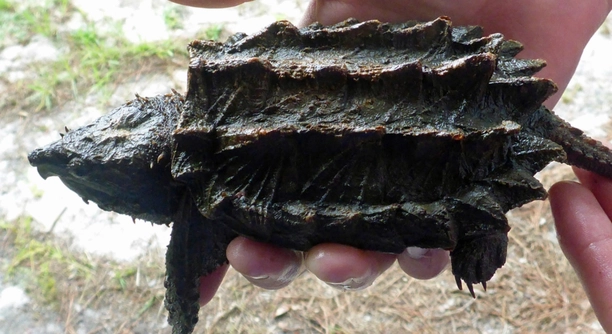
Alligator snapping turtles are fascinating creatures that live in freshwater habitats. They are known for their unique appearance and remarkable hunting skills. One interesting thing about these turtles is how they see the world around them.
Alligator snapping turtles have relatively poor eyesight. They rely more on their sense of touch and smell to hunt, using their tongue to lure prey rather than relying on vision. Their eyes are adapted for low-light environments.
Their vision is just one aspect of their amazing hunting techniques. Understanding their other senses helps reveal how they successfully hunt in their aquatic environments.
How Alligator Snapping Turtles See the World
Alligator snapping turtles have limited vision, which is not ideal for spotting prey in their environment. Their eyes are designed for low-light conditions, but they don’t have sharp vision like many other animals. This doesn’t stop them from being highly effective hunters. Their eyes are positioned on the sides of their heads, allowing them to spot movement in the water, but the clarity of their sight is poor. Instead of using their eyes to hunt, they rely on other senses that are more finely tuned.
Their eyes are built for survival in murky, dark waters, where visibility is poor. These turtles spend most of their time in the shadows, so their vision isn’t as important. It’s their other senses that help them thrive.
In the wild, they use their sense of smell and touch to find food. Their mouths have special lures, often resembling a worm or small fish. They use this to attract fish or other prey, which comes close enough to be snatched up quickly. The turtle’s poor vision isn’t an issue because it can sense when a potential meal is near. This clever technique is how they manage to catch food without depending on their eyesight.
How Their Hunting Techniques Work
Alligator snapping turtles have a unique hunting style that doesn’t rely on their vision. Their tongue acts as bait to attract fish. When a fish approaches, the turtle strikes with remarkable speed and precision.
This hunting technique has proven to be effective for their survival in the wild. The turtle waits very still, and its tongue moves in a way that mimics a worm or small creature. This clever trick fools the fish, making it come closer to the turtle. Once the prey is close enough, the turtle quickly snaps its jaws, capturing the meal in one swift motion.
With poor eyesight, it’s clear that alligator snapping turtles must rely on their keen sense of touch and smell to find their prey. Even though their vision doesn’t give them an advantage, their other senses more than make up for it. Through this hunting strategy, the alligator snapping turtle has become a skilled predator in its habitat.
The Role of Vision in Alligator Snapping Turtle Behavior
Alligator snapping turtles don’t rely on their eyesight for most of their behavior. Their vision is limited, so their other senses take over. They use their sense of touch and smell to explore their environment and find food. This helps them navigate through the murky waters where they live.
Despite their poor vision, these turtles can still detect movement. This sensitivity to changes in their surroundings is key to their behavior. When something nearby stirs, they’re able to respond quickly, even if they can’t see it clearly. This ability helps them avoid predators and find food.
Though their eyes aren’t sharp, they rely on subtle changes in their environment to tell them when to act. Whether it’s the movement of prey or an approaching threat, their senses ensure they don’t miss important cues. Without strong eyesight, their other abilities make up for the lack of visual information. Their ability to adapt has kept them thriving in their habitat.
How Poor Vision Affects Hunting Efficiency
The poor vision of an alligator snapping turtle doesn’t hinder its hunting success. Instead, their hunting strategy compensates for the lack of clear sight. They remain very still, allowing their lures to attract fish. Their slow, methodical movements ensure their presence doesn’t scare prey away.
The turtle’s hunting technique is all about patience. They wait for fish or other small creatures to come close enough. When they’re near, the turtle strikes with speed, using its powerful jaws to capture prey in one quick motion. This method allows them to conserve energy and remain undetected by prey.
Despite not seeing clearly, these turtles are highly efficient hunters. Their patience and skill in using their unique lures help them succeed, even in dark and murky water. Vision may be limited, but their other traits allow them to thrive.
The Limitations of Alligator Snapping Turtle Vision
Alligator snapping turtles have a limited field of vision. Their eyes are positioned on the sides of their head, and their sight is blurry. This makes it hard for them to see clearly, especially in murky water, where visibility is already poor.
Despite their poor eyesight, these turtles have adapted to their environment. Their eyes help them detect movement, but their other senses are much more important. They rely on touch and smell to hunt and navigate through their surroundings, ensuring they thrive even with limited vision.
Alligator Snapping Turtle’s Survival Skills
The alligator snapping turtle’s survival depends more on its hunting skills than its vision. Its tongue lures fish, which it then captures using its powerful jaws. This technique is a reliable way for the turtle to find food, even without clear sight.
Its ability to remain still for long periods makes it an effective predator. The turtle can blend in with its surroundings, making it nearly invisible to potential prey. Once a fish is close enough, it strikes with speed and precision, ensuring it gets a meal with minimal effort.
Adaptations Beyond Vision
Although the alligator snapping turtle’s vision is poor, its other adaptations make up for it. Its powerful jaws, sharp sense of touch, and effective hunting technique allow it to survive in its environment. These skills help it find food and protect itself.
FAQ
Do alligator snapping turtles have good eyesight?
Alligator snapping turtles do not have great eyesight. Their vision is blurry and not very sharp, making it difficult for them to see clearly. Their eyes are located on the sides of their heads, which limits their ability to focus directly in front of them. In their murky aquatic environments, their eyesight is further reduced, as they live in waters where visibility is already poor. However, they do rely on their ability to detect movement, so they can notice when something in their surroundings changes. Their eyes help with basic detection, but they depend more on other senses, such as touch and smell, to navigate and hunt.
How do alligator snapping turtles hunt if they can’t see well?
While their eyesight is poor, alligator snapping turtles are highly effective hunters. They use a unique technique to catch prey: they lure fish using a specialized part of their tongue. The tongue resembles a worm or small fish, which attracts prey to the turtle’s mouth. Once the prey comes close, the turtle strikes quickly with its powerful jaws. The turtle’s ability to remain still for long periods also helps it avoid detection by potential prey. By staying hidden and using its lures, it doesn’t need to rely on sharp eyesight to catch food.
How do alligator snapping turtles catch prey with poor eyesight?
Despite their limited vision, alligator snapping turtles are skilled at catching prey. Their ability to mimic prey with their tongue lure makes them successful hunters. Fish and other small creatures are drawn to the movement, mistaking the turtle’s tongue for food. The turtle stays motionless and waits patiently until the prey is close enough to strike. With their jaws snapping shut with incredible speed, they capture their meal quickly. This strategy works even without clear sight, proving that their senses beyond vision play a critical role in hunting.
Can alligator snapping turtles see in the dark?
Alligator snapping turtles can see in low-light environments but not in total darkness. Their eyes are adapted to see better in murky water, where they often live. While they can’t see well in bright light, they are able to detect movement in darker waters, which helps them with hunting and avoiding predators. Their eyes have evolved to make the most of low-light conditions, but in complete darkness, they would still rely on other senses to navigate and hunt.
How does the alligator snapping turtle’s vision compare to other turtles?
Compared to other turtles, the alligator snapping turtle has relatively poor vision. Many turtles have better eyesight, as they need to spot prey or predators in clearer waters. In contrast, the alligator snapping turtle is adapted to its dark, murky environment, where eyesight is less important. Other turtles might rely more on vision to navigate, while the alligator snapping turtle depends more on its sense of touch, smell, and its hunting techniques. Its poor vision isn’t a disadvantage because it’s developed other skills to survive.
Do alligator snapping turtles use their eyes to communicate?
Alligator snapping turtles do not use their eyes for communication. Their vision is limited, and they do not rely on visual cues to interact with other turtles. Instead, these turtles communicate in other ways, such as through body movements or possibly chemical signals in the water. While some turtles may display visual signals, the alligator snapping turtle’s behavior suggests that it relies more on other senses to interact with its environment and other animals.
What adaptations help alligator snapping turtles survive despite poor eyesight?
Alligator snapping turtles have developed a variety of adaptations that help them survive despite poor eyesight. Their most notable adaptation is their unique hunting strategy. Their tongue serves as a lure to attract fish and other prey. Additionally, these turtles can remain completely still for long periods, which allows them to avoid detection by potential prey. Their powerful jaws enable them to capture food quickly once it’s within range. Their sense of touch and smell also helps them navigate and find food in their murky, low-visibility habitats.
How do alligator snapping turtles find food without relying on their eyesight?
Alligator snapping turtles have developed several ways to find food without relying on their eyesight. Their sense of touch and smell is far more important. They use their tongue as a lure, which attracts fish or other small prey. When prey approaches, they strike with their strong jaws, capturing their meal. This strategy is highly effective in murky waters, where visibility is poor. By relying on other senses, such as detecting the movement of prey or chemical cues in the water, they are able to hunt successfully even with limited vision.
Do alligator snapping turtles have good vision in the wild?
In the wild, alligator snapping turtles have limited vision. Their eyesight works well in low-light conditions, such as the murky waters where they live, but they cannot see as clearly as many other animals. Their vision is not sharp enough to spot prey from a distance. Instead, these turtles rely on their ability to detect subtle movements in their environment and their other senses, such as smell and touch, to hunt effectively. Although their vision isn’t ideal, their other adaptations help them thrive in the wild.
Can alligator snapping turtles hunt without using their vision?
Yes, alligator snapping turtles can hunt without relying on their vision. Since their eyesight is limited, they use their sense of touch and smell to locate prey. The turtle’s tongue is its primary tool for hunting—it resembles a worm and attracts fish and other small creatures. Once the prey is close, the turtle strikes with precision, capturing it with its powerful jaws. This hunting strategy allows them to be successful even in environments with poor visibility, proving that sight isn’t essential for their survival.
Final Thoughts
Alligator snapping turtles are fascinating creatures with unique hunting skills that make them well-suited to their environment. Despite having poor eyesight, they have developed other senses and techniques to thrive in the wild. Their vision might not be sharp, but they don’t need it to hunt successfully. Instead, they rely on their ability to sense movement and detect chemical signals in the water. The tongue they use as a lure to attract fish is a perfect example of how they have adapted to their environment.
The poor vision of alligator snapping turtles doesn’t limit their ability to find food or navigate their surroundings. These turtles have adapted to live in murky waters where vision isn’t a key factor. They have evolved to use their other senses to hunt and stay safe. By waiting motionless and using their tongue as bait, they can catch prey that approaches without needing to rely on sight. This hunting method shows how the turtle has compensated for its lack of sharp vision by enhancing other survival traits.
While their vision may not be their strongest sense, it’s important to remember that alligator snapping turtles are not at a disadvantage. Their poor eyesight is simply part of how they have evolved to live in dark, underwater environments. They have learned to rely on other senses like touch and smell, making them highly skilled hunters. In the end, these turtles are a great example of how creatures adapt to their habitats and survive, even without the ability to see the world clearly.

Hello,
If you enjoy the content that we create, please consider saying a "Thank You!" by leaving a tip.
Every little bit helps us continue crafting quality advice that supports the health, happiness, and well-being of pets around the world, for pets of all shapes, sizes, and species.
We really appreciate the kindness and support that you show us!