
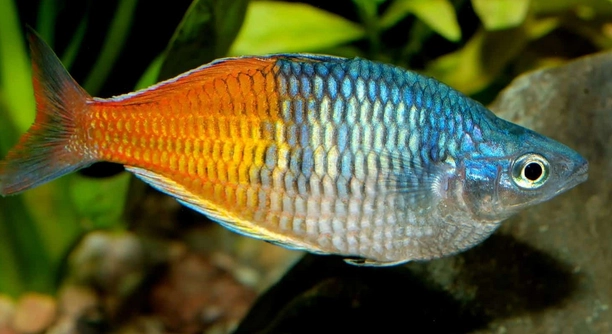
Rainbow fish are known for their vibrant colors and lively behavior. Observing their interactions can be fascinating, especially when wondering whether they can learn from watching others. This idea of learning by observation is common in many animals.
Research suggests that rainbow fish can indeed learn from observing others. Through social learning, they can acquire new behaviors, especially in the context of foraging or navigating their environment. This type of learning helps them adapt more effectively.
Understanding how these fish learn from each other can shed light on their social dynamics. It shows how they adapt and thrive in their natural surroundings.
What Does It Mean to Learn from Watching Others?
When animals learn by watching, it’s known as social learning. For rainbow fish, this means picking up skills or behaviors from observing other fish. This could involve figuring out where to find food or how to avoid danger. Social learning helps them survive by allowing them to learn faster and more effectively than if they were relying solely on their own experiences. In the wild, this ability would be crucial for adapting to changing environments. Rainbow fish have been observed mimicking the actions of others, especially in tasks like navigating their environment. This suggests they can understand and imitate behaviors, making them more adaptable.
It’s important to note that social learning isn’t limited to just rainbow fish. Many species of fish and even other animals can learn from their peers. It helps them save energy and time since they don’t need to make all the discoveries on their own.
In nature, fish that learn from others might find food more quickly or avoid predators more effectively. By observing what other fish do, rainbow fish can learn vital survival skills. This ability to adapt through watching others can give them an edge in their ecosystem. The more opportunities they have to observe, the better equipped they are to thrive.
Types of Social Learning in Rainbow Fish
Rainbow fish can learn in different ways when watching others. They might imitate a behavior directly or simply recognize a pattern and follow it. A common way this occurs is through observational learning, where a fish watches another perform a task. This could involve something as simple as discovering the best hiding spot or a method for catching prey.
Fish also learn by trial and error, but seeing others make mistakes or succeed helps them adjust their strategies. This form of learning means they don’t have to start from scratch with every situation, as they can gain insights from the experiences of others. Social learning becomes even more important when it comes to avoiding predators or navigating unfamiliar environments. If one fish discovers a safe path, others can follow without needing to take the same risks.
This type of learning improves the overall survival rate of the species, especially in habitats with many potential dangers. By observing each other, rainbow fish can reduce their individual risks while improving their chances of success.
How Do Rainbow Fish Benefit from Social Learning?
Rainbow fish benefit from social learning by reducing the time it takes to learn important survival skills. By watching other fish, they can quickly discover food sources, avoid danger, and find suitable habitats. This ability helps them avoid wasting energy or putting themselves at unnecessary risk, increasing their chances of survival. Social learning also supports faster adaptation to changes in the environment, which can be vital when resources are scarce or predators are present.
When a rainbow fish sees another fish successfully navigate a new obstacle or find a hidden food source, it can replicate that behavior. This process shortens the learning curve, allowing the fish to adapt quickly to new challenges. The more fish observe and share information with one another, the more successful the entire group can become. Social learning helps build a stronger, more cohesive community where the survival of one fish can impact the success of others.
This behavior is essential for rainbow fish, as it plays a significant role in helping them survive and thrive in their environment. For example, if one fish finds a safe space to hide from predators, others can follow its lead, reducing the risk of being caught. Social learning makes each fish smarter, stronger, and more capable of navigating the challenges they face together.
The Role of Observation in Behavior Learning
Observation is a key element in the learning process for rainbow fish. By watching others perform tasks like feeding, defending territory, or escaping predators, rainbow fish can pick up these behaviors without direct trial and error. This allows them to conserve energy and avoid risks.
Rainbow fish that observe successful actions from others can quickly replicate those behaviors themselves. This process is beneficial in many aspects of their lives, such as navigating around obstacles, interacting with other fish, and even forming social bonds. Over time, they refine their skills by observing the results of others’ actions, improving their ability to survive in challenging conditions. Through this observation, they also learn which actions are more likely to result in rewards, such as finding food or staying safe.
In nature, this ability to learn from observation helps rainbow fish adapt to changes and challenges in their environment. It makes them more resourceful and able to respond faster to threats, increasing their chances of survival. Observation is not only about learning specific actions but also about gaining insight into what behaviors are most effective in ensuring survival. Through this process, rainbow fish become more connected to their surroundings and to each other, creating a more cohesive social structure.
How Social Learning Affects Group Behavior
Social learning can have a strong impact on the behavior of rainbow fish groups. When one fish learns a new skill, it can spread to others. This results in coordinated behaviors, making the entire group more efficient at finding food and avoiding threats. The group becomes stronger through shared knowledge.
As the group shares information, they grow more synchronized. Fish that are part of a group with strong social learning behaviors often experience less stress. They can rely on one another for safety, such as following the lead of fish that have discovered safe areas or optimal feeding spots.
Group behavior among rainbow fish is essential for their survival. The more efficiently they communicate and share learned behaviors, the better equipped they are to handle challenges. Social learning keeps the group connected and more capable of responding to threats as a cohesive unit.
Observational Learning and its Limits
Although observational learning is effective, it does have limits. Fish cannot always learn everything just by watching others. Some behaviors, like complex hunting techniques or intricate social interactions, might need direct experience. Rainbow fish must balance watching with their own trial-and-error learning.
This limitation is often seen when they face new challenges that require innovation or adaptation. While social learning is helpful, fish still need to be able to experiment and adjust based on their individual experiences. If the environment changes drastically, rainbow fish might need to rely more on their instincts to survive.
Social Learning in Captivity
In captivity, rainbow fish might not have as many opportunities for social learning compared to their wild counterparts. Without other fish to observe, they could face challenges in adapting to new environments or learning survival strategies. However, their natural ability to learn still plays a role in their adaptation to new surroundings.
FAQ
Can rainbow fish learn complex tasks by watching others?
Rainbow fish are capable of learning basic behaviors through observation, such as finding food or avoiding predators. However, when it comes to more complex tasks, like hunting in groups or using tools, their learning seems limited. They can pick up on simple behaviors and survival techniques by observing others, but tasks that require advanced problem-solving or innovation may require personal trial and error. Rainbow fish can adapt to their environment quickly through social learning, but their ability to learn complex behaviors is not as advanced as some other species.
How does social learning help rainbow fish in the wild?
In the wild, social learning plays a significant role in survival. Rainbow fish that can learn from others can quickly discover food sources, identify dangers, and adapt to changing environments. This reduces the time and energy spent on trial and error. By observing others, rainbow fish can avoid unnecessary risks and learn safer, more effective behaviors. This helps them thrive in their ecosystem and increases their chances of survival, especially when resources are scarce or predators are nearby.
Can rainbow fish learn new behaviors from humans?
Rainbow fish, like many animals, can learn to associate certain actions with rewards, such as food. However, learning new behaviors from humans is limited. They can recognize patterns and respond to basic cues, such as feeding times or environmental changes, but their ability to pick up new tasks or behaviors from humans is much more restricted than social learning from other fish. In captivity, they may associate human actions with food or care routines, but they don’t typically learn complex behaviors the way some animals, like dogs, might.
Do rainbow fish learn from each other in social groups?
Yes, rainbow fish learn from one another, especially within a social group. When one fish finds food or a safe hiding spot, others in the group may follow. This kind of learning benefits the whole group, allowing them to collectively make better decisions about where to find food or how to avoid predators. In groups, they can also help each other stay aware of danger and react to threats more effectively. Social learning within a group strengthens their ability to adapt and survive in their environment.
How do rainbow fish choose who to learn from?
Rainbow fish don’t actively choose who to learn from. Instead, they observe behaviors of nearby fish, particularly those that seem to result in positive outcomes, like finding food or avoiding predators. They are likely more inclined to follow individuals that appear successful or dominant in the group, as this can be a sign of effective behavior. However, fish in the group often learn from each other, and each member plays a role in passing on knowledge. The process is more passive, with younger or less experienced fish learning from others based on proximity and observable success.
Do rainbow fish learn from their mistakes?
Yes, rainbow fish can learn from their own mistakes, although they are more likely to do so through trial and error. If they make an error, such as approaching a predator or not finding food, they can adjust their behavior the next time. This type of learning is less efficient than social learning but still plays an important role in their ability to survive. Over time, rainbow fish can refine their actions based on their experiences, making them better prepared for future challenges. The combination of social learning and personal experience helps them become more adaptable.
How do environmental changes affect rainbow fish’s learning?
Environmental changes can impact how rainbow fish learn, especially if new dangers or food sources are introduced. Fish that are able to observe how others adapt to these changes can learn more quickly. However, if the environment changes too drastically or too suddenly, social learning might not be enough on its own. In such cases, rainbow fish must rely on their instincts and personal experience to navigate the new situation. A sudden loss of familiar landmarks or food sources can lead to confusion, but fish that have observed successful behaviors may find new solutions faster.
Can rainbow fish learn new feeding techniques from each other?
Rainbow fish can learn simple feeding techniques from one another, especially when it involves basic foraging methods. If one fish discovers a new food source or feeding strategy, others can observe and mimic the behavior. However, rainbow fish may not learn complex hunting or cooperative feeding strategies, as seen in some other species. They are more likely to observe simple behaviors, such as identifying and accessing food. This helps them adapt quickly in their natural habitat but doesn’t extend to more sophisticated methods like teamwork-based hunting.
Do rainbow fish ever teach other fish?
Rainbow fish don’t “teach” other fish in the traditional sense, as teaching requires one individual to actively guide or instruct another. However, they can influence other fish by simply behaving in ways that encourage others to follow. If one fish finds food or a safe place to hide, others may imitate those actions. In this sense, rainbow fish contribute to the learning process, but it’s more of a passive influence rather than direct teaching. Their role in helping others learn is mostly about providing examples through their actions.
How can social learning impact rainbow fish in aquariums?
In aquariums, social learning can still play an important role, although it might be limited due to fewer fish in the environment. If multiple rainbow fish are kept together, they will observe each other’s behaviors and adapt to the aquarium’s routine, such as feeding times or recognizing when the aquarium environment is changed. However, since aquarium setups are controlled, the fish have fewer opportunities to learn survival skills or adapt to environmental changes. Still, the social learning among fish can make them more relaxed and comfortable in their artificial habitat.
Final Thoughts
Rainbow fish are fascinating creatures with the ability to learn by watching others. This form of social learning helps them adapt to their environment by observing the behaviors of other fish. Whether it’s finding food or avoiding predators, they can pick up useful skills without needing to make all the mistakes themselves. This ability not only improves their chances of survival but also allows them to thrive in their natural habitats where dangers and challenges are common. Social learning is a key part of how these fish navigate their surroundings and make decisions that impact their well-being.
While social learning is important, it does have limitations. Rainbow fish are good at picking up basic behaviors, but more complex tasks might be beyond their abilities. They can observe and imitate actions, but behaviors like advanced hunting strategies or intricate social interactions are harder for them to learn from watching alone. This doesn’t mean they are incapable of learning, but it shows that their capacity to adapt and learn has boundaries. Personal experience still plays a large role in their overall survival strategy, and sometimes they need to rely on trial and error to figure things out. However, the combination of both social learning and personal experience allows them to adapt to their surroundings in a balanced way.
In captivity, rainbow fish still benefit from social learning, although the opportunities to observe others may be limited. Without a diverse group of fish to interact with, they might miss out on the full range of behaviors that would help them in the wild. However, they can still learn from their experiences in the aquarium, especially in relation to feeding times and changes in their environment. Whether in the wild or in a controlled setting, their ability to learn from each other plays a significant role in helping them adapt, grow, and thrive. Ultimately, rainbow fish show us how the simple act of watching others can have a profound impact on survival and adaptation.

Hello,
If you enjoy the content that we create, please consider saying a "Thank You!" by leaving a tip.
Every little bit helps us continue crafting quality advice that supports the health, happiness, and well-being of pets around the world, for pets of all shapes, sizes, and species.
We really appreciate the kindness and support that you show us!