
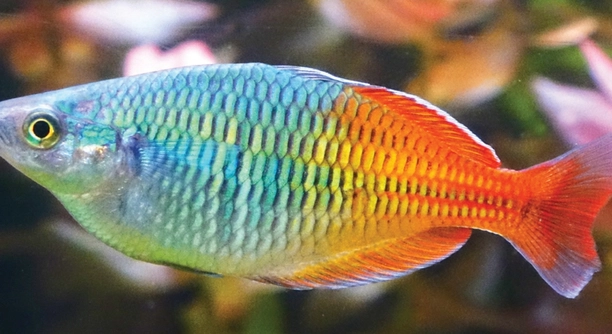
Rainbow fish are known for their vibrant colors and graceful movements, making them a popular choice for aquariums. But do these fish have the ability to learn tricks? In this article, we’ll explore the topic.
Rainbow fish cannot be trained to perform complex tricks like mammals or birds. While they can be conditioned to associate certain stimuli with rewards, their abilities are limited to basic behaviors such as feeding responses.
Understanding the limitations of training rainbow fish can help set realistic expectations. There is a fascinating world of fish behavior waiting to be explored.
Understanding Rainbow Fish Behavior
Rainbow fish are active swimmers and can be very responsive to their environment. Their bright colors and quick movements make them a joy to watch. While they are not capable of learning advanced tricks, they do exhibit some conditioned responses. They can recognize feeding times and will swim to the surface when they anticipate food. Over time, they might even learn to associate certain sounds or visual cues with feeding.
However, their ability to respond is limited mostly to basic patterns. This is primarily due to their simple brain structure. Unlike more complex animals, rainbow fish don’t have the mental capacity to perform specific behaviors on command. Understanding this is key when setting up expectations for their training.
Fish, including rainbow fish, are not naturally inclined to seek out interaction with humans. They don’t bond in the way that some other pets, like dogs or birds, do. Instead, their behaviors are driven by instincts, such as feeding or mating. Despite this, you can still create an enriching environment for them that allows for predictable patterns of interaction.
Training Techniques for Rainbow Fish
There are ways to gently encourage rainbow fish to engage with their environment. Using food is a simple method to establish a routine. Over time, you can create certain feeding habits that they will come to expect. They will not perform tricks, but their behavior can still be influenced.
When you feed them at the same time every day, they will begin to recognize your routine. You can use specific sounds or motions to trigger their feeding response. This is more of a conditioning process rather than actual training. For example, tapping the glass before feeding will eventually signal to them that food is coming. Keep in mind, these responses are simple and predictable, not advanced tricks. It’s important not to push them too far, as this could stress them out.
Creating a consistent and stimulating environment is essential for rainbow fish. While they can’t perform tricks, ensuring their tank is well-maintained and providing them with the proper social and environmental cues can make their behavior more predictable. With time, you’ll notice that they respond more clearly to their feeding schedule or tank changes. Although they may not perform on command, they do have their own ways of interacting with the world around them.
Setting Realistic Expectations for Training
Rainbow fish are not designed to follow complex instructions or tricks. Their brains aren’t wired for learning behaviors like some other pets. Instead, focus on simple conditioning through food and consistent routines. While it’s nice to think of teaching your fish something, it’s better to accept their natural limitations.
You can train rainbow fish to recognize feeding times, but that’s about the extent of their learning ability. Over time, they will get used to certain sounds or movements before feeding. The more consistent you are with these routines, the more likely they are to associate them with food. However, don’t expect them to follow commands or learn complex actions. They can only respond to very simple stimuli and conditions that repeat consistently.
The key is to understand that rainbow fish don’t have the cognitive ability to be “trained” like a dog or even some birds. Their world is driven by instincts and patterns, which can be predictable with consistency. Recognizing these limits will help you appreciate the simplicity of their behavior and prevent frustration. Fish are fascinating in their own way, but expecting more than what they’re capable of can lead to disappointment.
Maintaining a Healthy Environment
Rainbow fish thrive in a stable and well-maintained environment. They’re sensitive to changes in water quality, temperature, and light. A proper habitat will ensure they are comfortable and behave predictably, especially when it comes to feeding. Consistent water changes and proper filtration are essential for keeping your fish healthy. This creates an environment where they can feel secure, which may lead to more active and visible behavior.
In addition to water quality, lighting plays a significant role. Rainbow fish are diurnal, meaning they are most active during the day. Proper lighting simulates natural daylight, encouraging their normal behaviors. Regular light cycles also help them maintain a routine, which could make their feeding times more predictable. While they won’t perform tricks, they will become accustomed to these patterns.
Having a reliable filtration system and a proper light cycle provides your rainbow fish with the right conditions to live their best life. Stress can affect their health, so the more stable their environment, the more comfortable they’ll feel. This stability allows them to live without distraction, which in turn helps them stick to a routine that you can predict.
Feeding and Conditioning
Feeding is the best way to condition rainbow fish. By maintaining a regular feeding schedule, they can learn to associate specific times with food. They will swim to the surface or to the feeding area when they expect food, but they won’t perform tricks. This behavior is simple and based on routine.
Rainbow fish may respond to specific sounds or motions around feeding time. Over time, they may swim toward you when they recognize these cues. While it may seem like they are learning, it’s really just conditioning. The more consistent you are, the more predictable their behavior becomes.
Enriching Their Environment
To ensure rainbow fish stay active and healthy, enrich their environment with plants and hiding spaces. They prefer well-planted tanks with plenty of room to swim and explore. This allows them to feel secure and reduces stress, making them more likely to follow feeding patterns. A good environment also encourages natural behaviors.
By adding plants and hiding spots, you also provide opportunities for your fish to exhibit natural foraging behavior. This type of enrichment can make them more active and comfortable in their tank. Although they won’t be trained to do tricks, a well-structured tank will help them stay engaged and healthy.
Patience and Observation
Patience is important when keeping rainbow fish. While they can’t be trained like more intelligent pets, you can still enjoy observing their natural behaviors. Their routine responses to feeding and environmental changes are a reward in themselves. Over time, you’ll learn to recognize their predictable patterns.
FAQ
Can rainbow fish be trained to do tricks?
Rainbow fish cannot be trained to perform tricks. Their brains are not designed for complex learning. They can be conditioned to respond to simple cues, such as associating certain sounds or motions with feeding time, but that’s the extent of their abilities. They are driven more by instinct than by the kind of cognitive learning seen in animals like dogs or birds.
How can I get my rainbow fish to interact with me?
You can encourage some level of interaction by feeding them at the same time each day. Rainbow fish will start to recognize your feeding schedule and may swim toward you when they expect food. They won’t interact beyond their basic feeding response, but they may come to the surface or swim in your direction when they associate you with food.
Do rainbow fish get bored?
Rainbow fish don’t get bored in the same way humans or other animals do. However, they can become stressed if their environment is too monotonous or if they don’t have enough space to swim. Adding plants and hiding spots to their tank can help simulate a more natural environment and give them opportunities to display natural behaviors. While they won’t show boredom, creating a stimulating environment will keep them active and healthy.
How can I keep my rainbow fish healthy?
Maintaining a clean tank with proper water quality is the most important factor in keeping rainbow fish healthy. Regular water changes, proper filtration, and monitoring water temperature are essential. Rainbow fish are sensitive to changes in their environment, so providing stable conditions will prevent stress. A well-maintained tank with appropriate lighting and enrichment will also help them thrive.
Why is my rainbow fish not eating?
There can be several reasons why your rainbow fish is not eating. Stress, poor water quality, and changes in their environment are common causes. Check the water parameters to ensure everything is in order. If the fish are not eating, try offering a different type of food to see if they show interest. Ensure there’s no aggression or competition for food in the tank, as this could make some fish shy away from eating.
Can rainbow fish live with other species?
Yes, rainbow fish can live with other peaceful species. They are generally friendly and social but should be kept with similar-sized fish that don’t display aggressive behavior. Avoid keeping them with overly territorial or predatory species, as this can cause stress. They do well in community tanks, provided there’s enough space and hiding spots for everyone.
How often should I feed my rainbow fish?
Rainbow fish should be fed once or twice a day. Offer them only what they can consume within a few minutes to prevent overfeeding, which can harm water quality. Feeding them at the same time every day will help them recognize feeding routines. Varying their diet with high-quality flakes, pellets, and occasional live or frozen food can help maintain their health.
What size tank do rainbow fish need?
Rainbow fish need a tank that is at least 30 gallons. They are active swimmers and benefit from having plenty of space to move around. A larger tank is always better as it helps reduce stress and allows you to keep more fish. A well-sized tank also makes it easier to maintain stable water conditions, which is crucial for their health.
Do rainbow fish need a heater?
Rainbow fish are tropical fish and require a heater to maintain a stable water temperature. The ideal temperature for most rainbow fish species is between 72°F and 80°F (22°C to 27°C). A consistent temperature helps keep them healthy and active, as fluctuations can cause stress and make them more susceptible to illness.
Can rainbow fish live in cold water?
Rainbow fish are not cold-water fish and cannot survive in temperatures below 68°F (20°C). They need a tropical environment with warm, stable water. Keeping them in cold water will weaken their immune system and can lead to health problems. Make sure to use a heater to maintain the appropriate temperature for them.
Are rainbow fish hard to care for?
Rainbow fish are relatively easy to care for compared to some other species. They do require a stable environment, but as long as you maintain proper water quality, temperature, and lighting, they thrive. They are hardy fish and can live a long time in the right conditions. With regular maintenance and attention, they make a great addition to any aquarium.
Why do rainbow fish swim near the surface?
Rainbow fish often swim near the surface because that is where they naturally find food in the wild. They are also curious creatures and will swim at the top of the tank when they are anticipating food. This behavior can be a sign that they are healthy and active. However, if they remain near the surface and show signs of distress, it could indicate poor water quality or insufficient oxygen levels. Check the tank conditions to ensure everything is optimal.
Do rainbow fish need a lot of light?
Rainbow fish prefer bright, natural light, which encourages their active behaviors and vibrant colors. However, they don’t need intense lighting all the time. A consistent light cycle of around 10 to 12 hours a day is ideal. Too much light can cause algae growth, so it’s important to balance it with the tank’s needs. Ensure you have proper lighting that simulates natural day and night cycles for their well-being.
Final Thoughts
Rainbow fish are beautiful and active creatures that make a great addition to any aquarium. While they may not be able to learn tricks like some other pets, they do have predictable behaviors that can be influenced through simple conditioning. By associating specific cues with feeding times, they can learn to respond to routine actions, such as swimming to the surface when food is near. However, it’s important to keep in mind that their responses are more about basic instincts rather than complex learning. Their world revolves around simple patterns and behaviors driven by their environment.
The best way to interact with rainbow fish is through consistency. Maintaining a regular feeding schedule and creating a stable, enriching environment can lead to more visible and predictable behavior. While they may not perform tricks, you’ll find that they become more comfortable with their surroundings and responsive to the conditions you set for them. A well-maintained tank with the right water quality, temperature, and lighting ensures that they stay healthy and active. Offering a variety of food and adding plants or hiding spots to the tank will also help create an environment that allows them to express natural behaviors.
Ultimately, caring for rainbow fish is about understanding their natural tendencies and creating a space where they feel safe and secure. While they can’t be trained like more intelligent pets, they still offer a lot of enjoyment through their colorful presence and graceful movements. By observing their routines and respecting their limitations, you can create a rewarding aquarium experience. Rainbow fish may not perform tricks, but they still bring beauty and life to any tank, and learning how to care for them properly will ensure they thrive.

Hello,
If you enjoy the content that we create, please consider saying a "Thank You!" by leaving a tip.
Every little bit helps us continue crafting quality advice that supports the health, happiness, and well-being of pets around the world, for pets of all shapes, sizes, and species.
We really appreciate the kindness and support that you show us!