
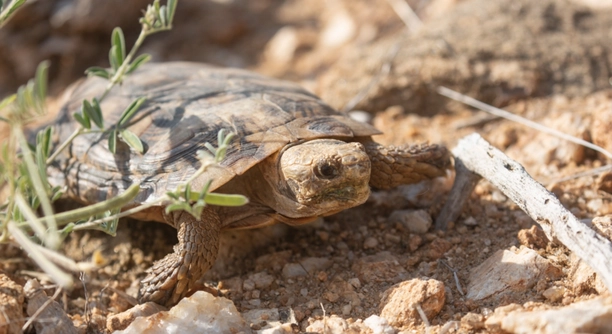
Pancake tortoises are fascinating reptiles that require specific care to thrive. One important consideration for their well-being is UVB light. This essential factor helps them absorb calcium and stay healthy in captivity.
Pancake tortoises should not live without UVB lighting. UVB is crucial for their calcium metabolism and overall health. Without it, they may develop health problems such as metabolic bone disease, weakening their bones and making them more susceptible to injury.
Proper UVB lighting is essential for maintaining your pancake tortoise’s health, and understanding the role it plays will help ensure their well-being in captivity.
Why UVB is Important for Pancake Tortoises
UVB light is essential for pancake tortoises because it helps them produce vitamin D3. This vitamin is necessary for calcium absorption, which keeps their bones strong and healthy. Without UVB, their ability to process calcium is impaired, leading to conditions like metabolic bone disease. In the wild, tortoises bask under the sun, absorbing the UVB they need for proper metabolism. In captivity, providing a UVB light source mimics natural sunlight and ensures they get enough exposure to stay healthy.
While UVB lighting is crucial, it’s not just about preventing health issues. It also helps maintain your tortoise’s natural behavior. Exposure to UVB light helps regulate their circadian rhythms and supports overall well-being, reducing stress. By providing proper UVB lighting, you allow them to thrive in your care.
Remember, it’s not only about calcium—UVB also plays a role in regulating other vital processes, such as reproduction and immune function. Ensuring your tortoise has access to it will promote a happier and healthier life.
What Happens When They Don’t Get UVB?
Without UVB, pancake tortoises can suffer from weak bones, poor appetite, and slow growth. These issues result from the lack of calcium absorption.
If your tortoise isn’t getting UVB, they’re more likely to develop metabolic bone disease (MBD). This serious condition can lead to deformities, paralysis, and even death if not addressed. MBD happens because the tortoise cannot properly metabolize calcium, leading to brittle bones and muscle weakness. The condition is often difficult to reverse once it has progressed. Ensuring your pancake tortoise has access to UVB from the start is the best way to prevent this.
In addition to physical health concerns, lacking UVB exposure can lead to behavioral problems. Pancake tortoises may become lethargic, less active, and less responsive to their environment. A proper light source helps mimic their natural habitat, encouraging them to move around more and engage in normal activities like basking.
Choosing the Right UVB Light for Pancake Tortoises
When selecting a UVB light for your pancake tortoise, ensure it provides the correct spectrum for their needs. Look for bulbs labeled specifically for reptiles, as these are designed to emit UVB wavelengths that mimic natural sunlight.
It’s also important to position the light correctly. Pancake tortoises need to bask within a certain distance of the light source to absorb enough UVB. A basking area with a heat source should be set up under the UVB light. The light should be placed around 10 to 12 inches above the basking spot to provide the right intensity. Be sure to replace the bulbs regularly, as their UVB output diminishes over time, even if the light still appears to be functioning.
A good UVB bulb lasts about six months before it needs replacement. Using a combination of both UVB and heat bulbs will give your tortoise the best of both worlds: warmth for digestion and UVB for overall health. Make sure your pancake tortoise has access to these light sources daily to maintain their well-being in captivity.
UVB Light Setup for Pancake Tortoises
The setup for UVB lighting should be easy to maintain and provide consistent exposure. It’s important to position the light where your tortoise can bask comfortably but not be too close.
A good setup for UVB lighting involves creating a basking area with both UVB and heat sources. The basking spot should have enough space for your tortoise to move between the light and cooler areas, allowing them to regulate their body temperature. Ensure that the UVB light is placed at the proper distance—usually about 10 to 12 inches above the basking area.
Use a timer to ensure the UVB light is on for 10-12 hours daily. Consistent lighting mimics the natural day-night cycle. The bulb should be replaced every six months, as its UVB output degrades over time.
Understanding UVB Bulbs
UVB bulbs come in different types, such as fluorescent, mercury vapor, or LED. Fluorescent bulbs are a common choice for tortoises, but you must select one with a high UVB output.
Mercury vapor bulbs are another option, providing both heat and UVB. While these bulbs are more powerful and last longer, they tend to be more expensive. Fluorescent bulbs are less costly and suitable for smaller enclosures. LED UVB bulbs are newer and energy-efficient, but you should ensure they emit the right spectrum for your tortoise’s needs.
Choose a bulb that matches the size of your tortoise’s enclosure. Larger spaces may require a higher wattage to provide enough UVB intensity. It’s also essential to check that the bulb covers the entire basking area to prevent uneven exposure.
UVB Lighting and Tortoise Behavior
UVB lighting has a direct effect on your pancake tortoise’s behavior. Without proper UVB exposure, they can become lethargic and inactive.
The absence of UVB disrupts your tortoise’s natural circadian rhythms. This can lead to reduced activity levels and a lack of interest in foraging. If your tortoise isn’t basking properly or seems to be hiding more often, it could be due to insufficient UVB.
Proper lighting promotes healthy behaviors, such as basking, moving around, and engaging with its environment, improving overall well-being.
How to Monitor UVB Intensity
It’s crucial to monitor UVB intensity to ensure your tortoise is receiving enough light. A UVB meter can help you measure the exact output and ensure it meets the needs of your pet.
Testing the intensity regularly helps confirm that your bulb is working as it should. If the output drops below the recommended levels, it might be time to replace the bulb. Keep track of the UVB light’s age, as bulbs lose their effectiveness over time.
Adjusting UVB Lighting for Different Enclosures
Enclosures vary in size, and the UVB lighting needs to be adjusted accordingly. Larger enclosures may require stronger bulbs or multiple light sources.
In a small enclosure, a single UVB light might be sufficient, but ensure it covers the basking area entirely. For larger spaces, use two lights or a more powerful bulb to ensure proper UVB distribution. Consider the placement of obstacles and how they affect light exposure. Proper spacing allows your tortoise to move freely between light and shade, mimicking its natural environment.
FAQ
Can pancake tortoises live without UVB light for a short period?
While it’s not ideal, a pancake tortoise can survive for a short period without UVB lighting. However, without consistent exposure to UVB, it’s likely to develop health problems, such as calcium deficiency and weak bones. These issues may not show immediately but can become severe over time. It’s best to provide UVB light continuously to avoid long-term damage.
How long should I leave UVB lights on for my pancake tortoise?
UVB lights should be on for 10 to 12 hours a day, simulating the natural day-night cycle. This duration helps regulate your tortoise’s internal clock and ensures it receives adequate exposure to UVB rays. Use a timer to maintain consistency, as irregular light patterns can cause stress and confusion for your tortoise.
What happens if my pancake tortoise doesn’t get enough UVB?
Without sufficient UVB light, your pancake tortoise will struggle to metabolize calcium properly. This can result in metabolic bone disease (MBD), where bones become weak and fragile, and the tortoise may have difficulty moving. This can also affect its appetite and overall behavior. In severe cases, MBD can be fatal.
How can I tell if my UVB bulb is working properly?
UVB bulbs lose their effectiveness over time, even if they still emit visible light. To check if your bulb is working properly, you can use a UVB meter to measure its output. If you don’t have a meter, note that bulbs should typically be replaced every six months, as their UVB output significantly decreases by then.
Is it safe to use regular light bulbs instead of UVB bulbs for my tortoise?
No, regular light bulbs do not emit UVB rays, and your tortoise needs this specific type of light to stay healthy. Regular light bulbs provide only visible light, which does not help with calcium absorption. UVB-specific bulbs are designed to mimic natural sunlight and are essential for maintaining your tortoise’s health.
Do I need a heat source along with the UVB light?
Yes, pancake tortoises require both UVB and heat. UVB light helps with calcium metabolism, while heat is necessary for digestion and maintaining body temperature. The heat source should be placed over a basking area, which allows the tortoise to regulate its temperature by moving between warm and cooler zones.
Can I use a UVB light from other reptiles for my pancake tortoise?
Yes, UVB lights designed for other reptiles, such as turtles or lizards, can work for your pancake tortoise, as long as they emit the correct UVB spectrum. Make sure the bulb is appropriate for the size of your tortoise’s enclosure and is strong enough to cover the basking area.
How close should the UVB light be to my pancake tortoise?
The UVB light should be placed around 10 to 12 inches above the basking area to ensure the tortoise gets the proper intensity. If the light is too far away, the UVB exposure may be insufficient, and if it’s too close, the tortoise may become stressed by excessive heat or light intensity.
What is the difference between UVB and UVA light for tortoises?
UVB light is essential for vitamin D3 production, which helps with calcium absorption, while UVA light helps regulate the tortoise’s behavior and activity. Both types of light are necessary for your tortoise’s well-being. UVB promotes physical health, while UVA supports natural behaviors like basking and foraging.
How can I maintain proper UVB lighting in my tortoise’s enclosure?
To maintain proper UVB lighting, you need to replace bulbs regularly—typically every 6 months—since their UVB output decreases over time. Position the UVB light 10 to 12 inches above the basking area, and check the intensity periodically with a UVB meter. Additionally, avoid covering the enclosure with materials that block UVB rays.
Are there any signs that my pancake tortoise isn’t getting enough UVB?
If your tortoise seems lethargic, reluctant to bask, or has difficulty moving, it could be a sign of inadequate UVB exposure. Other indicators include soft, fragile shells or bones that are easily deformed. If you notice any of these signs, check the UVB setup and ensure the tortoise has the proper light exposure.
Can I use a UVB lamp for other reptiles for my pancake tortoise?
Yes, UVB lamps designed for other reptiles, such as turtles, can also be used for pancake tortoises. Just make sure the wattage and light intensity are suitable for your tortoise’s enclosure size. The important factor is ensuring the UVB light provides the proper wavelength for calcium metabolism.
What type of UVB bulb is best for a pancake tortoise?
The best UVB bulb for a pancake tortoise is a fluorescent bulb with a 5.0 to 10.0 UVB rating. This range mimics the natural sunlight that the tortoise would bask under in the wild. Alternatively, mercury vapor bulbs can be used as well, but they are more expensive and provide both UVB and heat.
Should I keep my tortoise indoors with UVB lights, or can they be outside?
Pancake tortoises can benefit from outdoor exposure to natural sunlight, which provides the right UVB. However, if kept outside, ensure they have a safe, controlled environment to prevent predators and environmental stress. If they are indoors, providing UVB lighting is essential to replicate the benefits of natural sunlight.
Can a UVB light harm my tortoise if left on too long?
While UVB lights themselves are not harmful when used correctly, leaving them on too long can stress your tortoise. Ensure you have a timer to control the lighting duration, maintaining a 10 to 12-hour light cycle. Overexposure to UVB can lead to stress, but it’s much more common for tortoises to suffer from insufficient UVB than too much.
Do pancake tortoises need UVB in the wild?
In the wild, pancake tortoises naturally receive UVB from sunlight. They bask in open areas to absorb the UVB rays they need for calcium metabolism. In captivity, replicating this exposure is crucial for their health and longevity, as they can’t access natural sunlight in the same way.
Can I use a UVB light that only provides heat for my pancake tortoise?
A UVB light that only provides heat is not enough for your pancake tortoise. While heat is essential for digestion and thermoregulation, it doesn’t provide the UVB needed for calcium absorption. Always use a UVB bulb designed specifically to emit ultraviolet light, in addition to heat if necessary.
Final Thoughts
Providing your pancake tortoise with UVB lighting is essential for its overall health. Without proper UVB exposure, they can suffer from serious health issues like metabolic bone disease, which weakens their bones and shell. This can lead to a decrease in quality of life and even shorten their lifespan. Although they might seem fine for a short time without UVB, the effects will become noticeable later. By providing the correct lighting setup, you’re helping ensure a long, healthy life for your tortoise.
To properly care for your pancake tortoise, you’ll need to provide both UVB light and heat. UVB helps them process calcium, while heat keeps their metabolism functioning well. Make sure the UVB light is positioned correctly, about 10 to 12 inches above their basking area, and ensure it’s on for around 10 to 12 hours daily. Regularly check that the light is functioning properly and replace bulbs as needed, since UVB light intensity diminishes over time. A good UVB light setup is crucial in mimicking the natural sunlight they would receive in the wild.
In conclusion, maintaining a proper UVB setup for your pancake tortoise is not just about their immediate comfort, but about their long-term health. A balanced approach with proper UVB exposure, heat, and an adequate diet will ensure your tortoise thrives. Even though they can survive without UVB for a brief period, it’s important not to neglect this aspect of their care. Keeping their environment as close to their natural habitat as possible will help them live a healthy, active life.

Hello,
If you enjoy the content that we create, please consider saying a "Thank You!" by leaving a tip.
Every little bit helps us continue crafting quality advice that supports the health, happiness, and well-being of pets around the world, for pets of all shapes, sizes, and species.
We really appreciate the kindness and support that you show us!