
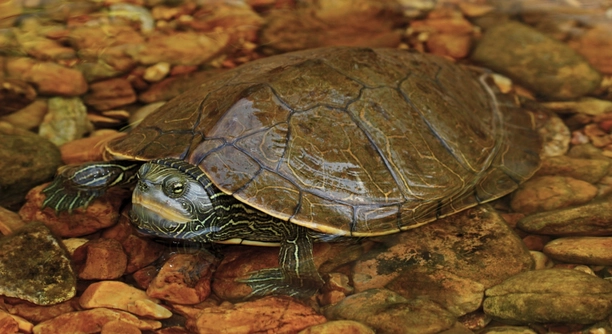
Map turtles are known for their adaptability in their natural habitats. However, their ability to thrive in completely new environments remains an interesting subject for research and observation.
Map turtles can adapt to new habitats to a certain extent, but their success depends on various factors. These include environmental conditions, food availability, and the presence of predators. The extent of their adaptability varies among different species.
Understanding the key factors that influence their adaptability can help ensure the health and survival of map turtles in unfamiliar habitats.
Habitat Preferences of Map Turtles
Map turtles prefer environments with slow-moving water, abundant aquatic plants, and plenty of basking spots. They are typically found in freshwater habitats such as rivers, lakes, and ponds, often in areas with soft mud or sand at the bottom. These conditions provide essential resources for their diet, which includes aquatic invertebrates, small fish, and plant matter. While map turtles can adapt to different water qualities, they thrive best in clean, well-oxygenated waters. If placed in an unfamiliar environment, their ability to adjust depends on the availability of food sources, water temperature, and basking locations.
Environmental changes, such as pollution or drastic temperature fluctuations, can negatively affect their health. It’s crucial to recreate these elements when relocating map turtles to new habitats. If the ecosystem is too different, they may struggle to survive. Adjusting their environment may involve ensuring there’s enough food and proper water conditions to avoid stress or illness.
In captivity, map turtles require similar conditions to their natural habitat. Maintaining the water quality and temperature is essential to keep them healthy. Providing a basking spot with UVB light will help simulate sunlight exposure. This setup mimics the natural environment, allowing map turtles to live comfortably and thrive.
Food Availability in New Habitats
Map turtles are primarily carnivorous but will eat plant material when necessary.
A new habitat must provide the right balance of nutrients for map turtles. A lack of proper food sources can lead to malnutrition, affecting their overall health and ability to thrive.
Adapting to Water Quality
Map turtles are sensitive to water quality. In new habitats, water should be free from pollutants and chemicals. Stagnant or heavily polluted water can cause health issues, including respiratory problems and skin infections. They require clear, clean water with minimal contaminants to thrive.
When placed in a new environment, map turtles may take time to adjust to the water quality. It’s important to monitor the water regularly, ensuring the pH levels, temperature, and oxygen content are appropriate. Water filters can help maintain cleanliness, but it’s essential to test water frequently to avoid harmful changes. Poor water quality can stress the turtles, leading to illness and reduced life expectancy.
If water quality in a new habitat is not suitable, map turtles may exhibit signs of distress. These include lethargy, skin shedding, and loss of appetite. Proper filtration and water changes can help maintain an environment conducive to their survival. Regularly cleaning the tank or pond will improve the overall health of the turtles.
Importance of Temperature Regulation
Temperature plays a significant role in the health of map turtles. They require warm water to remain active and digest food properly.
In unfamiliar habitats, ensuring the correct temperature is essential for map turtles to adapt successfully. Cold water can make them sluggish, impair their immune system, and hinder digestion. A consistent water temperature between 75°F and 85°F is ideal for most species. For basking, map turtles need a temperature around 90°F to stay warm enough to regulate their body temperature. Without proper heat, their immune system weakens, and they may refuse to eat.
Basking and Sunlight Requirements
Map turtles need access to sunlight or UVB light to maintain proper health. Without it, they can develop shell deformities and metabolic bone disease. In new habitats, it is important to provide a suitable basking spot where they can warm up and get the UVB exposure they need.
Turtles should be able to bask for several hours a day to meet their sunlight needs. UVB light is essential for vitamin D synthesis, which helps them absorb calcium for a healthy shell. Inadequate basking conditions can lead to weakened bones, making map turtles more vulnerable to injury and disease.
Social and Behavioral Factors
Map turtles are typically solitary and can be territorial, particularly in males.
Introducing them to new habitats with other turtles or animals can sometimes cause stress. If the new environment contains multiple turtles, ensuring enough space for each to establish its own area is important. This reduces aggression and stress.
FAQ
Can map turtles live in saltwater?
Map turtles are freshwater turtles and cannot live in saltwater environments. They rely on freshwater ecosystems to thrive, where they can find their preferred food and basking spots. Exposure to saltwater can harm their skin, eyes, and overall health, making it unsuitable for them.
What do map turtles eat in the wild?
In the wild, map turtles primarily eat aquatic invertebrates, small fish, and aquatic plants. Their diet is generally high in protein, but they will also consume plant matter such as algae or water lilies when available. This variety helps maintain their nutritional needs and supports their active lifestyle.
How long do map turtles live in the wild?
Map turtles typically live for 20 to 30 years in the wild. Their lifespan depends on their environment and the presence of threats such as predators and habitat destruction. With proper care in captivity, map turtles can live even longer, sometimes reaching up to 40 years.
How much space do map turtles need in captivity?
Map turtles require ample space to move around, especially when kept in captivity. A large tank or outdoor pond with enough room for swimming, basking, and hiding is ideal. A 75-gallon tank is usually recommended for a single adult turtle, with more space needed for additional turtles.
How often should I clean my map turtle’s tank?
You should clean your map turtle’s tank regularly to maintain water quality and prevent the buildup of waste. A full tank cleaning should be done every 2 to 3 weeks, with partial water changes every week. Regular filter maintenance will also help keep the water clean and healthy for your turtles.
What temperature should the water be for map turtles?
Map turtles require a water temperature between 75°F and 85°F. This range ensures that they remain active and can digest their food properly. If the water gets too cold, they may become lethargic, which can lead to health problems. A water heater is often necessary for maintaining a stable temperature.
Do map turtles need a basking spot?
Yes, map turtles need a basking spot to regulate their body temperature and absorb UVB light. A basking area with a temperature of around 90°F is ideal. This spot should be easily accessible and large enough for them to rest and warm up during the day. Without a proper basking area, their health can suffer.
How often do map turtles need to eat?
Map turtles should be fed 3 to 4 times a week in captivity. Their diet can include a mix of commercial turtle food, aquatic insects, small fish, and leafy greens. It’s important not to overfeed them, as this can lead to obesity and other health issues.
Can map turtles be kept together?
Map turtles can be kept together, but they should have enough space to establish their own territory. Males can be territorial, and without sufficient space, they may become aggressive toward one another. It’s important to monitor their interactions and separate them if aggression occurs.
Are map turtles good pets?
Map turtles can make good pets if provided with the proper care. They are relatively easy to care for, but they do require specific environmental conditions, such as clean water, proper basking spots, and the right diet. They are also long-lived, so they need a long-term commitment from their owners.
What do I need for a map turtle tank setup?
For a proper map turtle tank setup, you’ll need a tank large enough to provide space for swimming and basking, a reliable filtration system to keep the water clean, a basking area with access to UVB light, and a water heater to maintain the right temperature. A good water testing kit is also important to monitor water quality.
Can map turtles drown?
While map turtles are strong swimmers, they can drown if they are unable to reach a surface to breathe. It’s important to ensure they have easy access to a basking area where they can rest and catch their breath. They can also drown if they become too weak due to illness or poor water quality.
How can I tell if my map turtle is sick?
Signs that your map turtle may be sick include a lack of appetite, lethargy, abnormal swimming behavior, skin lesions, or swollen eyes. It’s important to monitor their behavior closely and consult a vet if you notice any of these symptoms, as early detection can prevent serious health issues.
Do map turtles need UVB light?
Yes, map turtles require UVB light to produce vitamin D3, which helps them absorb calcium for strong bones and shells. If kept indoors, they need access to a UVB light source that mimics sunlight. Without UVB light, map turtles can develop metabolic bone disease, which weakens their shell and bones.
What is the best type of food for map turtles?
The best food for map turtles includes high-quality turtle pellets, live or frozen fish, aquatic insects, and leafy greens. These provide the right balance of protein and vitamins. It’s important to vary their diet to ensure they get all the nutrients they need to stay healthy.
How can I help my map turtle adjust to a new habitat?
To help your map turtle adjust to a new habitat, gradually introduce it to the environment. Make sure the water quality, temperature, and basking conditions are appropriate. Monitor its behavior and health closely, and provide a safe space for it to hide and feel secure as it settles in.
Do map turtles need a filter in their tank?
Yes, map turtles require a filter to keep their water clean. A good filtration system helps remove waste, debris, and excess food from the tank. Without a filter, the water can become polluted quickly, which can lead to health issues for the turtle. Regular filter maintenance is essential.
Final Thoughts
Map turtles are fascinating creatures that can adapt to new habitats, but they require specific care to thrive. The right environment, diet, and attention to their behavior are all crucial for their well-being. When relocating map turtles, it’s important to ensure their new habitat provides proper water temperature, space for swimming, and access to basking areas. Any changes to their environment should be gradual to reduce stress, as sudden shifts can cause health issues. Proper care and understanding of their needs can help them adapt successfully to new surroundings and lead long, healthy lives.
Adapting to new habitats is not only about the physical space but also the conditions of their environment. Map turtles need clean, filtered water to prevent health problems, and the temperature of both the water and basking spots should be consistent. Providing these necessary elements will allow them to adjust to their new home more easily. It’s also essential to monitor their behavior and health closely during the adjustment period. If signs of stress or illness appear, it’s important to address the problem immediately to prevent further complications. Map turtles are resilient, but they rely on their owners to create a safe, stable environment.
The key to helping map turtles adapt to a new habitat is consistency and patience. The transition process may take time, but with the right care, they can adjust without issue. Ensuring they have access to a suitable basking area, clean water, and a proper diet is the foundation of their health. In the end, map turtles are hardy and adaptable creatures, but they thrive best when their environment mimics their natural habitat. With proper preparation and attention, they can adapt successfully and enjoy a long, healthy life in their new home.

Hello,
If you enjoy the content that we create, please consider saying a "Thank You!" by leaving a tip.
Every little bit helps us continue crafting quality advice that supports the health, happiness, and well-being of pets around the world, for pets of all shapes, sizes, and species.
We really appreciate the kindness and support that you show us!