
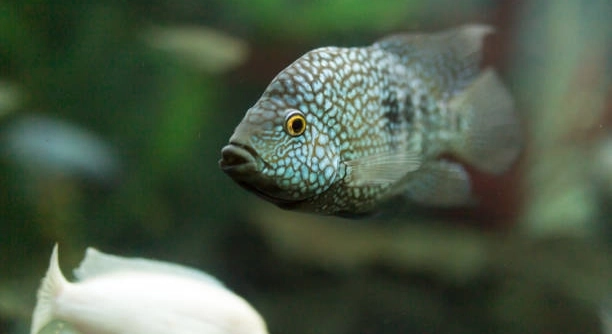
Jack Dempsey fish are known for bold personalities and strong feeding responses in home aquariums. Many keepers notice patterns forming around mealtime, creating interest in how these fish respond to routine signals over time consistently.
Jack Dempsey fish are capable of learning feeding cues through repeated associations between visual or auditory signals and food delivery. Consistent conditioning leads to anticipatory behavior, demonstrating associative learning rather than instinct alone in controlled aquarium environments over time reliably.
Recognizing these learned behaviors helps improve feeding routines, reduce stress, and build stronger interaction between keeper and fish daily care.
How Feeding Cues Form in Jack Dempsey Fish
Jack Dempsey fish respond strongly to routine, especially around feeding time. When food appears after the same signal, such as tank tapping or lid movement, the fish begins linking that action with eating. Over time, this link becomes reliable and visible. The fish may swim forward, show alert posture, or gather near the feeding area. This behavior is not random. It reflects basic associative learning shaped by repetition and timing. I noticed this pattern develop after weeks of consistent care. Feeding at similar times helped reinforce the response. Irregular schedules slowed progress and caused hesitation. A calm environment also mattered. Loud movements distracted the fish and weakened the signal. Consistency remained the strongest factor. When cues stayed clear and predictable, the fish reacted faster and with more confidence during feeding moments. This steady response made daily care feel more connected and rewarding over long periods of observation at home aquariums.
Simple cues work best because Jack Dempsey fish rely on repetition rather than complexity. Visual signals paired with food create faster learning. From my experience, patience matters more than creativity, since rushed changes can confuse the fish and weaken the feeding response over time when consistency is lost completely suddenly.
Timing plays a major role in cue learning for this species. Feeding at random hours delays recognition and reduces anticipation. A stable schedule allows the fish to predict outcomes with less stress. I found that once timing improved, cue strength increased naturally. The fish stopped hiding during preparation and remained visible. This shift suggested growing confidence. Regular light cycles supported this process by anchoring daily rhythms. When lighting changed often, responses slowed. Clear patterns helped the fish conserve energy and respond calmly. Structure, rather than stimulation, shaped the most reliable feeding behavior over time through consistent care routines at home.
Applying Feeding Cues in Daily Care
Applying feeding cues requires restraint and regularity. Using the same motion, sound, or position before feeding builds trust and clarity. I kept movements slow and predictable. This reduced tension and helped the fish stay focused on the feeding area instead of reacting defensively during routine maintenance and daily observation periods.
Once cues are established, maintaining them becomes the priority. Sudden changes in schedule or signal weaken learned responses. I learned to avoid unnecessary variation, even on busy days. Feeding at similar times reinforced expectation and reduced pacing behavior. The fish appeared calmer before meals and recovered faster afterward. Portion control also mattered. Overfeeding disrupted attention and caused delayed responses. Smaller, consistent portions kept the cue meaningful. Environmental stability supported learning as well. Tank layout changes distracted the fish and shifted focus away from feeding signals. When adjustments were necessary, I introduced them gradually. Observation remained essential. Watching posture, swimming speed, and positioning revealed whether cues remained effective. If responses slowed, I returned to basics instead of adding new signals. This approach preserved clarity. Over weeks, the feeding routine felt smoother and required less effort. The fish responded with steady behavior rather than bursts of excitement. This balance improved overall care and reduced stress for both of us during daily maintenance. Consistency supported long term health, improved digestion, and made monitoring appetite easier. These patterns helped me notice changes early and adjust feeding amounts without confusion, keeping the environment stable and predictable for the fish over extended periods of regular care.
Behavioral Changes Linked to Feeding Cues
Jack Dempsey fish show clear behavioral shifts when feeding cues are learned. Movement becomes focused, reactions are faster, and positioning improves. I noticed fewer startle responses once cues were consistent, which suggested reduced stress and better anticipation during routine feeding times. This change developed slowly but remained stable with repetition.
Learned cues often influence how Jack Dempsey fish interact with their environment. Instead of roaming the tank, the fish waits near the feeding zone. I observed less glass surfing and more controlled swimming. This suggests the fish is conserving energy and responding with intention. Feeding cues also reduce aggressive displays during meals. When expectations are clear, competition decreases. The fish focuses on food delivery rather than territory defense. Over time, this stability supports digestion and overall condition. Regular cue use created a calmer pattern that carried into non-feeding hours as well. Consistency remained important for maintaining these observed behavioral improvements.
Individual personality affects how quickly feeding cues are learned. Some Jack Dempsey fish respond within days, while others require weeks. My fish needed steady repetition before reacting reliably. Environmental stress slows progress. Sudden noise, tank changes, or lighting shifts interrupt learning. I found that reducing disruptions improved cue retention. Water quality also plays a role. Stable parameters support focus and appetite. When conditions declined, responses weakened. Feeding cues work best as part of overall care rather than a single training method applied in isolation. This balance helped maintain predictable behavior without creating dependency or overstimulation during long term care periods.
Using Visual and Sound Signals Effectively
Visual cues tend to be the most effective for Jack Dempsey fish. Hand movement, container appearance, or lid opening are easy to recognize. I relied on the same motion each time. Bright or sudden gestures caused hesitation. Simple signals allowed the fish to remain calm and attentive, reinforcing learning without overstimulation or fear responses over repeated feedings. This approach supported steady responses and reduced confusion during daily care routines across extended observation periods at home.
Auditory cues can also support feeding routines when used consistently. Soft tapping or a gentle sound before feeding becomes recognizable over time. I avoided loud noises, which caused retreat behavior. Pairing sound with visual signals improved clarity. The key remained consistency. Changing tones or timing weakened the association. I noticed better results when cues were brief and predictable. Overuse reduced effectiveness. Feeding cues should remain limited to mealtime. When used randomly, the fish stopped responding. Balanced use preserved meaning. Combined with stable lighting and water conditions, auditory cues added structure without increasing stress or agitation during regular care. This helped maintain focus, improved appetite consistency, and supported calmer behavior patterns over extended observation periods while reinforcing predictable daily feeding structure for the fish long term.
Common Mistakes That Disrupt Feeding Cues
Feeding cues can fail when routines become inconsistent or rushed. Missed feedings, delayed signals, or changing gestures confuse the fish. I noticed slower responses when my schedule shifted, even briefly. Returning to a stable routine restored clarity and reduced hesitation during feeding over time with consistent care and calm handling.
Overfeeding weakens feeding cues by reducing motivation and focus. Large portions cause lingering food and delayed reactions. I reduced portion size and saw quicker responses. Clear expectations improved behavior, and feeding cues stayed meaningful without overwhelming the fish during daily care routines and long term tank stability and calm behavior.
Does Age Affect Learning Feeding Cues
Young Jack Dempsey fish often learn feeding cues faster due to higher curiosity and flexibility. Adults can still learn, though progress may be slower. My adult fish required more repetition and calmer conditions. Once learned, cues remained stable. Age influenced speed, not ability. Consistent signals, stable water parameters, and predictable timing supported learning across life stages. I avoided changing cues once established. This prevented confusion and preserved trust. With patience, both juvenile and adult fish responded reliably. The key difference remained how long reinforcement took before behavior became automatic and dependable over extended care periods at home aquariums consistently observed.
Environmental Factors That Support Cue Learning
Lighting and tank placement influence how well feeding cues are noticed. Dim or shifting light reduces visibility. I kept lighting steady and avoided feeding during maintenance. Clear sightlines helped cues stand out, allowing the fish to respond without distraction or defensive behavior during regular daily care routines over time consistently.
FAQ
Can Jack Dempsey fish recognize their owner during feeding time?
Jack Dempsey fish can associate specific people with feeding routines through repeated exposure. I noticed my fish responded faster when I approached the tank compared to others. This recognition is based on movement patterns, positioning, and timing rather than emotional attachment. Over time, consistent care builds familiarity. When feeding cues are paired with the same person, responses become more reliable. Sudden changes in who feeds the fish can slow reactions temporarily. The behavior reflects learned association rather than social bonding, but it still improves predictability and reduces stress during feeding.
How long does it take for a Jack Dempsey fish to learn a feeding cue?
Learning time varies based on age, environment, and consistency. In my experience, early signs appeared within one week, while reliable responses took closer to three weeks. Daily repetition helped speed the process. Missed days slowed progress. Stable lighting and water conditions supported focus. Fish exposed to frequent disruptions needed more time. Once learned, the cue remained effective as long as it stayed unchanged. Patience mattered more than frequency. Short, consistent sessions worked better than repeated attempts within the same day.
Do feeding cues affect aggression levels in Jack Dempsey fish?
Clear feeding cues can reduce aggression during mealtime. When expectations are predictable, the fish shows less territorial behavior around feeding zones. I observed fewer sudden lunges once cues were established. Confusion often led to defensive displays. Consistent cues helped the fish focus on food rather than surroundings. This effect extended beyond feeding periods. Calmer feeding routines supported overall tank behavior. While cues do not eliminate aggression entirely, they help manage it by reducing uncertainty and stress related to feeding events.
Is it possible to use too many feeding cues at once?
Using multiple cues at the same time can confuse the fish. I learned this after combining sound, movement, and light changes together. Responses became slower and inconsistent. Jack Dempsey fish respond best to one or two clear signals. Overloading the process reduces clarity. Each cue should have a single purpose and occur only before feeding. When cues were simplified, responses improved quickly. Limiting signals helped preserve their meaning and prevented the fish from ignoring them over time.
Should feeding cues be used for every meal?
Feeding cues work best when used consistently at every meal. Skipping cues occasionally caused hesitation in my fish. The routine felt incomplete, and responses weakened slightly. Using cues each time reinforced predictability. However, cues should remain brief. Repeating them excessively during a single feeding reduced effectiveness. One clear signal before food delivery was enough. Consistent use supported stable behavior patterns and made appetite changes easier to notice during regular observation.
Can feeding cues stop working over time?
Feeding cues can lose effectiveness if routines change or cues are overused. I noticed slower responses after altering feeding times. Returning to the original schedule restored behavior. Overfeeding also reduced cue strength by lowering motivation. Environmental stress played a role as well. Poor water quality or frequent tank changes disrupted focus. As long as conditions stayed stable and cues remained unchanged, responses stayed reliable. Maintenance of the routine mattered more than introducing new elements.
Do feeding cues improve overall fish health?
Feeding cues indirectly support health by reducing stress and improving feeding efficiency. My fish showed steadier appetite and better digestion once cues were established. Predictable routines helped regulate behavior and energy use. Reduced stress supports immune function and recovery. While cues are not a substitute for proper diet or tank care, they enhance consistency. This made it easier to monitor eating habits and notice changes early, allowing adjustments before issues developed.
Final Thoughts
Feeding cues offer a simple way to build structure into daily care for Jack Dempsey fish. Through repetition and stable routines, these fish learn to anticipate feeding without confusion or stress. What stands out most is how consistency shapes behavior over time. Small actions repeated in the same way lead to visible changes in movement, focus, and calmness. Feeding becomes less reactive and more controlled. This predictability benefits both the fish and the keeper. Care routines feel smoother, and observation becomes easier. Appetite changes are easier to notice when behavior follows a clear pattern. Feeding cues do not require advanced tools or constant adjustment. They rely on patience and steady habits. When applied correctly, they support a balanced environment where the fish responds with confidence rather than hesitation.
What matters most is how feeding cues fit into overall care rather than standing alone. Water quality, lighting, tank layout, and feeding amounts all influence how well cues are learned and maintained. Feeding cues cannot compensate for unstable conditions. Instead, they work best as part of a consistent system. From my experience, when one area slipped, cue responses weakened. When everything stayed stable, behavior improved naturally. This reinforced the idea that feeding cues are not about control but about clarity. The fish benefits from knowing what to expect. This reduces unnecessary stress and helps maintain steady behavior throughout the day. Over time, this structure supports better digestion, calmer swimming patterns, and fewer defensive reactions. These changes may seem subtle, but they add up with long term care.
Feeding cues also change how care feels on a personal level. Routine builds familiarity, and familiarity builds awareness. Watching a fish respond calmly to a learned signal creates a sense of rhythm in daily maintenance. It becomes easier to tell when something feels off. Small delays or changes in response stand out quickly. This awareness helps address issues early rather than reacting late. Feeding cues do not create dependence. Instead, they support communication through consistency. Jack Dempsey fish remain independent and instinct driven, but they adapt to patterns that benefit their environment. With patience and steady habits, feeding cues become a quiet but effective tool. They do not demand attention, yet they improve the quality of care over time. This balance makes them worth maintaining as part of responsible, long term fish keeping.

Hello,
If you enjoy the content that we create, please consider saying a "Thank You!" by leaving a tip.
Every little bit helps us continue crafting quality advice that supports the health, happiness, and well-being of pets around the world, for pets of all shapes, sizes, and species.
We really appreciate the kindness and support that you show us!