
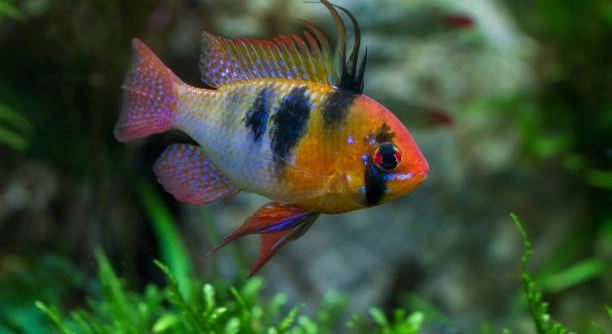
Convict cichlids are known for bold behavior and strong awareness of their surroundings, making them fascinating aquarium fish. Their daily movements, shelter choices, and interactions suggest a level of mental mapping within familiar tanks environments.
Research indicates that convict cichlids can remember tank layouts through spatial learning and repeated exposure. They rely on visual landmarks and consistent structures, allowing efficient navigation, territory defense, and resource access even after temporary environmental changes within controlled aquarium conditions.
Understanding memory in these fish reveals how tank design affects stress, behavior, and overall well-being in home aquariums over time.
How Convict Cichlids Learn Their Space
Convict cichlids rely on repeated movement and visual reference points to form a mental layout of their tank. Rocks, plants, heaters, and hiding spaces become fixed markers. Over time, the fish associates safety, feeding areas, and resting spots with these markers. I notice this most during feeding, when the fish swim directly to familiar corners without hesitation. This behavior reflects basic spatial memory rather than complex reasoning. When the layout stays stable, the fish move with confidence and reduced stress. Consistency allows them to predict outcomes, such as where food appears or where shelter is located. This learning process develops gradually and depends on daily routines. Lighting patterns, water flow, and even glass reflections contribute to how the tank is understood. Each element reinforces a recognizable structure that the fish remembers and follows with repeated exposure across weeks in a calm and predictable home aquarium setting that supports overall stability.
Short term disruptions can confuse these patterns. Sudden rearrangement forces the fish to relearn safe paths and boundaries. During this period, activity often slows, and defensive behavior increases slightly until familiarity returns through repeated exposure. This adjustment phase varies based on age, temperament, and prior experience within controlled tank conditions.
Observations from home aquariums and controlled studies align closely on this behavior. Convict cichlids show faster navigation after repeated exposure to the same layout. When obstacles shift slightly, they adapt quicker than newly introduced fish. I have seen this when cleaning tanks, as the fish briefly pause, then resume normal routes. Memory strength improves when changes are minimal and gradual. Stable layouts support natural behaviors like territory guarding and nesting. While they may not remember exact positions forever, consistent environments clearly support reliable movement patterns and reduced stress responses over extended periods in well maintained aquariums with attentive daily care.
Why Tank Layout Consistency Matters
Tank layout consistency plays a direct role in behavioral stability. Predictable spaces reduce unnecessary stress and support feeding, breeding, and rest. Frequent major changes interrupt learned patterns and can lead to hiding, aggression, or reduced activity levels especially in smaller aquariums with limited visual reference points for daily navigation needs.
Maintaining a consistent tank layout does not mean avoiding all change. Routine cleaning, plant trimming, and equipment maintenance are still necessary. The key is limiting how much shifts at once. When I clean my tanks, I return rocks and shelters to their original positions whenever possible. This small effort helps the fish settle quickly. Gradual adjustments allow memory to adapt without triggering prolonged stress. Visual anchors such as caves or large stones should remain stable. These features act as reference points the fish rely on daily. Lighting schedules and feeding locations should also stay predictable. Over time, this stability supports healthier behavior and stronger feeding responses. Fish that feel secure explore more and show clearer social structure. For keepers, this means easier observation and fewer behavioral concerns. A thoughtful layout benefits both the fish and the overall balance of the aquarium environment. This approach is especially helpful for territorial species that rely on boundaries. Consistency supports recovery after stress events like transport or health treatment, allowing normal routines to return steadily without unnecessary disruption. It also encourages natural interactions and improves long term observation accuracy for keepers seeking calm, predictable systems that remain stable over time with minimal disruption overall.
How Rearranging the Tank Affects Memory
Rearranging a convict cichlid tank disrupts established spatial memory and temporarily alters behavior. Familiar paths disappear, shelters shift, and feeding zones feel uncertain. The fish slows movement, patrols less confidently, and may guard smaller areas until visual landmarks are relearned through repeated daily exposure over time in stable aquarium conditions.
Minor changes such as moving a plant or adjusting a rock usually cause short confusion. I notice brief hesitation, followed by careful exploration. The fish traces edges, revisits shelters, and tests familiar routes. Within days, movement becomes smooth again. Larger rearrangements take longer to adjust to. Memory rebuilding depends on how drastic the change is and how often it occurs. Consistency after the change is critical. Repeated shifts prevent solid learning and keep behavior cautious. Stable layouts following adjustments allow the fish to regain confidence, defend territory properly, and resume predictable feeding patterns without prolonged stress responses in home aquariums.
Some convict cichlids adjust faster than others. Age, prior experience, and tank size all play a role. Fish raised in stable environments show quicker relearning. I have seen younger fish explore faster after changes, while older ones pause longer. Stress levels also influence memory retention. Calm conditions support faster adaptation. Loud noise, tapping, or inconsistent lighting slows progress. Providing familiar shelters during rearrangement helps maintain orientation. Even when layouts change, leaving one or two landmarks untouched gives the fish a reference point, supporting smoother transitions and steadier behavior during adjustment periods within controlled and well maintained aquarium setups over time.
Signs Your Cichlid Recognizes the Layout
Recognition appears through confident swimming and direct movement between key areas. The fish returns to the same shelter, patrols the same boundaries, and approaches feeding spots quickly. I often notice reduced hesitation and fewer sudden stops. Aggression becomes more controlled and purposeful. These behaviors suggest the tank layout is familiar and mentally mapped, allowing energy to focus on territory defense, feeding, and routine movement instead of constant reassessment during daily activity in stable environments consistently.
Another sign is how the fish reacts after brief removal or disturbance. When returned to the tank, a cichlid with strong layout memory resumes normal behavior quickly. It swims directly to shelter or patrol zones without prolonged scanning. I have observed this after water changes and equipment adjustments. Fish lacking recognition drift aimlessly or hide longer. Feeding response also improves with familiarity. The fish positions itself early and competes confidently. Over time, these patterns remain consistent as long as the layout stays stable. Predictable movement and calm responses indicate the environment is well learned and supports long term behavioral balance. This stability reduces stress behaviors and supports clearer observation for keepers maintaining structured care routines over extended periods within consistent home aquarium systems and environments.
Tank Size and Spatial Memory
Tank size directly influences how well convict cichlids store spatial information. Larger tanks provide more landmarks and clearer territory zones. With added space, movement patterns become consistent, allowing memory to form through repetition. Small tanks limit reference points, making layouts harder to distinguish and remember accurately over time consistently overall.
Limited space increases stress and overlap between territories. I notice more pacing and sudden stops in smaller tanks. These behaviors interrupt learning. When space is tight, the fish reacts instead of memorizing. Adequate volume supports calm movement, clearer boundaries, and stronger long term memory retention during daily aquarium routines consistently.
The Role of Environmental Stability
Environmental stability strengthens memory by reinforcing repeated experiences. When lighting, décor, and equipment remain consistent, convict cichlids show smoother navigation and predictable behavior. I keep changes minimal to support this process. Sudden shifts force relearning and raise alertness. Stable environments reduce wasted energy and support territory awareness. Over time, memory becomes more reliable. Fish respond faster during feeding and return to shelters without hesitation. Stability also improves observation accuracy for keepers. Patterns are easier to notice when behavior remains steady. This consistency benefits long term care and reduces unnecessary stress responses in maintained aquarium systems with consistent daily husbandry practices.
Using Landmarks to Support Recognition
Providing clear landmarks supports memory retention. Large rocks, caves, and plants should remain fixed. I rely on these anchors to keep behavior steady. When landmarks stay consistent, convict cichlids navigate confidently, defend territory efficiently, and settle faster after routine maintenance within stable aquarium environments over extended care periods consistently applied.
FAQ
How long can convict cichlids remember a tank layout?
Convict cichlids can retain memory of a tank layout for several weeks if the environment remains consistent. I have observed fish quickly navigating familiar areas even after short absences. Memory strength depends on stability and repeated exposure. Frequent changes weaken recognition, while consistent landmarks reinforce spatial awareness over time.
What happens when the tank is rearranged?
Rearranging the tank disrupts their learned patterns. Fish may pause, explore cautiously, and hide more often until they relearn locations of shelters and feeding spots. Minor changes cause temporary confusion, but leaving some visual anchors intact helps them adapt faster. Large rearrangements take longer to recover confidence.
Do younger cichlids remember layouts better than older ones?
Yes, younger convict cichlids tend to adapt more quickly and form memory faster. Older fish may pause longer and show more hesitation after changes, especially in new environments. Experience in a stable tank still allows older fish to retain memory, but adaptation may be slower compared with younger individuals.
How does tank size affect memory?
Tank size directly influences spatial learning. Larger tanks provide more visual markers and space to establish territory. I notice that in small tanks, fish struggle to distinguish areas, and memory formation is weaker. Sufficient space allows confident movement, efficient patrols, and reduced stress, supporting clearer recognition of landmarks.
Do all cichlids remember layouts equally?
Memory abilities vary between species. Convict cichlids are particularly good at forming spatial memory due to their territorial nature. Other cichlids may be less consistent or slower to adjust. Even within convict cichlids, temperament and prior experience play a role. Calm, confident fish form memories faster than nervous or stressed individuals.
How can I help my cichlid remember the layout?
Keeping the tank consistent is key. Rocks, caves, and plants should remain in the same place. Feeding in predictable locations and maintaining steady lighting patterns also helps. Gradual changes allow fish to adapt without stress. I always try to keep at least one visual landmark in the same position during maintenance.
Can stress affect memory?
Yes, stress can temporarily reduce their ability to recall layout. Loud noises, sudden movements, or frequent rearrangements make fish cautious. In stressed conditions, movement slows, and hiding increases. I notice that once the environment returns to calm, spatial memory quickly recovers, especially if landmarks remain familiar.
How quickly do cichlids relearn a changed tank?
The speed of relearning depends on the extent of the change. Small adjustments may take a few hours or days. Larger rearrangements require several days to a week. Providing some consistent reference points accelerates adaptation. Fish gradually explore, test shelters, and resume normal routes with repeated exposure in a calm tank.
Do feeding patterns influence memory?
Yes, predictable feeding reinforces spatial awareness. Fish learn where food appears and link it with surrounding landmarks. I feed in the same spots daily, and the fish consistently swim directly there, showing confidence and recognition. Inconsistent feeding can confuse routes and slow memory reinforcement.
Are there signs that my cichlid remembers the layout?
Confident, direct swimming between shelters and feeding zones is a clear sign. Reduced hesitation, calm patrolling, and controlled aggression indicate familiarity. I also notice fish quickly returning to preferred hiding spots after brief removal, suggesting strong spatial memory and comfort within their tank environment.
Can environmental enrichment help memory?
Yes, varied but stable structures enhance learning. Different hiding spots and textures provide reference points. I rotate minor elements gradually, keeping main landmarks fixed. Enrichment encourages exploration, improves mental stimulation, and strengthens spatial memory while maintaining consistency that prevents stress and confusion.
Do cichlids forget layouts over time?
Memory fades slowly if the tank remains unchanged. I’ve seen fish return to familiar routes even after weeks, but prolonged inactivity or repeated disruptions can weaken recognition. Continuous exposure to the same layout ensures memory remains sharp and behaviors remain predictable, reducing stress and improving overall tank management.
How does social interaction affect memory?
Social dynamics influence navigation. Dominant individuals patrol more actively and maintain clear routes, reinforcing memory. Territorial disputes can cause temporary displacement but also enhance learning as fish map boundaries. I observe that peaceful communities retain layout recognition faster, while frequent aggression can temporarily interrupt confidence in movement and shelter use.
Can memory be tested in a home tank?
Yes, simple observation works. Moving a minor landmark and watching the fish’s reaction reveals recognition. Confident navigation toward familiar shelters or feeding areas indicates memory. I often track routes during feeding or after minor adjustments, noting hesitation or direct paths as evidence of how well the fish recalls the tank layout.
What role do landmarks play in memory retention?
Landmarks are critical. Rocks, plants, and caves act as visual anchors. I keep them fixed whenever possible. They guide movement, define territory, and support orientation. Without landmarks, fish show uncertainty, pause frequently, and take longer to patrol or feed, demonstrating that these elements are essential for retaining spatial memory over time in home aquariums.
How long should I leave the tank stable to reinforce memory?
Continuous stability over weeks allows strong spatial learning. I maintain consistent layout, feeding, and lighting schedules to reinforce memory. Short periods of stability help, but repeated changes prevent long-term retention. Fish respond best when their environment remains predictable and familiar, supporting calm behavior, confident movement, and efficient territory management consistently over time.
Do convict cichlids recognize their tank after temporary removal?
Yes, after brief removal or water changes, they often return to familiar areas quickly. I notice fish swim directly to preferred shelters or feeding zones, showing that spatial memory remains intact if landmarks and layout are consistent. Memory recovery is faster in calm, undisturbed conditions.
Does the type of decoration affect memory?
Yes, prominent and unique structures are easier to remember than uniform or small items. I use larger rocks or distinctive plants as anchors. These items create reference points that the fish can navigate by. Consistent decoration allows them to map their space efficiently, improving orientation, patrol routes, and comfort in the aquarium environment over time.
Are repeated changes harmful to memory?
Frequent rearrangements reduce recognition and increase stress. Fish pause, hide, and patrol less confidently. I keep changes minimal and gradual to prevent disorientation. Stability supports memory formation, reduces wasted energy, and encourages predictable, calm behaviors that reflect a well-learned environment for territorial and social interactions alike.
Can cichlids form memory of multiple tank layouts?
Yes, but switching often slows learning. Fish adapt to a new layout with repeated exposure, but older patterns may fade. I find that maintaining one consistent setup at a time ensures strong spatial recognition. Gradual changes allow relearning without prolonged stress, while frequent alternation prevents reliable memory retention over time.
Do external cues like light and water flow affect recognition?
Yes, consistent lighting and flow patterns help reinforce landmarks and routes. I maintain regular schedules for lighting and equipment, reducing confusion. Sudden changes can make familiar areas feel different. Stability in environmental conditions complements fixed landmarks, supporting confident movement and predictable behaviors in convict cichlids consistently over extended periods.
How does territory size influence memory?
Larger territory zones support clearer spatial mapping. Fish navigate more confidently and defend specific areas effectively. In smaller territories, overlapping movement reduces clarity, slowing recognition. I notice that cichlids in spacious tanks patrol efficiently, while in tight tanks, hesitation and cautious movement increase, showing that adequate space is critical for strong spatial memory.
Can multiple cichlids learn the same layout differently?
Yes, individual temperament affects learning. Bold fish explore and memorize routes quickly, while shy fish may take longer. I often see dominant individuals establish clear paths first, while others follow. Consistent layout and gradual exposure allow all fish to eventually form reliable memory, but adaptation speed varies with personality and social rank within the tank environment.
How does feeding frequency affect memory?
Regular feeding helps reinforce routes and familiar areas. I feed at the same times and spots each day. Fish anticipate food, swim directly to locations, and navigate efficiently. Irregular feeding disrupts these learned patterns, increasing hesitation. Consistent routines strengthen memory and support calm, predictable behavior within the aquarium over long periods.
Do convict cichlids rely more on visual or spatial memory?
They rely on both, but visual landmarks are key. Distinct rocks, plants, and caves provide reference points for mapping routes. Spatial memory complements this by linking locations with activities like feeding and resting. I notice confident swimming and efficient navigation improve when both cues are consistent and reinforced regularly.
Can memory be improved over time?
Yes, repeated exposure and stable environments strengthen memory. I maintain consistent layouts, feeding spots, and lighting schedules. Fish gradually move more confidently and patrol efficiently. Memory improves with routine, calm conditions, and minimal disruption. Over months, learned behaviors become predictable and long-lasting, reflecting strong spatial recognition and comfort in the tank.
Is it normal for memory to fade?
Slight fading is normal if the tank is left unchanged for long periods without stimuli. I notice that occasional reintroduction to landmarks restores confidence. Continuous exposure keeps memory sharp. Fish retain core navigation routes and territory awareness even after weeks, as long as the environment remains relatively stable and familiar over time.
How important is consistency for long-term memory?
Consistency is critical. Stable layouts, feeding schedules, and lighting support lasting spatial memory. I find that fish in predictable environments show confident navigation, defend territory efficiently, and reduce stress. Even minor disruptions can temporarily interfere, but long-term consistency ensures reliable recognition and predictable behavior in convict cichlids across extended periods.
Does hiding behavior indicate memory issues?
Not necessarily. Temporary hiding after changes reflects uncertainty, not permanent memory loss. I see hesitation when landmarks are moved or unfamiliar stimuli appear. Once stability returns, the fish resumes normal routes and behaviors, showing that memory remains intact but may require time to adjust to minor changes.
How do I balance enrichment and stability?
Enrichment should be gradual and predictable. I introduce new plants or small decorations slowly, keeping main landmarks fixed. This stimulates exploration without disrupting memory. Gradual changes allow fish to form new spatial associations while retaining core recognition of territory, feeding zones, and shelters, supporting confident, stress-free behavior in daily aquarium routines.
Can memory help in breeding or territory management?
Yes, fish with strong spatial memory defend nests and patrol efficiently. I notice more confident pairing and reduced conflict in well-learned tanks. Memory allows predictable routes and controlled interactions, which supports breeding success and stable territory boundaries over time in structured environments where landmarks and layouts remain consistent.
How do I know if memory is failing?
Repeated hesitation, aimless swimming, or constant hiding after long stability may indicate stress rather than memory loss. I observe behavior carefully. If normal patterns return once environmental factors stabilize, memory is intact. Continuous stress or frequent changes are more likely causes than fading spatial memory in convict cichlids.
What is the most effective way to maintain memory?
Keep a consistent layout, feeding spots, and environmental conditions. I maintain familiar shelters, large landmarks, and predictable lighting. Gradual, minor changes support adaptation without confusion. Repeated exposure to these stable conditions ensures strong spatial memory, confident movement, and calm, predictable behavior over long periods in home aquarium systems consistently.
How does memory affect aggression and social behavior?
Memory helps define territory and reduce unnecessary aggression. Fish recall boundaries and shelters, limiting disputes. I notice calmer interactions in well-learned tanks. Without memory, overlapping patrols and confusion can trigger conflict. Predictable environments support social balance, territorial clarity, and more stable group dynamics over time in shared aquarium spaces.
Can memory be tested through exploration patterns?
Yes, by observing movement after minor changes or brief removal. Fish that remember layout swim directly to familiar shelters, feeding zones, and patrol routes. I track exploration behavior during maintenance and feeding to assess recognition. Consistent routes indicate strong memory, while hesitation or wandering shows adaptation is still in progress.
Does memory influence stress recovery?
Yes, confident navigation reduces stress. Fish familiar with their environment resume normal behaviors quickly after disturbances. I notice less hiding and calmer movement in tanks where layouts remain stable. Strong memory allows quicker recovery from water changes, minor disturbances, or brief handling, supporting overall well-being and predictable daily activity patterns.
Do all fish in the same tank share memory cues?
They may share awareness of landmarks indirectly. Observing others can guide navigation and reduce hesitation. I notice subordinate fish following dominant individuals’ routes, gradually forming their own memory of safe paths, shelters, and feeding areas. Social observation complements individual spatial learning in a consistent environment, supporting collective adaptation and efficient navigation.
Can I use memory to improve care routines?
Yes, knowing fish recall landmarks helps schedule cleaning, feeding, and minor rearrangements with minimal disruption. I maintain predictable routines and stable layouts. This ensures confident movement, reduced stress, and stronger behavioral patterns, making daily aquarium management smoother while supporting long-term mental mapping and memory retention in convict cichlids.
How does territory complexity affect memory?
Complex layouts with multiple shelters and pathways provide more reference points. I notice fish navigate confidently when landmarks are clear and varied. Overly simple or cluttered setups reduce clarity, causing hesitation. Moderate complexity with consistent anchors supports exploration, patrols, and territorial behavior while strengthening spatial recognition over time.
Are there signs memory improves naturally?
Yes, confident swimming, reduced pauses, and direct movement to feeding areas show improvement. I observe faster route recall after minor changes. Increased comfort with territory, calmer interactions, and efficient patrolling indicate that repeated exposure and environmental consistency enhance spatial memory gradually, supporting predictable behaviors in daily life.
Can memory loss occur suddenly?
Sudden memory loss is rare. Most observed changes are due to stress, illness, or major environmental shifts. I check water quality, temperature, and behavior first. When stability returns, spatial recognition usually recovers, indicating memory was intact but temporarily disrupted by external factors rather than permanent loss.
Do convicts remember each other’s territories?
Yes, dominant and subordinate individuals learn boundaries and routes through repeated social interaction. I observe reduced conflict once positions are established. Memory of neighbors’ territories prevents unnecessary aggression, allowing stable cohabitation in shared tanks with multiple individuals over long periods.
Can repeated handling affect memory?
Frequent handling causes temporary stress, which may slow navigation and recognition. I minimize interactions and keep them brief. Once calm returns, fish navigate familiar layouts confidently. Memory remains intact if handling is minimal and gentle, while repeated stress without recovery can reduce behavioral confidence temporarily.
How can I monitor memory without disruption?
Observing routine behavior is key. I watch movement patterns during feeding, resting, and patrols. Confident, direct swimming and repeated use of familiar routes indicate memory retention. Minor adjustments in shelters or rocks can test recognition without causing prolonged stress, giving insight into spatial awareness and learning in convict cichlids over time.
Does memory influence learning other behaviors?
Yes, spatial memory supports feeding, hiding, and social interactions. I notice that fish familiar with the layout respond faster to food, explore efficiently, and establish stable territories. Strong memory provides a foundation for learning additional behaviors, reinforcing confident, stress-free patterns in a consistent aquarium environment over extended periods.
Can memory decline with age?
Some decline is possible, but consistent exposure mitigates it. Older fish may pause longer, but routine and stable layouts support continued recognition. I notice confident navigation persists in well-maintained tanks. Memory remains functional for territory, feeding, and shelter use even in mature convict cichlids if the environment remains predictable and calm.
Is memory affected by water quality?
Poor water conditions increase stress, which can temporarily affect recognition. I keep temperature, pH, and cleanliness stable to support spatial memory. Fish in optimal water quality navigate confidently and patrol efficiently. Environmental stressors, not memory capacity, usually cause hesitation or disrupted behavior in otherwise healthy convict cichlids.
Do visual markers matter more than hiding spots?
Both matter, but distinct visual markers provide reliable navigation cues. I use large rocks and plants as anchors. Hiding spots support territory and stress reduction but alone don’t guide consistent movement. Combining clear landmarks with shelters ensures spatial memory and confident navigation across the tank environment consistently.
How much change is safe for memory?
Small, gradual adjustments are safe. I move a single plant or rock at a time, allowing the fish to explore and adapt. Sudden, large rearrangements cause hesitation and increased stress. Incremental changes allow memory to update without disrupting established routes, patrols, or feeding patterns.
Does memory help in multi-tank setups?
Yes, fish may remember layouts in different tanks if repeated exposure occurs. I observe quicker adaptation in secondary tanks after prior experience. Familiar landmarks, feeding zones, and consistent environmental conditions improve recognition, but new tanks always require gradual acclimation for confident navigation and stress-free behavior.
Can memory affect breeding behavior?
Absolutely. Fish familiar with layout establish nests efficiently and defend them confidently. I notice that stable environments encourage pairing, consistent patrols, and controlled aggression, all supported by spatial memory. Memory reinforces routine and territory boundaries, which are essential for successful breeding and nest maintenance in convict cichlids.
How do I know if my cichlid is stressed versus forgetting?
Signs like hiding, erratic swimming, and hesitation usually indicate stress from environmental factors, not memory loss. I check water quality, lighting, and layout stability. Once conditions return to calm, confident navigation resumes. Memory remains intact if stressors are removed and landmarks remain consistent.
Can memory influence hierarchy formation?
Yes, dominant individuals use spatial memory to patrol territories and establish boundaries. I see subordinate fish observe and learn routes over time. Memory helps reduce conflict and supports clear social structures. Consistent layouts reinforce hierarchy, allowing predictable interactions and calmer group dynamics within the tank environment.
Do feeding types matter for memory retention?
Consistent feeding types and locations strengthen learned routes. I feed flakes or pellets in the same areas daily. Fish associate landmarks with food and navigate efficiently. Changing feeding types alone has little effect, but inconsistent feeding locations slow route recall and reduce confident movement.
Can visual changes in decorations confuse fish?
Yes, drastic color or shape changes in landmarks can cause hesitation. I maintain consistent appearance of key rocks, plants, and shelters. Small additions are fine if main anchors stay recognizable. Stability in visual cues ensures smooth navigation, strong spatial memory, and predictable behavior in convict cichlids consistently over time.
How important is repetition for learning layouts?
Repetition is critical. Fish remember paths through daily exposure to landmarks, shelters, and feeding spots. I notice stronger confidence and quicker route navigation with consistent routines. Repeated use reinforces memory, reduces stress, and supports stable territorial and feeding behaviors, ensuring the fish retain familiarity with their environment over extended periods.
Does memory help with stress recovery after illness?
Yes, familiar layouts support faster recovery. I observe that fish regain confidence, patrol efficiently, and return to preferred shelters after treatment. Memory provides a predictable environment, reducing anxiety and energy spent on reorientation, which supports healing and smooth return to normal behavior in the aquarium.
**Can
Final Thoughts
Convict cichlids show a remarkable ability to remember the layout of their tanks. Their memory relies on consistent landmarks, familiar feeding spots, and stable environmental cues. Rocks, plants, and caves act as reference points that help them navigate efficiently and confidently. When these features remain unchanged, the fish can move between shelters, patrol territories, and locate food with minimal hesitation. I have noticed that fish in well-maintained tanks develop predictable routines and seem calmer overall, showing less stress and more natural behavior patterns. Memory allows them to focus on essential tasks, such as defending territory and interacting with tank mates, rather than constantly reassessing their surroundings. Even after short absences or minor disturbances, convict cichlids often return directly to familiar areas, which shows how strongly they can retain information about their environment over time.
Maintaining a stable layout is crucial for supporting this memory. Sudden changes, such as rearranging decorations or moving shelters, can temporarily disrupt learned patterns. The fish may pause, explore cautiously, or hide more often while relearning routes. Small adjustments are less stressful, especially if at least some landmarks remain in the same place. Gradual changes allow the fish to adapt without prolonged confusion or fear. Tank size also plays a role in memory retention. Larger tanks provide more space and visual cues, which helps the fish establish clear territories and remember paths between feeding areas and shelters. Smaller tanks with fewer reference points can make navigation less predictable, leading to hesitation and stress. Consistent feeding schedules, predictable lighting, and minimal environmental disturbances all contribute to memory formation and reinforcement. The more predictable the environment, the more confident and relaxed the fish appear.
Memory also affects behavior beyond navigation. Fish familiar with their tank layout defend territory efficiently, interact more calmly with tank mates, and respond quickly to food. Stable, familiar environments reduce unnecessary stress and support overall well-being. Even in social tanks, dominant and subordinate individuals can rely on memory to understand boundaries and patrol routes, which helps minimize conflict. Over time, repeated exposure and consistency strengthen spatial recognition, allowing fish to adjust quickly after brief disturbances, maintenance, or temporary relocations. Environmental enrichment, when done carefully and gradually, can enhance exploration and stimulate memory without causing confusion. Convict cichlids benefit from clear, stable visual cues and predictable routines, which support confident, natural behaviors. By keeping tank layouts consistent and observing how fish navigate and interact with their environment, it is possible to create a comfortable and mentally stimulating space that supports memory retention and overall health over the long term.

Hello,
If you enjoy the content that we create, please consider saying a "Thank You!" by leaving a tip.
Every little bit helps us continue crafting quality advice that supports the health, happiness, and well-being of pets around the world, for pets of all shapes, sizes, and species.
We really appreciate the kindness and support that you show us!